In concert – Oxford Lieder Festival celebrates Saint-Saëns with Elizabeth Watts, Victor Sicard & Anna Cardona, Fenella Humphreys & Martin Roscoe, Adèle Charvet & Anne Le Bozec

Various venues in Oxford, Saturday 9 October. Artists as listed below

Written by Ben Hogwood from online streams

The Oxford Lieder festival is into its 20th year, a cause for celebration indeed. It has become one of the UK’s finest classical music events, lovingly curated and produced but gathering increasing levels of enthusiasm every year.

The 2021 model is ideally weighted, with live music events streamed and recorded for posterity – an ideally weighted dual approach in these uncertain times. Titled Nature’s Songbook, it has set aside days for anniversary composers Saint-Saëns (100 years since his death) and the lesser-heard Swedish composer Wilhelm Stenhammar (150 years since his birth)

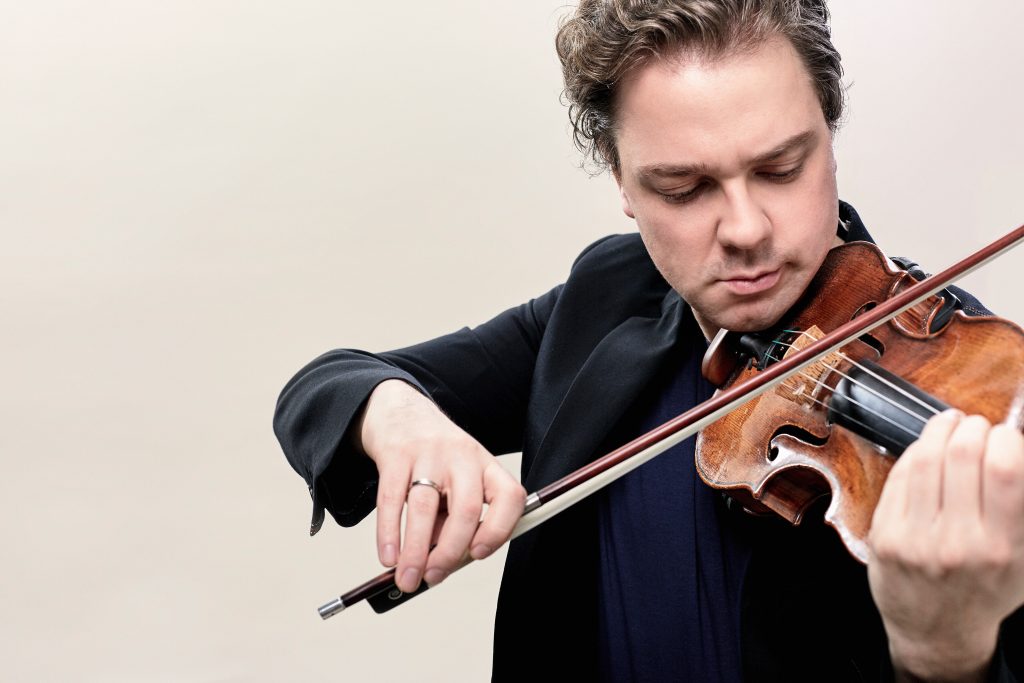
Saint-Saëns had his day on the Saturday, offering audiences a chance to appreciate his under-heard Mélodies in the context of better-known chamber and stage works, not to mention works by pupils and contemporaries. Baritone Victor Sicard & pianist Anna Cardona (above) were on first, the 2011 winners of the festival’s Young Artists Platform giving a recital from the ideal acoustic Saint John the Evangelist.

They began with a pupil and close friend of the featured composer. Gabriel Fauré was to become one of the very finest French composers of the 20th century, his output headed but not restricted to sublime contributions in the world of chamber music, piano and song. We heard his first published song cycle Poème d’un jour Op.21, a brief affair – which is ironic, since the subject of Charles Grandmougin’s verse was exactly that. Sicard found his feet in the slightly sorrowful first song, with an easily flowing piano part from Cardona. There was strength of character in the second, and wistfulness in the third as the day-long love affair fizzled out.

Saint-Saëns melodies followed and – as is often the case with this composer – hit the mark immediately. The attractive La Brise was secured by a rustic drone from Sicard’s left hand, which also gave its urgency to the next song. Emotionally the heart of this selection lay in La splendeur vide Op.26/2, which was followed by the Danse macabre, Saint-Saëns working with inner resolve. Perhaps it lacked a little edginess but a really strong connection between the two was clear.

Fauré’s pupil Ravel was next, and Sicard found the exquisite, timeless quality of Kaddisch, its melodic inflections beautifully expressed and contrasting with the questioning L’Énigme Éternelle. Following this was Histoires Naturelles, the ideal choice given the festival’s theme. Cardona had a strong descriptive role to play, with some lovely detail portraying Crickets, and The Swan too, which had strong characterisation. The Guinea Fowl’s ‘rowdy and shrill’ ending was perfectly judged by the pair – as was an exquisite encore of Chanson française.

Later we further examined the link between teacher and student in the Jacqueline du Pré Music Building, as violinist Fenella Humphreys and pianist Martin Roscoe played sonatas by Saint-Saens and Faure. In an aside to the audience, Humphreys revealed it was the first time the duo had performed the Saint-Saens Violin Sonata no.1 in D minor Op.75 (1885), realising a long-held dream of playing a work in public she had loved since childhood.

The closer acoustics of the hall took a little while to adjust to – certainly on the live stream – but it was easy to admire the duo as they met the challenges of the busy first movement head on, getting beneath the tumultuous phrases to the deeper emotion below. The softer-hearted second theme, a chorale, with rippling arpeggios from the piano, reminded us that the Organ Symphony was not far off – and it was beautifully rendered here. A keenly felt Adagio led to a balletic third movement, initiated by Roscoe’s nicely pointed piano part. There was however a strong sense of everything pointing towards the finale. Its tremendous technical demands were comfortably conquered, but again the music’s feeling won the day, Humphreys playing winsome long phrases. Both players enjoyed the return of the ‘chorale’ theme, but also the peal of bells evoked by Roscoe from the piano.

Fauré’s Violin Sonata no.1 in A major Op.13 is an early work, written nine years earlier, when it was given a glowing review by his teacher. Humphreys spoke affectingly of its significance during lockdown, and it was clearly a tonic for her to be playing it again. The two players dovetailed beautifully, Roscoe’s flowing introduction picked up seamlessly by Humphreys’ lyrical phrases. The slow movement took time for deep thought, its gently undulating piano a foil for the violin’s probing melodies, gradually building to a deeply felt apex. The scherzo was winsome, its syncopations tripping over each other happily. An ardent account of the fourth movement found the players deep in conversation, right up to the end of this richly rewarding piece. It is difficult to write about what makes Fauré such an attractive composer – his gifts are plentiful but elusive – yet this performance had all the qualities that so impressed his teacher.

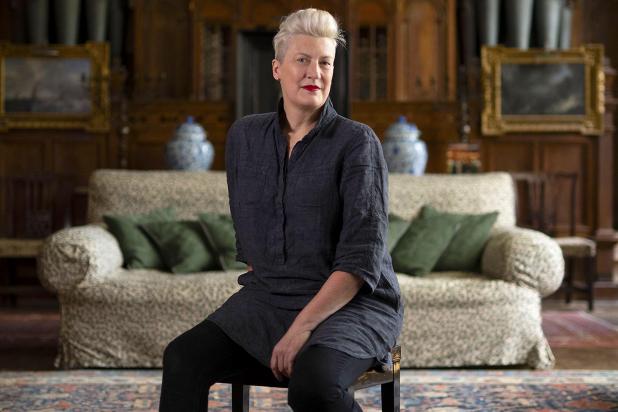
A strong cast of thirteen musicians assembled for a pair of concerts in the Saint John the Evangelist church. They were led by soprano Elizabeth Watts, and baritone Felix Kemp, with pianists Jâms Coleman, Martin Sturfält joined by principal players of the Echor Chamber Orchestra (Anna Wolstenholme (flute / piccolo), Jernej Albreht (clarinet), Owen Gunnell (percussion), Jonathan Stone and Sara Wolstenholme (violins), William Bender (viola), Nathaniel Boyd (cello), Laurence Ungless (double bass)

It is funny to think Saint-Saëns prohibited performances of Le Carnaval des Animaux in his lifetime, for fear of being dismissed as a frivolous composer. In the event the suite was published a year after his death, and the piece has had an enduring appeal ever since. The Oxford Lieder edition recognised that appeal but interspersed his suite with an array of animal-based songs from contemporaries and countrymen, together with short readings from nonsense verse by Ogden Nash.

The programme was brilliantly conceived but was too big, including a total of 17 songs alongside the Carnival without a break, meaning the flow was difficult to pick up at times. That said, the imaginative set of works largely succeeded thanks to the artistry on stage. Watts’ versatility was evident in the oppressive heat of Chausson’s La Caravane, its powerful vocal line in thrall to Wagner, and also in the amusing tale of La Cigale et la fourmi as set by Offenbach, with some brilliant high notes at the end.

There was a striking duet between Watts and flautist Anna Wolstenholme, portraying Roussel’s Rossignol mon mignon, before the soprano found the nub of Hugo Wolf’s solemn Wie lange schon war immer mein Verlangen. Felix Kemp was an effective foil, capturing the micro portraits of animals as realised by Poulenc from Apollinaire’s poetry, as well as Britten’s elusive Fish in the unruffled lakes.

The Carnival itself was a huge amount of fun. From the boisterous Introduction and Royal March of the Lion onward, it was nice to see the performers enjoying themselves in this irrepressible music. Double bassist Laurence Ungless caught the character of The Elephant, lumbering into view, while The Swan was beautiful and effortless in the hands of Nathaniel Boyd. Pianists evinced some ready laughter, before we returned to Watts for the rather lovely final song, Grieg’s own portrayal of the swan, which found her using a third language of the evening. The Echor soloists wrapped up with a celebratory finale, putting the cap on a concert which may have been too long, but which was ultimately enjoyable.

A packed day ended with a late evening recital from Adèle Charvet & Anne Le Bozec. Subtitled Mélodies on Tour, their program began with three English-language songs – two about sleep from Gounod, by turns perky then lustrous, with a setting of Longfellow’s poem Sleep. Saint-Saëns himself was next, evoking a heady atmosphere with A Voice By The Cedar Tree but then agitated in La mort d’Ophélie, where Charvet held an impressively strong tone.

The recital alternated songs by our chosen composer with a well-chosen selection of eight songs from Pauline Viardot, to whom Saint-Saëns dedicated his opera Samson et Dalila. Her song Lamento was the most directly communicative song, and an indication of why she is finally starting to get the exposure she deserves in a male-dominated field. Noch’Yu, one of two Pushkin settings, was evocative in this setting, but the pick of the eight was Aimez Moi, which brought a rapt stillness to proceedings.

Saint-Saëns‘ two settings of Uhland featured a striking piece of writing in the low register during Antwort, very well handled by Charvet, then the composer exaggerating his feelings rather in Ruhetal. Later we heard Guitares et Mandolines, the composer relishing the chance to depict the instruments in Anne Le Bozec’s deft accompaniment. The agitated Tournoiement spun itself into an eternal whirlpool.

There was time for two songs from Massenet, another underrated songwriter – his Crépuscule and Nuit D’Espagne expertly crafted examples, the latter with a Habanera-like profile – to which we returned in Viardot’s Madrid. The context of these night-time songs helped put the seal on a fascinating and richly rewarding set of concerts, showing the strength of depth French composers have to offer.

For further information on this year’s Oxford Lieder festival, you can visit the event’s website here

In concert – James Ehnes, CBSO / Finnegan Downie Dear: Cassandra Miller, Britten & Beethoven

©Frank-Bloedhorn-finnegan-downie-dear

Miller La Donna (2021) [UK premiere]
Britten
Violin Concerto in D minor Op.15 (1938-9)
Beethoven
Symphony no.6 in F major Op.68 ‘Pastoral’ (1807-08)

James Ehnes (violin), City of Birmingham Symphony Orchestra / Finnegan Downie Dear (above)

Symphony Hall, Birmingham
Wednesday 6 October 2021

Written by Richard Whitehouse; Picture of Frankie Downie Dear (c) Frank Bloedhorn

Tonight’s concert by the City of Birmingham Symphony Orchestra saw a first appearance with British conductor Finnegan Downie Dear, winner of the 2020 Mahler Competition in Bamberg, and a first hearing in the UK for an orchestral piece by the Canadian composer Cassandra Miller.

Currently based in London, where she is Professor of Composition at the Guildhall, Miller’s output has often drawn on pre-existing sources as are then integrated into the work at hand. Such is the case with La Donna, premiered at Barcelona earlier this year, where a group of Genoese male voices singing La Partenza da Parigi (as recorded by the redoubtable Alan Lomax in 1954) is channelled into music of intensive polyphonic activity and topped by a falsetto melodic line – the eponymous La donna. This builds to an apex as intricate in its texture as it is immediate in expression, then gradually subsides in a resonance of suffused elation. Such was the impression left by this performance, Downie Dear drawing sustained amplitude from relatively modest forces in a visceral demonstration of tension and release.

A time there was when Britten’s Violin Concerto enjoyed only a modest presence in British concert halls, though recent years have seen it taken up by leading soloists from around the world. Its edgy yet intense lyricism has a persuasive exponent in James Ehnes (above), who brought out the restless emotion of the initial Moderato – the five-note motto underlining the context of war and unrest from which it emerged. The Vivace’s rhythmic velocity and sardonic tone were no less evident, a tensile reading of the cadenza pointing up its thematic function and leading inevitably into the final Passacaglia. After a superbly shaped orchestral introduction, Ehnes characterized its variations with mounting intensity to a powerfully wrought climax – the final pages exuding a fatalistic eloquence no less affecting now than eight decades ago.

Perhaps this music’s rapt equivocation explains why it has often been programmed in recent seasons with Beethoven’s Pastoral. While by no means revelatory, the present account gave a good indication of Downie Dear’s abilities – not least his emphasis on rhythmic articulation during what was a relatively swift traversal of the opening Allegro, along with his fastidious attention to dynamics as brought the requisite focus and lucidity to the Scene by the Brook with its warmly enveloping string textures and its bird-calls deftly inflected towards the close.

The final three movements unfolded in much the same vein – the peasants lithe if arguably a little too well-behaved in their merrymaking and the thunderstorm forceful if not electrifying in response, though with a seamless diminuendo of volume and energy going into the finale. Without drawing the ultimate gravitas from its interplay of rondo and variation procedures, Downie Dear guided it surely and attentively to a ruminative coda – Beethoven transcending the incipient era of musical romanticism through the (deliberate) absence of any defining ego.

This evening’s programme is repeated tomorrow afternoon – with the Miller being replaced by Mozart’s Idomeneo overture – while the CBSO returns next week for Rossini, Berlioz, and Prokofiev under François Leleux, along with Baiba Skride in Mozart’s Fifth Violin Concerto.

Further information on the CBSO’s current season can be found at the orchestra’s website. For more on Cassandra Miller, click here – and for more information on Finnegan Downie Dear, head to the conductor’s website

In concert – Boris Giltburg plays Ravel, Schumann & Prokofiev @ Wigmore Hall

boris-giltburg

Prokofiev Piano Sonata no.6 in A major Op.82 (1939-40)
Ravel Valses nobles et sentimentales (1911)
Schumann Carnaval Op.9 (1834-5)
Ravel La valse (1920)

Boris Giltburg (piano, above)

Wigmore Hall, London
Monday 4 October 2021

Written by Ben Hogwood

This review marks your correspondent’s first visit to the Wigmore Hall for 18 months – after weekly coverage of the hall’s wonderful Monday lunchtime series. It was so good to be back! In that time it seems the core audience has changed, dropping by a couple of decades at least. This could be due to understandable caution on the part of the older members of the audience to get back to the post-Coronavirus version of concert life, but it is more likely to be the regular streaming of concerts that has lured in a much younger generation. This concert was streamed (you can watch below) and, for the record, the audience were enthusiastic and immaculately behaved – in fact there was a celebratory atmosphere.

Boris Giltburg fully inhabited the positivity. The pianist was beginning a new, two-year look at the piano music of Ravel, and if this first instalment was anything to go by, we are in for a treat. Giltburg’s first selection concentrated on the waltz in its many forms – with two very different approaches to triple time from Ravel, complemented by Schumann and Prokofiev.

It was with the coruscating tones of the latter’s Piano Sonata no.6 in A major that Giltburg began, something of a shock to unaccustomed ears with its discordant language. This underrated work is first in a trilogy of sonatas written during World War Two. The impact was immediate and confrontational, delivered with impressive force but also control. The serrated edges of the first movement were complemented by a poetic second theme, and the tension relaxed a little further for the second movement’s witty march. The right hand of the piano drew parallels with the Ballet of the Unhatched Chicks from Mussorgsky’s Pictures At An Exhibition, as the left hand ascended with a probing melody. The slow movement had a softer, yearning heart, though the dissonant harmonies lingered around the edges, before the runaway theme of the finale took hold. This could easily be a silent film soundtrack, but its cat and mouse nature was challenged and ultimately caught by the reappearance of the first movement’s angular melody. Giltburg staged a profound drama between these elements before bringing the sonata to a shattering conclusion.

Ravel’s Valses nobles et sentimentales was next, providing a relatively controlled contrast to the Prokofiev’s unwieldly ways. Giltburg enjoyed the music greatly, swaying to the rhythms as he played. His control was immaculate but the rhythmic profile of the waltzes was instinctive, holding back or pressing forward as appropriate. A tender, intimate second waltz (marked Assez lent – avec une expression intense) brought the audience in closer, while the fourth waltz (Assez animé) twinkled in the night air. Giltburg could be forceful when needed, as in the first (Modéré) and seventh (Moins vif) waltzes, and his Épilogue was exquisitely voiced.

The second half began with Schumann’s Carnaval, a tableau of portraits and personal insights completed in the composer’s mid-twenties. Schumann’s ability to paint vivid pictures at the piano is rightly celebrated, and the sketches here were rich in colour and implied detail. Giltburg relished the extravert Florestan as much as he did the reserved poetry of Eusebius, both sections portraying the personality of Schumann himself. The nagging ‘answer’ motif of Pierrot left its mark, as did the repeated notes of Reconaissance. Meanwhile Papillons quoted from one of Schumann’s first piano pieces with a slightly shy countenance. Schumann’s portraits of Chopin and Paganini were once again fascinating in their insights, while finally the triumphant Marche des Davidsbündler contre les Philistins carried all before it in a triumphant account.

As did Ravel’s La valse, which followed, though here there was a very different outcome. La valse describes the destruction wrought by the First World War, its closing bars collapsing in vivid imagery, but it could just as easily describe elements of our civilization over the last few years. Giltburg seemed to inhabit that possibility, the warm-hearted dance dropping in temperature as his account progressed, until the end when it was rumbling throughout the piano in a self-destructive whirlpool. This is a fiendishly difficult transcription, but Giltburg made it seem effortless as he inhabited each and every twist and turn, hurling out the final pages with formidable power.

After this alarming turn of events we returned to the solace of Giltburg’s first encore, a limpid Intermezzo in A major Op.118/2 by Brahms, then marvelled at the passion in his second choice, Rachmaninov’s Prelude in G# minor Op.32/12. A memorable recital, and an auspicious start to what promises to be a great series. Best experienced in person rather than online though!

You can listen to the repertoire from Boris Giltburg’s concert on this Spotify playlist, which includes the pianist’s recordings of the Prokofiev, Schumann and Rachmaninov:

For more information on Boris Giltburg you can visit his website

In concert – Alexander Sitkovetsky, English Symphony Orchestra / Kenneth Woods: Beethoven in Hereford

alexander-sitkovetsky

Alexander Sitkovetsky (violin, above), English Symphony Orchestra / Kenneth Woods

Mendelssohn Symphony no.4 in A major Op.90 ‘Italian’ (1833 rev.1834)
Carwithen arr. Woods
: Lento for Strings (1945 arr. 2020)
Beethoven
Violin Concerto in D major Op.61 (1806)

St. Peter’s Church, Hereford
Sunday 26 July 2021 (3.30pm) (Concert reviewed online via ESO Digital)

Written by Richard Whitehouse

For this first concert in its 2021/22 season, the English Symphony Orchestra was heard at St. Peter’s Church, Hereford in a concert combining familiar classics with an arrangement of the kind that has been a hallmark of its programming under principal conductor Kenneth Woods.

The piece in question was a Lento for Strings that began as the slow movement of the First Quartet by Doreen Carwithen. Although she left a notable output of concert and film music, Carwithen (1922-2003) is remembered mainly through her association with William Alwyn – being his amanuensis from 1961 and second wife from 1975 for the final decade of his life. At the time of this quartet, she was a promising composer in her own right, as confirmed by Woods’s adaptation of the slow movement so that its prevailing intimacy and introspection lose none of their acuity. The ESO played it with requisite poise and finesse, not least those plangent solos for viola and violin that were eloquently rendered here by Matt Maguire and Kate Suthers, thereby resulting in an atmospheric miniature which warrants frequent revival.

Mendelssohn was just a year older when he completed his Italian symphony, long among his most popular works even if heard a mere handful of times then withheld from publication in his lifetime. Maybe the touristic nature of its conception or its unlikely tonal trajectory (A to A minor) created issues he was unable to resolve, but in creating this symphonic suite he had unconsciously set a precedent. Woods undoubtedly had its measure – whether in an Allegro (exposition repeat included) whose joyousness did not exclude more combative energy from its development and coda, an Andante whose journeying pilgrims were evoked with no little pathos, an intermezzo deftly revisiting the wide-eyed enchantment of the composer’s youth, or a finale whose interplay of saltarello and tarantella rhythms surged on to a decisive close.

Beethoven’s Violin Concerto is one of a select few in its genre whose weight and substance justifies its occupying the whole second half. Alexander Sitkovetsky responded accordingly – the opening movement long-breathed but sustaining itself at least until the latter stages of the development, when a sense of expectancy rather failed to materialize. Momentum picked up thereafter, not least during a finely projected account of the (Kreisler) cadenza whose tensile rhetoric subsequently made the orchestra’s heartfelt re-entry in the coda seem more telling.

The highlight of this performance came with the Larghetto, slower than is often now the case but its sequence of variations melding into each other with seamless elegance, with a rapport between soloist and conductor at its most tangible in the theme’s hushed reiteration prior to a spirited transition into the Rondo. This did not lack for impetus, and if Sitkovetsky was most perceptive in the intervening episodes, the anticipation generated as the main theme steals in on the approach to the final tutti carried through to the nonchalant pay-off of the closing bars. An appealing and enjoyable concert in which, moreover, the ESO sounded not at all fazed by the vagaries of the acoustic. It continues its current schedule on October 10th with music by Mendelssohn, Mozart and Schubert – plus a mystery piece ‘‘to be announced on the night’’!

Further information on the ESO’s next concert can be found at their website. For more on Doreen Carwithen, visit the MusicWeb International page here

In concert – Dame Sarah Connolly, CBSO / Gustavo Gimeno: Humperdinck, Chausson & Tchaikovsky

gustavo-gimeno

Humperdinck Hänsel und Gretel – Prelude (1891-2)
Chausson
Poème de l’amour et de la mer Op.19 (1882-92)
Tchaikovsky
Symphony no.6 in B minor Op.74 ‘Pathétique’ (1893)

Dame Sarah Connolly (mezzo-soprano, below), City of Birmingham Symphony Orchestra / Gustavo Gimeno

Symphony Hall, Birmingham
Thursday 23 September 2021

Written by Richard Whitehouse

This afternoon’s programme (repeated from yesterday) by the City of Birmingham Symphony Orchestra saw a welcome reappearance from Dame Sarah Connolly for a relatively rare hearing, at least in the UK, of Ernest Chausson’s probable masterpiece Poème de l’amour et de la mer.

Often described as a song-cycle, Poème is closer to a scena with its unfolding over two large parts separated by an orchestral interlude. Drawing on texts by Maurice Bouchor, these evoke what is ostensibly the protagonist’s ill-fated affair but whose deeper resonance suggests more that disillusion afforded when revisiting the past. Such a trajectory could easily have resulted in indulgence or even self-pity, avoided through Chausson’s unerring formal control over his subject-matter as well as a thematic resourcefulness sustained across the near half-hour span.

Following in a distinguished lineage of mezzos (among them Dame Janet Baker), Connolly brought out the playfulness of La fleur des eaux as it conveys the burgeoning of love against a heady seascape – doubt only creeping in towards the close as the passing of a year is contemplated. This is represented by the Interlude in which first appears a theme dominant by the close, and while the opening of La mort de l’amour brings a renewed anticipation of arrival, the anguish occasioned by forgetfulness is transmuted into a brooding fatalism – the composer drawing on an earlier song for this sombre final stage. Connolly’s eloquence came into its own here, abetted by a soulful response from cellist Eduardo Vassallo among an orchestral response abounding in soloistic finesse. A powerful reading of a still underestimated piece.

Chausson lived a further six years after its premiere in 1893, whereas Tchaikovsky lived just nine days after the premiere that year of his Pathétique before his still-contested demise. Here again, there was no undue emoting thanks to Gustavo Gimeno’s firm grip over the complex formal and emotional trajectory of the first movement – not least its explosive development culminating in an anguished yet also consoling reprise. The ensuing intermezzo had charm but also a purposeful underlying tread – not least in its wistful trio, then the scherzo amassed no mean impetus through to an explosive second half whose orchestral response evinced no mean virtuosity. Heading straight into the finale, Gimeno sustained expressive tension right through to the closing bars as here faded into a silence born of resignation rather than defeat.

The close of that year brought the premiere of Humperdinck’s ‘fairy-tale’ opera Hänsel und Gretel – then, as now, the work by which this undervalued composer is best remembered and whose prelude encapsulates the essence, though not the totality, of the drama while proving equally effective as a concert-overture. Gimeno paced this unerringly, thereby allowing its animated central phase to merge unobtrusively out of then back into the confiding warmth either side. At least one major work written in 1893 can be said to have a ‘happy ending’.

Next week’s concert brings pieces from very different eras – Brahms’s First Symphony and Rachmaninov’s Third Piano Concerto being preceded by another of the CBSO’s Centenary Commissions, an evidently celebratory overture by Mark-Anthony Turnage called Go For It.

For more information on next week’s concert, click here for tickets. You can find information on the new CBSO season here, and for more on Symphonic Sessions click here