Live review – Kirill Gerstein, Helsinki Philharmonic Orchestra / Susanna Mälkki: World premiere of Saariaho’s ‘Vista’; Schumann & Debussy

susanna-malkki

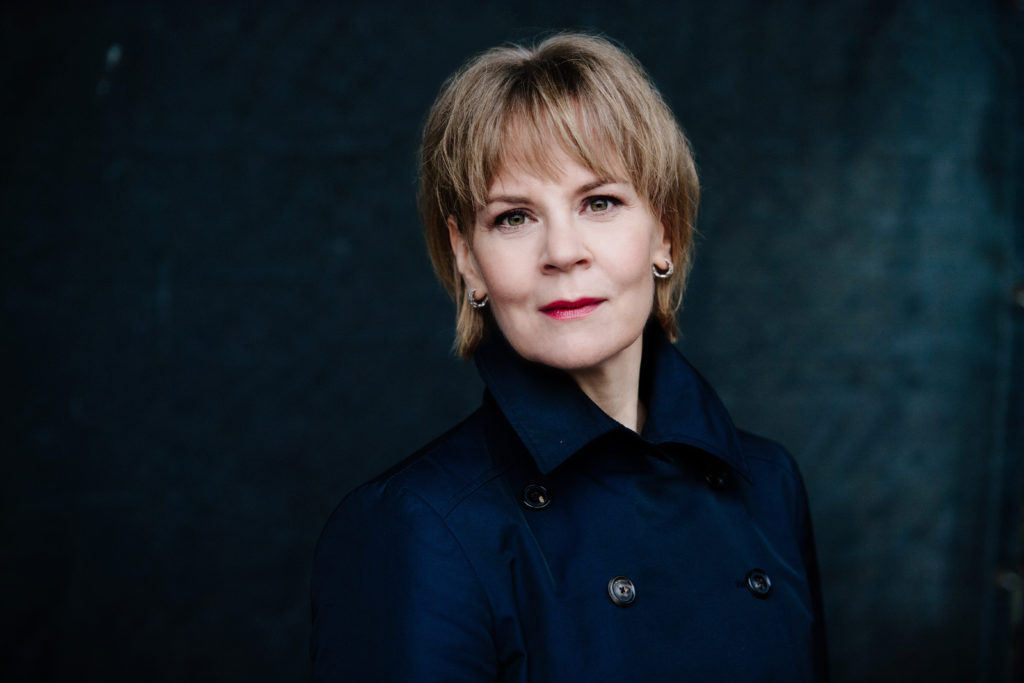
Kirill Gerstein (piano), Helsinki Philharmonic Orchestra / Susanna Mälkki (above, photo (c) Jiyang Chen)

Helsinki Music Centre, Helsinki
Broadcast Wednesday 12 May 2021, available online

Schumann Piano Concerto in A minor Op.54 (1841)
Debussy Pièce pour Le Vêtement du blessé (unknown, publ. 1925); Berceuse héroïque (1914); Les soirs illumines par l’ardeur du charbon (unknown, publ. 2001); Élégie; Étude retrouvée (both 1915)
Saariaho Vista (2019, world premiere)

Written by Ben Hogwood

One of the very few advantages of being restricted to online concerts in the last year has been the chance to enjoy music making on an international scale. This happily gave the opportunity to hear a major world premiere, a new orchestral work from Finnish composer Kaija Saariaho.

A truly international piece, Vista was co-commissioned by the Helsinki Philharmonic Orchestra, the Berlin Philharmonic, the Oslo Philharmonic and the Los Angeles Philharmonic Association. Its title page has the inscription For Susanna – presumably a dedication to the night’s conductor, Susanna Mälkki.

Although scored for a large orchestra, Vista is economical in its use of the forces. Inspired by road signs the composer saw in California – all promising great ‘vistas’ – the work has something of the West Coast about it, a shimmering heat haze and dust on the horizon. In its darker moments the twinkling of the stars, and the metropolis, can be discerned.

Vista impressed from the outset. Its first section, Horizons, began with a high oboe solo, played with very impressive control in this performance. As always with Saariaho’s music, the vivid colours in the orchestra made themselves known early on and after the initial intimacy of the wind instruments the view panned out appreciably, to an expansive picture.

Microtones and almost imperceptible changes in pitch were part of the evocation, and when the music alighted on a particular pitch the effect was striking. Saariaho’s music continuously evolved – shimmering, glistening, darkening, lightening, or casting shadow, as it did in a particularly vivid section where the metallic percussion took centre stage. Here the twinkling of glockenspiel contrasted with the spidery flurries of the strings.

saariaho

Targets, the second section, began with a blast of sound, before brass and strings were involved in dialogue – and we heard a flurry of activity from the whole orchestra, after which all the forces reached the same pitch, the view panning out again. Now the vista was nocturnal, with a shiver in the air.

Saariaho (above) was present, and in a rather moving response to the piece the orchestra and conductor applauded the composer, rather than the other way around. It is always difficult to appraise a major orchestral piece on the basis of its premiere, but on this evidence Vista is a major achievement and a piece to return to as often, Thankfully Mälkki is conducting it with the Berliner Philharmoniker on 22 May, but this was a special performance from the composer’s ‘home’ orchestra.
kirill_gerstein

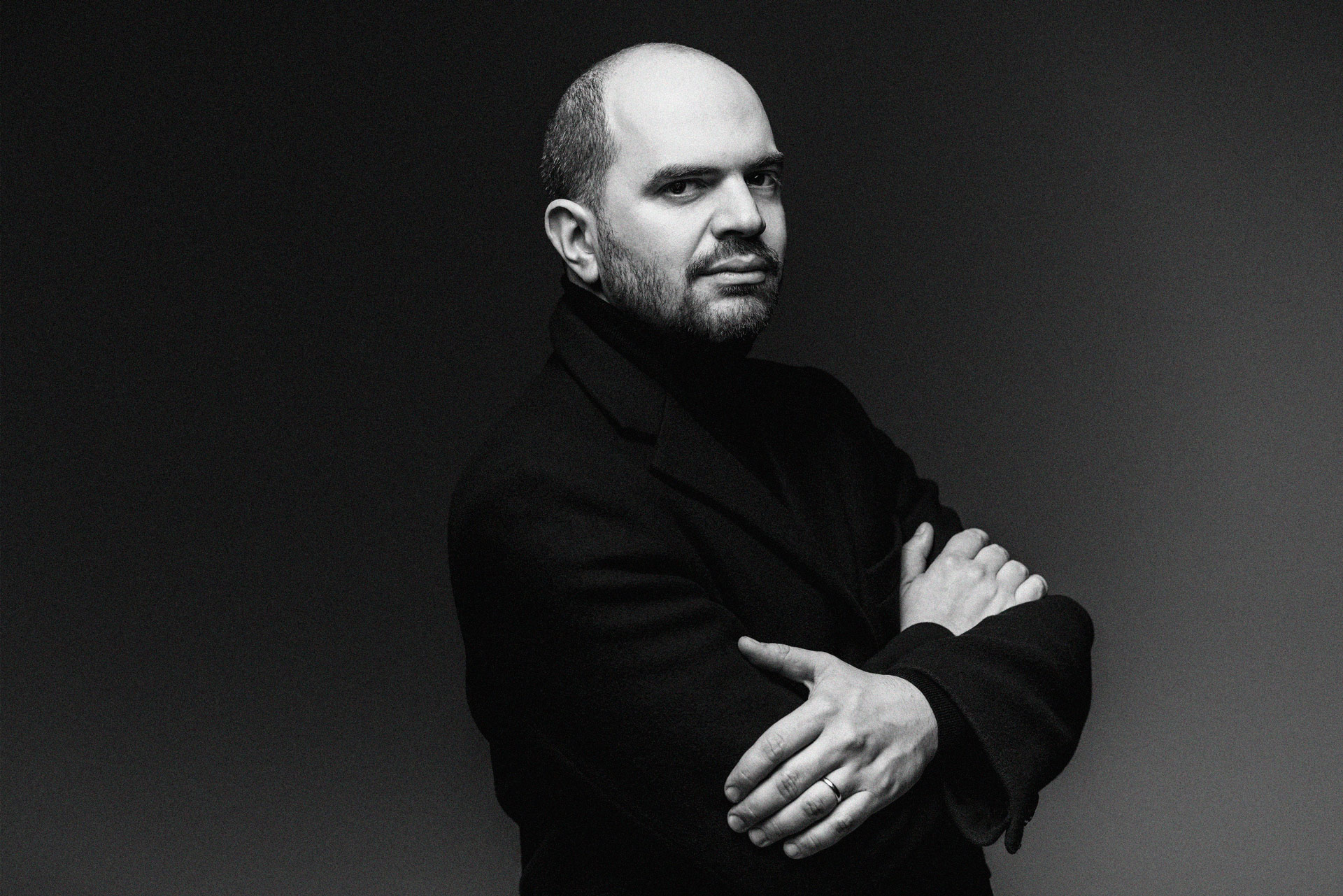
Elsewhere on the program we enjoyed a fresh, vibrant performance of Schumann’s Piano Concerto in which the soloist was Kirill Gerstein (above). He clearly enjoys the piece, and the fast movements were notable for the clarity of their phrasing and lightness of touch. The first movement had an attractive lilt and some very appealing dialogue with the orchestra woodwind, oboe particularly. The slow movement gave plenty of room for Schumann’s softer sentiments, and the finale danced attractively.

The Schumann was complemented by some well-chosen solo Debussy, Gerstein opting for five lesser-known piano works. A palette-cleansing Pièce pour Le Vêtement du blesse, a posthumous publication, was followed by the steady tread of the Berceuse héroïque, given a solemn account. Les soirs illumines par l’ardeur du charbon was next, a piece unearthed in 2001 – sounding like a previously unreleased Prélude in these descriptive hands. The profound Élégie was next, then a rippling Étude retrouvée, a seldom-heard study written prior to the book of Études in 1915.

This was a fine concert, nicely structured and pointed towards the Saariaho – which fully lived up to its billing. Catch it if you can!

You can watch the concert on the Helsinki Philharmonic Orchestra website here

For more information on the Helsinki Philharmonic Orchestra digital season, you can visit their website here
In concert – Timothy Ridout & Tom Poster: Brahms Sonatas & Schwertsik world premiere @ Wigmore Hall

ridout-poster

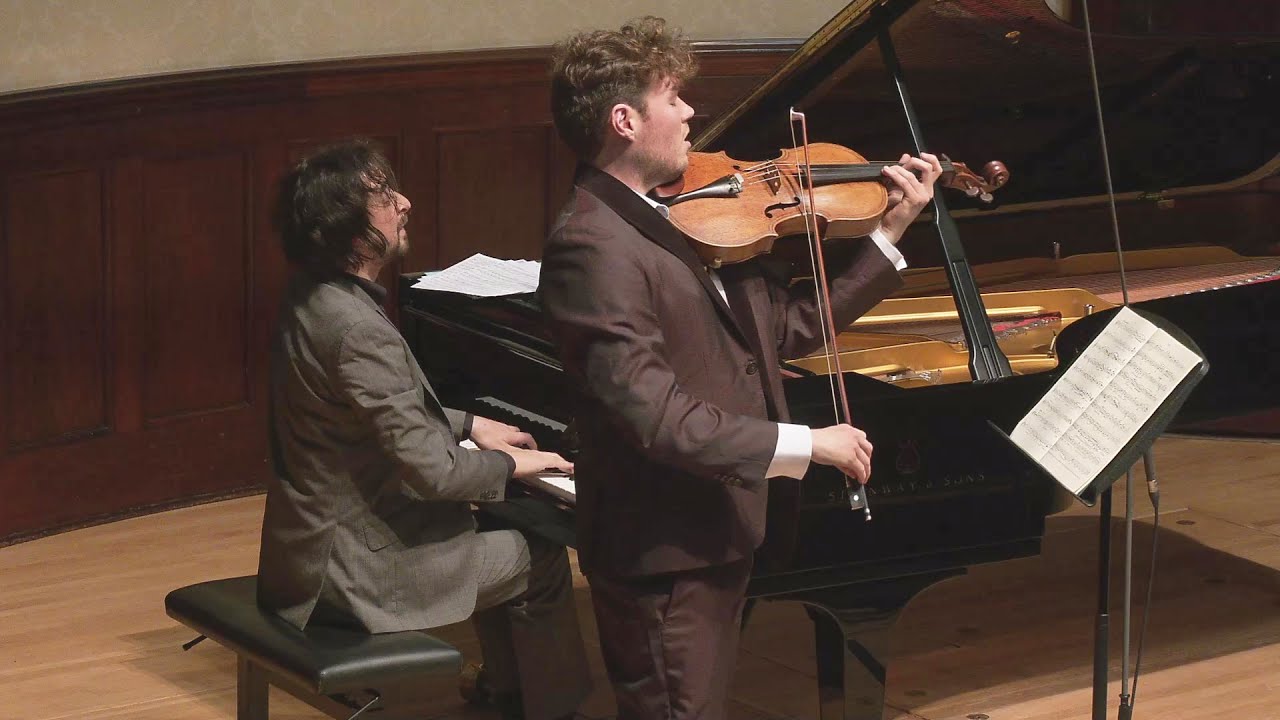
Timothy Ridout (viola), Tom Poster (piano)

Brahms Sonata for viola and piano in F minor Op.120/1 (1894)
Schwertsik Haydn lived in Eisenstadt (2021, world premiere)
Brahms Sonata for viola and piano no.2 in E flat major Op.120/2 (1894)

Wigmore Hall, London
Monday 10 May (review of the online broadcast)

Written by Ben Hogwood

This was, on paper, an ideal match of repertoire and performers – and it proved that way on screen too, as the Wigmore Hall served us the latest offering in its lunchtime concert program.

Timothy Ridout and Tom Poster are both beneficiaries of the invaluable Young Concert Artists Trust (YCAT) scheme and the BBC’s New Generation Artists program, of which Ridout is still a member. They are both plotting exciting paths as distinctive artists, and as a duo they enjoy an easy rapport, clearly relishing the music they play – an observation which can never be taken for granted!

The two sonatas published as Op.120 are Brahms’ final notes in chamber music, and indeed among his last works altogether. To have younger artists playing them is to reveal the youthful heart amid their autumnal colours, showing off their elusive qualities and winsome melodies.

Both works may have originated for clarinet and piano but work equally well through the burnished tones of the viola. Indeed Ridout proved with the first notes of the Sonata in F minor Op.120/1 that the range is ideal for his instrument, and the tone – not to mention Poster’s complementary piano line – was ideally weighted once he had fully secured the intonation.

The second movement had a cold shiver, thanks to the use of less vibrato, but grew warmer as it progressed. The genial Allegro grazioso was a treat, the finale more celebratory but enjoying its flowing second themes too.

The E flat sonata was if anything even more successful, lighter on its feet and with airy phrases and interplay. The first movement bobbed and weaved beautifully, especially when Ridout was playing in the higher register, which Poster clearly relished. The second movement literally rolled up its sleeves for a powerful outpouring, Ridout’s tone beautifully supple. By contrast the central section benefited from the burnished tones of the double-stopped viola. The finale’s theme and variations were well judged, thoughtful and mellow to begin with but then more capricious as they progressed, finishing with a thoroughly convincing flourish.

Between the two Brahms works was an interesting new piece by Kurt Schwertsik, commissioned by Ridout himself. Schwertsik is a Viennese composer now in his 70s, aware of his place in musical history but making original and intriguing music. This piece was characteristically elusive, under the intriguing title Haydn lived in Eisenstadt. Set in several movements, it posed questions and answers, but remained curiously unsettled. BBC Radio 3 presenter Andrew McGregor thought the piece had ended at one point, only for another two movements to follow – a situation we have all surely experienced as audience members! Ridout swept through the longer phrases of the penultimate movement against softly tolling chords from the piano, before the last movement threw furtive glances into the shadows amid bursts of activity, ending in a similar vein to early Schoenberg.

Poster ensured the harmonies were a point of focus throughout, hinting at exotic late Romanticism but never quite settling in that mood. This was a piece of intriguing thoughts and colours, a substantial utterance well worth hearing again. It proved the ideal complement to the poised Brahms sonatas around it – and the encore of the older composer’s Wie melodien, with which the concert softly concluded.

This concert is available to play for 30 days using the YouTube embedded link above.

Live review – Nicola Benedetti, Royal Scottish National Orchestra / Thomas Søndergård: Polska Scotland opening concert

nicola-benedetti-rsno

Nicola Benedetti (violin, photo by Martin Shields), Royal Scottish National Orchestra Thomas Søndergård

RSNO Studio, Glasgow
Broadcast Friday 16 April 2021, available online until Friday 30 July 2021

Weinberg Rhapsody on Moldavian Themes Op.47/1 (1949)
Szymanowski Violin Concerto no.1 Op.35 (1922)
Panufnik Sinfonia Sacra (Symphony no.3) (1964)

Written by Ben Hogwood

The first concert of the Royal Scottish National Orchestra’s Polska Scotland season provided a tempting mix of 20th century pieces. The season is exploring connections between the two countries, and watching the accompanying video (at the bottom of this page) reveals a number of interesting and pertinent connections, not least in the orchestra itself.

The choice of repertoire here was refreshing, too. Szymanowski’s Violin Concerto no.1 is more of a regular repertoire piece these days, but the same could certainly not be said of the inclusions from Mieczysław Weinberg, the Polish composer who found his way to Moscow in the 1940s, and Andrzej Panufnik, who fled Warsaw for London ten years later.

Weinberg’s parents moved to Poland from Moldova in 1916, and this concert began with the composer’s Rhapsody on Moldavian Themes, exploring the heritage of his parents through the development of contrasting folk tunes. In this way he was following the lead of folk-based pieces for orchestra from the likes of Kodály, Enescu and Bartók, relishing the chance to project and develop the music of their home countries through the concert hall.

The RSNO strings were appropriately deadpan at the start, their cold and muted contributions expertly controlled and matched by suitable lighting in the hall. The woodwind gave heartfelt, soulful contributions, as did the orchestra leader, violinist Sharon Roffman, and these led to thrills and spills as the RSNO powered through the faster sections, urged on by Thomas Søndergård.

Polska-scotland

Nicola Benedetti was the soloist in Szymanowski’s Violin Concerto no.1, a piece she started to play at the age of 16. Having lived with it for approximately the same length of time, she noted the increased popularity of the piece – and talked through how conductor Sondergaard’s vision of the music was slower than hers, giving her a renewed perspective.

The violin emerged rather magically from the brief but colourful orchestral introduction and dominated almost throughout, rich of tone and with extremely secure intonation. The vivid colours were an overriding feature of this performance, Søndergård achieving a sound balance between soloist and orchestra, but within the ensemble he probed the deeper shades of Szymanowski’s lyrical writing. Benedetti was passionate and driven, the searing high notes carrying easily above the orchestra and then doing their own work in ardent outpouring of the complex cadenza. Søndergård gave the piece more room than it normally receives, but this was to its benefit – and the capricious ending was beautifully weighted.

First violinist Jane Reid then recounted a Polish tour for the orchestra in 1978, which opened with Panufnik’s Sinfonia Sacra, receiving its first performance in the country. It was a daring choice from conductor Sir Alexander Gibson, given the composer’s departure for London in 1954, but Reid’s vivid account spoke of tears in the Warsaw audience. Indeed, it is hard to understand why the piece is not performed more today – given the Weinberg revival of late, the music of Panufnik is just as deserving.

This performance from the RSNO was intensely moving. The powerful opening fanfares of Vision I from the brass were razor sharp, and cut to an equally heartfelt Vision II from the strings, icy cold music of solemn countenance. This was blown apart by Vision III, where driven percussion gave way to onrushing strings the surging brass in music of dissonance and disquiet. The contrast with the final Hymn was even greater, the strings united again in a cold chorale, but gradually the music thawed and grew in power.

Sondergård expertly marshalled this section and its steady build, taking a broad tempo but controlling the unwavering intensity of Panufnik’s writing. The brass fanfares were resolute, but the final statement of the hymn had great resolve, an ultimately triumphant end – even if the dissonances remained, defiant to the finish.

This was a superb start to a season which promises much, with works to come from Lutosławski, Bacewicz and more Szymanowski – Nicola Benedetti will return to play his Violin Concerto no.2. On this evidence, all the online concerts are highly recommended.

You can watch the concert on the Royal Scottish National Orchestra website here

For more information on the Royal Scottish National Orchestra digital season, you can visit their website here

Live review – Kile Smith, Gemma Whelan, English Symphony Orchestra / Kenneth Woods: The Art of Storytelling – The Bremen Town Musicians

eso-bremen-town

Kile Smith (music), Gemma Whelan (narrator), English Symphony Orchestra / Kenneth Woods

Wyastone Concert Hall, Monmouth
Recorded 30 July 2020, available online from Friday 16 April 2021

Written by Richard Whitehouse

The English Symphony Orchestra reaches the concluding instalment of its series for virtual storytelling with one of the most appealing fairy tales – The Bremen Town Musicians, here given in a discreetly updated version which preserves its salient narrative and robust charm.

Maybe through its specifically German setting, what is among the more life-enhancing tales by the Brothers Grimm has never enjoyed the popularity of various other such stories (those who remember an enticingly illustrated version published by Ladybird in the 1960s would no doubt disagree!). The more reason, then, why it should not find renewed currency today – not least with the assistance of this online rendering, which has been vividly and imaginatively illustrated by students from Chadsgrove School in the Worcestershire town of Bromsgrove.

The story is breezily and resourcefully told by Gemma Whelan, assuming a variety of accents and intonations to differentiate those characters – donkey, dog, cat and cockerel – who defy imminent demise to become travelling musicians on a journey to Bremen that (at least in this version) they never reach. Their travails and unlikely victory over a band of rural robbers is underpinned with a score by Kile Smith whose echoes of Stravinsky, Hindemith and lesser-known but worthwhile figures such as Walter Piston is effectively geared to events at hand

The ESO musicians play with style and assurance, while Kenneth Woods ensures poise and humour – not least in several meaningful ‘wrong entries’. The overall presentation is sure to win this story new friends and, as usual, a range of sundry material enhances the experience.

You can watch the concert on the English Symphony Orchestra website here

For more information on the English Symphony Orchestra you can visit their website here

For information about Auricolae, visit Kenneth Woods’ website here

Live review – Thomas Kraines, Henry Goodman, English Symphony Orchestra / Kenneth Woods: The Art of Storytelling – Hansel and Gretel

eso-hansel

Thomas Kraines (music), Henry Goodman (narrator), Members of the English Symphony Orchestra / Kenneth Woods

Wyastone Concert Hall, Monmouth
Recorded 20 July 2020, available online from Friday 9 April 2021

Written by Richard Whitehouse

The English Symphony Orchestra reaches the penultimate instalment of its series for virtual storytelling with one of the most enduring among fairy tales – Hansel and Gretel, here given in the more abrasive version such as leaves little or no room for sentimental embellishments.

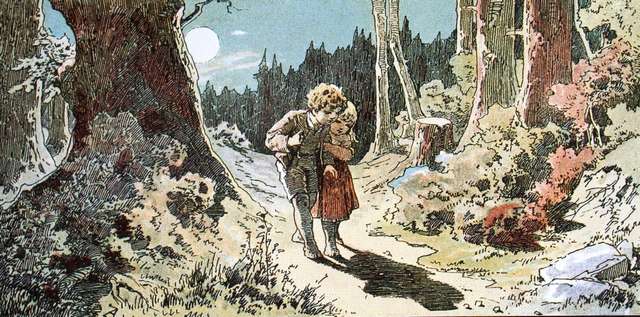
Although it has always been a parable for the playing-off of good against evil, the intensified recent concern about the exploitation of children has given this story a more ominous undertow. Little of that was emphasized here, yet the scenario remains one where the brutal corrupting of innocence is foremost; whether in the guise of the stepmother, rendered here in scarifying Irish, or that of the witch whose tendency to caricature is judged to a nicety. That neither children nor woodcutter exudes much in the way of persona may itself be significant.

As will have been realized, Henry Goodman is an animated and appealing narrator as he leads the listener through a story where incident likely counts for more than the ultimate destination. The score itself shows Thomas Kraines’s knack for moving across genres and styles with real sureness of touch, alighting on elements of German romanticism and expressionism to inflect those highpoints of the narrative. That the theme for the stepmother and the witch is a 12-note row brings a fresh perspective to a conceit whose lineage stretches back over nearly a century.

As in previous instalments the ESO musicians play with skill and sensitivity, Kenneth Woods ensuring clarity and balance even in the densest textures. The presentation is sure to provoke children of all ages and, as usual, a range of sundry material enhances the overall experience.

You can watch the concert on the English Symphony Orchestra website here

For more information on the English Symphony Orchestra you can visit their website here

For information about Auricolae, visit Kenneth Woods’ website here