In concert – CBSO Youth Orchestra plays Shostakovich with Michael Seal

michael-seal-bcsoyo

Howard Argentum (2017)
Britten
Diversions Op.21 (1940, rev. 1954)
Shostakovich
Symphony no.10 in E minor Op.93 (1953)

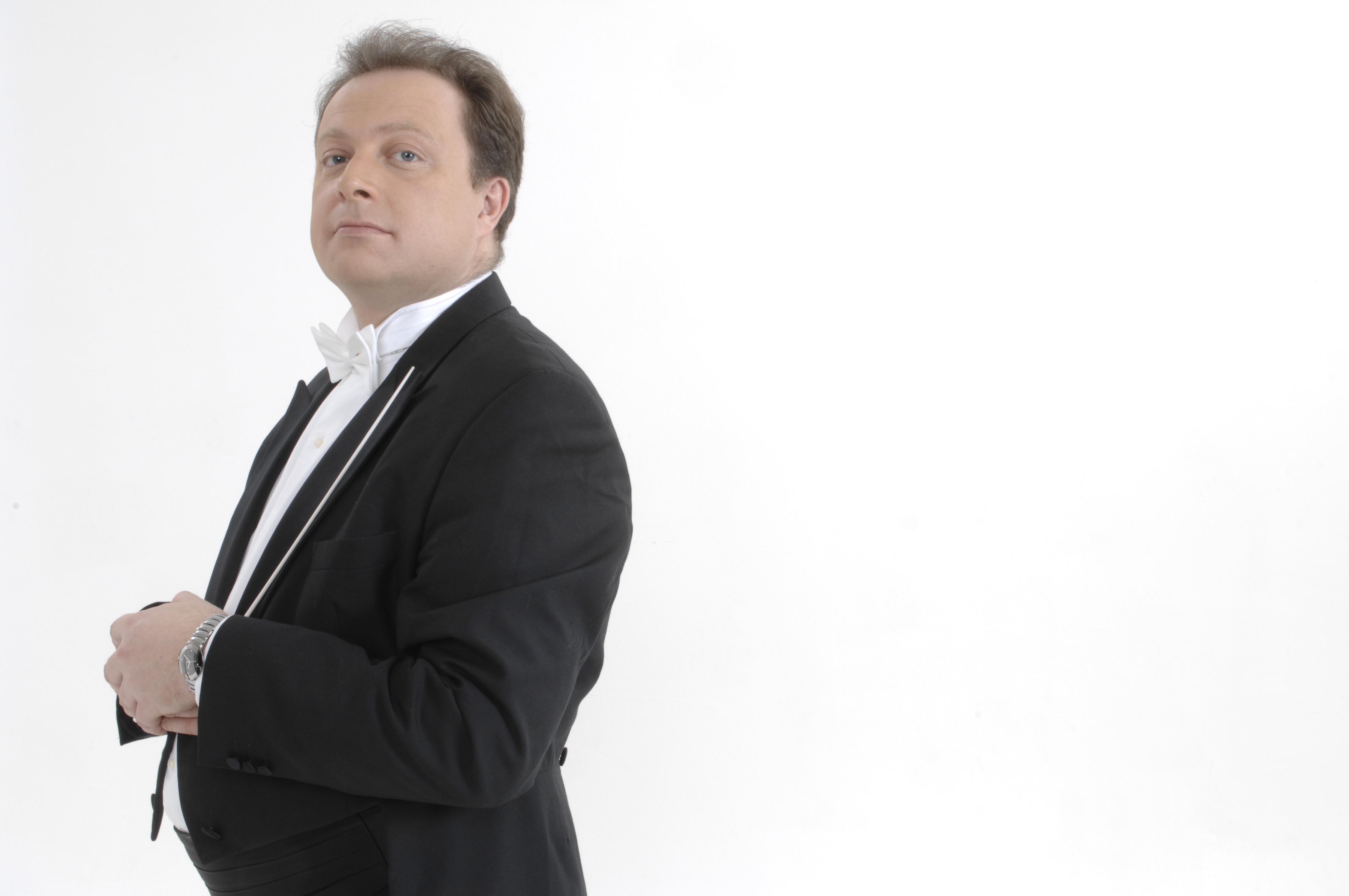
Nicholas McCarthy (piano, below), CBSO Youth Orchestra / Michael Seal (above)

Symphony Hall, Birmingham
Sunday 31 October 2021 (3pm)

Written by Richard Whitehouse

It seems quite a while since the CBSO Youth Orchestra was last in action – this afternoon’s concert playing to its strengths with a programme as featured respectively early and mature works from Britten and Shostakovich, while beginning with a recent piece by Dani Howard.

Now in her late twenties, Howard is one among several British composers who have come to prominence in the past five years. Written to commemorate the silver-wedding anniversary of two close friends, the appropriately named Argentum is in a lineage of curtain-raisers by such as John Adams or Michael Torke – drawing audibly yet productively on such post-minimalist traits in music whose unbridled animation subsides towards a mid-point stasis, before rapidly regaining its previous energy over the course of a build-up to the pointedly affirmative close.
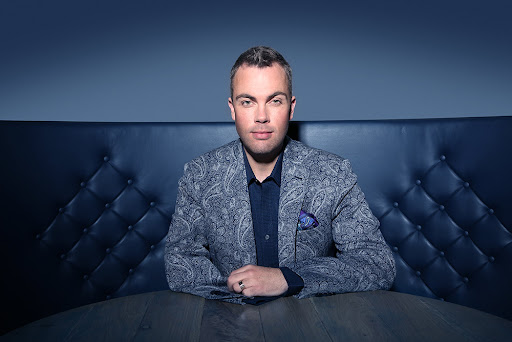
The CBSOYO evidently enjoyed making its acquaintance, then seemed no less attuned to the eclecticism pursued by Britten in his Diversions. Written for Paul Wittgenstein, who had lost his right-arm in the First World War, it takes the form of 12 variations on a theme announced by the orchestra whose faux-portentousness determines what follows. Prokofiev is the main influence (Britten could not have known his left-hand Fourth Concerto, written for but never played by Wittgenstein and unheard until the 1950s) on music of an inventiveness and verve admirably conveyed here by Nicholas McCarthy; his characterizing of each variation astutely gauged through to a scintillating ‘Toccata’ cadenza, with Michael Seal similarly judicious in the mock-solemnity of the ‘Adagio’ then a final ‘Tarantella’ of suitably uproarious humour.

Over his years as Associate Conductor of the CBSO, Seal has gained a formidable reputation in symphonic repertoire, with his account of Shostakovich’s Tenth Symphony never less than satisfying in its long-term cohesion. Not least the opening Moderato, unfolding at an almost unbroken pulse with the stark main theme powerfully wrought and its successor lacking only a degree of irony. The central development exuded palpable impetus and while the climactic arrival of the reprise could have been even more shattering, the wind-down into the musing coda was ideally judged. Taken at a swift if never headlong tempo, the Scherzo was suitably graphic in its evoking of violence (whether, or not, a ‘portrait’ of Stalin is beside the point), then the ensuing Allegretto was poised unerringly between slow movement and intermezzo.

This most intriguing portion of the work again lacked little in insight – with due credit to first horn Alex Hocknull for coming through, almost unscathed, in one of the lengthiest and most testing solos of the orchestral literature. A pity that Seal did not head straight into the finale, but his handling of its Andante introduction astutely mingled pathos with anticipation – the main Allegro itself pivoting between nonchalance and defiance through to a conclusion in which any thought of triumph over adversity was – rightly- withheld until the closing bars.

All in all, a gripping performance of a symphonic masterpiece and a fine demonstration of the CBSO Youth Orchestra’s collective prowess. The CBSO returns this Wednesday for Mozart and Mendelssohn frère et soeur, with Benjamin Grosvenor in Beethoven’s First Concerto.

Further information on the CBSO’s current season can be found at the orchestra’s website. For more on Michael Seal, click here – and for more on pianist Nicholas McCarthy, click here

In concert – Sol & Pat (Sol Gabetta & Patricia Kopatchinskaja) @ Queen Elizabeth Hall

pat-sol

Leclair Violin Sonata in C major Op.5/10: Tambourin (c1734)
Widmann 24 Duos: Valse bavaroise; Toccatina all’inglese (2008)
J.S. Bach Prelude in G major (from BWV860) (c1722)
Francisco Coll Rizoma (2017)
Domenico Scarlatti Sonata in G, Kk.305
Ravel Sonata for violin & cello (1922)
J.S. Bach 15 Two-part Inventions BWV772-86 (selection) (c1723)
Ligeti Hommage à Hilding Rosenberg (1982)
Xenakis Dipli zyia (1951)
C.P.E. Bach Presto in C minor Wq114/3 (c1768)
Kodály Duo Op.7 (1914)

Patricia Kopatchinskaja (violin), Sol Gabetta (cello)

Queen Elizabeth Hall, London
Tuesday 26 October 2021

Written by Richard Whitehouse

Combining two of the most charismatic and creative string players of their generation was such a good idea to make one surprised it had not happened earlier, but tonight the Patricia Kopatchinskaja and Sol Gabetta double-act hit the Southbank Centre in no uncertain terms.

A stomping entrée to Leclair’s Tambourin in C (a rare instance when Kopatchinskaja donned footwear) launched proceedings in arresting fashion, while Jörg Widmann’s Valse bavaroise and Toccatina all’inglese – both from his resourceful playbook of 24 Duos – allured and engaged. Bach’s Prelude in G (from BWV860) afforded a limpid breathing-space, then Francisco Coll’s Rizoma fairly intrigued with its incrementally shifting textures and ethereal harmonics – just the sort of piece, indeed, necessary for energizing the violin-and-cello medium. Kopatchinskaja admitted to disliking the arrangement of Scarlatti’s Sonata in G (Kk305) and canvassed the audience for its opinion, the response encouraging an incisive take on music whose enthusiastic response left her shaking her head in mock consternation.

The first half concluded with Ravel’s Sonata for violin and cello – much less often revived than it should be, ostensibly on account of the duo-medium, but an undoubted masterpiece when rendered with such commitment as here. Kopatchinskaja and Gabetta teased out those exquisite tonal obliquities of the Allegro, countered by the alternate brusqueness and suavity of the scherzo or distanced rapture of the slow movement; before the finale brought matters to a head with its headlong syncopation and no lack of that ‘spirit’ as indicated in the score.

A brief inclusion from Bach’s 15 Two-Part Inventions (BWV772-86) opened the second half with pointed understatement (presumably more so than the Scarlatti sonata that was originally scheduled), with the expressive poise of Ligeti’s Hommage á Hilding Rosenberg duly making way for the acerbic interplay of Xenakis’s Dipli zyia which is among the most Bartókian of the formative pieces to have found posthumous revival by this composer (who is hopefully being suitably commemorated throughout his centenary in 2022).

Kopatchinskaja and Gabetta then sat side by side for a speculative reading of C.P.E. Bach’s Presto in C minor (Wq.114 No. 3) made the more so through its being played pizzicato throughout. Interesting, too, how such an arrangement can dissolve any perceived boundary between musical epochs.

The programme reached a culmination in every sense with Kodály’s Duo, one of several large-scale chamber-works for strings on which his reputation as a composer of ‘abstract’ music rests. After a tensile account of the preludial Allegro, Kopatchinskaja and Gabetta rendered the central Adagio with sustained pathos and a timbral acuity made more so by their faultless intonation. Nor was there any lack of eloquence in the finale, its deliberate progress building a momentum that was released in the coda to heady and exhilarating effect.

Quite a concert, then, with a performance to match by two musicians who complement each other’s playing to a mutually beneficial degree. Hopefully they will be returning with another wide-ranging programme before too long. The enthusiastic audience evidently felt likewise.

For more information on the new Sol & Pat release, head to the Linn Records website

In concert – Hockley Social Club & the CBSO present: Symphonic Sessions

CBSO_2021.10_Symphonic Sessions_cr-Hannah Fathers-33

Symphonic Sessions

Hockley Social Club, Birmingham
Thursday 21 October 2021

Written by Richard Whitehouse Photos courtesy of Hannah Fathers

The City of Birmingham Symphony Orchestra’s ‘Out & About’ schedule has seen musicians playing at venues from railway stations to suburban pubs, but tonight’s Symphonic Sessions, billed as ‘‘the perfect evening for the musically curious’’, was a more ambitious undertaking.

The venue was Hockley Social Club – located closer to Newtown and an area which, with its rundown warehouses next to remnants of faded civic planning, is ripe for redevelopment of a kind encountered on the other side of Great Hampton Street. Such urban realism aside, it was an ideal setting for an event designed to appeal to the young professionals living or working in this area, and the capacity (300 or so) attendance was gratifying to club and orchestra alike. Assorted street food and designer cocktails were some of the attractions available on the night.

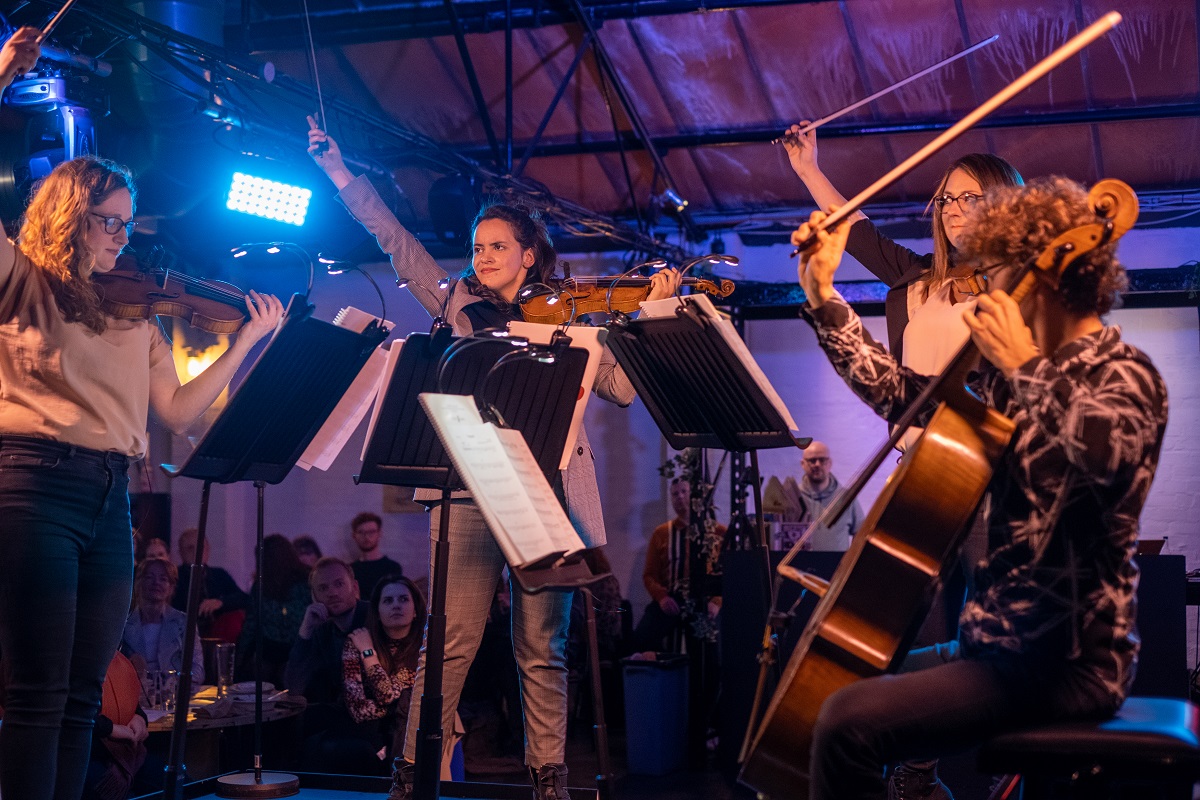
The live element consisted of two half-hour sets played by a quartet drawn from the CBSO, situated on a raised central platform, and amplified so neither visibility nor audibility was an issue. The first set enjoyed a lively start with Year of the Boar from Sufjan Stevens’s zodiacal electronica Enjoy Your Rabbit, popularized in Michael Atkinson’s arrangement for the Osso Quartet. One of the most arresting younger American composers, Caroline Shaw has written widely for quartet but, while Entr’acte provided a showcase for the musicians’ dexterity – not least cellist Arthur Boutillier – its fractured continuity tried the patience of numerous punters. Not so those teasingly ironic excerpts from Anna Meredith’s Songs for the M8 – with Sigur Rós’s evergreen Hoppípolla, as reimagined by the Vitamin Quartet, a delightful signing-off.

The inward fervency of Stevens’s Year of our Lord began a second set that touched on more Classical fare with a visceral take on the second movement of Shostakovich’s Eighth Quartet, then a lucid First Contrapunctus from Bach’s The Art of Fugue that only gained in eloquence on restarting after violinist Colette Overdijk had lost her battle with a dislodged microphone. The undoubted highlight was Bryce Dessner’s Aheym (Homeward) – a commission from the Kronos Quartet for the guitarist of The National, this is music whose propulsive energy and tensile interplay were to the fore in a performance which brooked no compromise. Violinist Kirstie Lovie and violist Amy Thomas then came into their own in excerpts from the Danish String Quartet’s folk-song anthology Wood Works, which made for a scintillating conclusion.

Either side of and in between the live music, low-key DJ sets (at least until the half-hour prior to closing) from ‘local tastemaker’ Pritt Kalsi did much to enhance the atmosphere for what throughout was a lively and appreciative audience. What proportion can be persuaded to make CBSO concerts at Symphony Hall a regular part of its fixture-list remains to be seen, though feedback on the ground was encouraging. Whatever else, the future of live events looks to be one in which listening across the spectrum of musical styles and genres has become the norm.

Good news, therefore, that Symphonic Sessions is destined not to be a one-off experiment, with the follow-up having been set for Thursday 2nd December. Whatever the line-up of musicians and music, it would seem certain that ‘‘A splendid time is guaranteed for all’’.

Further information on Symphonic Sesions can be found here. Further listening on the featured music can be enjoyed through the Spotify albums below:

Stevens:

Shaw:

Meredith:

Sigur Rós:

Shostakovich:

Bach:

Dessner:

Danish SQ:

cbso-symphonic-sessions

In concert – Jess Gillam, CBSO / Jaume Santoja Espinós: Jess Gillam’s American Roadtrip

Jess-Gillam

Gershwin Cuban Overture (1932)
Villa-Lobos
Fantasia for Saxophone W490 (1948)
Copland
Danzón cubano (1942)
Milhaud
Scaramouche Op.165c (1937/9)
Copland
Appalachian Spring – Suite (1944/5)
Barber
Symphony No. 1, Op. 9 (1935-6, rev, 1942-3)

Jess Gillam (saxophones, above), City of Birmingham Symphony Orchestra / Jaume Santoja Espinós (below)

Symphony Hall, Birmingham
Wednesday 20 October 2021

Written by Richard Whitehouse

This evening’s concert by the City of Birmingham Symphony Orchestra took a break from ‘standard’ repertoire to focus on music by composers either American or with an American focus, in a programme which rung the changes to often vibrant and always appealing effect.

A familiar radio presence, Jess Gillam has already encouraged renewed interest in the music for classical saxophone, as her contributions amply demonstrated. Little heard in his lifetime, the Fantasia by Villa-Lobos is among those more modest creations of a composer known for his (over-reaching) ambition – its three short movements drawing animated and ruminative responses from the soloist enhanced by a restrained orchestration. Swapping soprano for the alto instrument, Gillam returned for Milhaud’s Scaramouche which was no less engaging in this arrangement than the original for two pianos; whether in its incisive opening movement, soulful central interlude or its final Brazileira which could hardly fail to provoke a response from orchestra and audience – the latter evidently appreciative of such an infectious display.

The CBSO captured the spirit of both pieces, thanks not least to former assistant conductor Jaume Santoja Espinós, who had opened the concert with Gershwin’s Cuban Overture – the percussion-clad exuberance of its outer sections a telling foil to the haunting pathos of those canonic textures at its centre. Copland’s Danzón Cubano can seem irritating in its rhythmic over-insistence, but Espinós brought an unsuspected wit and subtlety to this amalgam of coy nonchalance with an orchestration recalling Stravinsky’s forays into ‘crossover’ at this time.

Latin-American traits made way for those of a Europeanized East Coast after the interval, Espinós directing the suite from Copland’s Appalachian Spring with a cohesion as brought out expressive contrasts between the various sections without these becoming too episodic. The idealization inherent in this ‘Ballet for Martha’ can hardly be gainsaid, yet the chaste eloquence of its musical content came through no less affectingly – not least as the familiar ‘Variations on a Shaker Hymn’ subsided into the serene inevitability of the final evocation.

The highlight was a welcome revival for Barber’s First Symphony, whose continuous design marries Sibelian formal precision with that unabashed emotionalism closer to Russian music from this period, with a cumulative impact to its four-in-one trajectory which was palpably in evidence. From the stark foreboding with which it begins, through the relentless impetus of its ‘scherzo’ and consoling poise of its ‘slow movement’ (felicitous oboe playing by Emmet Byrne), to the inexorable force of its closing passacaglia, this was a performance to savour.

An eventful evening, then, and was more to come with a post-concert informal performance from the quintet El Ultimo Tango, familiar from its several recordings and here providing a 30-minute overview of Astor Piazzolla for what was a – necessarily – belated tribute in the year of his centenary. Those wanting a longer selection can hear this group at CBSO Centre next February, while the CBSO returns next week for a programme of mainly French music from conductor Kevin John Edusei with Kirill Gerstein in both of Ravel’s piano concertos.

Further information on the CBSO’s current season can be found at the orchestra’s website. For more on Jess Gillam, click here – and for more on El Ultimo Tango, here. For more information on Jaume Santoja Espinós, head to the conductor’s website

In concert – Baiba Skride, CBSO / Andrew Gourlay: Rossini, Mozart, Berlioz & Prokofiev

Rossini Guillaume Tell – Overture (1829)
Mozart
Violin Concerto no.5 in A major K219 (1775)
Berlioz
Le carnaval romain, Op.9 (1844)
Prokofiev
Romeo and Juliet – Suite no.2 Op.64ter (1936)

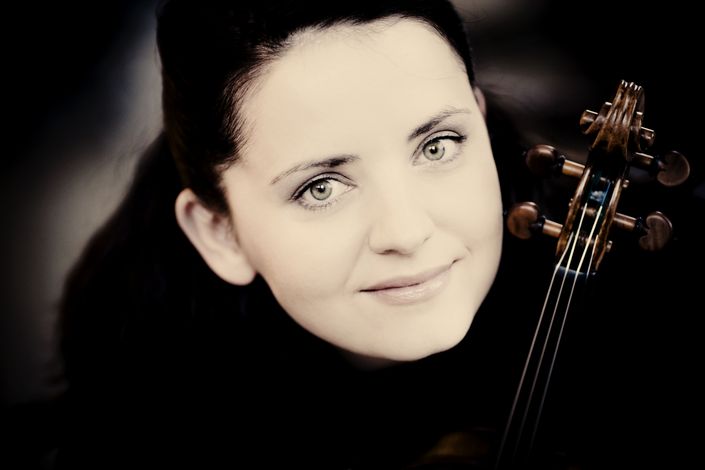
Baiba Skride (violin, below), City of Birmingham Symphony Orchestra / Andrew Gourlay (above)

Symphony Hall, Birmingham
Wednesday 13 October 2021, 2pm

Written by Richard Whitehouse; Picture of Andrew Gourlay (c) Kaupo Kikkas, Baiba Skride (c) Marco Borggreve

This afternoon’s concert by the City of Birmingham Symphony Orchestra saw an unexpected but welcome return from Andrew Gourlay (replacing an indisposed François Leleux) for this diverse programme as worked much better as a concert than it might have appeared on paper.

Its fame as a novelty item in cartoons et al can easily obscure the innovative qualities of the Overture to William Tell, last and most ambitious of Rossini’s operas, in terms of its eliding between curtain-raiser and symphonic poem; which latter aspect Gourlay emphasized in this evocative but cohesive account – whether in the ruminative calm of its opening section with the CBSO cellos eloquently fronted by Eduardo Vassallo, a scrupulously controlled ‘storm’ episode, a not unduly mawkish ‘lullaby’ then a closing galop free from Hollywood overkill.

Mozart was barely out of his teens on writing his Fifth Violin Concerto, if not the finest then certainly the most eventful of his cycle through such as the soloist’s alluring first entry in the opening Allegro with music not directly related to either of the main themes and rendered by Baiba Skride with real finesse. Equally successful was her succinct yet ideally proportioned cadenza prior to its close; after which, the Adagio had elegance without excessive sweetness. In the final Rondeau, others may have made more of that contrast between graceful lyricism and the robust humour of its central section’s stylized Turkishness, but Skride brought these into complete accord and, with Gourlay securing limpid playing from a scaled-down CBSO, this was a persuasive performance of music whose felicities can easily be taken for granted.

Formerly ubiquitous as a concert-opener, Berlioz’s Roman Carnival – the inspired recycling of music from his opera Benvenuto Cellini – launched the second half to striking effect. If the soulful introduction took a little time to settle (doubtless occasioned by a soon extinguished onstage rebellion before Gourlay’s return), what ensued was not lacking rhythmic elan or that scintillating interplay of orchestral timbres as was Berlioz’s gift to the orchestra. Effecting a tangible crescendo into the blazing peroration, Gourlay undoubtedly saved the best until last.

Ad hoc selections from Prokofiev’s Romeo and Juliet rarely provide a satisfying second half, making one of three suites the composer extracted from his ballet the more viable option. Of these the Second Suite is the best overview, and this account quickly found its stride with a visceral take on the music which opens Act Three, the grinding progress of Montagues and Capulets proving no less forceful. Juliet as a young girl exuded the right insouciance and pathos, as did Friar Laurence that of earnest authority. The lithe Dance made a telling foil to Romeo and Juliet before parting, its fraught rapture potently conveyed here, then Dance of the girls with lilies made for an appealingly wistful entrée into Romeo at Juliet’s grave with its searing anguish that only gradually subsides into expectant calm towards the close.

Gourlay had previously directed a fine account of Rachmaninov’s Third Symphony with this orchestra and the Prokofiev confirmed his prowess in Russian music. The CBSO, meanwhile, returns next Wednesday for a varied American programme with the saxophonist Jess Gillam.

Further information on the CBSO’s current season can be found at the orchestra’s website. For more on Baiba Skride, click here – and for more information on Andrew Gourlay, head to the conductor’s website