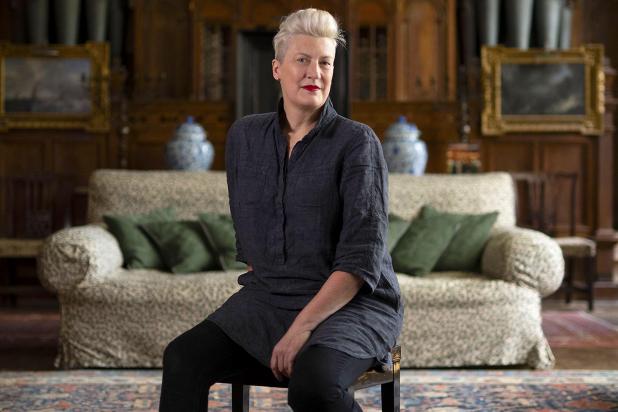
In concert – James Ehnes, CBSO / Finnegan Downie Dear: Cassandra Miller, Britten & Beethoven

©Frank-Bloedhorn-finnegan-downie-dear

Miller La Donna (2021) [UK premiere]
Britten
Violin Concerto in D minor Op.15 (1938-9)
Beethoven
Symphony no.6 in F major Op.68 ‘Pastoral’ (1807-08)

James Ehnes (violin), City of Birmingham Symphony Orchestra / Finnegan Downie Dear (above)

Symphony Hall, Birmingham
Wednesday 6 October 2021

Written by Richard Whitehouse; Picture of Frankie Downie Dear (c) Frank Bloedhorn

Tonight’s concert by the City of Birmingham Symphony Orchestra saw a first appearance with British conductor Finnegan Downie Dear, winner of the 2020 Mahler Competition in Bamberg, and a first hearing in the UK for an orchestral piece by the Canadian composer Cassandra Miller.

Currently based in London, where she is Professor of Composition at the Guildhall, Miller’s output has often drawn on pre-existing sources as are then integrated into the work at hand. Such is the case with La Donna, premiered at Barcelona earlier this year, where a group of Genoese male voices singing La Partenza da Parigi (as recorded by the redoubtable Alan Lomax in 1954) is channelled into music of intensive polyphonic activity and topped by a falsetto melodic line – the eponymous La donna. This builds to an apex as intricate in its texture as it is immediate in expression, then gradually subsides in a resonance of suffused elation. Such was the impression left by this performance, Downie Dear drawing sustained amplitude from relatively modest forces in a visceral demonstration of tension and release.

A time there was when Britten’s Violin Concerto enjoyed only a modest presence in British concert halls, though recent years have seen it taken up by leading soloists from around the world. Its edgy yet intense lyricism has a persuasive exponent in James Ehnes (above), who brought out the restless emotion of the initial Moderato – the five-note motto underlining the context of war and unrest from which it emerged. The Vivace’s rhythmic velocity and sardonic tone were no less evident, a tensile reading of the cadenza pointing up its thematic function and leading inevitably into the final Passacaglia. After a superbly shaped orchestral introduction, Ehnes characterized its variations with mounting intensity to a powerfully wrought climax – the final pages exuding a fatalistic eloquence no less affecting now than eight decades ago.

Perhaps this music’s rapt equivocation explains why it has often been programmed in recent seasons with Beethoven’s Pastoral. While by no means revelatory, the present account gave a good indication of Downie Dear’s abilities – not least his emphasis on rhythmic articulation during what was a relatively swift traversal of the opening Allegro, along with his fastidious attention to dynamics as brought the requisite focus and lucidity to the Scene by the Brook with its warmly enveloping string textures and its bird-calls deftly inflected towards the close.

The final three movements unfolded in much the same vein – the peasants lithe if arguably a little too well-behaved in their merrymaking and the thunderstorm forceful if not electrifying in response, though with a seamless diminuendo of volume and energy going into the finale. Without drawing the ultimate gravitas from its interplay of rondo and variation procedures, Downie Dear guided it surely and attentively to a ruminative coda – Beethoven transcending the incipient era of musical romanticism through the (deliberate) absence of any defining ego.

This evening’s programme is repeated tomorrow afternoon – with the Miller being replaced by Mozart’s Idomeneo overture – while the CBSO returns next week for Rossini, Berlioz, and Prokofiev under François Leleux, along with Baiba Skride in Mozart’s Fifth Violin Concerto.

Further information on the CBSO’s current season can be found at the orchestra’s website. For more on Cassandra Miller, click here – and for more information on Finnegan Downie Dear, head to the conductor’s website

In concert – Boris Giltburg plays Ravel, Schumann & Prokofiev @ Wigmore Hall

boris-giltburg

Prokofiev Piano Sonata no.6 in A major Op.82 (1939-40)
Ravel Valses nobles et sentimentales (1911)
Schumann Carnaval Op.9 (1834-5)
Ravel La valse (1920)

Boris Giltburg (piano, above)

Wigmore Hall, London
Monday 4 October 2021

Written by Ben Hogwood

This review marks your correspondent’s first visit to the Wigmore Hall for 18 months – after weekly coverage of the hall’s wonderful Monday lunchtime series. It was so good to be back! In that time it seems the core audience has changed, dropping by a couple of decades at least. This could be due to understandable caution on the part of the older members of the audience to get back to the post-Coronavirus version of concert life, but it is more likely to be the regular streaming of concerts that has lured in a much younger generation. This concert was streamed (you can watch below) and, for the record, the audience were enthusiastic and immaculately behaved – in fact there was a celebratory atmosphere.

Boris Giltburg fully inhabited the positivity. The pianist was beginning a new, two-year look at the piano music of Ravel, and if this first instalment was anything to go by, we are in for a treat. Giltburg’s first selection concentrated on the waltz in its many forms – with two very different approaches to triple time from Ravel, complemented by Schumann and Prokofiev.

It was with the coruscating tones of the latter’s Piano Sonata no.6 in A major that Giltburg began, something of a shock to unaccustomed ears with its discordant language. This underrated work is first in a trilogy of sonatas written during World War Two. The impact was immediate and confrontational, delivered with impressive force but also control. The serrated edges of the first movement were complemented by a poetic second theme, and the tension relaxed a little further for the second movement’s witty march. The right hand of the piano drew parallels with the Ballet of the Unhatched Chicks from Mussorgsky’s Pictures At An Exhibition, as the left hand ascended with a probing melody. The slow movement had a softer, yearning heart, though the dissonant harmonies lingered around the edges, before the runaway theme of the finale took hold. This could easily be a silent film soundtrack, but its cat and mouse nature was challenged and ultimately caught by the reappearance of the first movement’s angular melody. Giltburg staged a profound drama between these elements before bringing the sonata to a shattering conclusion.

Ravel’s Valses nobles et sentimentales was next, providing a relatively controlled contrast to the Prokofiev’s unwieldly ways. Giltburg enjoyed the music greatly, swaying to the rhythms as he played. His control was immaculate but the rhythmic profile of the waltzes was instinctive, holding back or pressing forward as appropriate. A tender, intimate second waltz (marked Assez lent – avec une expression intense) brought the audience in closer, while the fourth waltz (Assez animé) twinkled in the night air. Giltburg could be forceful when needed, as in the first (Modéré) and seventh (Moins vif) waltzes, and his Épilogue was exquisitely voiced.

The second half began with Schumann’s Carnaval, a tableau of portraits and personal insights completed in the composer’s mid-twenties. Schumann’s ability to paint vivid pictures at the piano is rightly celebrated, and the sketches here were rich in colour and implied detail. Giltburg relished the extravert Florestan as much as he did the reserved poetry of Eusebius, both sections portraying the personality of Schumann himself. The nagging ‘answer’ motif of Pierrot left its mark, as did the repeated notes of Reconaissance. Meanwhile Papillons quoted from one of Schumann’s first piano pieces with a slightly shy countenance. Schumann’s portraits of Chopin and Paganini were once again fascinating in their insights, while finally the triumphant Marche des Davidsbündler contre les Philistins carried all before it in a triumphant account.

As did Ravel’s La valse, which followed, though here there was a very different outcome. La valse describes the destruction wrought by the First World War, its closing bars collapsing in vivid imagery, but it could just as easily describe elements of our civilization over the last few years. Giltburg seemed to inhabit that possibility, the warm-hearted dance dropping in temperature as his account progressed, until the end when it was rumbling throughout the piano in a self-destructive whirlpool. This is a fiendishly difficult transcription, but Giltburg made it seem effortless as he inhabited each and every twist and turn, hurling out the final pages with formidable power.

After this alarming turn of events we returned to the solace of Giltburg’s first encore, a limpid Intermezzo in A major Op.118/2 by Brahms, then marvelled at the passion in his second choice, Rachmaninov’s Prelude in G# minor Op.32/12. A memorable recital, and an auspicious start to what promises to be a great series. Best experienced in person rather than online though!

You can listen to the repertoire from Boris Giltburg’s concert on this Spotify playlist, which includes the pianist’s recordings of the Prokofiev, Schumann and Rachmaninov:

For more information on Boris Giltburg you can visit his website

In concert – Dame Sarah Connolly, CBSO / Gustavo Gimeno: Humperdinck, Chausson & Tchaikovsky

gustavo-gimeno

Humperdinck Hänsel und Gretel – Prelude (1891-2)
Chausson
Poème de l’amour et de la mer Op.19 (1882-92)
Tchaikovsky
Symphony no.6 in B minor Op.74 ‘Pathétique’ (1893)

Dame Sarah Connolly (mezzo-soprano, below), City of Birmingham Symphony Orchestra / Gustavo Gimeno

Symphony Hall, Birmingham
Thursday 23 September 2021

Written by Richard Whitehouse

This afternoon’s programme (repeated from yesterday) by the City of Birmingham Symphony Orchestra saw a welcome reappearance from Dame Sarah Connolly for a relatively rare hearing, at least in the UK, of Ernest Chausson’s probable masterpiece Poème de l’amour et de la mer.

Often described as a song-cycle, Poème is closer to a scena with its unfolding over two large parts separated by an orchestral interlude. Drawing on texts by Maurice Bouchor, these evoke what is ostensibly the protagonist’s ill-fated affair but whose deeper resonance suggests more that disillusion afforded when revisiting the past. Such a trajectory could easily have resulted in indulgence or even self-pity, avoided through Chausson’s unerring formal control over his subject-matter as well as a thematic resourcefulness sustained across the near half-hour span.

Following in a distinguished lineage of mezzos (among them Dame Janet Baker), Connolly brought out the playfulness of La fleur des eaux as it conveys the burgeoning of love against a heady seascape – doubt only creeping in towards the close as the passing of a year is contemplated. This is represented by the Interlude in which first appears a theme dominant by the close, and while the opening of La mort de l’amour brings a renewed anticipation of arrival, the anguish occasioned by forgetfulness is transmuted into a brooding fatalism – the composer drawing on an earlier song for this sombre final stage. Connolly’s eloquence came into its own here, abetted by a soulful response from cellist Eduardo Vassallo among an orchestral response abounding in soloistic finesse. A powerful reading of a still underestimated piece.

Chausson lived a further six years after its premiere in 1893, whereas Tchaikovsky lived just nine days after the premiere that year of his Pathétique before his still-contested demise. Here again, there was no undue emoting thanks to Gustavo Gimeno’s firm grip over the complex formal and emotional trajectory of the first movement – not least its explosive development culminating in an anguished yet also consoling reprise. The ensuing intermezzo had charm but also a purposeful underlying tread – not least in its wistful trio, then the scherzo amassed no mean impetus through to an explosive second half whose orchestral response evinced no mean virtuosity. Heading straight into the finale, Gimeno sustained expressive tension right through to the closing bars as here faded into a silence born of resignation rather than defeat.

The close of that year brought the premiere of Humperdinck’s ‘fairy-tale’ opera Hänsel und Gretel – then, as now, the work by which this undervalued composer is best remembered and whose prelude encapsulates the essence, though not the totality, of the drama while proving equally effective as a concert-overture. Gimeno paced this unerringly, thereby allowing its animated central phase to merge unobtrusively out of then back into the confiding warmth either side. At least one major work written in 1893 can be said to have a ‘happy ending’.

Next week’s concert brings pieces from very different eras – Brahms’s First Symphony and Rachmaninov’s Third Piano Concerto being preceded by another of the CBSO’s Centenary Commissions, an evidently celebratory overture by Mark-Anthony Turnage called Go For It.

For more information on next week’s concert, click here for tickets. You can find information on the new CBSO season here, and for more on Symphonic Sessions click here

In concert – Carolyn Sampson, Anna Lapwood, CBSO Chorus, CBSO / Kazuki Yamada – Poulenc Gloria & Saint-Saëns ‘Organ’ Symphony

Yamada_Kazuki_5142_c_Zuzanna_Specjal

Tchaikovsky Solemn Overture ‘The Year 1812’ Op.49 (1880)
Poulenc
Gloria FP177 (1959)
Fauré
Messe Basse IGF50 (1881 rev.1906)
Saint-Saëns
Symphony no.3 in C minor Op.78 ‘Organ’ (1886)

Carolyn Sampson (soprano), Anna Lapwood (organ), CBSO Youth Chorus (Julian Wilkins, director), CBSO Chorus, City of Birmingham Symphony Orchestra / Kazuki Yamada (above)

Symphony Hall, Birmingham
Thursday 16 September 2021

Written by Richard Whitehouse
Photo credits Zuzanna Specjal (Kazuki Yamada), Marco Borggreve (Carolyn Sampson), Kirsten McTernan/BBC (Anna Lapwood)

It was no doubt coincidental that this opening concert of the City of Birmingham Symphony Orchestra’s new season was typical of those programmes which one-time chief conductor Louis Frémaux gave with this orchestra during the mid-1970s, in its featuring two of his French specialities.

Back then, Poulenc’s Gloria could still be regarded as contemporary music, though its adept borrowing from the Stravinsky textbook married to the French composer’s insouciant brand of expressivity is arguably more widely accepted now than in that often style-conscious era. It duly responded to Kazuki Yamada’s keen impetus in the opening Gloria then the bracing syncopation of Laudamus te or a joyously animated Domine Fili. Carolyn Sampson (above) was an elegantly detached soloist in Domine Deus, opening-out emotionally in the Agnus Dei whose inward ecstasy was unerringly conveyed. Yamada elided deftly between the surging energy then calm resignation of the final Qui sedes; here, as throughout, the CBSO Chorus bringing supplicatory warmth to music it has been associated with almost since its founding.

Saint-Saëns’s Organ Symphony was a familiar item at CBSO concerts during the Frémaux era and one that the present-day orchestra tackled with no less alacrity. Yamada was clearly (and rightly) intent on stressing its symphonic cohesion – drawing ominous expectancy from the first half’s Adagio introduction then securing a powerful momentum in the main Allegro, before the organ’s hushed entry for a chastely eloquent slow movement. There was no lack of incisiveness or humour in the second half’s scherzo, not least its scintillating passagework for piano duet, but also purposeful intent as segued directly into the finale with its indelible main theme and its methodical build-up to an electrifying peroration. Here, too, Anna Lapwood’s (below) subtle choice of registration underlined motivic resourcefulness more than gestural brilliance.

In between these works, opening the second half, Fauré’s Messe Basse enjoyed relatively rare revival (at least in the concert hall). Initially a collaboration with André Messager, Fauré later essayed a complete setting of what is a Missa brevis (thus omitting the Gloria and Credo) for female voices and which sounds no less apposite when rendered, as here, by young singers. The CBSO Youth Choir summoned a poised detachment under the assured guidance of Julian Wilkins, abetted by Lapwood’s thoughtful accompaniment in this modest yet appealing piece.

One aspect of this programme that Frémaux would not have opted for was to commence with Tchaikovsky’s 1812, though few would surely dissent given the all-round focus of Yamada’s conception. Not least when the CBSO Chorus added its yearning tones to the opening section, returning towards the close for an emotive rendering of ‘God Save the Tsar’ to cap an already resplendent apotheosis. Tubular bells and Mahler-type mallet more than compensated for the absence of canon et al when this piece is trotted out at the end of a ‘greatest hits’ assemblage.

It was indeed fortuitous that Yamada open this season given his recent appointment as Chief Conductor of the CBSO from April 2023. He returns in due course, while next week brings Sarah Connolly for a rare hearing for Chausson’s rapturous Poème de l’amour et de la mer.

This concert will be repeated on Saturday 18 September at Symphony Hall – click here for tickets. You can find information on the new CBSO season here, while for more on Kazuki Yamada you can visit the conductor’s website

In concert – Birmingham Contemporary Music Group: Mark-Anthony Turnage

Mark-Anthony-Turnage

Pre-Concert Event:
Ma Xiao-Qing Back to the Beginning (2021)
Skempton Heinen Skizzen (2021) [BCMG Commission: World premiere]
Colette Overdijk (violin), Ulrich Heinen (cello)

Concert:
Turnage This Silence (1992)
Alberga On a Bat’s Back I do Fly (2000)
Saunders Stirrings (2011)
Turnage Concertino for Clarinet and Ensemble (2020) [BCMG commission: World premiere]

Jon Carnac (clarinet), Birmingham Contemporary Music Group / Thomas Kemp

CBSO Centre, Birmingham
Sunday 12 September 2021

Written by Richard Whitehouse

Birmingham Contemporary Music Group began its new season with a concert centred around music from Mark-Anthony Turnage, and what should have been a premiere to mark his 60th birthday last year but which still left a favourable impression however belated its emergence.

First came an earlier Turnage piece, This Silence drawing clarinet, bassoon, horn and string quintet into an intensive dialogue whose opening Dance built up a fair momentum that the ensuing Dirge channelled towards an eloquent if by no means unruffled set of variations as found just tentative closure. Three decades (and a brief Uli fanfare) later, Concertino exudes a far more relaxed aura, doubtless occasioned by its being a tribute to clarinettist (and fellow sexagenarian) Jon Carnac – his artistry to the fore in the playful Study in Fifths and incisive Carnac with its ingenious workout on the soloist’s name. In between, a soulful Romanza afforded contrast but if this and the final Sad Soliloquy found Turnage’s cool-jazz leanings at their smoothest, the alluring interplay of clarinet and ensemble was no less appealing for it.

In between these works came, firstly, a timely revival for Eleanor Alberga. On a Bat’s Back   I do Fly takes its cue from Ariel’s final song in Shakespeare’s The Tempest for music whose fluid contrasts of motion and expressive force, ably drawn into a cohesive whole, brought an agile response from BCMG – not least percussionist Julian Warburton. Appreciably different was Stirrings, the third in a sequence of ‘‘quiet and fragile collage compositions’’ by Berlin-based composer Rebecca Saunders, which took extracts from Samuel Beckett as the starting-point for an evocative soundscape whose simple yet effective spatial disposition – woodwind being situated around the gallery, with strings and piano spread across the platform – audibly enhanced the succession of echoes and resonances informing this frequently intangible score.

The pre-concert event (essentially the first half, given the interval which followed) brought a welcome further hearing of Ma Xiao-Qing’s Back to the Beginning, arguably the most striking of the ‘Soliloquys and Dialogues’ series written for BCMG musicians during the pandemic – violinist Colette Overdijk eliding between some vividly rhetorical passagework and spoken interpolations with a confidence borne of familiarity. Ulrich Heinen then gave the premiere of Heinen Skizzen, a miniature wholly typical of Howard Skempton in its deceptive simplicity.

This latter piece ably served its purpose of honouring Heinen’s retirement from BCMG after 35 years of commitment to the ensemble and its music-making. Not a few listeners (including the present writer) fondly recall his cycle of Bach’s Cello Suites given at St. Paul’s, Hockley in the late 1980s, with his subsequent recordings of the initial five of these – placed within a stimulating contemporary context – well worth investigating on the Métier Sound and Vision label. Hopefully his retirement will not preclude the occasional reappearance with BCMG.

Back to the present, this evening’s main concert is being repeated at West Malling in Kent on September 26th, with BCMG’s subsequent recitals in Birmingham and Bristol on November 12th and 13th. A full programme of activities for the 2021/22 season hopefully (!) lies ahead.

You can find information on further BCMG activities here, while further information on Ulrich Heinen’s Bach can be found at the Divine Arts website