Wigmore Mondays – Ruby Hughes, Natalie Clein & Julius Drake: Works for soprano, cello & piano

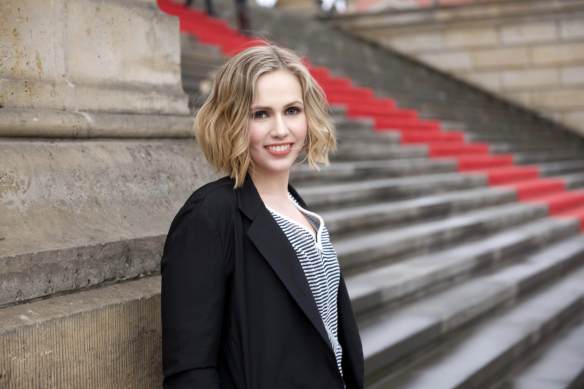
Ruby Hughes (soprano, above), Natalie Clein (cello), Julius Drake (piano, both below)

Wigmore Hall, Monday 9 March 2020 (lunchtime)

You can listen to this concert on the BBC Sounds app here (opens in a new window)

Review and guide by Ben Hogwood

A fascinating hour of music for three instruments not often linked – soprano, cello and piano. Its imaginative programme comprised music by six composers from three different centuries using four languages! It made for a very satisfying whole.

Kodály’s single-movement Sonatina for cello and piano (1:41 on the radio broadcast) began the program. This is a work with which Natalie Clein and Julius Drake are very familiar, having recorded it for Hyperion in 2009, and they immediately found its expressive core. The Sonatina was initially intended for a Sonata the composer finished in 1909, but it happened to work particularly well on its own, and was completed later. Its colourful music – which has parallels to Debussy’s own Cello Sonata – is rich in melodic and harmonic content. Free in form, it speaks directly of the composer’s Hungarian heartlands. Clein’s tone was sumptuous in this performance and Drake’s piano exemplary, the two plotting a convincing course for the work.

This was followed without a break by three of John Tavener’s 6 Akhmatova Songs, written for soprano Patricia Rozario and cellist Steven Isserlis in 1993. In effect the cello is singing here too, its wordless line providing an otherworldly introduction for the third song of the six, Boris Pasternak (10:45). Clein’s rich sound was the ideal foil for the clarity of Ruby Hughes’ soprano. Couplet (12:48) was immediately more agitated, the gruff cello adopting a more questioning slant as it helped describe the poet’s suspicion about praise of her own work. Hughes, too, was more penetrating in her delivery. Finally Dante (14:23) grew outwards from the start, its expressive line shared between singer and instrumentalist.

Deborah Pritchard’s short but powerful Storm Song (16:46), a setting of text by Jeanette Winterson, was the last part of this unbroken first sequence. Premiered almost exactly three years ago, it was led by Hughes’ wide ranging but beautifully shaped melodic lines, soaring above the sinuous cello and piano as they descended into a powerful maelstrom at the song’s heart.

Debussy’s Chansons de Bilitis were next, three heady settings of words by Pierre Louÿs, initially claimed to be erotic works from Ancient Greece. They were in fact the poet’s own construction, a fact Debussy presumably knew. La flûte de Pan (23:02) immediately transported the listener to a sultry outdoor setting and a lovers’ tryst, given appropriately chromatic settings by the composer. Julius Drake provided a rich tapestry in Debussy’s piano writing, and the humid setting was enhanced by the slow, tolling bells of the introduction to La chevelure (25:50) Hughes, now lower in her range, cast the spell. Le tombeau des naïades (29:16) closed this deliberately elusive trio, and we were left feeling as though we were all in on a rendezvous that was not supposed to be happening!

On the palmy beach is a commission from Kings Place for Judith Weir, completed in 2019 for these three performers and watched here by the composer herself. A cycle of four themed songs, it takes encounters with the sea and its inhabitants as inspiration, setting four very different poems by Wallace Stevens, Kathleen Jamie, Norman McCaig and Emily Dickinson. Weir has blogged on how she initially intended to keep the two instruments in step with each other, but how it became ‘much more alluring to liberate the cello’. Presumably for copyright reasons, the text for only one of the four poems (the Dickinson) could be printed, which made the text more difficult to follow in spite of Hughes’ wonderful singing. Yet there was a great deal of communication through the music, for which Clein and Drake were equally responsible.

Clein soared towards the heights in the prologue to the setting of Stevens’ Fabliau of Florida (34:30), where foam and cloud are one, and gave a full-throated epilogue too. Weir’s use of the cello to depict a jellyfish in Jamie’s The Glass-hulled boat (38:23) was uncanny, humorous and strangely touching, the agile lines dovetailing with Hughes’ own words. Norman McCaig’s Basking Shark (42:08) was next, the broad cello line a counterpoint to Hughes’s vivid storytelling and only latterly joined by the piano. Finally the setting of Dickinson’s I started Early – Took my Dog – (656) (46:13) was compelling, the sea toying with the author before ultimately opting not to catch her up.

To conclude a unique concert we heard Schubert’s Auf dem Strom (50:57), written for Beethoven’s memorial a year after his death in 1828 and containing a quotation from the Eroica Symphony. Setting the poetry of Ludwig Rellstab, it was written for soprano with horn and piano accompaniment, the composer later adding an obbligato cello was just as valid instead of the horn. This was to our advantage, for it enabled Natalie Clein to project the phrases beautifully, setting the scene for Hughes’ subtly wrought grief. With eloquent playing from Drake, this felt rather like the slow movement of a Schubert piano trio, but with words – expressive and touching.

Repertoire

This concert contained the following music (with timings on the BBC Sounds broadcast in brackets):

Kodály Sonatina for cello and piano (1922, published 1969)
Tavener Akhmatova Songs (1993) (excerpts) (10:45)
Pritchard Storm Song (2017) (16:46)
Debussy Chansons de Bilitis (1897-8) (23:02)
Weir On The Palmy Beach (2019) (34:30)
Schubert Auf dem Strom D943 (1828) (50:57)

Further listening & viewing

The works by Deborah Pritchard and Judith Weir have not been recorded yet, but you can hear available recordings of the works by Kodály, Tavener, Debussy and Schubert on the following Spotify playlist:

References to Natalie Clein and Julius Drake’s Kodály recordings of 2009 were unfortunately missed from the Wigmore Hall program. You can hear preview clips of their collection, including the Sonatina on the Hyperion website

The most recent collection of music by Judith Weir comes highly recommended. Airs from Another Planet is a collection of songs and chamber music, released on the enterprising Delphian label:

Meanwhile the music of John Tavener continues to enchant in a lasting way. While awareness of the composer centres all too often around his piece for cello and orchestra, The Protecting Veil, this collection of works for cello from RCA – nominated for the Mercury Music Prize in 1997 – has aged very well. It includes all six of the Akhmatova Songs, performed by dedicatees Patricia Rozario and Steven Isserlis:
Wigmore Mondays – Lise Berthaud & David Saudubray: Schubert & Brahms sonatas

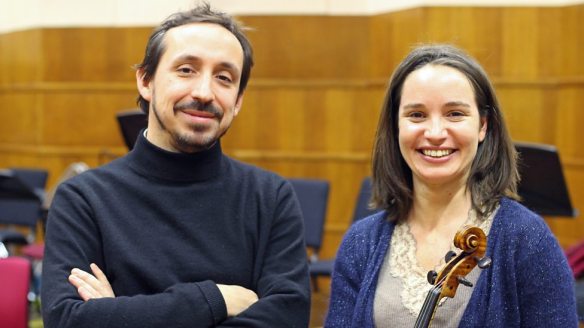
Lise Berthaud (viola), David Saudubray (piano)

Wigmore Hall, Monday 2 March 2020 (lunchtime)

You can listen to this concert on the BBC Sounds app here (opens in a new window)

Review and guide by Ben Hogwood

Neither of the two principal works in this BBC Radio 3 Lunchtime concert originated as viola pieces, but both have become repertoire staples for the instrument, the warmth of the Schubert Arpeggione Sonata and the sage experience of Brahms’s First Clarinet Sonata being ideal vehicles for its silvery tone.

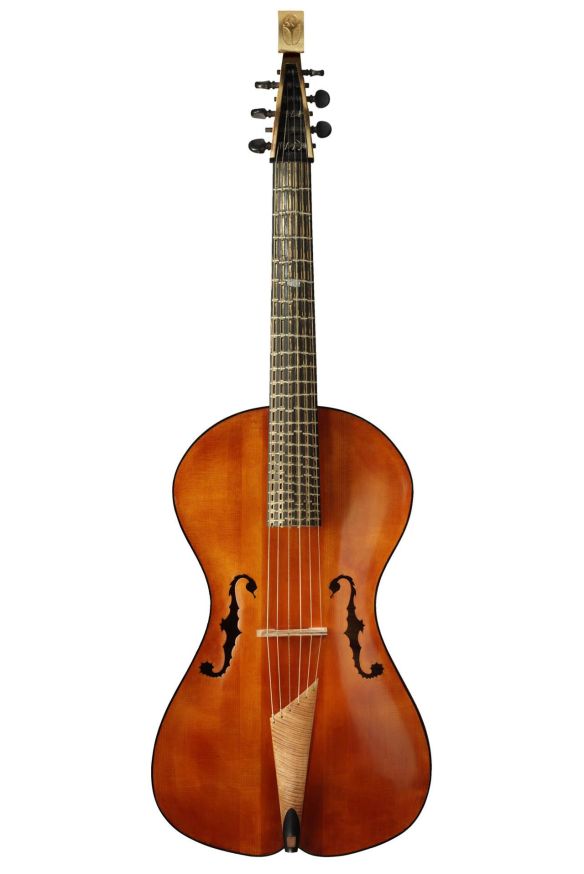
The Schubert is an especially unusual case, being the only prominent piece written for the arpeggione. This was an instrument with six strings and frets like a guitar, which was bowed and held between the knees.

Though it did not catch on as an alternative to the cello or the viola, Schubert wrote a substantial piece for a friend of his who played it. Because of the practicality of performing the work it was not until 1867 that it was finally published, with the realisation that it transcribes ideally for either cello or viola with piano accompaniment, the melodies lying under the fingers with deceptive ease.

The Arpeggione Sonata is a largely happy work, though it begins lost in thought (from 2:42 on the broadcast link). This was a measured intro from David Saudubray but as the first movement progressed the songful tone of Lise Berthaud’s viola took over, the pair enjoying the spring in the step of the faster music as though they were venturing out to dance. There was a really nice passage around the 8:38 mark, the viola using pizzicato to accompany the piano.

The second movement Adagio (14:28) explored more tender thoughts, the piano’s rocking motion suggesting the profile of a lullaby, especially with Berthaud’s soft musings above. However it was not long before we were straight into the Allegretto finale (18:13), the players investing more urgency until we arrived back at the dance (19:31), Schubert unable to resist setting the players on the floor once again. This good humour continued until the bright ending.

Brahms’s first contribution to the viola and piano repertoire is a very different animal, being from late in his career. Having decided to finish as a composer in 1890 it was something of a surprise when Brahms, having rid himself of the pressure of a Fifth Symphony, found inspiration in the clarinet. He wrote a Trio, Quintet and two Sonatas for the clarinettist Richard Mühlfeld, but it was soon brought to his attention that the Trio and both Sonatas transcribed very easily for viola – and those arrangements were made with his blessing.

As Lise Berthaud showed, the profile of Brahms’ melodies in the Sonata in F minor Op.120/1 are ideal for the instrument, the wide range of the first movement (29:07) easily under her fingers. The sweep of this melody and its subsequent development was impressive, as was the graceful second theme, with just the occasional slip from Saudubray in Brahms’s more congested piano writing. The controlled but expressive Andante was delightfully played (37:14), its roots clearly in song. A lilting Intermezzo was third (42:10), both players finishing each other’s musical sentences as equals, the music itself like a breeze in the branches of an old tree. The fourth movement (46:07), marked Vivace, threw caution away, with a peal of bells from the piano leading to a flowing and good spirited exchange, prone to the odd outspoken burst from the piano. Here was proof that the older Brahms still had the enthusiasm and musical vitality of his youth.

Repertoire

This concert contained the following music (with timings on the BBC Sounds broadcast in brackets):

Schubert Arpeggione Sonata in A minor D821 (1824) (2:42)

Brahms Viola Sonata in F minor Op.120/1 (1894) (29:07)

As an encore we had a lovely piece from Frank Bridge, the Berceuse (52:40), whose rocking motion was evident in Saudubray’s sensitive piano playing, the ideal foil to Berthaud’s velvety tone.

Further listening & viewing

The music from this concert can be heard in the playlist below, with versions of the Schubert and Brahms recorded by Berthaud herself:

As alluded to in the review, late Brahms works particularly well for the viola, as this collection shows – with both sonatas and the trio for viola, cello and piano coupled together:

Frank Bridge wrote some winsome music for his first instrument, collected here by the viola player Louise Williams and pianist David Owen Norris, joined for three songs by mezzo-soprano Jean Rigby:

Wigmore Mondays – Meta4: String Quartets by Fanny Mendelssohn & Bartók

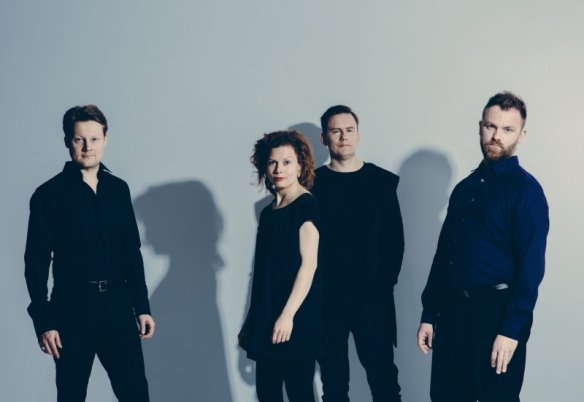
Meta4 [Antti Tikkanen, Minna Pensola (violins), Atte Kilpeläinen (viola), Tomas Djupsjöbacka (cello)]

Wigmore Hall, Monday 17 February 2020 (lunchtime)

You can listen to this concert on the BBC Sounds app here (opens in a new window)

Review and guide by Ben Hogwood

A pleasingly varied program from the Finnish string quartet Meta4, not least because it gave the Wigmore Hall and BBC Radio 3 audience a chance to hear Fanny Mendelssohn’s String Quartet, many undoubtedly experiencing the piece for the first time.

Often overshadowed by her brother Felix Mendelssohn’s musical output, Fanny was clearly a highly accomplished composer in a time when women were not encouraged to follow such musical disciplines. Only now is the quality of her music fully revealed, and this String Quartet stands side by side with the seven completed works of her brother. This one, as its composer freely admits, stands in the shadow of the late quartets of Beethoven.

The work’s dimensions are relatively unusual, pointed towards the third movement by two relatively short movements, slow and fast respectively, and it spends a lot of time in C minor as well as the ‘home key’ of E flat major, creating a tension between darker thoughts and sunnier climes. There is an enjoyable disregard for convention in the slow first movement (from 2:41 on the broadcast), with a broad and quite free approach that Meta4 have fully under their wing, the three standing players swaying and moving around the stage in response to the music.

While this could have been off putting there was no doubting their commitment and involvement, ensuring the first movement Adagio was thoughtful and profound. The following Allegretto (6:55) was quite wary initially, its C minor fluttering speaking of unease, but its central section scurried forward with an energetic fugue started by Atte Kilpeläinen’s busy viola (from 8:01).

The Romanze (10:57), beautifully played, was back in C minor but grew to be the centre of the performance, the soft heart of the movement becoming something really substantial and emotive in this performance. Meanwhile the spirited and full bodied finale (18:18) signed off in a lively fashion, powering forward through unison from viola and cello to a headlong sprint for the finish. Occasionally the intonation was a little off in the upper reaches of the violin line, but this was otherwise a very fine performance.

Bartók’s cycle of six string quartets rank among the very finest achievements in the form, and are rightly a cornerstone of any aspiring group’s repertoire. The First is the longest, in keeping with his earlier works as displaying deep Romantic-inspired passion but changing the musical language, finding a more individual voice as it strays further from tonality. The work came after several discarded attempts in the string quartet form, suggesting Bartók knew already that this would be one of his primary means of expression – and is regarded by many commentators on the composer as the work where his mature style arrives.

Much of the passion in this case was invested by the composer in a relationship with the young violinist Stefi Geyer, dedicatee of the Violin Concerto no.1, and the quartet is effectively a detailed account of their relationship and its ultimately tragic ending. That said, it is effectively a transition from the darkness of the breakup to the light and positivity of what might lie ahead.

Set in three substantial movements, this work often sounds as though there are more than four instruments playing, thanks to the use of multiple stopping (playing more than one note at a time on an instrument).

The first movement, described by Bartók as a ‘funeral dirge’, begins in shadow (26:39) but grows gradually in expressive intent. The quartet stay largely together in their outpouring, though a striking change of emphasis occurs at 31:04 when the cello takes on a drone-like figure. The music is briefly more assured, before dropping back to more threadbare, muted sounds.

The sorrowful first movement is effectively an introduction to the second (35:43) which pulls away from the slow tempo and starts noticeably to look up and outward. The textures become fuller, the dialogue between instruments is much more pronounced and the rhythmic definition starts to make itself known, as though Bartók wants to incorporate more of the traditional music around him. There are still pauses for reflection, but essentially the mood is one of grit and determination.

The third movement (46:06) is marked Allegro vivace – a real sign that the composer wants to get on with things. The cello takes up the mantle, its weighty dialogue with the viola inspiring full-bodied ensemble passages and more obviously folky asides.

The musical language flits between tonal statements, with bold tunes, and sections of music with a much less obvious centre. At 50:42 the music retreats, the quartet together but murmuring confidential asides to each other. The music builds and the statements become wilder and more sweeping. There are big chords from 55:49 where the sound could perhaps be bigger…but then Meta4 are saving themselves for a final push, finishing with a wonderfully robust and rustic chord.

As a side note, it was refreshing to see Meta4’s colourful attire for this concert, brightening up a dull February lunchtime! There need be no rules for dress in classical music like this, and it was good to see the quartet wearing what they felt comfortable with.

Repertoire

This concert contained the following music (with timings on the BBC Sounds broadcast in brackets):

Fanny Mendelssohn String Quartet in E flat major (1834) (2:41)

Bartók String Quartet no.1 (1908-9) (26:39)

Further listening & viewing

The music from this concert can be heard in the playlist below, which includes Meta4’s own recording of the Bartók from 2014:

It has taken an awful long time for the music of Fanny Mendelssohn to break through to anywhere near the centre of classical repertoire – which is unforgivable really, given how good it is. The playlist below collects her Piano Trio and Piano Quartet, bisected by a Piano Sonata in C minor:

Bartók, meanwhile, is an ever-present as one of the 20th century’s musical innovators. The string quartets form the backbone of his career, and the cycle by the Takács Quartet is certainly one of the finest:

You can see details of Meta4’s Bartók release here:

Wigmore Mondays – Daniel Müller-Schott & Annika Treutler: Dvořák, Webern & Franck

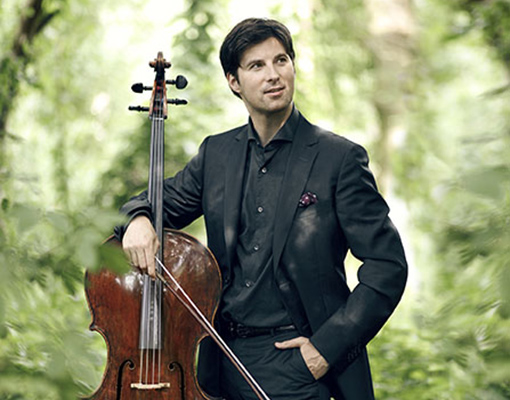
Daniel Müller-Schott (cello, above), Annika Treutler (piano, below)

Wigmore Hall, Monday 17 February 2020 (lunchtime)

You can listen to this concert on the BBC Sounds app here (opens in a new window)

Review and guide by Ben Hogwood

There is so much original music for cello and piano dating from the 19th century that there is a danger of feeling short changed in a concert when presented with music arranged from a different instrument. Yet such was the conviction with which Daniel Müller-Schott and Annike Treutler played these pieces that it was possible to forget those thoughts and enjoy the music, pure and simple.

It also showed just how flexible some of the original music is. Dvořák’s 4 Romantic Pieces began as works for string quartet but their songful nature gives them just as much expression in their better known arrangement for violin and piano, and then in Müller-Schott’s own arrangement here. The first piece, a Cavatina, is a lyrical treat (2:36), while the second has a comparatively stern expression (5:44), ending with imaginative use of harmonics from the cellist. The third and most lyrical of the four pieces (8:28) returns to the same key as the first, and is ideally suited to the cello’s range, while the fourth and longest piece (10:51) is more thoughtful and affecting.

It usually takes longer to write about Webern’s music than it does to perform – which is again the case here. Yet such is the compressed intensity of his writing that the Drei Kleine Stücke will have stuck in people’s memories, despite lasting less than 5 minutes. Webern wrote the three pieces at a particularly fraught time in 1914, and Daniel Müller-Schott’s probing tone communicates their strength of feeling. As did Annika Treutler’s timely interventions, lingering on the mysterious chords of the first (from 19:06) signing off the second piece abruptly (20:15) and then the two savouring the ghostly sonorities of the slow, stretched out notes of the third piece (20:42).

The Violin Sonata in A major is one of César Franck’s most enduring works. Brimming with good tunes, it has an air of spring about it, and its abundance of good feeling makes it a very popular concert piece – as it surely was in its first performance, at the wedding of legendary Belgian violinist and composer Ysaÿe. Although originally written for violin and piano Franck was fully aware of the potential of a version for cello, and specified it could be played as such. This was eventually realised with the help of French cellist Jules Delsart.

Because most of the melodies are an octave lower in pitch it means the sonata does not have quite such a sunny outlook in its cello arrangement – but it does bring out the red blooded Romanticism of the stormy second movement.

Before that, Müller-Schott and Treutler delight in the dreamy first movement, threading Franck’s thematic ideas together beautifully (from 24:11). The second movement, the most effective in the arrangement, powers forward with impressive momentum (30:15), the music flowing freely as Müller-Schott’s probing tone and intonation shine through. At the same time Treutler proves the ideal anchor, the two judging the tempo just right.

The third movement is a freeform recitative for cello with subtly voiced thoughts for the piano (38:22), and the pair’s instinctive feel for the music gives it just the right amount of room to breathe. The finale (46:17) is a masterful bit of writing, a canon where the cello part shadows the piano at a close distance almost constantly. There is little more to say here than simply to enjoy the music and Franck’s powers of invention in an ideal performance!

Repertoire

This concert contained the following music (with timings on the BBC Sounds broadcast in brackets):

Dvořák, arr Müller-Schott 4 Romantic Pieces Op.75 (1887) (2:36)
Webern Drei Kleine Stücke Op.11 (1914) (19:06)
Franck, arr. Desart Sonata in A major (1886) (24:11)

As an encore we had a nicely chosen Schumann treat, the first of 3 Fantasiestücke Op.73 (54:04). Like the Dvořák and Franck before it, this is a piece whose songful nature means it can be arranged for any number of instruments. The cello does just fine here though!

Further listening & viewing

The music from this concert can be heard in the playlist below, most of it recorded by Müller-Schott himself:

Beyond the Violin Sonata and Piano Quintet, very little of César Franck’s chamber music gets a regular airing. This playlist adds the String Quartet and Trio Concertant no.1, two substantial and major works that show off once again Franck’s talent for recycling and developing melodies:

On a very different tip are Webern’s works for chamber forces. Never one to overstay his welcome, he did nonetheless contribute some remarkable works in the smaller form, among them the Concerto for 9 instruments and four distilled pieces for violin and piano. They are included here as part of a disc that begins with the famous Symphony:

As well as writing large scale chamber works, Dvořák was able to put together much shorter pieces for the salon and light entertainment. The Cypresses for string quartet fall into this category, essentially working as songs without words:

Wigmore Mondays – Lucie Horsch & Thomas Dunford: Music for Recorder and Lute

Lucie Horsch (recorder, above), Thomas Dunford (lute, below)

Wigmore Hall, Monday 10 February 2020 (lunchtime)

You can listen to this concert on the BBC Sounds app here (opens in a new window)

Review and guide by Ben Hogwood

The recorder does not appear to have great appeal or exposure to the concert-going public, yet with a few more concerts like this from Lucie Horsch and Thomas Dunford could change that perception very quickly indeed.

The Dutch player Horsch is still only 20, but she demonstrated incredible virtuosity and command of the four or five different instruments she called upon in this recital. Not only that but her musical instincts were extremely sound, her communication with equally stylish lute player Thomas Dunford borne of friendship and a shared enjoyment of the music. It said much that when the solo pieces were being performed, the instrumentalist not involved listened closely and often smiled in response to the phrases they heard.

The well-planned concert was packed with music from the 16th, 17th and 18th centuries, with a brief excursion to the 20th for a brave and brilliantly realised arrangement of Debussy’s Syrinx. That appeared fourth in a list of 11 pieces from no fewer than 10 composers, performed in four logical blocks.

Horsch and Dunford started together with the Sonata Seconda in stil moderno by Venetian composer Dario Castello (from 1:58 on the broadcast link). If you listen you will hear the purity of the recorder’s tone, on a soprano instrument, and the mottled sound of the lute which complements it ideally. It may sound as though Dunford is playing with a very relaxed air, but watching him confirmed there is a lot of work going on behind the scenes for the part to sound so instinctive. As the sonata unfolds here Horsch demonstrates her bravura in the faster music.

Dowland’s Preludium (7:31) follows, a subdued, slightly downcast piece for lute that works well as an introduction for Horsch’s own arrangement of the famous song Flow, my tears (12:19). Here the two communicated beautifully, even with the vocal line slightly tampered by the recorder’s limitations on producing vibrato.

This is followed by the Suite no.5 in F from the French composer Charles Dieupart, a set of six dance movements prefaced by an Ouverture (16:35). The dances are an Allemande (17:46) with an attractive lilt, then a lively and spiky Courante (20:54); both are countered by a slower Sarabande (22:11). Then comes a Gavotte with a spring in its step (24:24), a Menuet en rondeau (25:19) and finally a lively Gigue (26:46), where Dunford’s lute strumming gives a good snap to the rhythms.

We then jump forward over 200 years for Horsch’s own arrangement of Debussy’s famous solo flute piece Syrinx (28:48). This is a remarkable performance, given the definition Lucie gets from the very difficult lower notes on her recorder. Here the subdued but sonorous tones take on an exotic and faintly South American air.

She turns to a slightly smaller instrument for the Philidor, a Sonata in D minor with four movements. It begins with a slower introduction (32:16), an intricate fast movement with the players swapping melodies (34:33), an elegant Courante (35:37) and a much more deliberate Les notes égales et détachez (36:45), which blossoms into a lively fast section.

For the next sequence of three pieces we get an idea of how far the performers have looked for this programme, with a really nice blend of moods and colours. Les Voix Humaines (40:26), an arrangement of a piece for solo viol by Marin Marais, is subdued but stylish in Dunford’s solo lute performance. That blends into the enchantment of François Couperin’s nightingale, strongly evoked by Horsch in Le rossignol-en-amour (44:00). Horsch then gives a short but moving dance from Dutch composer Jacob van Eyck (46:35). Recercadas by Diego Ortiz (48:47) is a florid response, with the lute strummed like a guitar. Then comes the remarkably modern sounding world of Joan Ambrosio Dalza’s Calate ala spagnola (51:30), with repeated notes anticipating tremolos in much later guitar music, brilliantly played by Dunford before the music fades away.

Finally the Marais Couplets de folies (54:48), a set of variations on the famous tune La Folia. Dunford’s lute sets out the theme before the recorder enters. Its lines grow in difficulty, and there were some eye-popping moments of virtuoso brilliance from Lucie Horsch here. With the two performers sat together they still cut a relaxed presence, as though both were performing in your own front room. An unnamed encore, unfortunately dropping off the end of the broadcast, encapsulated the bright and instinctive music of the previous hour.

Repertoire

This concert contained the following music (with timings on the BBC Sounds broadcast in brackets):

Castello Sonata Seconda in stil modern (published 1629) (1:58)
Dowland Preludium (7:31); Flow my tears (12:19) (both 1600)
Dieupart Suite No. 5 in F major (publ. 1701) (16:35)
Debussy Syrinx (1913) (28:48)
Philidor Sonata in D minor (publ. 1712) (32:16)
Marais Les Voix Humaines (publ. 1701) (40:26)
François Couperin Le rossignol-en-amour (publ. 1722) (44:00)
van Eyck Lavolette (publ. 1646) (46:35)
Ortiz Recercadas (unknown, 16th century) (48:47)
Dalza Calate ala spagnola (unknown, 16th century) (51:30)
Marais Suite in D minor – Couplets de folies (Les folies d’Espagne) (publ. 1701) (54:48)

Further listening & viewing

The music from this concert can be heard in the playlist below, with some of the repertoire appearing on Horsch and Dunford’s most recent release Baroque Journey. The original versions of Dowland’s Flow, my tears and Marais’ Le Voix Humaines are included.

Baroque Journey is itself a very enjoyable listen, showing off the complementary talents of both of the soloists in this concert:

Meanwhile the music of Charles Dieupart can be explored in the company of Henry Purcell, both composers’ music for recorder making up this album from Hugo Reyne and La Simphonie Du Marais:

Finally a link to the remarkable music of Marin Marais and the second book of his Pièces De Viole, played by the masterful Jordi Savall: