Wigmore Mondays – Lucie Horsch & Thomas Dunford: Music for Recorder and Lute

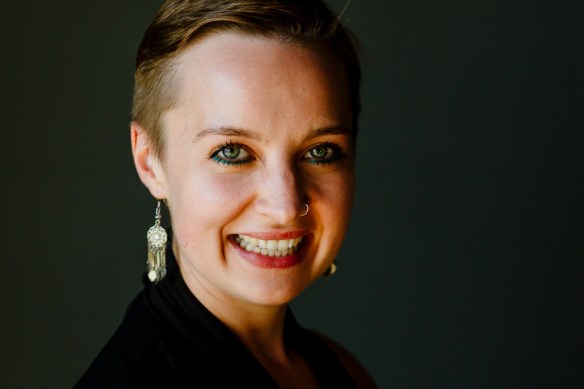
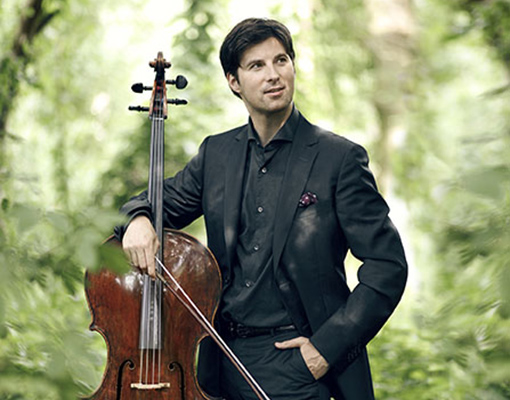
Lucie Horsch (recorder, above), Thomas Dunford (lute, below)

Wigmore Hall, Monday 10 February 2020 (lunchtime)

You can listen to this concert on the BBC Sounds app here (opens in a new window)

Review and guide by Ben Hogwood

The recorder does not appear to have great appeal or exposure to the concert-going public, yet with a few more concerts like this from Lucie Horsch and Thomas Dunford could change that perception very quickly indeed.

The Dutch player Horsch is still only 20, but she demonstrated incredible virtuosity and command of the four or five different instruments she called upon in this recital. Not only that but her musical instincts were extremely sound, her communication with equally stylish lute player Thomas Dunford borne of friendship and a shared enjoyment of the music. It said much that when the solo pieces were being performed, the instrumentalist not involved listened closely and often smiled in response to the phrases they heard.

The well-planned concert was packed with music from the 16th, 17th and 18th centuries, with a brief excursion to the 20th for a brave and brilliantly realised arrangement of Debussy’s Syrinx. That appeared fourth in a list of 11 pieces from no fewer than 10 composers, performed in four logical blocks.

Horsch and Dunford started together with the Sonata Seconda in stil moderno by Venetian composer Dario Castello (from 1:58 on the broadcast link). If you listen you will hear the purity of the recorder’s tone, on a soprano instrument, and the mottled sound of the lute which complements it ideally. It may sound as though Dunford is playing with a very relaxed air, but watching him confirmed there is a lot of work going on behind the scenes for the part to sound so instinctive. As the sonata unfolds here Horsch demonstrates her bravura in the faster music.

Dowland’s Preludium (7:31) follows, a subdued, slightly downcast piece for lute that works well as an introduction for Horsch’s own arrangement of the famous song Flow, my tears (12:19). Here the two communicated beautifully, even with the vocal line slightly tampered by the recorder’s limitations on producing vibrato.

This is followed by the Suite no.5 in F from the French composer Charles Dieupart, a set of six dance movements prefaced by an Ouverture (16:35). The dances are an Allemande (17:46) with an attractive lilt, then a lively and spiky Courante (20:54); both are countered by a slower Sarabande (22:11). Then comes a Gavotte with a spring in its step (24:24), a Menuet en rondeau (25:19) and finally a lively Gigue (26:46), where Dunford’s lute strumming gives a good snap to the rhythms.

We then jump forward over 200 years for Horsch’s own arrangement of Debussy’s famous solo flute piece Syrinx (28:48). This is a remarkable performance, given the definition Lucie gets from the very difficult lower notes on her recorder. Here the subdued but sonorous tones take on an exotic and faintly South American air.

She turns to a slightly smaller instrument for the Philidor, a Sonata in D minor with four movements. It begins with a slower introduction (32:16), an intricate fast movement with the players swapping melodies (34:33), an elegant Courante (35:37) and a much more deliberate Les notes égales et détachez (36:45), which blossoms into a lively fast section.

For the next sequence of three pieces we get an idea of how far the performers have looked for this programme, with a really nice blend of moods and colours. Les Voix Humaines (40:26), an arrangement of a piece for solo viol by Marin Marais, is subdued but stylish in Dunford’s solo lute performance. That blends into the enchantment of François Couperin’s nightingale, strongly evoked by Horsch in Le rossignol-en-amour (44:00). Horsch then gives a short but moving dance from Dutch composer Jacob van Eyck (46:35). Recercadas by Diego Ortiz (48:47) is a florid response, with the lute strummed like a guitar. Then comes the remarkably modern sounding world of Joan Ambrosio Dalza’s Calate ala spagnola (51:30), with repeated notes anticipating tremolos in much later guitar music, brilliantly played by Dunford before the music fades away.

Finally the Marais Couplets de folies (54:48), a set of variations on the famous tune La Folia. Dunford’s lute sets out the theme before the recorder enters. Its lines grow in difficulty, and there were some eye-popping moments of virtuoso brilliance from Lucie Horsch here. With the two performers sat together they still cut a relaxed presence, as though both were performing in your own front room. An unnamed encore, unfortunately dropping off the end of the broadcast, encapsulated the bright and instinctive music of the previous hour.

Repertoire

This concert contained the following music (with timings on the BBC Sounds broadcast in brackets):

Castello Sonata Seconda in stil modern (published 1629) (1:58)
Dowland Preludium (7:31); Flow my tears (12:19) (both 1600)
Dieupart Suite No. 5 in F major (publ. 1701) (16:35)
Debussy Syrinx (1913) (28:48)
Philidor Sonata in D minor (publ. 1712) (32:16)
Marais Les Voix Humaines (publ. 1701) (40:26)
François Couperin Le rossignol-en-amour (publ. 1722) (44:00)
van Eyck Lavolette (publ. 1646) (46:35)
Ortiz Recercadas (unknown, 16th century) (48:47)
Dalza Calate ala spagnola (unknown, 16th century) (51:30)
Marais Suite in D minor – Couplets de folies (Les folies d’Espagne) (publ. 1701) (54:48)

Further listening & viewing

The music from this concert can be heard in the playlist below, with some of the repertoire appearing on Horsch and Dunford’s most recent release Baroque Journey. The original versions of Dowland’s Flow, my tears and Marais’ Le Voix Humaines are included.

Baroque Journey is itself a very enjoyable listen, showing off the complementary talents of both of the soloists in this concert:

Meanwhile the music of Charles Dieupart can be explored in the company of Henry Purcell, both composers’ music for recorder making up this album from Hugo Reyne and La Simphonie Du Marais:

Finally a link to the remarkable music of Marin Marais and the second book of his Pièces De Viole, played by the masterful Jordi Savall:

Wigmore Mondays – Jennifer Pike & Martin Roscoe: Dani Howard world premiere & Elgar Violin Sonata

Jennifer Pike (violin, above), Martin Roscoe (piano, below)

Wigmore Hall, Monday 27 January 2020 (lunchtime)

You can listen to this concert on the BBC Sounds app here (opens in a new window)

Review and guide by Ben Hogwood

How refreshing to witness a world premiere brighten up an incredibly dull January day. Dualism, by British composer Dani Howard, is a new piece by violin and piano based on the conflict between ambition and relaxation that we experience on an increasing scale in our everyday lives. With the premise in hand it was easy to spot the ambitious bits – the piano’s energy propelling the music forward initially, the violin swept along – and the much-needed relaxation, where the music paused rather beautifully to take in its surroundings.

Because of these moments Dualism (2:39) was easy to relate to, and its tonal language, with wide open textures in the piano part, brought with it thoughts of the space achieved by the music of Copland and John Adams. Howard created some buoyant harmonies to go with the relatively angular melodic writing but the piece had depth too, an ongoing tension between the power for which it strove and the respite it also needed. The ultimate winner was difficult to call over the nine and a half minutes, Jennifer Pike and Martin Roscoe finding a balance between the elements and each other in an attractive performance.

Elgar’s Violin Sonata followed, an important work in his output as it effectively signals the beginning of his late, shadowy style. Here is where the composer’s work takes on an appreciably darker tinge, though each of the four main works in the period – the Sonata, String Quartet, Piano Quintet and Cello Concerto – each contain moments of light despite all being set in a minor key.

The Sonata is an elusive work, but Pike and Roscoe found its essence and its tunefulness. The first movement (2:39) was the strongest, and you can hear on the broadcast the strength of feeling immediately transmitted through the long sweeps of violin melody. The first theme is passionate, but soon the wisps of violin melody (16:28) indicate the dappled light of autumn.

The second movement (23:38) is a Romance, reaching levels of intensity that speak of sadness and bitter personal experience. It begins with a spirit of unrest, and the light humour forces a short-lived smile before Elgar retreats to the shadows once again. Pike and Roscoe apply a lightness of touch that really suits the dance-like figures that ultimately never get off the ground.

The final movement (31:08) is much broader in its dynamic reach and Pike relishes the return to the sweeping style of the first movement, her broad bow strokes bringing beauty to the melody. Meanwhile Roscoe successfully clarifies the busy piano part, again judging its volume ideally. A fine performance – bittersweet but ultimately resolving positively.

The pair finished with a rustic Theme and Variations from Miklos Rózsa, the composer of such epic film scores as Ben-Hur, Spellbound and A Double Life. Rózsa had a firm grounding in classical forms, writing a Violin Concerto for Jascha Heifetz in 1953 among numerous orchestral pieces. The Hungarian Peasant Song in this concert found him inspired by the folk music of his native country, and more specifically the Mátra region – where he wrote 14 variations on a rustic, outdoor theme. Pike had a lot of fun with these but found the emotional centre too, right from the unaccompanied theme itself (42:34).

The piece progressed through long, powerful lines, bold double stopping or short, twanged pizzicato (plucking). Roscoe’s counterpoint to this was a delight, knowing exactly when to hold back or push on, the pair navigating the very different moods of Rózsa’s variations before bringing them all back together at the end.

Repertoire

This concert contained the following music (with timings on the BBC Sounds broadcast in brackets):

Dani Howard Dualism (2019, world premiere) (2:39)
Elgar Violin Sonata in E minor Op.82 (1918) (14:28)
Rózsa Variations on a Hungarian Peasant Song Op.4 (1929) (42:34)

A well-chosen encore came in the form of Elgar’s Salut d’Amour (54:00), this orchestral favourite working beautifully in reduced form and given the appropriate level of indulgence by Pike.

Further listening & viewing

The Elgar and Rózsa music from this concert can be heard in the recorded versions below, including a classic account from early in Nigel Kennedy’s career, with pianist Peter Pettinger:

Martin Roscoe has recorded the Elgar with Tasmin Little previously, but that version is not available on Spotify. However Jennifer Pike has recorded the orchestral version of the Rózsa Variations, and they form part of a highly rewarding disc devoted to the composer’s orchestral works, including a substantial Cello Concerto:

Jennifer Pike’s most recent album The Polish Violin comes highly recommended, a homage to her Polish roots. Based mainly on the exotic works for violin and piano by Szymanowski, it is brilliantly played and really well programmed, with works by Karłowicz and Wieniawski also included:

Finally a playlist of those four late Elgar works – the Violin Sonata, String Quartet, Piano Quintet and Cello Concerto, in order of publication:

Britten Sinfonia at Lunch – Katie Bray sings Freya Waley-Cohen’s Spell Book @ Wigmore Hall

Katie Bray (mezzo-soprano), Britten Sinfonia Soloists [Jacqueline Shave, Miranda Dale (violins), Clare Finnimore (viola), Caroline Dearnley (cello), Joy Farrall (clarinet), John Lenehan (piano)]

Leclair Trio Sonata in D major Op.2/8 (1728)
Mahler arr. Waley-Cohen Rückert-Lieder (1901-2, arr. 2019)
Lutosławski Bukoliki (1952 arr. 1962)
Waley-Cohen Spell Book (2019)

Wigmore Hall, London
Wednesday 22 January 2020

Photo credits Patrick Allen (Freya Waley-Cohen); Tim Dunk (Katie Bray)

Review by Ben Hogwood

The previews for this concert were intriguing. As well as a performance of a new arrangement of Mahler’s Ruckert-Lieder, we were to be treated to Spell Book, the world premiere tour of a new dramatic work by Freya Waley-Cohen.

Inspired by the composer’s encounter with Rebecca Tamás’ collection of poems WITCH, the song cycle was written for and performed by mezzo-soprano Katie Bray, singing with an ensemble of string quartet, clarinet and piano. In terms of forces used this gave the work a similar profile to Schoenberg’s famous melodrama Pierrot Lunaire. The music fulfilled Waley-Cohen’s wish that it would place us under a spell, as the book had clearly done for the composer. She brought it to life with music of luminosity and captivating drama.

She was helped considerably by Bray (above), who held the attention effortlessly with a commanding performance. The first and most substantial song, spell for Lilith, found her word emphasis in the observation that Lilith is ‘such a bad girl’ setting the expressive tone. The music swept up to impressive heights, Bray’s voice stopping the listener in their tracks while simultaneously nailing the acoustic of the hall.

Waley-Cohen’s response to the text was often vivid, the instruments either offering weighty support to the words or dropping away under their feet. The observation that ‘Lilith, you have a great body’ received appropriately slinky contours, while the contrast of suspension and movement towards the end led to a delirious postlude from John Lenehan’s piano.

The following two songs were more compact but retained Lilith’s intensity. spell for sex had a soft, alluring vocalise that was also remote, while the spell for logic was much more active, pockets of instrumental music bumping into the vocal line but never overwhelming it. The open-ended challenge to the audience was effective, as was the relatively sudden finish, concluding a mysterious and strangely euphoric piece. The spell had indeed been cast.

Spell Book was complemented by Waley-Cohen’s arrangement of Mahler’s Rückert Lieder. In this regard she was bravely nailing her colours to the mast alongside the intimidating figure of Schoenberg, whose arrangement of the composer’s Lieder eines fahrenden gesellen (Songs of a Wayfarer) for chamber ensemble around 100 years ago is still occasionally performed. The ensemble here, replicating that for Spell Book, was cut from similar cloth.

This performance was a qualified success, part of the fault for that lying with the listener and a long-held familiarity with the piano and orchestral versions of Rückert-Lieder. There were however some imaginative qualities here, particularly the technique of doubling instruments at a distance of two octaves. John Lenehan‘s high piano right hand therefore acquired a ghostly shadow in the form of Caroline Dearnley‘s low cello, and this technique was used to create an enchanting, wispy half-light.

It also suited Bray’s range and performance, and while her interpretation felt like it may still be in progress – again the problem of over-familiarity rearing its head – she grew into the songs as they unfolded. The famous Um mitternacht was an inevitable highlight, while the clarinet lines in Blicke mir nicht in die Lieder! (Do not look into my songs!) were beautifully rendered by Joy Farrall. The final song, the rapt Ich bin der Welt abhanden gekommen (I am lost to the world) was beautifully controlled if not quite reaching peak intensity.

Prior to the song cycles we heard the Trio Sonata in D major from Jean-Marie Leclair. It made a nice change to hear this music on modern instruments, the program illustrating how the Trio Sonata was in fact a predecessor of the Piano Trio. Jackie Shave, Caroline Dearnley and John Lenehan clearly enjoyed their time with this piece, and Leclair’s elevation of the cello to much more than mere accompaniment found the two string players engaged in rewarding dialogue.

In between the song collections Dearnley teamed up with viola player Clare Finnimore for Lutoslawski’s six Bukoliki, delectable folk-inspired miniatures originally conceived for piano but subsequently arranged by the composer. Lasting little more than a minute, each one was beautifully formed and strongly expressive, the string players enjoying the melodic ornaments and the rustic sweeps of the bow. The addition of subtle discords created a haunting quality to some of this music, pointing the way to Lutoslawski’s sonic innovations to come.

The Britten Sinfonia’s At Lunch series continues to impress with its imaginative programming and opportunities for contemporary composers. Both aims were realised here in a richly rewarding concert.

Further reading and listening

To discover more about Freya Waley-Cohen, you can visit her website here or listen to her music on Soundcloud here. Meanwhile the Spotify link below offers a chance to hear her Permutations, as played by her sister, violinist Tamsin.


Wigmore Mondays – Jerusalem Quartet play Haydn & Bartók

Jerusalem Quartet [Alexander Pavlovsky, Sergei Bresler (violins), Ori Kam (viola), Kyril Zlotnikov (cello)]

Wigmore Hall, Monday 20 January 2020 (lunchtime)

You can listen to this concert on the BBC Sounds app here (opens in a new window)

Review and guide by Ben Hogwood
Photo of Jerusalem Quartet Felix Broede

The subtitle for this concert on the BBC Sounds website is ‘Quartet Masters’ – which is spot on when you consider the contributions both Haydn and Bartók made to this intimate form of chamber music. The string quartet – two violins, viola and cello – has presented composers with both challenge and inspiration over its 250-year existence, and even as I type this there is no sign of the form dying out.

A big part of the credit should go to Haydn, whose quartets are often used at the beginning of a program such as this. Sometimes that means the consistent quality of his work is overlooked, but there was no doubt of that happening in this performance from the Jerusalem Quartet.

Theirs was a red blooded performance, with a glossy texture to the luxurious string sound, aided by plenty of vibrato on the string. Such an approach would not have worked in the composer’s earlier quartets, but was more appropriate here for one of the six published in 1799 as the composer’s Op.76, his most mature statements yet as a quartet composer.

The ‘Fifths’ is so named because of the melodic interval Haydn uses between the two notes at the very start (2:10 on the BBC Sounds link) This motif becomes an integral part of the quartet, and as the first movement progresses it can be frequently heard. The Jerusalem Quartet’s bold performance gains more charm in the second movement (9:25), a light and relatively gentle dance. Alexander Pavlovsky’s intonation went a little awry here but not for long.

In the third movement, a darkly coloured Minuet (15:18), the quartet impress greatly, divided in two as the two violins’ melody is shadowed by the grainy tones of viola player Ori Kam and cellist Kyril Zlotnikov in impressive unison. The clouds part for a central Trio section with a rustic feel (16:44) before the obdurate theme returns (18:16) The fourth movement, initially quite furtive (19:10), blossoms into an affirmative finish.

Bartók had already confirmed his outright mastery of the string quartet form by the time he reached his Third Quartet of 1927, and the Fourth, completed a year later, achieves if anything a greater level of innovation in sound, together with strong melodic content and the use of connecting ideas between the five movements.

Bartók was obsessed with symmetrical forms, and the dimensions of the Fourth feel wholly right. Its five movements have two intensely concentrated pieces at their outer edge. Movements two and four are Scherzos – which implies they should be witty but the second is ghostly and the fourth otherworldly. The third movement is one of the composer’s classic evocations of the night, with pictorial references to insects and birds as well as dislocated elements of Hungarian folk music.

This performance was right on the money. From the start of the first movement (26:27) the tension is palpable, with a driven approach emphasising Bartók’s dissonant writing but also his melodic invention. The resolution in a pure C major is all the more telling because of it. The second movement (33:10) is marked to be played with all four players using mutes (‘con sordino’) and the ghostly entrails that result chill to the bone – in this case even on a cold January day. The four players shade their contributions exquisitely, preparing us for the central third movement (36:22), a great example of Bartók’s ‘night music’.

The emotional centre of the quartet, this is where time almost stops, and the Jerusalem Quartet captured this feeling immediately with their long, held chords and the songful lines from Kyril Zlotnikov’s cello and Alexander Pavlovsky’s violin. These held a profile close to folk melodies, the other three instruments standing watchfully by.

The fourth movement (42:50) broke us out of these nocturnal dreams, using pizzicato only (each of the four instruments required to pluck rather than use the bow) The folk-like ‘snaps’ against the board of the instrument were very effective, especially on the cello, but so was the thrumming of the violins and viola, which had an enchanting quality.

Finally the fifth movement (46:20) brings a lasting resolution, though it starts with great cut and thrust, using music of dissonance. Later a light-hearted diversion into more folk-based material breaks out, after which we head for a wholly convincing ending, summing up the whole performance perfectly.

A very fine concert, this, which was capped by an encore of the third movement (Minuet) from Mozart’s String Quartet in D minor K421 (54:24). Not only did this piece share the same key of the ‘Fifths’ quartet, it is one of a set of six quartets dedicated to Haydn, so brought the concert full circle with music of both grit and charm, rather like that of its dedicatee.

Repertoire

This concert contained the following music (with timings on the BBC Sounds broadcast in brackets):

Haydn String Quartet in D minor Op.76/5 ‘Fifths’ (1797-8) (2:10)
Bartók String Quartet no.4 (1928) (26:27)

Further listening & viewing

You can watch the Jerusalem Quartet play Bartók’s String Quartet no.4 in a live concert here:

The Jerusalem Quartet have recorded both the works played in this concert, which can be heard on the playlist link below:

Bartók’s cycle of six string quartets is one of his very greatest achievements, and you can track the development of his style by listening through chronologically. The later quartets in particular give the most reward to repeated listening, for even 100 or so years on these works are not easy to grasp straight away! The cycle from the Emerson String Quartet remains one of their best recordings:

Haydn is the father of the string quartet, and his Op.76 set – again six quartets – represents the pinnacle of his compositions for the relatively new sound world of two violins, viola and cello. These are good natured works but have considerable depth too, as this recording by the Hungarian Takács String Quartet proves:

Mozart’s six quartets dedicate to Haydn are among his finest chamber works. This recording from the Hagen Quartett includes a particularly fine account of the D minor work from which the Jerusalem Quartet took their encore:

Wigmore Mondays – Alexander Melnikov: Early piano music by Clementi, Haydn & Mozart

Alexander Melnikov (fortepiano)

Wigmore Hall, Monday 13 January 2020 (lunchtime)

You can listen to this concert on the BBC Sounds app here (opens in a new window)

Review and guide by Ben Hogwood

Something of a history lesson from the versatile pianist Alexander Melnikov, who is capable of moving between modern piano music on a concert grand and 19th century music on the instrument for which it was written, the fortepiano. Essentially the instrument is a forerunner of the grand version we are used to nowadays, but it allows us to see the join between the harpsichord – the go-to keyboard of much of the 18th century – and the bigger and more modern instruments the likes of Beethoven began to write for. Here Melnikov played an instrument by Paul McNulty after Walter & Sohn from an original of 1805. Alexander Skeaping deserves credit as the tuner and supplier.

Melnikov’s program was brilliantly conceived, including music by Mozart and Haydn but linking them through one of the leading pianists and composers of the day, Muzio Clementi. Beethoven was one of his greatest advocates and often played his sonatas, while Clementi promoted his fellow-composer in London, where he arrived in the early 1770s. At this point the English capital was regarded as the centre for keyboard innovations, and in the music for this concert – superbly played and interpreted by Melnikov – you can feel the sense of freedom and exploration as the music looks outwards and forwards towards Beethoven.

The pianist begins with a musical impression of Haydn by Clementi, a brief Prelude from his Musical Characteristics album written as a guide for to give performers an idea of the style of other composers. This short number (from 3:04 on the broadcast link) starts with a broad C major chord, helping us get used to the piano sound. The mood is free and expansive, with a busy left hand. The pianist adds a short improvised section, where it proves difficult to spot the joins, but this serves to lead us straight to a Haydn work, the Piano Sonata in C sharp minor HXVI:36 (4:53).

This was a very rare key for Haydn to use – and rare for piano music, with Beethoven’s Moonlight sonata the next excursion some 20 years later. Melnikov’s performance captures the exploratory air of the piece, beginning with quite a stern statement but then playfully holding back with some of the clipped right hand notes to emphasise the composer’s wit. Melnikov’s affinity for the music is clear, with some beautifully played melodies. The piano sound is lovely, with none of the tinny textures often associated with the earlier instruments.

The second movement is a Scherzando (14:26), Melnikov playing a graceful dance with a really satisfying sense of ebb and flow. The third movement (18:21) is the slowest, a slow and solemn Menuetto moving to a thoughtful and serene final section (20:14) where Haydn moves to the major key. The playing here, using the ‘damper’ pedal, is really lovely.

The next pair of works begin with Clementi’s second ‘impression’ of Mozart (24:17), where a great deal of technical control is required! Me The two composers famously sparred in an improvisation session in Vienna in 1781, so knew a lot about each other – but from the reports did not perhaps see eye to eye.

Clementi’s tribute is keenly felt however, before Mozart‘s own exploratory Fantasia (25:55) receives a carefully thought yet natural performance. Though a short piece, this unfinished work varies greatly in mood and tempo, with quick cascades from on high contrasting with dark left-hand thoughts, before a sunnier closing section to sweep away the clouds. Melnikov gives the music plenty of room, sometimes exaggerating the pauses but always to the benefit of the music.

The concert finished with one of Clementi’s own sonatas, the substantial Piano Sonata in G minor published in 1795. Before it we heard another Prelude from the Musical Characteristics, this time a portrait of himself with a tumbling figure and some highly chromatic music (32:55). The Sonata itself begins at 34:27 with a stern introduction of two-part writing, but that soon cuts to a busy and bright first movement proper. There are a number of abrupt mood swings in this movement, anticipating Beethoven’s way of changing quickly between thoughts, and Clementi also employs some daring harmonies for the time. Melnikov responds brilliantly to these, again his performance given as though performing a characterised stage work, with a stormy closing section.

The second movement (42:40) is marked Un poco adagio (loosely translated as ‘a little bit slow’) and is subtly charming, like a slower dance, before the third movement (48:38), marked Molto allegro (quick and lively), actually hangs back a bit in this performance before going full throttle to a thrilling finish. Again Melnikov’s right hand contours are brilliantly realised.

This was a really enjoyable concert, and great to see the importance of Clementi’s role properly realised. He was one of the true pioneers of early piano music, and without his part it is unlikely Mozart or especially Beethoven would have made their own mark.

Repertoire

This concert contained the following music (with timings on the BBC Sounds broadcast in brackets):

Clementi Musical Characteristics Op.19: Preludio II alla Haydn in C major (publ.1787)
Haydn Piano Sonata in C sharp minor HXVI:36 (publ.1780)
Clementi Musical Characteristics Op.19: Prelude I alla Mozart in A major (publ.1787)
Mozart Fantasia in D minor K397 (?1782)
Clementi Musical Characteristics Op.19: Prelude I alla Clementi (publ.1787)
Piano Sonata in G minor Op.34/2 (publ.1795)

Further listening

Alexander Melnikov has not yet recorded any of the music in this concert, but the playlist below includes recorded versions on the fortepiano wherever possible.

Thirty years ago it would have been unthinkable to consider we would now have a huge resource of recordings made on the fortepiano. This is thankful in part to early protagonists such as Melvyn Tan, but one pianist to have recorded a vast amount of this repertoire is Ronald Brautigam. His recordings of Beethoven are rewarding, but in Haydn he sparkles – such as in this disc of five sonatas, including the one heard in this concert:

Melnikov’s own discography on more historical instruments is in its relatively early stages, but this disc of piano music through the ages from Schubert to Stravinsky is well worth hearing:

Finally from this time comes a thrilling cycle of Beethoven sonatas for piano and violin – pioneering music which Arcana will explore in greater detail as part of 2020 Beethoven. This version with Isabelle Faust is one of the very best: