Joseph Tong – Sibelius and the piano

joseph-tong

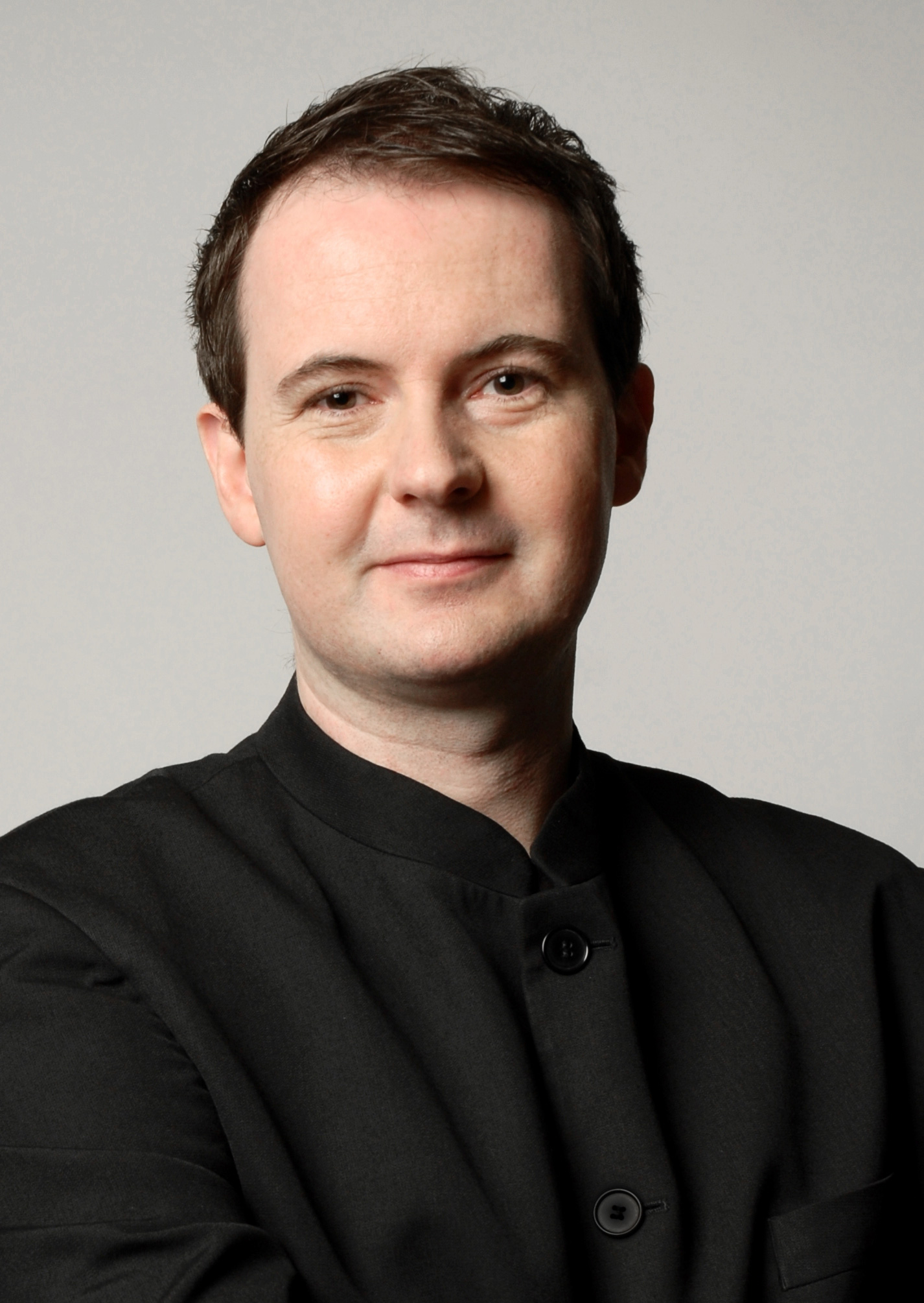
Joseph Tong, St John’s Smith Square, 13 May 2015.

It is surprising, the number of famous composers with piano works that are rarely if ever heard in concert. Tchaikovsky, Elgar, Dvořák and Wagner – all wrote a considerable amount of keyboard music that remains relatively unheard.

To that list can be added Jean Sibelius, whose canon of piano works runs from early juvenilia to the late Five Esquisses of 1929. Sibelius wrote at the piano in his Ainola house, but the suspicion persists that a lot of his work was a necessary complement to the popular orchestral works we do hear a lot of – and that it wasn’t always designed for outings in the concert hall.

sibelius-piano

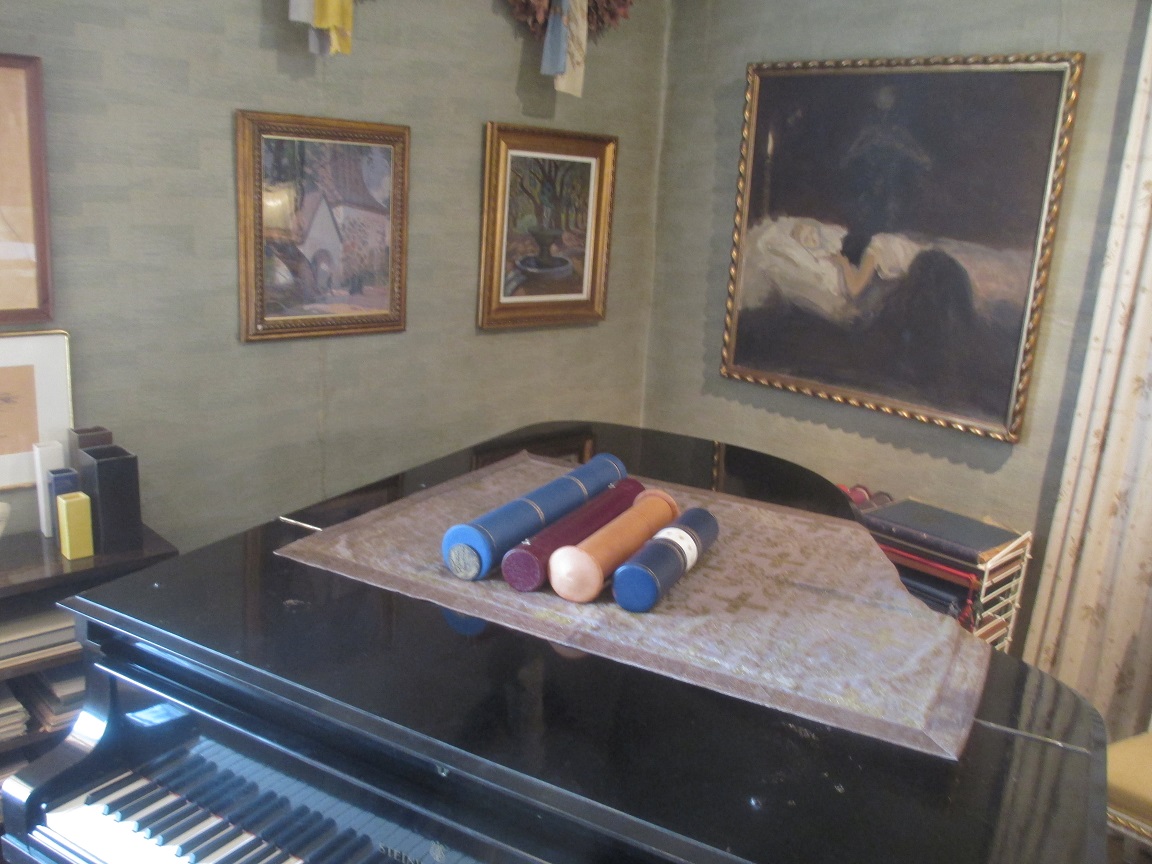
Sibelius’ piano at his Ainola home.

Joseph Tong sought to challenge that notion with a concert composed entirely of Sibelius piano works, given at St John’s Smith Square in the presence of the Finnish Ambassador. While the attendance suggested the music was not a great draw, the end product was never less than intriguing and often provided clues to Sibelius’s overall style.

Tong constructed a logical program that took us to the outer edges of the Finn’s piano output, from earlier pieces with a nationalist bent (the three movement suite Kyllikki and the five-piece suite The Trees) to some of the more rigorously structured pieces from Sibelius’ neo-classical period (a surprisingly touching Sonatina and two Rondinos) and finally to a strikingly effective transcription of the great Finlandia.

Tong was the ideal exponent, enjoying the intimacy of Sibelius’ writing and the occasionally abrupt manner in which he finishes his musical phrases. The Sonatina was a particular treat, its last movement hanging on the air like a branch after a bird has flown from it. Also notable was The Spruce last of The Trees, a popular work Tong played again as an encore. The later works were deeper and darker, suggesting winter claustrophobia in Sibelius’ house at Ainola, with only the hint of brighter times in evocations of spring.

To understand Sibelius as a composer the piano works are an invaluable and private aside, and in the right environment – such as this – they work very well as an intimate concert experience. Even the bluster of Finlandia, brilliantly played here, had its tender moments in the slow chorale theme that Tong gave lovingly. For an anniversary tribute with a difference, the pianist deserves great credit.

Joseph Tong has recorded a CD of Sibelius piano works, structured in a very similar way to the concert. It can be heard here on Spotify, with a second volume apparently in the pipeline for 2016.

Elias String Quartet and Simon Crawford Phillips – Messages Old and New

Messages old and new – the Elias Quartet give an Emily Howard world premiere, and are then joined by Simon Crawford Phillips for Schumann’s Piano Quintet
elias-quartet

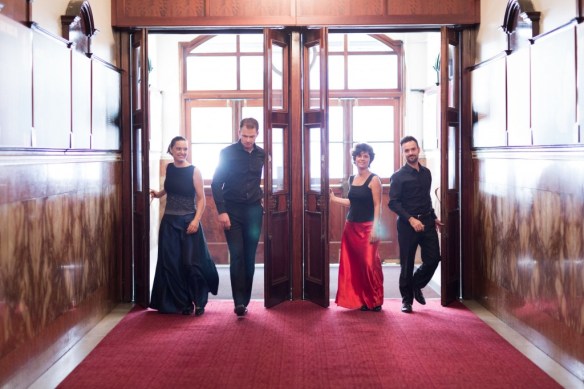
Elias Quartet (Sara Bitlloch, Donald Grant (violins), Martin Saving (viola), Marie Bitlloch (cello), Simon Crawford-Phillips (piano) – Wigmore Hall, London, live on BBC Radio 3, 4 May 2015.

Listening link (opens in a new window):

http://www.bbc.co.uk/programmes/b05qypn8

on the iPlayer until 9 June

Spotify

In case you cannot hear the broadcast, here is a link to a recording of the Schumann (Howard’s pieces is a world premiere so not yet recorded). The Schumann is played here by Sviatoslav Richter and the Borodin String Quartet:

Spotify

What’s the music?

Emily Howard Afference (2015) (22 minutes)

Schumann – Piano Quintet (1842) (32 minutes)

What about the music?

Emily Howard’s new piece Afference, a substantial work for string quartet, is based on a physiological term to describe the way in which the brain processes our experiences of the world. Howard herself has a degree in maths and computer science, something that might lead an audience to expect a very calculated approach to composing music. This is not entirely the case though, as the biography on Howard’s own website suggests.

Afference appears to be her first work for string quartet, commissioned by the Elias Quartet themselves. It joins a canon of pieces that range from large-scale orchestral works (Axon and a symphony called Magnetite) to smaller scale compositions for clarinet and piano.

Schumann’s Piano Quintet was written in 1842, when he was still giddy with love for wife Clara. She was the dedicatee of this work, but as the BBC Radio 3 announcer Georgia Mann details it was first performed with none other than the composer Felix Mendelssohn at the piano.

Performance verdict

A fine concert, with concentrated playing from the Elias Quartet of what is on two listens an engaging new work for string quartet. Emily Howard writes in a distinctive style that the Elias Quartet understand, and the colours she achieves are consistently interesting and imaginative. It helps to know the program for the piece, as there do indeed seem to be a lot of messages transmitted in 22 minutes. Some of them are very nervy, though ultimately the piece feels of a positive nature.

The Schumann receives an excellent performance, the happiness of the first, third and final movements a joy to behold – while the second movement, if a tiny bit slow in its central section perhaps, is uneasy and in need of consolation this ultimately provides. Simon Crawford-Phillips plays brilliantly, with authority but also ensuring the strings are heard at all times. His nimble finger work in the third movement scherzo is especially impressive.

What should I listen out for?

Emily Howard

1:20 – a busy start with all four instruments playing frenetically then cuts to a section with a very small voice, doing battle with the quartet.

5:55 – the instruments all take a melodic line that uses portamento (sliding from one pitch to another) before a more intimate phrase starts to dominate. At this point the instruments are close together in pitch.

8:09 – a much slower section, with an intense violin pitch that grows into what sounds like a sorrowful lament, while the other three instruments give softly breathed harmonies. This leads on to some feverish activity, Howard’s nervous messages transmitted at great intensity.

13:17 – As the second movement starts there is a large gap between the instruments – violins on high and cello down below. The lack of a key centre brings to mind some of the quartet writing of Schoenberg, though Howard’s writing has more pitch-related implications in the cello’s continual return to its low ‘D’.

16:50 – a striking passage for violin with upwards phrases, in which Howard seems to be reaching for higher plains

18:51 – the instruments stick closer together again, but at 19:53 the violin shoots out a much higher phrase. The harmonies still make the music sound quite uneasy, as if in a state of dread.

22:20 – a piercing line on the violin returns to the pitch of D, before the rest of the quartet finish the piece with a short series of comments.

Schumann

26:23 – the first movement begins with a wonderfully positive outpouring of music from piano and strings together. The theme itself is a surprisingly catchy one

27:35 – a lovely tune makes itself known on the cello, Schumann at his most romantic with the music flowing beautifully onwards. This tune is then picked up with a counter melody from the violin.

32:03 – now in the centre of the development section, the music gets more turbulent, the piano lines swirling around those of the string quartet, but then we switch to a triumphant reprise of the opening music at 32:45.

35:33 – the subdued second movement begins. This is a form of funeral march and it has a halting tune, played by both strings and piano with short notes. This is complemented by a much sweeter episode of music that begins at 37:19, still in the spirit of remembrance but with a positive approach. The sombre first theme returns once again at 38:56.

40:10 – a faster episode begins, led by the piano, the strings with much heavier lines alongside – but still the tune persists from the viola at 41:00, picked up by the violin – and the sweeter theme also makes a reappearance (41:49).

44:16 – the third movement, a Scherzo, begins with fizzing interplay led by the piano. Schumann again finds music of great positivity and energy. At 45:34 a second section begins, in the far-removed key of F sharp major, before the main scherzo returns with just as much irrepressible energy at 46:16. At 46:58 a new section is introduced, again with plenty of energy! The main theme returns at 48:02, carrying through to an emphatic finish at 48:57.

49:04 – the last of the four movements begins, and again the energy levels are up – though here we begin in a minor key that briefly recalls the second movement march. Quickly the music moves to E flat major – the ‘home’ key of the piece. The music then becomes more reserved and secretive.

51:24 – the first theme comes back, though the music is still in a minor key and still feels a long way from ‘home’. Gradually though the music gets greater presence in the ‘home’ key, and by the time we get to 54:16 it is rooted here, and sweeps to a decisive finish by way of a fugue, instigated by the piano at 54:41 and rounding off at 56:28.

Want to hear more?

Following the contrasting nature of the two pieces in this concert, the suggested further listening looks to progress from the Howard with Schoenberg’s String Quartet no.2. This famously has a last movement that sets the text ‘I feel the air from another planet…’, sung by a soprano and said to consciously signal the composer’s move away from writing in a particular key (tonality). Here the words are sung by Susan Narucki, in conjunction with the Schoenberg Quartet.

After the Schumann a rewarding next port of call is the Piano Quintet by Dvořák, his second in the form – and once again played by Sviatoslav Richter and the Borodin Quartet. The playlist can be found on Spotify here:

For more concerts click here

The ever-flexible Bach – Antoine Tamestit at Wigmore Hall

Antoine Tamestit performs two solo Bach suites and a new commission from Olga Neuwirth

antoine-tamestit

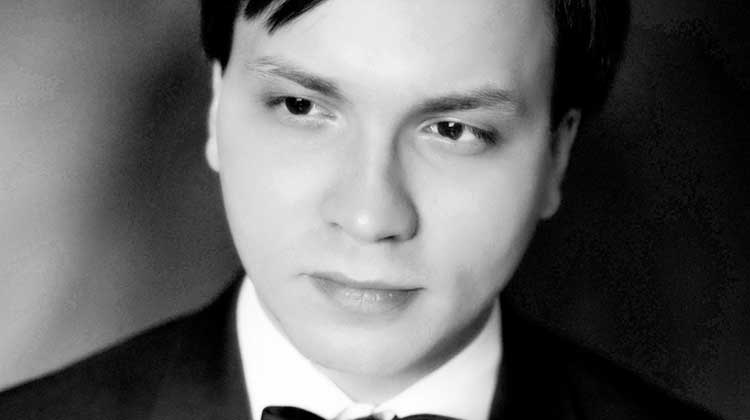
Antoine Tamestit (soprano) – Wigmore Hall, London, live on BBC Radio 3, 27 April 2015.

Listening link (opens in a new window):

http://www.bbc.co.uk/programmes/b05s3dhx

on the iPlayer until 28 May

Spotify

In case you cannot hear the broadcast, I have put together a Spotify playlist of the Bach suites played by Tamestit himself. Because the piece by Olga Neuwirth is so new – this was in fact the first performance – it has not been recorded yet. Here is the link to the Bach:


What’s the music?

J.S. Bach – Solo Cello Suite no.1 (arranged for viola) (1724, 15 minutes)

Olga Neuwirth – Weariness heals wounds (2014, 11 minutes)

J.S. Bach – Solo Cello Suite no.3 (arranged for viola) (1724, 19 minutes)

What about the music?

One sign of a great composer is surely the effectiveness of his music when heard on any instrument, not necessarily the one it was written for. J.S. Bach ranks among those whose music is incredibly versatile – Toccata and Fugue, Ave Maria and Sheep May Safely Graze just for starters! – and all have been successful in any number of guises.

So it is to a lesser extent with the solo cello suites, which transcribe for other stringed instruments – guitar and viola – very well.

The Austrian composer Olga Neuwirth has written for Tamestit before, in 2009 – a concerto for viola and orchestra. This much more private utterance, a response to the saturation posed by new media and some thoughts on how we can get away from that, takes a few quotations from the Concerto.

Performance verdict

These are excellent Bach performances, from a performer who is notable both for his technical command and expressive input. Tamestit ensures the Bach suites really dance, by taking pretty fast speeds but also giving plenty of air to the music. It suits the faster movements down to the ground, while the slower Sarabandes take time out for reflection.

The new piece Weariness heals wounds also gets a fine and concentrated performance. Tamestit clearly believes in this composer, and in the course of the ten minutes it is easy to hear the themes of frustration and saturation coming to the surface.

What should I listen out for?

Bach – Cello Suite no.1

1:37 – being up an octave from the cello original replaces the mellow sound of the lower instrument with a brighter viola. It works well as the dancing figures of the Prelude begin to work their magic. Towards the end an obsessive figure breaks out into a sunny finish.

3:42 – an Allemande, the first of the dance music, is relaxed and airy, and Tamestit adds to this feeling by slowing down at times in the more reflective passages. It is an effective technique.

7:50 – the Courante is a bit more lively, suggesting a quicker step in the dancing feet. Tamestit almost loses his way in the first half, with what seems like a memory lapse, but also adds some attractive ornamentation to Bach’s melodies, which is the performer’s prerogative here.

10:14 – the lovely Sarabande, a slower dance. Tamestit doesn’t let the bow rest on the string for too long, so the notes seem a bit shorter, and as a consequence they are lighter.

12:45 – the lively pair of Minuet begins, with a bracing first followed by a solemn second (beginning at 13:54 – and taken pretty fast by Tamestit here). As is customary in these suites, we hear the first Minuet again (14:45)

15:22 – the final movement in these Bach suites is always a Gigue, a dance of French origin in triple time that usually signs off the suite with some gusto. That is definitely the case here!

Neuwirth

18:33 – quite a biting start, with two strings playing pitches very close together that sound like quarter tones. The mood is tense and – as in the title – given with a certain weariness.

The jarring notes return again, suggesting that the new media is grating somewhat? Then a more aggressive section begins, where the bow is positioned near the bridge of the instrument to create a scratchy sound. Discomfort abounds!

At 25:15 a semblance of a tune begins, but it is uneasy. Then at 26:04 the ‘G’ pitch asserts its importance before a series of virtuosic and sweeping runs. Again the use of quarter tones is in evidence, and when the melodies get longer Tamestit makes the viola sound bluesy and mournful. The piece ends with a sharply plucked note.

Bach – Cello Suite no.3

31:19 – there is a nice and slightly mischievous approach in the stop-start Tamestit applies here, with grand gestures followed by quite hurried phrases. It works well as the Prelude progresses through a number of different but utterly logical keys, before going through a quick series of movements over a ‘pedal’ note, after which it works to a big finish.

34:11 – quite a bouncy Allemande this one, genial too.

37:47 – a Courante with plenty of energy, bounding out of the blocks. If you were dancing to this one – the cello suites do after all have dance movements – you’d have to be pretty quick on your feet!

40:24 – a grand Sarabande, which might not be as weighty in the hands of the viola as it is on the cello, but which still makes a strong impression. As so often in the slower dances there is time for intensely concentrated thought.

43:44 – a genial pair of Bourrées comes into view – another dance Bach used for some of his solo instrument works. Bach often writes one in a major key but contrasts it – as here at 45:07 – with a more reserved one in the minor key. Once again the first Bourrée is repeated, coming back at 46:22.

47:06 – the Gigue swings into action with an energetic burst. There is some quite dissonant double stopping too (more than one string played at once)

Encore

Kurtág – Perpetuum mobile, one of the Signs, Games and Messages

51:19 – this piece is little more than a gruff introduction and a few jarring notes lasting little more than a minute! Yet as always with Kurtág, whose pieces are famously brief but incredibly concentrated, it takes longer to write about his music than to listen to it.

Want to hear more?

Not many composers wrote for the viola on its own, but the composer Max Reger – for whom Bach was a hero and inspiration – wrote three suites. They can be heard on Spotify here as part of an album of his chamber music for viola, played by Nobuko Imai, who is accompanied by Ronald Brautigam in the substantial Sonata for viola and piano. The album can be found here

For more concerts click here

Alexei Grynyuk at the Wigmore Hall – Schubert’s last breath

alexei-grynyuk

Alexei Grynyuk, Wigmore Hall, 16 April 2015.

The last of Schubert’s 21 published piano sonatas is a remarkable piece of music, as in it we encounter one of those truly rare instances where time really does seem to stand still.
Alexei Grynyuk, completing a fine season of lunchtime recitals at the Wigmore Hall under the sponsorship of Lisa Peacock, gave the piece an eloquent and moving account, maintaining remarkable feats of concentration over the near-50 minutes in which Schubert’s last inspiration unfurled.

The opening movement seemed to go on for ever – but not in a bad way! From the off it was clear Grynyuk was going to let this music breathe, refusing to hurry in much the same way the great Sviatoslav Richter used to work with the sonata. Because of that the first movement alone clocked in at 28 minutes, but the disquiet it brought whenever the left hand was rumbling low in the piano register was palpable.

Eventually there was a form of resolution, but the questioning nature of the music returned in the slow movement and its less than comfortable modulations. As the sonata progressed so did Schubert’s willingness to cast his demons aside, and because of this Grynyuk ensured the third movement scherzo became ever sunnier as it progressed. Meanwhile the finale, despite some strife in its minor key exertions, ultimately strove for positivity.

This was a magnificent and clearly thought through performance, one where Alexei Grynyuk was ready to stand back, remove any showiness from his interpretation, and let Schubert’s music do the talking. Similar praise could be levelled at his performance of the Three Movements from Petrushka, arranged by Stravinsky from the ballet. A lot of pianists show off here but Grynyuk was careful to characterise, to bring forward the abundant selection of tunes and – crucially – not to play too loudly. His approach worked wonderfully well.

A Spotify playlist containing the works in concert can be accessed below. As Alexei Grynyuk has not yet recorded these works – though I understand this performance of the Schubert was recorded for future release – I have chosen versions by Maurizio Pollini:

Kristian Bezuidenhout plays Mozart at Wigmore Hall

Kristian Bezuidenhout plays Mozart piano music at Wigmore Hall

Kristian Bezuidenhout 2010 Photo: Marco Borggreve

Kristian Bezuidenhout (fortepiano) – Wigmore Hall, live on BBC Radio 3, 13 April 2015.

Listening link (opens in a new window):

http://www.bbc.co.uk/programmes/b05qdw80

on the iPlayer until 13 May

Spotify

In case you cannot hear the broadcast…Kristian Bezuidenout has recorded all of this music, save for the brief encore, as part of a complete series of Mozart’s solo piano works for Harmonia Mundi. A playlist of the works played in this concert can be found here

What’s the music?

Mozart – Piano Sonata in F major, K332 (c1783) (18 minutes) ((the ‘K’ number gives an indication of the work’s position in the Köchel catalogue of Mozart’s music)

Mozart – Adagio in F major (unknown) (6 minutes)

Mozart – Piano Sonata in D major, K284 (1775) (Dürnitz) (27 minutes)

What about the music?

mozart

The sound of the fortepiano (a very early form of the piano as we know it today) is definitely an acquired taste – and even then it has to be said not everybody acquires that taste. That is not to put you off listening to the music, but it is an advanced warning of sorts that this is a very different piano sound, one with sharp colours when played loudly. At times the sonorities approach that of a harpsichord, though with an instrument such as the one South African-born Kristian Bezuidenhout uses, a copy of an 1805 model, there is room for manoeuvre.

Kristian is in the process of recording all of Mozart’s work for the instrument, a sizeable canon that includes a number of memorable piano sonatas and several shorter but important standalone pieces. One of these is the Adagio inserted into the middle of the concert – though this is of doubtful authenticity, and may not be by Mozart at all.

The second sonata in this recital, K284, is almost twice as long as the first, and was completed in Munich for a friend of the composer’s, bassoonist Baron von Dürnitz.

Performance verdict

Kristian Bezuidenhout gives these pieces his all, leaving the listener in no doubt as to his total commitment to Mozart’s music. He adopts quite challenging speeds, the fast movements rushing along and even the slow ones being much faster than anticipated – at least in the case of the first sonata in the recital.

His right hand work is always very clear, especially when playing more than one note at once, so each of the inside parts can be heard. This is especially important with the fortepiano, where the notes do not necessarily sustain for as long.

If you are not a fortepiano enthusiast then hopefully Bezuidenhout’s graceful way with the Adagio in particular will go some way to winning you over.

What should I listen out for?

Piano Sonata in F, K332

1:37 – a genial beginning, but soon there is an outburst of storm and strife at 2:04, as Mozart wrenches the music into the minor key. Bezuidenhout exaggerates the contrasts between a relatively calm right hand and the occasionally stabbed notes in the left that give powerful energy to Mozart’s writing

8:31 – the slow movement, the middle of the three – and the most harmonically adventurous. Mozart enjoys some quite florid writing for the piano and uses the walking accompaniment to his advantage, writing music of unexpectedly profound expression. Bezuidenhout arguably plays it a bit too quickly here.

13:08 – a literal hammer blow starts this fast movement with a rapid clatter of notes. At times it sounds as though someone has sat on the lower end of the piano, such is the force of the playing! The fortepiano certainly brings alive the contrasts in Mozart’s writing for keyboard, and here Bezuidenhout uses it to bring out the bell-like figurations in the right hand. Towards the end there is a lovely, graceful touch from the pianist that brings us to a calm finish.

Adagio in F

21:26 – a tender, almost operatic piece of work where the right hand at times takes on the profile of a singer. There is a slightly mischievous element to the melody, which can overdo itself at times, but it is charming much of the time.

Piano Sonata in D, K284

29:18 – this piece starts with a flourish, and Bezuidenhout keeps a brisk tempo throughout. The first main theme is vigorous, the second a bit more thoughtful and graceful, especially when it appears the second time around at 31:18.

34:26 – a thoughtful second movement, and an airy one, with a lightness of touch that really suits the music. There is an attractive ‘question and answer’ between the hands.

39:18 – a long third movement, which is a theme and variations – a form in which Mozart excels. A relatively simple theme is heard to start with before the music heads through twelve very different reworkings of the source material, each one seemingly more difficult than the last! It is a chance for Mozart to really flex his compositional muscles. Of particular note is the variation at 44:31, where Mozart slows down rather. The variation finishing at 46:54 goes heavy on the bass, and is followed by a darker turn in the minor key. An unexpectedly tender episode at 51:36 finds the piano keys lightly brushed, the tempo slowed down dramatically. Finishes at 55:53

Encore

Mozart: Allemande from the Suite in C major, K399 (3 minutes)

57:21 – this short piece, described by the pianist as ‘enigmatic’, is part of a pastiche Mozart wrote, a Suite in the Style of Handel. It is surprisingly dark at times.

Want to hear more?

If more Mozart piano music is what you want, I would point you in the direction of some of the composer’s short and very profound single pieces. Two Rondos do the trick here, with a Fantasia and a late Adagio for good measure. All are played by Bezuidenhout, and included at the end of the Spotify playlist referenced above.

For more concerts click here