In concert – Nash Ensemble @ Wigmore Hall: Side by Side & Nash Inventions

Side by Side

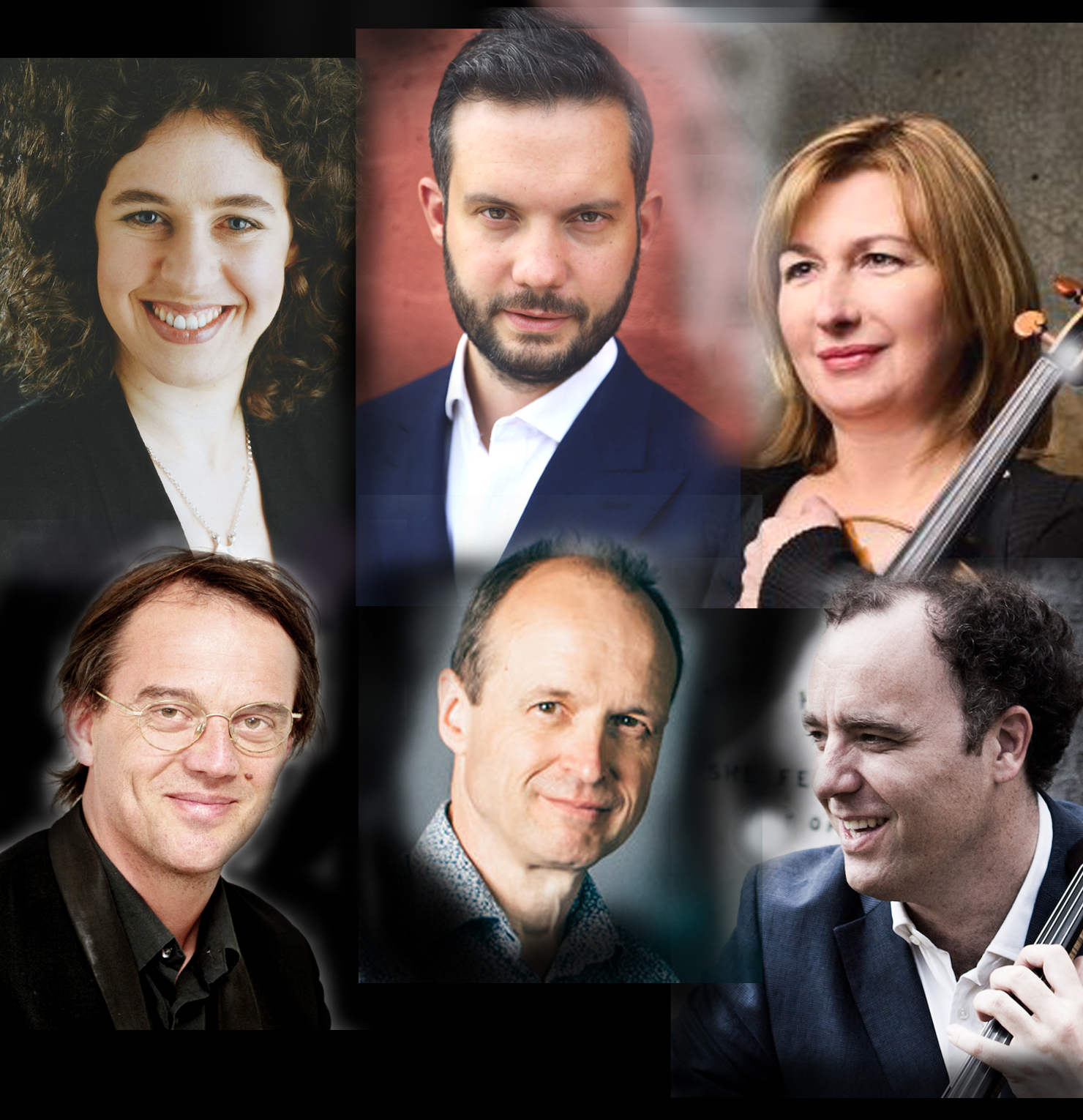
Royal Academy of Music Students [Christopher Vettraino (oboe), Silvia Bettoli, Johan Stone (horns), Magdalena Riedl (violin), Gordon Cervoni (viola)], Members of the Nash Ensemble – Adrian Brendel (cello), Alasdair Beatson (piano)

Colin Matthews Time Stands Still (2004)
Balency-Bearn Entre-Deux (2022)
Alberga No-Man’s-Land Lullaby (1996)
Keting before we were ocean (2021)
Colin Matthews Dual (2021)
Abrahamsen Congratulations Greeting (2022)

Nash Inventions

Claire Booth (soprano), Mark Padmore (tenor), Nash Ensemble [(Philippa Davies (flute), Gareth Hulse (oboe), Richard Hosford, Marie Lloyd (clarinets), Richard Watkins (horn), Sally Pryce (harp), Benjamin Nabarro, Michael Gurevich (violins), Lars Anders Tomter, Jennifer Stumm (violas), Adrian Brendel (cello), Graham Mitchell (double bass), Alasdair Beatson (piano)] / Martyn Brabbins

Casken Misted Land (2017)
Colin Matthews Seascapes (2021)
Anderson Van Gough Blue (2015); Three Songs (2018-22) [World Premiere of THUS]
Benjamin Viola, Viola (1997)
Turnage A Constant Obsession (2007)

Wigmore Hall, London
Tuesday 28 March 2023 (5pm and 7.30pm)

Reviewed by Richard Whitehouse

It has become such a fixture on the London calendar that Nash Inventions, given annually by the Nash Ensemble at Wigmore Hall, could easily be taken for granted. As tonight’s concert proved, however, the range and quality of those works performed is anything but predictable.

His long-time drawing inspiration from the landscape of the North-East might suggest Misted Land as a ready-made title for John Casken. Yet this quintet for clarinet and strings focusses on emotion as much, if not more than evocation by unfolding from the intangible impressions of its initial movement, via impulsive contrasts of its intermezzo, to a finale whose visceral progress is curtailed by a timely return to the initial equivocation. Richard Hosford made the most of his alternately insinuating and forceful writing in a piece that well deserved revival.

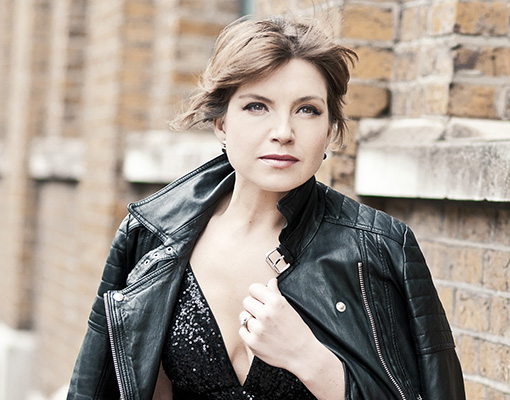
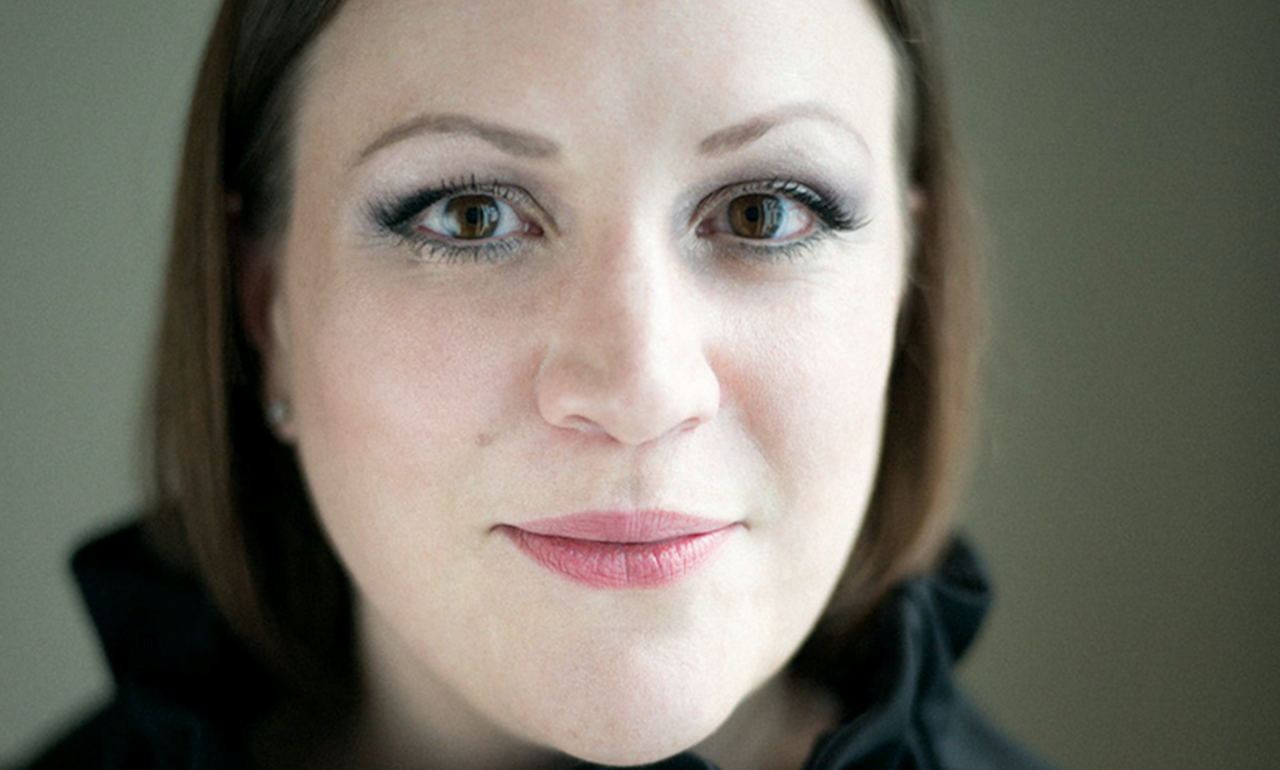
Although settings by Michael Tippett early on confirmed the musicality of his verse, Sidney Keyes (1922-43) has been relatively little set – making this selection by Colin Matthews in Seascapes the more welcome. From the unforced rhetoric of The Island City, it takes in the fleeting sensations of From : North Sea and the tense rumination of Night Estuary; a brief Interlude leading to the heartfelt expression of Seascape – one of Keyes’s greatest poems, in which Claire Booth’s commanding eloquence (above) more than vindicated the cycle as a whole.

Last in an informal trilogy centred on the colour, Van Gough Blue sees Julian Anderson pay tribute to this artist in a sequence traversing dawn to night. A speculative emergence of sound and texture in l’Aube, soleil naissant precedes the heady rhythmic and melodic interplay of Les Vignobles then mounting animation of Les Alpilles. Nothing, though, prepares for the inward rapture of Eygalières or the dance toward destruction of la nuit, peindre les étoiles: pieces wholly characteristic of this composer and as finely realized as anything he has written.

Further music by Anderson followed the interval – three in an ongoing series for soprano and ensemble identical to, but very different in usage from, that of Schoenberg’s Pierrot Lunaire. The viscerally sensual overload of Mallarmé’s Le Tombeau d’Edgar Poe (here made a tribute to Debussy in the centenary of his death) contrasted with the disarming sincerity of le 3 Mai – an email by composer Ahmed Essyad written during the pandemic, then lines by Longfellow in THUS – Claire Booth here enacting what is less a setting than a musical riposte to its text.

Writing what had become a tribute to Takemitsu 18 months after his death, George Benjamin turned what might have reflected the viola’s innate introspection into an intensive exploration by two of these instruments of how they might discover rhythmic then melodic and harmonic accord. Music diverse in content and logical in its unfolding, its technical challenges remain considerable – making this performance by Jennifer Stumm (having replaced Timothy Ridout at short notice) and Lars Anders Tomter the more engaging through its audible conviction.

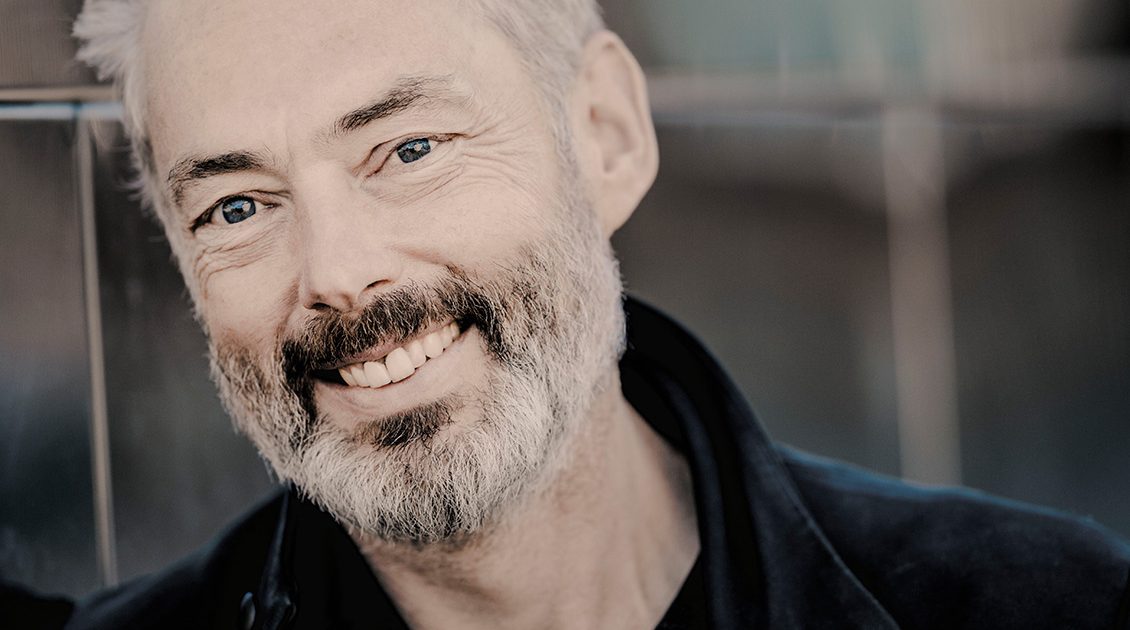
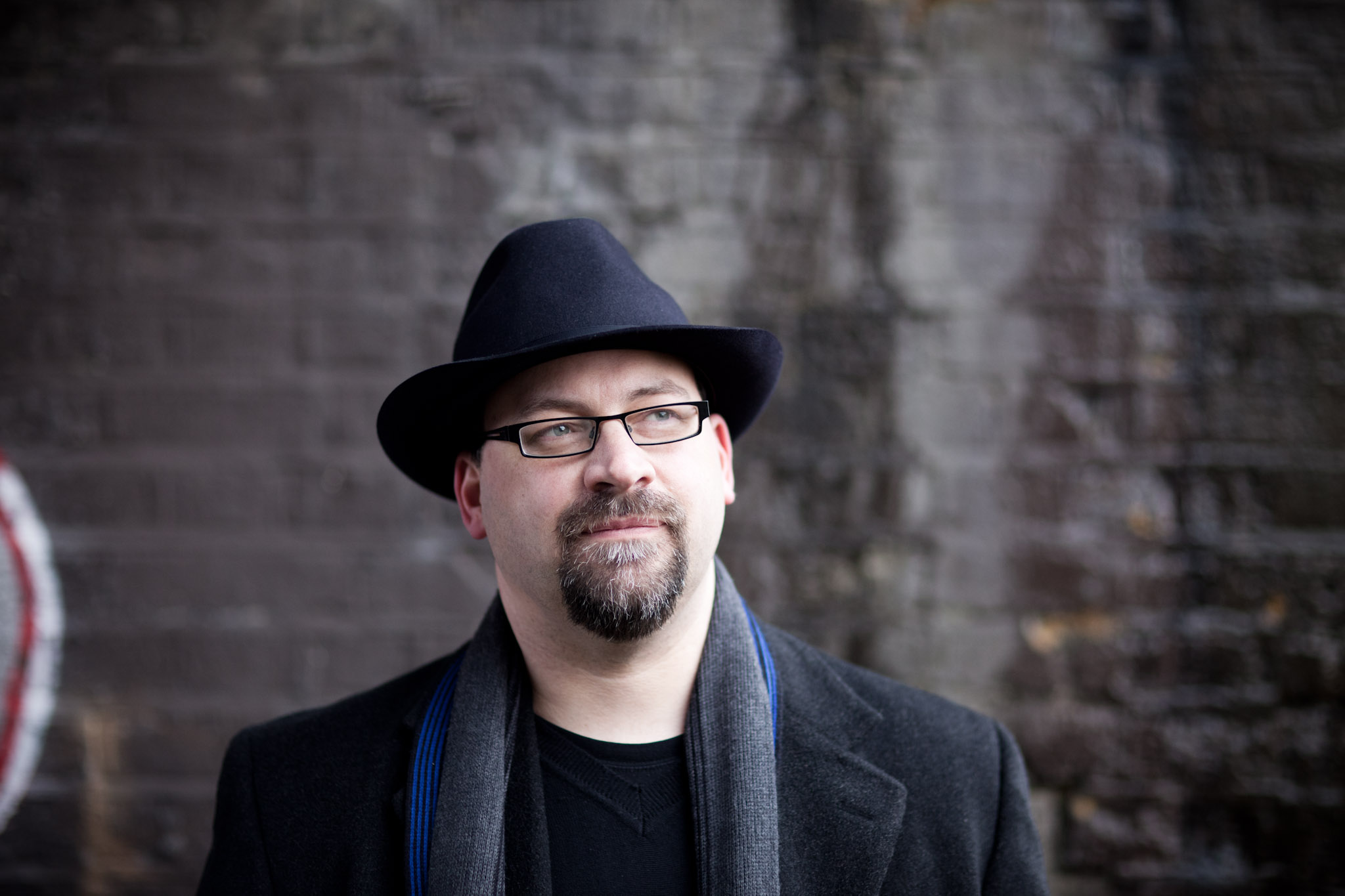
It might come a fair way back in his sizable output, but the song-cycle A Constant Obsession remains among Mark-Anthony Turnage’s finest vocal works. This reflection on ‘love’ – what it might be, what it becomes and what it could have been – is articulated across five settings of Keats, Hardy, Edward Thomas, Graves and Tennyson; its course predicted in a ‘Prologue’ and encapsulated in the bleakly humorous final poem. Mark Padmore (above) conveyed its measure now as 14 years before, as did Martyn Brabbins (below) with his attentive and unobtrusive direction.

The early evening slot brought together players from the Nash and Royal Academy of Music. Entre-Deux saw Andrea Balency-Béarn opening out the timbral and harmonic space between pitches with discreet elegance, and No-Man’s-Land Lullaby found Eleanor Alberga working toward a totemic melody with combative fervency. Sun Keting contributed music laced with nostalgia but also indignation in before we were ocean while, in Congratulations Greeting, Hans Abrahamsen commemorated the RAM’s bicentenary in lively and resourceful terms.

Colin Matthews provided a more quixotic take on that event in the subtle contrasted sections of Dual, with his music also opening and concluding this selection. Time Stands Still marked Simon Rattle’s 50th birthday in (surprisingly?) inward and even inscrutable terms, while 23 Frames marked the 30th anniversary of the Nash through that number of miniatures whose character felt as distinctive as their order was random. The outcome found this composer as his most entertaining, with no complaints if several ‘frames’ exceeded their 30-second remit.

A lengthy evening, then, and an impressive showcase for the Nash in term of marking those achievements past or present. Now is hardly the time for any complacency regarding events such as this, which remains a template for what is possible in matters of artistic excellence.

Click here for the Nash Ensemble website, and here for the Royal Academy of Music

In concert – Esther Abrami, English Symphony Orchestra / Kenneth Woods – Robert Saxton, Bruch & Mendelssohn

Avie, London 15 Feb 2011

Esther Abrami (violin), English String Orchestra / Kenneth Woods

Saxton Scenes from the Epic of Gilgamesh (2022-3) [World Premiere]
Bruch Scottish Fantasy in E flat (1880)
Mendelssohn Symphony no.3 in A minor Op.56 ‘Scottish’ (1841-2)

Sheldonian Theatre, Oxford
Friday 10 March 2022

Reviewed by Richard Whitehouse

There cannot be any more historic or atmospheric performance venues than the Sheldonian Theatre in Oxford, which is still going strong after over 350 years and the setting for this latest contribution to the English Symphony Orchestra’s ‘21st-Century Symphony Project’.

Speaking only recently, Robert Saxton stated a reluctance to call his Scenes from the Epic of Gilgamesh a symphony and yet the piece, a result of many years’ thinking about the musical treatment right for one of the oldest written texts, has a formal cohesion and expressive unity comparable to previous instalments in the ESO’s project. Scored for late Classical forces of pairs of woodwind, horns and trumpets with timpani and strings, its textural clarity serves to imbue any illustrative aspect with an abstract focus duly sustained across the five movements.

Charting a deft course over its narrative, the work heads from the fluid motion of a Prologue to The Journey to the Forest of Cedar, whose passacaglia-like evolution finds this composer at its most harmonically alluring, then to From dawn to dusk and a scherzo as tensile as it is evocative. Lament distils a tangible emotional force into its gradual yet inexorable build-up, moving straight into an Apotheosis which opens out the melodic content of earlier ideas and so brings a powerful culmination as the hero is forced to seek his immortality by other means.

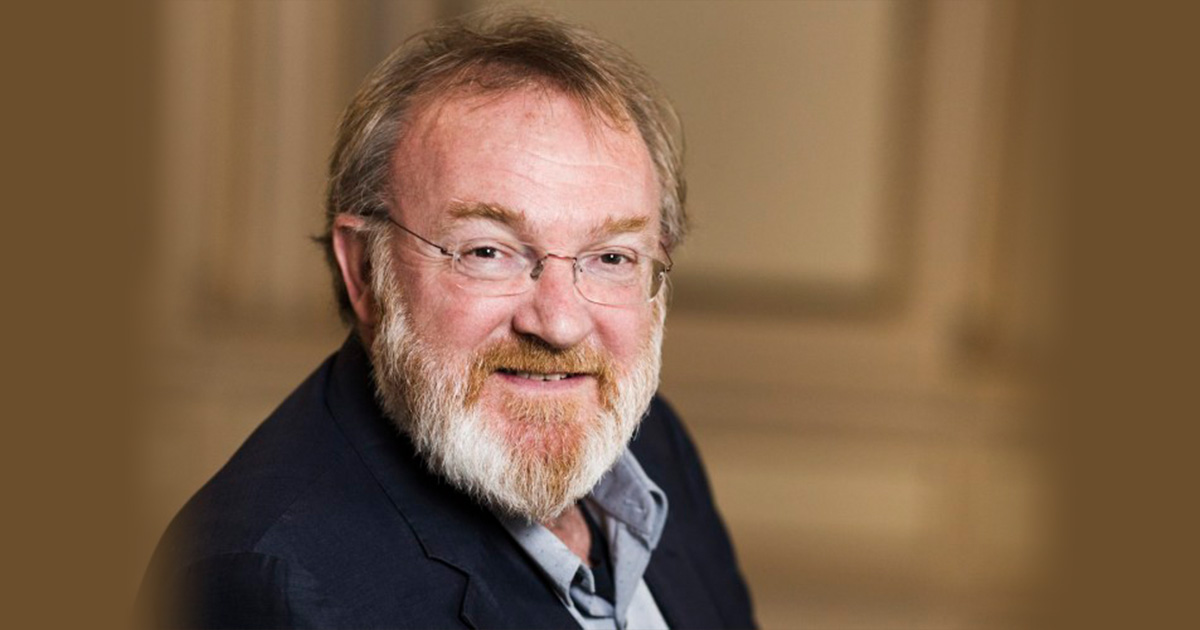
More overtly tonal it may have become, Saxton’s music still presents considerable challenges technical and interpretive. Suffice to add these were met with finesse and no little conviction by Kenneth Woods (above) and the ESO who, having previously recorded this work for future release, were fully conversant with its elusive while always approachable idiom. Almost four decades on from the flamboyant pieces which helped establish his name, Saxton revealed an orchestral mastery that will hopefully find an outlet in further such pieces – whether or not ‘symphonic’.

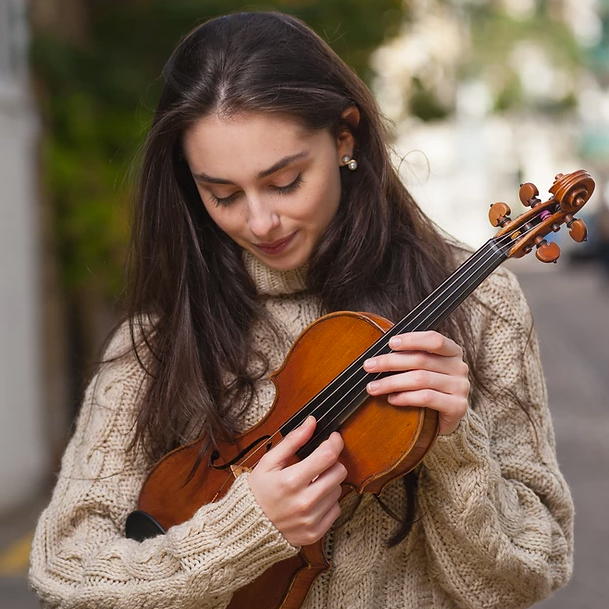
Tonight’s concert was also notable for featuring the ESO’s new Creative Partner and Artist in Residence – violinist Esther Abrami (above), her presence on social media enhanced by the release of her eponymous debut album for Sony. Stylishly attired (with an image that, for older readers, might recall Audrey Hepburn), she gave an account of Bruch’s Scottish Fantasy at its best in the transition from sombreness to eloquence of its Introduction and high-flown sentiments of an Andante in which the composer’s recourse to folk melodies is at its most felicitous. Before it, the Scherzo ideally needed more incisiveness for its engaging humour fully to register, with the final Allegro (given in abbreviated form) rather less than ‘warlike’ – though its mellifluous second theme enabled Abrami to conjure a tonal warmth which was never less than appealing.

After the interval, the ESO came fully into its own with an impressive take on Mendelssohn’s ‘Scottish’ Symphony. Whatever its genesis in his tour of that country when just 20, the work is demonstrably that of a composer who, having reached a creative mid-point, surveys his many successes but also failings. Hence the fatalistic aura such as informs the opening movement’s introduction or the tense agitation of its main Allegro – both of which were palpably brought out by Woods, who then gave the brief if scintillating scherzo its head. The highlight was an Adagio whose constant pivoting between pathos and anguish was graphically stated – aided by an orchestral discipline no less evident in the final Allegro, its martial overtones carrying through to a pause in which the decision to opt for tragedy or triumph is held in the balance.

That the work closes in triumph has often been felt its downfall but, as conveyed by Woods at a swift if not inflexible tempo, such an apotheosis is one of determination or even defiance in the face of whatever is to come. It certainly brought this concert to a memorable conclusion.

For more information on the artists in this concert, click on the links to read about Esther Abrami, Kenneth Woods and the English Symphony Orchestra. Click on the name to read more about composer Robert Saxton – who also has a page from his publisher here

In concert – English Symphony Orchestra / Kenneth Woods – American & Canadian Sounds 2

Roman Kosyakov (piano), Rebecca Wood (cor anglais), Stuart Essenhigh (trumpet), English String Orchestra / Kenneth Woods

Barber Adagio for strings Op.11a (1936)
Still (arr. Zur) Dismal Swamp (1935)
Gershwin (arr. Farrington) Rhapsody in Blue (1924)
Copland Quiet City (1941); Appalachian Spring (1945)

Kings Place, London
Sunday 19 February 2022

Reviewed by Richard Whitehouse

London appearances by the English Symphony Orchestra being so infrequent, it was good to see an (understandably) scaled-down orchestra returning to Kings Place for the series American & Canadian Sounds that is taking place under the auspices of London Chamber Music Society.

The ubiquitous Adagio that Samuel Barber arranged from his only string quartet almost had to feature here, but that was no hardship given the excellence of the ESO’s playing – the silence after its climax rightly made the focal-point around which this whole performance revolved.

Although his music never entirely went away, the extent of William Grant Still’s output has barely been explored so all credit to Kenneth Woods for championing Dismal Swamp (heard here in an effective reduction by Noam Zur). Taking its cue from a short yet intense poem by playwright Verna Arvey (Still’s second wife), this 15-minute tone poem evokes the no-man’s land between Virginia and North Carolina across which escaped slaves once fled to freedom. Its concertante role for piano subtly embedded into the orchestral texture, the music charts a progression from sombre desperation to outward elation through a subtly extended tonality (Still having studied with composers as distinct as Chadwick and Varèse) whose apotheosis elides resolve and equivocation with a fervency which was tangibly in evidence.

Roman Kosyakov was the admirable pianist here as in George Gershwin’s Rhapsody in Blue. This also was heard in reduction, Iain Farrington’s arrangement combining the immediacy of Ferde Grofé’s original scoring with the Europeanized grandeur of his later orchestration. Placing the piano rear-centre of the platform likely accounted for any occasional failings of coordination, but Kosyakov’s characterful playing – not least in the lengthy developmental cadenza and ensuing ‘big tune’ – held one’s attention through to the indelible closing bars.

The play by Irwin Shaw for which he wrote incidental music might have passed into history, but Quiet City is among Aaron Copland’s most effective shorter pieces – its halting dialogue between cor anglais (Rebecca Wood) and trumpet (Stuart Essenhigh) given context by the modal plangency of its string writing.

The programme ended with Copland’s Appalachian Spring – heard here in the familiar suite but in the original orchestration with its prominent part for piano, along with solo woodwind contributions that stand out more clearly against the string nonet. Familiar as this music may be, its understated harmonic shadings and keen rhythmic ingenuity are never easily realized in performance, and it was testament to the ESO’s playing that the piece emerged as vividly and as cohesively as it did. In particular, the penultimate sequence of variations on ‘Simple Gifts’ had an unforced eloquence (the last statement of the Shaker hymn eschewing any hint of bathos) which carried through into the coda – its evocation of community no less affecting for being so idealized, and in music such as more than warrants that misused term ‘iconic’.

A rewarding programme and a welcome London appearance by the ESO, which will be back in action next month with (inter alia) a concert at Oxford’s Sheldonian Theatre that features a major new work by Robert Saxton as part of the orchestra’s ‘21st Century Symphony Project’

For more information on the artists in this concert, click on the links to read about Roman Kosyakov, Kenneth Woods and the English Symphony Orchestra. For more on the London Chamber Music Society, click here – and for more on composer William Grant Still, click here

In concert – Allan Clayton & Kate Golla: A Winter’s Journey

A Winter’s Journey

Schubert Winterreise D911

Allan Clayton (tenor), Kate Golla (piano), Lindy Hume (director), David Bergman (videographer)

Barbican Hall, London
Wednesday 7 December 2022

Reviewed by John Earls

Before the start of this performance it was announced that Allan Clayton had a chest infection but didn’t want to disappoint the audience who were asked to bear with him. As it turned out there was nothing to bear with and it certainly didn’t disappoint.

Many people think that Schubert’s great song-cycle Winterreise shouldn’t be tampered with beyond concentrating on the singing and piano playing in this remarkable work of 24 songs. They would prefer a ‘straight’ concert performance such as that given by Ian Bostridge and Thomas Adès in this same hall in January 2015, which was indeed unforgettable (incidentally, Bostridge has written a magnificent book on Winterreise called Schubert’s Winter Journey: Anatomy of an Obsession).

This particular ‘production’ featured video projections of abstract paintings by the late Australian artist Fred Williams on two right-angled screens behind the piano. These gave a sense of landscape although not always the landscapes one might usually associate with this work. It was deftly and beautifully done. Full credit to David Bergman (videographer).

Credit, should also be afforded to director Lindy Hume and artistic director Paul Kildea. Clayton was allowed to wander around the stage although didn’t stray too far from the piano with the exception of cutting a strikingly remote figure at the side of the stage at the beginning and end. There was no overkill, just delicate touches of theatre such as Clayton lying down to sleep under the piano using his coat as a pillow in Rast (Rest). And I wasn’t the only one who chuckled (is one allowed to chuckle during Winterreise?) when a mocking finger was pointed at the pianist sounding the posthorn in Die Post (The mail-coach).

Kate Golla provided fine piano accompaniment. But it was Clayton’s show. Despite the aforementioned ailment his singing was clear, dramatic and immensely moving, Die Nebensonnen (Phantom suns) a case in point. This, combined with his considered theatricality, gave a real sense of going on the journey with him. This will come as no surprise to anyone who saw his stunning performance as Peter Grimes at the Royal Opera House earlier this year.

There is a risk that adding visual accompaniments to this masterpiece detracts (and distracts) from the power and atmosphere of the work itself. In this case they were respectful, complementary and engaging. It was an utterly compelling experience.

John Earls is Director of Research at Unite the Union and tweets at @john_earls

In concert – Zoë Beyers, English String Orchestra / Kenneth Woods – Journeys of Creation and Renewal: Vaughan Williams, Pritchard, David Matthews and Elgar

Vaughan Williams Fantasia on a Theme of Thomas Tallis (1910)
Pritchard Violin Concerto ‘Wall of Water’ (2014)
David Matthews Shiva Dances Op.160 (2021)
Elgar Introduction and Allegro Op.47 (1905)

Zoë Beyers (violin), English String Orchestra / Kenneth Woods

Holy Trinity Church, Hereford
Thursday 24 November 2022

Reviewed by Richard Whitehouse

Just a day after The Journey Home, the ESO reverted to its ‘String’ guise for this judiciously sequenced programme with two contrasted commissions framed by classics of the repertoire for string orchestra – these latter written not so far away from where this concert took place.

Acclaimed at its premiere in Gloucester Cathedral some 112 years ago, Vaughan Williams’s Fantasia on a Theme of Thomas Tallis has never been so popular as it has become this past decade. This performance did it justice – the placing of the ‘echo’ orchestra, behind the altar-screen in the imposing Victorian confines of Holy Trinity Church, abetting those antiphonal exchanges in the central section. Solo string quartet building steadily toward an impassioned culmination, from where Tallis’s theme is movingly recalled prior to the final evanescence.

Next came the welcome revival of an earlier ESO commission by Deborah Pritchard. Inspired by an eponymous series of paintings by Maggi Hambling, Wall of Water is a violin concerto which makes tangible reference to these 13 canvases as it unfolds. Their projection to the rear of the orchestra underlying a visceral as well as imagistic allure, even though the work itself is fully intelligible on its own terms – not least with a three-movement trajectory coalescing out of continuous 13 sections. Elements of Penderecki and Lutosławski can be discerned over its course, but a distinct and engaging personality is also in evidence along with a technical finesse with regard both to the solo writing and that for the strings. Zoë Beyers gave a superb account of a piece which seems sure to enter the repertoire of 21st-century violin concertos.

As too does Shiva Dances by David Matthews. The combination of string quartet and string orchestra is a potent one (see below), of which the composer has availed himself fully in this continuous sequence likely inspired as much in a description of Hindu god Shiva by Aldous Huxley as by Indian classical music. Proceeding from a slow introduction given piquancy by its modal intonations, the work comprises four dances which between them outline the four elements: an impetuous workout that represents ‘earth’, a quixotic interplay for soloists and ensemble that of ‘water’, the scherzo-like agility of ‘air’, then a lively waltz for ‘fire’ – this latter building to a forceful restatement of the opening theme, before the coda opens-out the overall expression such that what went before is rendered from a more ethereal perspective.

Kenneth Woods secured an engaging account of this appealing work, as he did of Elgar’s Introduction and Allegro that concluded the evening. As he pointed out, its main melody is a rare instance of this composer using an actual folksong, yet that never entails a lessening of formal intricacy in what becomes a latter-day recasting of the concerto grosso – reaching its emotional apex in a developmental fugue that bristles with technical challenges. A tough test for the London Symphony Orchestra, with whom Elgar enjoyed a productive association.

Suffice to add the ESO was equal to this task as in the sustained fervency of the final pages. It rounded off another worthwhile evening from this always enterprising ensemble. December brings the seasonal performance of Handel’s Messiah, with further concerts in the new year.

For more information on the artists in this concert, click on the links to read about Zoë Beyers, Kenneth Woods and the English Symphony Orchestra. For more on the composers, click on the names Deborah Pritchard and David Matthews