With more than 25 years’ worth of experience in making house music, Matthew Herbert knows more than most how to make people dance. He has done so in a wide variety of ways, none more so than in his so-called ‘domestic’ albums Around The House and Bodily Functions – where the music was made from home appliances and the human body respectively.
Musca completes a trilogy of these albums, as far as the production goes – with added vocals from eight singers who Herbert had not met at the time of recording. It is, in effect, the ultimate lockdown album.
What’s the music like?
If you liked Herbert’s 1990s deep house, with its experimental tendencies and intimate language, you’ll love this. To get his musical sounds the composer manipulated a number of sounds from around the farm where he lives – so there are cameos from the pigs, dogs and foxes to name just a few. This being Herbert the sounds are expertly treated and fashioned into the language of house music, which on this occasion is a soulful model, especially with some of the vocalists involved.
Bianca Rose stands out for her contributions to Chain Reaction, Gold Dust and Let Me Sleep. The first of these has a lovely choral effect that Herbert secures as part of his word painting, while the last is a dreamy, piano-led nocturnal number with a wide sonic scope. Verushka is another to stand out on Fantasy, which has a clunking beat reminiscent of mid-90s Herbert and a sublime vocal.
Allie Armstrong is also an ideal foil for Herbert’s music, with the sombre but curiously moving The Horror a standout among her three contributions, its lyrics especially moving. The Impossible, meanwhile, has the backdrop of what sounds like a dripping tap in a barn, but the multi-tracked vocals are like a warm blanket in the coda.
Meanwhile Hypnotised, with Mel Uye-Parker, works really well thanks to deep keyboards and lovely layered vocals to dive into. It comes off the back of the treated vocals of Joy Morgan in Two Doors, with shuffling beats the backdrop to quite an eerie experience.
Only one of the 14 tracks is instrumental, The Slip positioned in the centre of the album and taking a jazzier profile, with flute solo and plucked bass.
Does it all work?
It does, largely. Part of this will depend on your approach to Herbert, for if you started listening to him because of his house music ventures you will definitely warm to this. It has an urban and soulful charm, with its beautifully layered textures, and its songs are constantly shifting, never too repetitive.
Is it recommended?
Very much so – for Musca is an album that is at turns relaxing, hypnotic, moving and subtly inspiring. Herbert’s command of the beats ensures there is never a moment wasted.
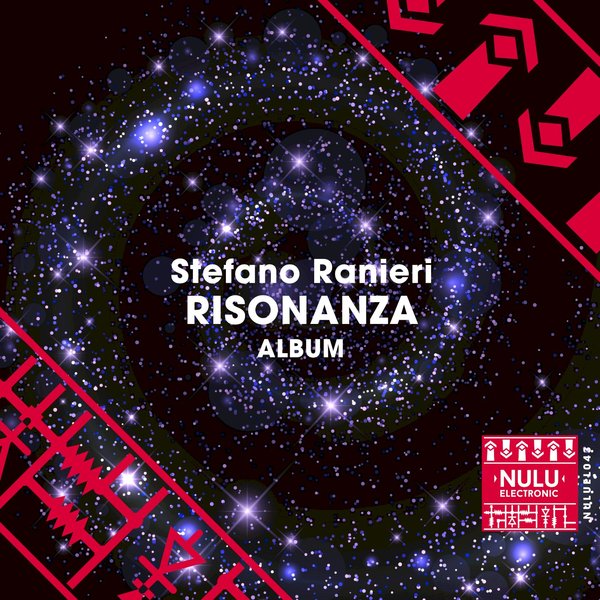
This is the first album for Italian producer Stefano Ranieri. He has been making and releasing music for around 15 years, and is now ready to dip his toes into the long player format. A list of the DJs supporting Ranieri’s work includes Carl Cox and Masters At Work, says much about his reputation built up in that time, and also the styles of dance music he gravitates towards.
What’s the music like?
Excellent. Ranieri uses all his experience of making dancefloors move to come up with a wide range of tracks that fulfill that brief perfectly. Koncept One has a touch of Lil Louis about it, with a great vocal rant ‘you’re not free, you’re a slave’. It comes after Your Time Is Up has set a smoky scene with a really good loping beat.
1942 has a powerful vocal and a strong piano line. C’est Terrible goes more acidic but counters that with a really good, slightly tribal sample. Saulè punches through a bassy electro riff, while a minimal cut like Karming Deep works really well as it has a good vocal cut to go with its keyboard hook. Die Of Pain has a real gravitas, taking the tail end of a Martin Luther King speech. Of Course is excellent too, rolling along nicely.
Does it all work?
Consistently. Ranieri knows what works on the most basic level, and has the confidence to let his beats do the talking. Each of the fifteen tracks is excellent, really well paced, and does all the right things – without ever being routine.
Is it recommended?
Enthusiastically. Risonanza is a really fine piece of work, whether you approach it from a house, techno or electro direction. Stefano Ranieri can be proud of his achievement.
Stream
Buy
You can listen to clips from the album and purchase Anywhere Here on Traxsource
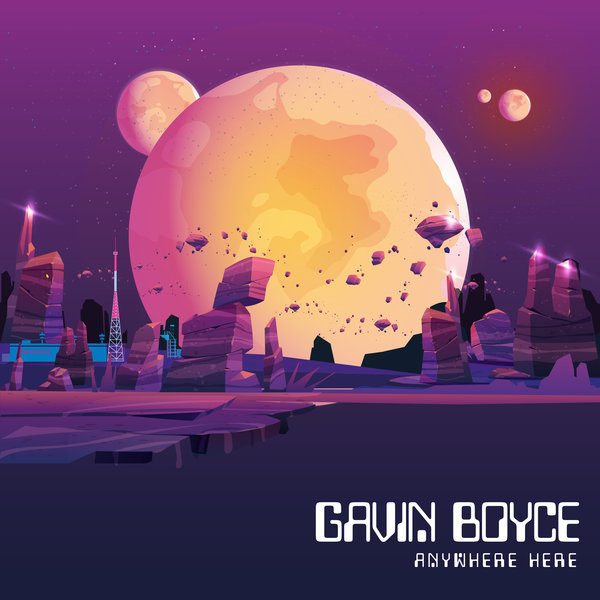
It has been out for a couple of months, but when you consider the debut album from Irish producer Gavin Boyce has been two decades in the releasing, what’s a few days between friends?! In that 20 years Boyce has been concentrating his endeavours on the single or EP format, with a stream of high quality house, techno and deep disco releases, many of them released on the excellent Canadian label Nordic Trax.
Their relationship goes back to 2012, and includes the much-loved Haboo, but his reputation for quality and positive house goes back a long way before then, with a fine bouncy vocal track called So Obvious getting pride of place on a Sessions mix by Mark Farina in 2006.
Anywhere Here contains a 2021 album mix of Haboo and a new version of Boyce’s 2008 release Face Down, alongside 10 other originals.
What’s the music like?
You don’t have to spend much time at all with Anywhere Here to know that it carries the imprint of an experienced production hand. Yet with Boyce experience has never bred over-familiarity, and he has always had a strong inventive streak running through his house music. Each of the instrumental tracks here on the carries a spark, a spring in its step, with a bit of class too.
Try Be Grand, a really strong nocturnal track that introduces itself with a slightly dubby tread. Haboo is predictably brilliant, an airy version for the album capitalising on its strong reputation, while Radarz has a similar open air feel, powered largely by a two chord progression on the piano.
Boyce’s beats are reassuringly solid throughout, with tracks like Olive Groves ideally paced and structured. Face Down introduces some sharper tones, while the flowing piano on Kitui has an end of day warmth, with the poolside beckoning. Anywhere Here, the last of the dozen, is arguably the best with its probing melody.
Does it all work?
Yes. Boyce stretches his 12 tracks over 80 minutes and structures them like a DJ set, so the peaks and troughs are beautifully managed, with an assured selection of beats and grooves that keep their vitality throughout.
Is it recommended?
It is, provided you bolster your Gavin Boyce collection with a selection of mixes from the singles he’s already released on Nordic Trax. Anywhere Here shows off his prowess as an album artist though, capable of keeping the floor full as the dozen tracks take us on a journey filled with strong, colourful grooves. All Boyce needs to do now is make sure he doesn’t leave it another two decades for the next one!
Stream
Buy
You can listen to clips from the album and purchase Anywhere Here on Beatport
Conclave is a musical collective under the wing of the multi-talented instrumentalist and vocalist Cesar Toribio. With his roots in the Dominican Republic and Florida, Toribio acquired a love of rhythm-based music through playing drums in church, studying jazz music in Boston, and garnering an appreciation of Afro and Latin-based rhythms.
The name ‘Conclave’ is an accurate identity for his aims, explained in the press release as an amalgamation: con (with) + clave (a unifying rhythm that holds the key to unlock dances both ancestral and contemporary).
What’s the music like?
Joyous. When thinking about dance and rhythm-based music it is so easy to take it for granted, to forget what an impact it can have on a community and how important it is to boosting moods in these difficult times. Cesar Toribio takes music back to those first principles, recognising the elemental feelings his music can provide, and because of that his self-titled album feels like a pure celebration of music. The album turns out to be as colourful as its cover.
To give some of the many highlights, the rich layers of There’s Enough are brightly coloured and enormously uplifting. Habla has a persuasive, swaying rhythm capped by a brilliant trumpet solo. Somehow All That I Need, featuring Sharin, is even better, with a winsome give and take between the two vocalists. Meanwhile Twice, while a little more introspective, features a squelchy bass and sun-drenched keys.
A soaring vocal takes Rise to the next level, while the much loved Perdón dazzles with its shimmering textures, a strong communal presence. The extended Alati Yeye Chege is hypnotic, while the album signs of with some irresistible, Todd Edwards-type funk on Take Heed (No Sunlight).
Does it all work?
Yes. The rhythms are gloriously instinctive, and production levels are just right so that the music has plenty of room to breathe, keeping its elements to the fore.
Is it recommended?
Heartily. For those of us in the Northern Hemisphere who are mourning the loss of our summer, the occasional appearance of the sun should be soundtracked by this album. It may have been out for a couple of months but if you haven’t got it yet, you are encouraged to invest in some warmer musical weather. It will go far – and comparisons with Masters At Works’ Nu Yorican Soul offshoot are well-earned.
This year in the Summer at Snape series, Britten Pears Arts has been presenting premieres of new arrangements of works by Benjamin Britten. The last in the series will be composer Joseph Phibbs’ arrangement of Britten’s landmark orchestral song cycle Our Hunting Fathers for the chamber forces of the Hebrides Ensemble and soprano Elizabeth Llewellyn. Described by Britten as ‘my real Op.1’, the piece represents the full flowering of his creative relationship with W.H. Auden, who supplied the texts for the three middle poems, writing his own new verse for the Prologue and Epilogue. It is also the first of Britten’s works to explore the theme of humans’ inhumanity, which ran as a thread throughout his life and music. Arcana was able to talk with Joseph about his arrangement, and about the meaningful relationship he has with the music of its composer.
BH: I understand you have a long-standing relationship with Britten’s music. Can you remember the first time you heard anything by him?
JP: I was around 13, and borrowed some cassettes of the String Quartets from my local library. The opening of No.1 immediately captivated me, the violins and viola sustaining a soft cluster of notes at the very top of their registers, with gentle cello pizzicato gestures beneath. The sound world had a disorientating effect, one that was totally alien as well as extraordinarily beautiful. My impressions were of wide landscapes bathed in a glowing, evening light, and it may indeed have been influenced by the impressions Britten had of America around the time he composed it.
A few months later, I heard the Dirge from the Serenade for tenor, horn and strings, which was riveting, and shortly after became obsessed with Peter Grimes, listening to it non-stop, before making a pilgrimage to The Red House when I was about 16.
I was incensed by a documentary that had just been made called J’accuse, which dismissed most of what Britten composed after 1945, and spoke at length to the curator about it, who kindly allowed me look around the Britten-Pears Library (perhaps to calm me down!). I remember picking up a stone from the drive way, in the hope that Britten’s shoe may have graced it 20 years earlier..
It all sounds crazy to me now (it probably was crazy), but my reverence for Britten has never really left me. He strikes me as an extraordinary and mysterious figure, a workaholic who was in some ways compelled to compose because his own irrepressible genius.
When I first heard Our Hunting Fathers it made an incredibly strong impression on me, and I found it emotionally very powerful. How did you respond on first hearing?
Of Britten’s mature works, it was one I knew less well. Having now rediscovered it, I can see how remarkable it is. Britten’s technique was fully formed when he composed it in 1936, at the age of 22, and although it’s his first mature work to include orchestra the scoring is both impeccably judged and extremely imaginative in ways that would have been unusual at the time. He himself regarded it as his first ‘real opus 1’, so clearly felt he had achieved something important. It’s also his first large-scale expression of pacifism. Fascism was on the rise throughout Europe at the time – the Spanish Civil War erupted while the piece was being composed – and Auden’s juxtaposition of ‘German’ and Jew’ (dogs in a hunting pack) at the close of The Dance of Death has a chilling prescience in light of how the world would look ten years later. In some respects it’s an atypical work for Britten, a reason why even some of his detractors have a soft spot for it.
How would you describe Britten’s ability at scoring for orchestra?
As mentioned above, there’s a certain glow to his sound, as well as a clarity and lightness of touch, which I’ve always loved. His music is the opposite of ‘dense’, and he disliked orchestral music that sounded heavy (famously so in the case of Brahms – though also in some Beethoven). He discovered new ways of approaching the orchestra throughout his life; the textures of Peter Grimes, for example, are completely different from those of A Midsummer Night’s Dream or Death in Venice. The melodic and harmonic aspects of his music are always perfectly aligned to his orchestration, and can’t really be divorced from it. For this reason, in this arrangement the original orchestral colour has been kept as possible, and elsewhere I’ve tried to imagine what Britten would have done were he scoring for a small ensemble.
What other Britten works do you particularly admire?
I drift in and out of pieces, and am at the moment re-familiarising myself with Rejoice in the Lamb, another early work. Death in Venice is my favourite opera, and Les Illuminations has always been high on my list. A Boy was Born, which predates Our Hunting Fathers, is to my mind one of the most extraordinary works in the repertoire, and the pinnacle of his choral writing from a technical angle. I discovered the cello suites through the superb Tim Hugh recordings around 15 years ago, and they became a big influence on my work. They are perhaps his most private, intimate pieces.
In recent years I’ve enjoyed getting to know his more obscure works better: Prelude and Fugue, for example, and The Journey of the Magi, both wonderful pieces. Occasionally pieces I haven’t listened to for several years suddenly come alive again through an unfamiliar recording, as with Noseda‘s live LSO recording of War Reqiuem, or Iona Brown‘s riveting take on Variations on a Theme of Frank Bridge.
How did the commission come about?
I was asked last year by Roger Wright at Britten Pears Arts – on Colin Matthew’s recommendation – to make this new arrangement, in part due to COVID restrictions. I discussed the instrumentation with William Conway, Artistic Director of the Hebrides Ensemble, and we decided on a scoring that would be compatible with the Sinfonietta Op.1, in the hope that these two pieces might be programmed together in the future. Boosey and Hawkes, who publish the work, granted permission, and it was then then a matter of gaining an overview of the whole piece, isolating particular sections that might be more challenging than others, and then working from beginning to end.
In Britten’s scoring for Our Hunting Fathers I felt I could detect the influence of in the idea of chamber-like passages in a work set for symphony orchestra. Was this something you were conscious of?
The chamber ensembles that emerge in parts of Mahler were clearly an influence, and his imagination had also been fired by Schoenberg, Berg, and Stravinsky, if not harmonically then in a more transparent, colouristic approach to scoring. It’s an unusual piece for the time in which it was written, when a denser approach to orchestral writing in England would have been more typical. I don’t know a work of Britten’s that is more fastidiously scored; every bar is packed full of instructions, and one has the impression he was setting out the full extent of his orchestral technique for the world to see. It left the audience – including Frank Bridge – fairly baffled after the premiere, and was savaged in most of the press. Though it was performed the following year, under Adrian Boult, it had to wait until 1950 before resurfacing.
Did you refer to other smaller-scale Britten works when you were doing the arrangement? I was thinking of the economical scoring in works like Curlew River or the Nocturne.
The Sinfonietta was my closest reference point, although some of the chamber operas, in particular The Turn of the Screw, were also in my mind. Every one of the 12 instruments were essential to do justice to the piece; without, for example, the strident, brassy quality of the horn, the moments of high drama would have been lost.
It must be quite something having the premiere at Snape, and to have your own work back in the live environment.
To have something of Britten’s performed which I’ve tampered with, in the concert hall he built, feels a bit daunting. I can only hope he’d be pleased that one of his most original and neglected works might reach a wider public, albeit in a new guise.
Has Britten been an influence on your own music? I’m thinking particularly of the string quartets.
His instrumentation and orchestration has probably had the biggest single influence. The way he reinvents old forms, such as the passacaglia – which he used many times – is also intriguing. But more than that, it’s his willingness to be emotionally direct which I find so appealing. His music has a spontaneity which I adore; there’s no struggle in order to enjoy it, since his technique is so impeccable. The music seems to move in a direction that it could only go, and in this sense there’s a mastery of judgement – of effortlessness and inevitability, as in Bach or Mozart – which is extremely seductive. His ability to enthral and yet not confuse is, for me, one of the hallmarks of his genius.
How would you describe your new Cello Sonata?
This is a joint commission between Wigmore Hall and Hatfield House Chamber Music Festival, which will host the premiere by Guy Johnston and Tom Poster at the end of September. I got to know Guy’s playing more intimately while composing the work, and have since become a huge fan. Tom, who I’ve worked with before, is also a superb musician, so I couldn’t hope to be better served. The work is written in memory of someone I’d worked with closely, who passed away in his early 50s, and this lends the piece an elegiac quality at times. It’s in several movements, some linked, and includes an arrangement of a 16th Century pavane, in a movement entitled Ghost Dance, as a link to Hatfield House, where Elizabeth I lived as a child.
Is it important for you to have a friendship / understanding with your performers in the way that Britten had with his?
In a few cases, such as my Clarinet Concerto or Letters from Warsaw, I’ve written for close friends whose playing I know well. In other cases, it’s important for me to have a clear grasp of the technical capabilities of the performers, assuming it’s a commissioned work. Aside from that, it’s a question of trying to ‘ find the right notes’, as Britten put it, and to that extent the process is a personal and sometimes chaotic one, involving a large number of ideas and sketches. I get nervous sharing drafts before the piece is finished, as a player’s response – whether positive, negative, or silent – can divert you from what you intended to do.
What else are you working on at the moment?
I’m writing some guitar miniatures for a superb young player, Alex Hart, as well as a set of pieces for Tom Kimura – a wonderful pianist who I studied with at The Purcell School. After that, I’m starting a string piece for the Britten Sinfonia, and also gathering ideas together for a Violin Concerto.
JosephPhibbs’ arrangement of Britten’s orchestral song cycle Our Hunting Fathers for the chamber forces of the Hebrides Ensemble and soprano Elizabeth Llewellyn receives its world premiere at Snape Maltings on Tuesday 24 August. More information can be found here.