On record: Anders Hillborg: Sirens, Cold Heat, Beast Sampler (BIS)

Hillborg Beast Sampler (2014); O dessa ögon (2011); Cold Heat (2010); Sirens (2011)

Royal Stockholm Philharmonic Orchestra / Sakari Oramo (Beast Sampler)

Hannah Holgersson (soprano), Royal Stockholm Philharmonic Orchestra / Sakari Oramo (O dessa ögon)

Royal Stockholm Philharmonic Orchestra / David Zinman (Cold Heat)

Ida Falk Winland, Hannah Holgersson (sopranos); Eric Ericson Chamber Choir; Swedish Radio Choir; Royal Stockholm Philharmonic Orchestra / Esa-Pekka Salonen (Sirens);

Summary

BIS’s second disc devoted to the music of Anders Hillborg (b1954), currently the highest profile composer in Sweden, comprises two of his more recent orchestral works, together with Sirens, his most ambitious piece to date; directed by three leading interpreters.

What’s the music like?

The disc opens with Beast Sampler, a nine-minute evocation of the orchestra as a (to quote the composer) ‘‘sound animal’’ that draws on extended instrumental techniques as well as electronically influenced textures in music. It essentially translates Ligeti’s mid-1960s idiom (specifically Lontano) into a demonstratively post-modern context. Colourful and not uneventful, this is music dependent not on what is said but rather the effectiveness of how it is said. Judged solely as a curtain-raiser, moreover, this is entertaining enough – but no more.

The dichotomy between technique and substance is more acutely exposed in Cold Heat, a three-way commission between orchestras in Berlin, Helsinki and Zurich. Its cosmopolitan genesis is embodied in the range of its influences while culminating in that staple of present-day resolutions – the Sibelian apotheosis. The continued recourse to this evinces as limited an understanding of what the Finnish composer was doing comparable to those ‘advocates’ from the interwar era. Good for first impressions, though.

Of the two vocal items, O dessa ögon (Oh these eyes) is a brief setting of verse by Swedish poet Gunnar Ekelöf whose aura of distanced ecstasy is eloquently conveyed by soprano and strings. At just over four minutes, it is easily the most substantial composition on this disc.

Which duly puts into perspective the qualities of Sirens. Opulently realized for two sopranos, mixed choir and orchestra – and, at just over half-an-hour, Hillborg’s most ambitious work to date – it utilizes lines from Book XII of Homer’s Odyssey (albeit expanded by the composer) where Ulysses is being implored by the sirens to abandon his voyage and submit to their fatal entreaties.

Once again, the technical realization leaves little to chance – Hillborg summoning considerable elegance and finesse from his forces such as makes for undeniably pleasurable listening. Yet the sheer consistency of the mood being sustained engenders monotony well before the work is concluded, taking in an amorphous central climax before subsiding into a long postlude which seems little more than an extended fadeout as empty as it is enervating.

Does it all work?

On its own terms, undoubtedly. As mentioned, Hillborg is a consummate technician able to bring any number of stylistic traits into viable accord. Nor is there any doubting the overall excellence of response displayed by the Royal Stockholm Philharmonic Orchestra under its trio of renowned conductors, or the all-round depth and spaciousness of the sound. Scratch beneath the surface, though, and the limitations of this music are evident: Hillborg is simply unable to offer much of substance to flesh out his dazzling surfaces or his enticing textures.

Is it recommended?

Yes, on the basis that Hillborg is undoubtedly a composer of the moment and this collection affords a representative overview of what his music is about. Admire it on a first and even second hearing, then ask yourself just how much more you need to listen to this in future.

Richard Whitehouse

Watch Kent Nagano conduct the Gothenburg Symphony Orchestra in Beast Sampler below:

HILLBORG’S Beast Sampler – Kent Nagano from Göteborgs Symfoniker on Vimeo.

Have a listen on Spotify below, to see if you agree with Richard’s verdict!

On record: Colin Matthews: Violin Concerto, Cortège, Cello Concerto No. 2 (NMC)

matthews

Colin Matthews: Cortège (1988)*. Cello Concerto No. 2 (1996)**. Violin Concerto (2009)***

***Leila Josefowicz (violin); **Anssi Kartunen (cello); *Royal Concertgebouw Orchestra / Riccardo Chailly; BBC Symphony Orchestra / **Rumon Gamba and ***Oliver Knussen

Summary

A welcome (and timely!) release of three major pieces by Colin Matthews, who celebrated his 70th birthday last year and whose involvement – as producer and promoter – in British contemporary music has sometimes obscured his considerable contribution as a composer.

What’s the music like?

The three works offer a viable overview of Matthews’s orchestral output over two decades. Earliest is Cortège – written for the Orchestra of the Royal Opera House and its then Music Director Bernard Haitink, and a notable instance of the Mahlerian strain in this composer’s thinking. Unfolding over an inexorable tread, this diversifies incrementally for a convulsive central section as duly brings an intensified resumption of the initial music and an explosive culmination before subsiding into nothingness. Under Riccardo Chailly, the Concertgebouw gives an impressive account of a ‘processional’ such as has featured prominently in modern British music (Birtwistle’s The Triumph of Time and John Pickard’s Channel Firing come immediately to mind), and which here sustains its monumentality with impressive purpose.

Although by no means an understated piece, the Second Cello Concerto is appreciably more varied in mood and diverse in its formal construction. Its five movements play continuously – the angular central ‘Scherzo’ framed by two ‘Song without text’ movements of an arioso-like expressiveness; these, in turn, are flanked by a ‘Declamation’ whose recitative-like austerity is transmuted in the final ‘Resolution’ towards an incisive resolve. Written for and premiered by Mstislav Rostropovich (whom memory recalls played it rather poorly), the piece finds an admirable exponent in Anssi Karttunen, who audibly appreciates the underlying subtlety of a conception more ‘concertante’ than ‘concerto’ in its emphasis. Hopefully this belated release will encourage further hearings of one of the finest such works from the past quarter-century.

The most recent piece here, the Violin Concerto (2009) was commissioned by Birmingham’s Feeney Trust, whose portfolio amounts to a fair conspectus of post-war British music – one to which this concerto is a notable addition. Its harmonic basis may stem from Mahler and Berg but its rhythmic incisiveness, notably the tensile solo writing, recalls Prokofiev and Walton. The first of two movements elides twice between slower and faster material with understated intent, so allowing its successor to open-out expressively via an acceleration from measured intensity to headlong propulsion at the close. The work is finely realised by Leila Josefowicz, her rendering of a solo part virtuosic for all its lack of display highlighted against an orchestra which features a diverse percussion section and duly yields an enticing interplay of sonorities.

Does it all work?

Yes. Matthews has long been a composer fighting shy of stylistic straitjackets, with the result that his diverse output sometimes lacks focus or consistency. Not so the three pieces featured here, demonstrating a keen handling of form and an equally well-integrated expressive range.

Is it recommended?

Indeed. The sound leaves little to be desired, while the booklet notes are informative and not unreasonably enthusiastic. A pity, even so, that it has taken so long for at least two of these recordings to be made available: musicians and listeners alike need to be aware of this music.

Richard Whitehouse

Further information at the NMC website

On record: Max Richter – Three Worlds: Music from Woolf Works (Deutsche Grammophon)

max-richter

Summary

For his follow-up to the extraordinarily successful SLEEP, Max Richter turns his attentions to the works of Virginia Woolf. He has been working on a Royal Ballet production with Wayne McGregor, and this full length album documents his responses to Woolf’s novels.

The resultant soundtrack features Woolf’s own text, read by Sarah Sutcliffe, Gillian Anderson and the author herself, her only surviving recording, where she reads Craftsmanship to the eerie backing of Big Ben. Anderson reads her suicide note, a deeply felt letter to her husband to which Richter responds with the extended meditation Tuesday.

What’s the music like?

Richter shows his versatility as a composer throughout this album, drawing on his legacy as an electronic composer but showing also how he continues to effectively exploit analogue instruments.

The music for Mrs Dalloway is incredibly intimate and has a small-scale setting to go with it. Utterances like Words and In the garden are simplicity itself and are subtly scored, while War anthem features a resonant cello, beautifully played by Hila Karni, that soars in the spirit of John Tavener.

Orlando contains a varied selection of shorter pieces. Morphology has a lovely, open texture, and like a few of the numbers here it would have been nice for the music to have longer to open out and present itself fully. Perhaps because of the constraints of the director, some of Richter’s music adopts more of a sketch form here.

That is emphatically not the case for the final, heartrending Tuesday, Richter’s response to the suicide note that makes up the whole of the Waves section. It is a powerful meditation, deliberately written to connect with Zen Buddhism, and comes close to Hans Zimmer’s music for Interstellar in mood. Richter’s musical development is subtle, the elegiac motif generating a deep and lasting power that leads to a final, exhausted coda.

The Waves, Woolf Works from Ravi Deepres on Vimeo.

Does it all work?

Mostly, and it presents Richter as a multifaceted composer who can work on the small scale of chamber music but also a larger orchestral stage. Tuesday is a really impressive piece of work, showing how he can command the attention of an audience over a longer structure – which SLEEP did of course, but in a very different way!

The music for Mrs Dalloway is very simple – too much at times – but at its best is also deeply effective. The sensitive use of speech around the music is effective.

Is it recommended?

Yes. Not always the cheeriest album, Three Worlds does nonetheless become both a restful and emotionally powerful piece of meditation, a heartfelt response to the works of one of Britain’s finest 20th century novelists.

Ben Hogwood

Listen on Spotify

On record: A Winged Victory For The Sullen – Iris (Erased Tapes)

winged-victory-for-the-sullen

Summary

For their third album A Winged Victory For The Sullen, the duo of Adam Bryanbaum Wiltzie and Dustin O’Halloran, have turned to film. Given the deeply atmospheric music of their first two extended works this was perhaps an inevitable move, though was made at the suggestion of Iris director Jailil Lespert, who had discovered their music online.

The film Iris is a remake of Hideo Nakata’s mysterious thriller Chaos, and speaks of unexpected sightings and unexplained appearances. Ideal, you would think, for a moody soundtrack laden with menace.

What’s the music like?

The Prologue sets the brooding scene and establishes the duo’s sound, a combination of beautifully scored strings and subtly used electronics. The slowly oscillating harp and long chords set a wary atmosphere, which by the time of Retour Au Champs De Mars arrives has spilled over into outright threat.

There are no obvious melodies in this music, but as you listen more the harmonic movements become ever more inevitable, the conviction of the music increasingly strong. Galerie is especially effective, the sheen of strings broken by a striking, mottled piano, while in Le Renversement there is the effect of distant gunfire, a chilling effect over static held notes.

Does it all work?

Yes. The music is very slow moving, so is not ideal for every listening situation, but the quality of writing for strings and the ability to paint dark pictures make Iris an increasingly compelling listen.

The combination of subtly used modular synths and the strings is an effective one, especially on bigger sound systems, and the music has enough about it for each part of the soundtrack to stand on its own.

Is it recommended?

Yes. Once again A Winged Victory For The Sullen show their ability to create unique and rather eerie sound worlds, and while some might find their approach a bit too dark and foreboding, there is always a shaft of light to pierce the relative gloom.

Ben Hogwood

Listen on Spotify

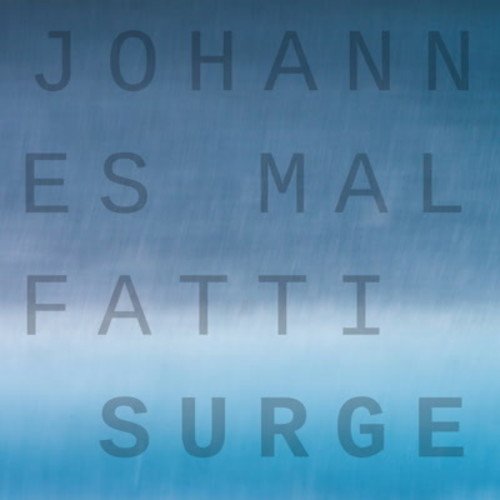
On record: Johannes Malfatti – Surge (Glacial Movements)

johannes-malfatti

Summary

Johannes Malfatti is striking out on his own. Having worked as a member of Ensemble, where he has recorded for One Little Indian and worked with Björk among others, this is his first solo venture.

Surge is a description of slow-moving natural phenomena in sound, an observation that most of these processes in the natural world – glaciers, tectonic plates, icebergs and the like – move incredibly slowly.

What’s the music like?

Surge is a single block of sound and music lasting just under an hour. In keeping with several Glacial Movement releases it feels cold, from the early spray of white noise to the closing fade of the last big chord.

As befits his objective Malfatti makes his music move at an incredibly slow tempo, but as it proceeds it builds up power and a surprising depth of emotion. This happens through a huge block of almost completely static music that slowly progresses into audible rage from around five minutes in and keeps moving.

It is the start of a broadly structured canvas where the music ebbs and flows with progressively more powerful chords. By the end the textures have progressed to an incredibly thick block of sound that the listener can dive into, before the movement slows completely and the music fades away.

Does it all work?

Yes. Best heard on headphones, Surge is a powerful expanse that I found I appreciated more with repeated listening. It slows the brain down while engaging the mind with a vivid picture of deep blues and icy greys (for me at least!), moving from darkness to light and back again.

Writing music this slow is a brave move, but the risk pays handsome dividends here.

Is it recommended?

Very much so  – but make sure you have an hour to enjoy it, as Surge only works in a complete listen.

Ben Hogwood

Listen on Spotify