On record: Music For My Love (Toccata)

music-for-my-love

Brahms (arr. Söderlind) Von ewiger Liebe
Casulana (arr. C. Matthews) Il vostro dipartir
Dean Angels’ Wings (Music for Yodit)
Elcock Song for Yodit, Op. 23
Ford Sleep
Holloway Music for Yodit
Kerem A Farewell for Yodit
Lord (arr. Mann) Zarabanda Solitaria
Pickard …forbidding mourning…
Ruders Lullaby for Yodit
Söderlind 15 Variations on a Norwegian Folktune

Kodály Philharmonic Orchestra / Paul Mann

Summary

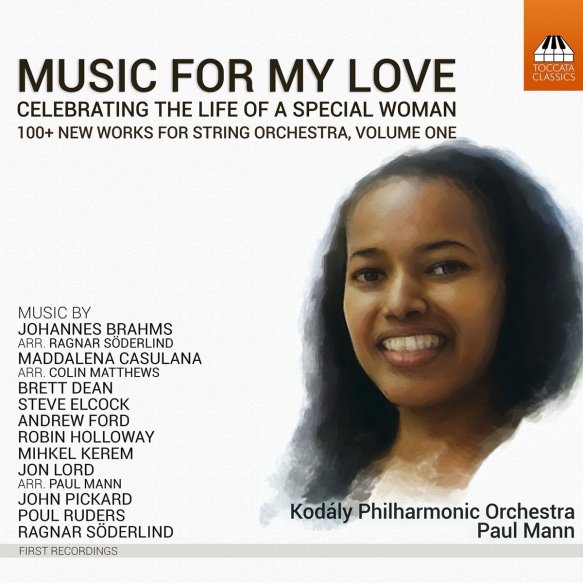
The Music For My Love project has its basis in the life, cut short by cancer, of Yodit Tekle – the Eritrean-born partner of Martin Anderson, whose desire to commemorate her in music led to his contacting those composers he knew personally, resulting in over 100 pieces for string orchestra which he intends to record for his Toccata Classics label. This first volume takes in eight pieces and three arrangements, ranging from around two minutes to a full quarter-hour.

What’s the music like?

Appreciably more varied in expression than might be expected given the context.

Among the original pieces, Robin Holloway has written a pensive elegy whose dance-like central section offers but minimal contrast, whereas Poul Ruders contributes a wistful and affecting lullaby. Mikhel Kerem’s miniature amply sustains its rapt atmosphere, while Andrew Ford takes an earlier vocal setting for his gentle round-lay. Steve Elcock conveys a consolatory mood via the subtlest of means, then Brett Dean draws on an earlier piano piece in music of ethereally diffused harmony. John Pickard draws more obliquely upon an earlier cello piece for what is the most animated of these works in its textural contrasts, while Ragnar Söderlind takes the Norwegian folksong Oh, the cooling wind as the basis for 15 variations whose cumulative impact feels a little diffused in context – for all that its emotional consistency is undeniable.

Among the arrangements, the late Jon Lord’s evocative sarabande for string quartet responds effortlessly to Paul Mann’s skilful adaptation. Framing the sequence overall, Söderlind makes of Brahms’s song a threnody of Grieg-like plaintiveness, whereas Colin Matthews draws out the assertive eloquence inherent in a madrigal by the still little-known Maddalena Casulana.

Does it all work?

Indeed, given that it would have been all too easy to assemble a programme unrelieved in its emotional range. Thanks to judicious sequencing of the pieces at hand, this disc amply fulfils its commemorative function while also making for an hour’s absorbing listen in its own right.

Is it recommended?

Absolutely, not least as the Debrecen-based Kodály Philharmonic Orchestra responds with commitment to Paul Mann’s direction. The sound endows the string textures with plenty of space and definition, while booklet annotations are as comprehensive as ever from Toccata.

Richard Whitehouse

Further instalments in this worthwhile project are much anticipated: in the meantime, read more about its continuation via the Toccata Classics website

On record: Now Comes Beauty – Commissions from the English Music Festival

now-comes-beauty

Richard Blackford Spirited (2013)

Paul Carr Now Comes Beauty (2009); Suddenly It’s Evening (2013)

Matthew Curtis A Festival Overture (2008)

Philip Lane Aubade Joyeuse (1986)

Paul Lewis Norfolk Suite (2013)

David Matthews White Nights Op.26 (1980)

David Owen Norris Piano Concerto (2008)

John Pickard Binyon Songs (2015)

Christopher Wright Legend (2013)

Roderick Williams (baritone – Pickard); Rupert Marshall-Luck (violin – Carr & David Matthews); David Owen Norris (piano); BBC Concert Orchestra / Owain Arwel Hughes (Blackford), Gavin Sutherland (all others)

EM Records

Summary

Over the decade of its existence, the English Music Festival has revived an impressive number of works from (not always deserved) obscurity and commissioned numerous others. Some of the latter are brought together on this set, with a stylistic range wider than might be supposed.

What’s the music like?

The discs adopt a roughly similar layout, each opening with an overture as makes for a lively curtain-raiser. How else to describe A Festival Overture by Matthew Curtis (b1959), its bustle offset by a lyrical melody redolent of those in Sullivan’s Irish Symphony, whereas Spirited by Richard Blackford (b1954) adds a hint of Adams-like minimalism to broaden the transatlantic appeal of his engaging piece. Of the two works featuring solo violin, White Nights by David Matthews (b1943) draws on Dostoevsky (via Bresson) and the composer’s own experiences in a haunting and eventful nocturne – later remodelled as the opening movement of his First Violin Concerto. More limited in its content and expressive range, Suddenly It’s Evening by Paul Carr (b1961) exudes a wistfully elegiac air that is no less fully conveyed by Rupert Marshall-Luck.

Carr also appears on the other disc with Now Comes Beauty, formerly a song then a motet before emerging as a miniature for strings ideal for the ‘Smooth Classics’ slot on Classic FM. Aubade Joyeuse by Philip Lane (b1950) is (to quote the composer) an ‘introduction and allegro’ that assumes mounting activity prior to its climactic fugato and vigorous close. Firmly in the lineage of British geographical pieces, Norfolk Suite by Paul Lewis (b1943) takes in the heroic setting of Castle Rising, evocative ruins of Wymondham Abbey, ruminative calm of Ranworth Broad and bustling jollity of Norwich Market over its appealing course. Further down the east coast, the Suffolk hamlet of Shingle Street had inspired Legend by Christopher Wright (b1954), its sombre yet affecting mood amply evoking the aura of this isolated place.

Of the works ending each disc, the Piano Concerto by David Owen Norris (b1953) is a three-movement entity on ostensibly Classical lines. The solo writing is as idiomatic and assured as might be expected from this fine pianist, with that for orchestra hardly less idiomatic. Yet after a well-argued Allegro, the Andante loses its way in misplaced rhetoric and emotional cliché, with the finale too reliant on its underlying jig rhythm prior to an overstretched and predictable apotheosis. ‘‘Keys have personalities’’ says the composer: his music could do with more of it.

Binyon Songs by John Pickard (b1963) might well have emerged as a song-cycle malgré-lui, but the motivic cohesion and expressive logic with which these unfold cannot be gainsaid. The first four may be relatively brief, yet the wrenching ambivalence of Nature, tenuous hope of Sowing Seed, tensile anger of Autumn Song and suffused rapture of When all the World is Hidden make their mark no less acutely than the expansive The Burning of the Leaves that makes for a cathartic ending. Roderick Williams sings with his customary poise and eloquence.

Does it all work?

Yes, in terms of the complementary and contrasting aspects which inform this collection as a whole. The set is further enhanced by the excellence of the BBC Concert Orchestra’s playing, with Owain Arwel Hughes making a welcome appearance in the two overtures and the rest of the programme directed with unstinting conviction by Gavin Sutherland. The recorded sound takes full advantage of Watford Colosseum’s spacious immediacy, while the booklet includes detailed overviews of each work and composer together with full texts for the Binyon settings.

Is it recommended?

Indeed. Since its inception, EM Records has amassed a notable catalogue of predominantly first recordings – with the present release among its most ambitious and rewarding. Uneven in overall quality though it may be, the best of the music here deserves the widest dissemination.

Richard Whitehouse

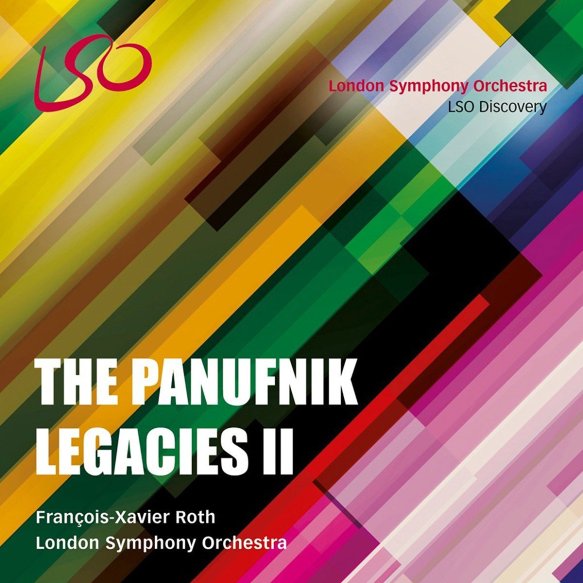
On record: The Panufnik Legacies II (LSO Live)

lso-panufnik-legacies-2

Colin Matthews, Max de Wardner, Evis Sammoutis, Christopher Mayo, Toby Young, Elizabeth Winters, Larry Goves, Raymond Yiu, Anjula Semmens and Edmund Finnis Panufnik Variations
Duncan Ward P-p-paranoia
Alastair Putt Spiral
Aaron Parker Captured
Kim B. Ashton Spindrift
James Moriarty Granular Fragments
Elizabeth Ogonek as though birds
Leo Chadburn Brown Leather Sofa
Bushra El-Turk Tmesis
Matthew Kaner The Calligrapher’s Manuscript

London Symphony Orchestra / François-Xavier Roth

Summary

Three years on and the Panufnik Legacies series continues with a disc no less substantial if perhaps less diverse than its predecessor. Beginning with a set of variations on the opening theme from what is arguably the Polish-born composer’s greatest work, this continues with nine pieces again by participants of the Panufnik Composers Scheme – all testament to the scope and ambition of the LSO Discovery project which has played a crucial, even decisive role in introducing many new composers to audiences at the Barbican and LSO St Luke’s.

What’s the music like?

Panufnik Variations comprises the ‘theme’ from that composer’s Universal Prayer (1969), followed by 11 variations that open-out its essence without always probing it in any depth. From this perspective, variations by Evis Sammoutis, Christopher Mayo, Larry Goves and Anjula Semmens (3, 4, 7 and 9) are the most perceptive, with that by Raymond Yiu (8) the most entertaining in its allusion to a more famous Panufnik work often revived by the LSO. Colin Matthews orchestrated theme, first and final variations in highly professional fashion.

Of the stand-alone pieces, Duncan Ward’s P-p-paranoia packs a fair degree of incident into compact proportions, while Alastair Putt’s Spiral takes a segment of the Fibonacci Sequence as basis for its accumulating impetus. Aaron Parker’s Captured evidently utilizes ‘‘looping techniques and ambient forms’’ for its four brief fragments without a context, then Kim B. Ashton’s Spindrift evokes abstract seascapes in its ebb and flow. James Moriarty’s Granular Fragments evolves his notions of timbre and texture over three subtly contrasted miniatures.

Elizabeth Ognek’s as though birds elides its three miniatures into a cohesive if unfocussed whole, whereas Leo Chadburn’s Brown Leather Sofa brings a de Chirico-like ethos to bear on his austere musical sculpture. Bushra El-Turk’s Tmesis draws on Arabic prosody for a piece abundant in gestures that ultimately lack distinction. Finally, Matthew Kerner’s The Calligrapher’s Manuscript looks to the model-books from Johan Hering in a lengthy (12-minute) work whose two parts respectively predicate textural density then melodic clarity.

Does it all work?

Yes, inasmuch that all of these pieces – each written between 2011 and 2013 – give notice of compositional techniques thoroughly absorbed and confidently handled. If there is a proviso, it is that most (but not all) of them seem almost too well suited to the premise of small-scale works designed to slot into an ostensibly mainstream programme without causing any undue provocation. That several composers operate in part outside of the classical domain feels of little consequence when the music in question follows so overtly a post-modernist template.

Is it recommended?

Certainly, though the greater stylistic range of the first Panufnik Legacies release (LSO Live LSO5061) is a better starting-point for those wishing to get a real sense of what this scheme is about. What is never in doubt here is the excellence of the London Symphony Orchestra’s playing as it tackles these pieces, or of François-Xavier Roth’s commitment to a cause made possible in part via the involvement of the Panufnik estate. Two years after that composer’s centenary, one can only hope his own music will retain more than a foothold in the repertoire.

Richard Whitehouse

On record: Oberon Symphony Orchestra – Beethoven, Dvořák, Grieg & Langgaard

oberon

Beethoven: Symphony No.6 ‘Pastoral’; Dvořák: Cello Concerto in B minor (Rohan de Saram (cello), Oberon Symphony Orchestra / Samuel Draper)
Recorded live at St James’s Church, Sussex Gardens, London on 19th October, 2013

Grieg: Peer Gynt – Suites Nos. 1 & 2; Langgaard: Symphony No. 4 ‘Løvfald’ (UK premiere); Sibelius: Symphony No.5 (Oberon Symphony Orchestra/Samuel Draper)
Recorded live at St James’s Church, Sussex Gardens, London on 27th September, 2014

Now nearing the end of its fourth season, the Oberon Symphony has already established itself as an orchestra equally at home in the standard repertoire and relatively unfamiliar music; its conductor, Samuel Draper, as attentive to the letter of the score in question as to the spirit that informs it. These discs, comprising two out of its 13 concerts to date, typify the questing spirit of its performances: these are presented unedited, with no attempt to disguise passing flaws in ensemble or intonation – not that this lessens appreciation of some committed music-making.

What’s the music like?

The first disc juxtaposes two seminal pieces from either end of the 19th century. Beethoven’s ‘Pastoral’ Symphony has been described as the last of his works where beauty of sound and richness of texture predominate, and Draper acknowledges this in his unforced approach to the opening Allegro then his leisurely though never sluggish handling of its Andante. Some felicitous woodwind playing here (not least with the interplay of bird-calls towards its close) is further evident in the scherzo, even if the earnest characterization arguably pre-empts the ‘Storm’ movement which emerges as sombre rather than elemental. The highlight is a finale that rightly carries the expressive weight of the whole, its progress underpinned by an elusive if tangible onward motion which holds good through to a radiant climax and searching close.

The performance of Dvořák’s Cello Concerto features Rohan de Saram, for many years the cellist of the Arditti Quartet and a soloist whose perspective on arguably the finest work in its genre is distinctive and refreshing. Thus the initial Allegro is rendered with the necessary emotional breadth, its expansive though never unduly protracted formal design confidently unfolded despite passing technical fallibilities, while the central Adagio is even finer in its mingling of wistfulness with those passionate outbursts as open-out the music’s expression accordingly. De Saram’s inward eloquence comes into its own both here and in the extended coda to the finale, an inspired afterthought (prompted by the death of the composer’s sister-in-law) whose intense retrospection makes the concluding bars more affirmative in context.

The second disc has the Oberon SO venturing into more esoteric realms with the UK premiere of the Fourth Symphony by the Danish composer Rued Langgaard. Langgaard (1893-1952) is among the more prominent instances of a creative figure who snatched defeat from the jaws of victory, yet between his heady early success and the neglect prevalent from the mid-1920s onwards is a series of works that ought to have established him among the leading European composers of his generation. Not least the Fourth Symphony (1916): its subtitle, ‘Fall of the Leaf’, is often rendered as ‘Autumn’ though the seasonal process of change and decay surely has a metaphysical and even apocalyptic resonance. Its single movement, in eight continuous sections, is best heard as an expanded sonata-form design overlaid by continuous variation.

Certainly the plunging gesture with which it opens sets the tone for what follows and Draper amply brings out this fatalistic defiance, then ensures a seamless transition into the plaintive second main theme whose opulent expansion on strings at the end of the exposition is among the work’s highpoints. Nor does the central span risk diffusiveness, Draper as attentive to the geyser-like eruptions on strings and woodwind at its apex as to the mesmeric transition when oboe unfolds a plangent melodic line over a string cluster of inward intensity. Exposed string writing is for the most part securely managed, and while Draper cannot quite prevent the final stages from hanging fire, he secures the necessary momentum heading into the coda with its startling bell-like ostinatos, then a final build-up in which dread and decisiveness are as one.

This concert commences with three pieces from Grieg’s music for Peer Gynt. ‘Morning’ is rapturously expressive, while ‘The Death of Åse’ avoids undue vehemence, its inward final bars preparing for a ‘Solveig’s Song’ whose indelible main melody never becomes cloying.
Sibelius’ Fifth Symphony is given a sympathetic if not always ideally focussed reading. The first movement is finely launched, Draper ensuring the altered exposition repeat has the right cumulative intensity, with the majestic central climax moving convincingly into its ‘scherzo’ continuation where progress can be fitful, yet the coda lacks little in velocity. More debatable is a second movement which emerges as a slow intermezzo, its progress having insufficient lightness of touch as the music takes on a greater ambivalence prior to its winsome close. In the finale, Draper elides ideally between the surging impetus and airborne rapture of its main themes; if Sibelius’ ingenious design feels at times uncertain, neither the glowing affirmation of its coda nor the decisiveness of those six closing chords (taken ‘in tempo’) can be gainsaid.

Does it all work?

On both discs, the warm while occasionally diffuse sound is in keeping with the acoustic of St. James’s Sussex Gardens, with the booklets including full personnel for each concert and some excellent booklet notes (notably from Hannah Nepil on Dvořák and Andrew Mellor on Langgaard) – though Draper’s name might reasonably have featured on both the front covers.

Is it recommended?

Yes. The discs are obtainable either at the Oberon SO’s concerts (the next of these is on September 17th), or directly via the orchestra’s website

On record: BE – One (Rivertone)

be-one

Ben Hogwood writes about the first release from an environmentally conscious label.

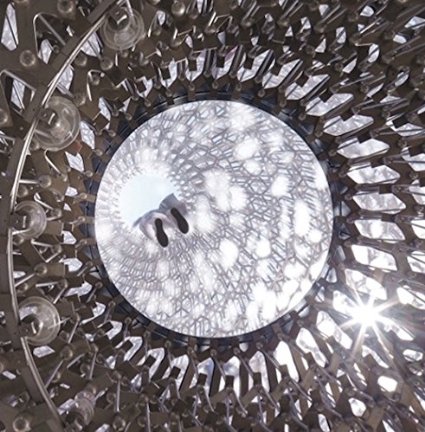
The first long playing release on Caught By The River’s Rivertones imprint, Be is the simply-titled moniker used by a group of musicians assembled to highlight the importance of the honeybee, their aim to provide a soundtrack for the UK pavilion at Expo 2015. The musicians, headed by Wolfgang Buttress, include the Sigur Rós string section Amiina, Jason Pierce of Spiritualized, Youth and cellist Deirdre Bencsik.

What’s the music like?

Extremely restful. The musicians of Be make their points with great subtlety, using field recordings to aid the imagination of natural sounds as they might be heard by the honey bees themselves.

The Journey, the first extended piece of nearly twenty minutes, begins with the clicking sound of the wren, the chirp of a singing robin and the buzz of the bees. Gradually shimmering strings come into view and a pure chord of C major is established, and then sits suspended in mid-air. The music is deceptive, for although it moves very slowly closer inspection reveals a lot of activity – rather like a beehive.

Bencsik’s cello comes into its own on the following piece Into, given expansive freedom over a soft, consoling piano phrase. Each piece of music is lovingly prepared, but given all the room it needs.

Does it all work?

Yes – this is music for the hazy atmosphere of a sunny early morning, requiring absolutely no effort to enjoy. For background listener it provides an ideal and lasting ambience, while closer inspection reveals the detail of the honeycomb in lovely technicolour. As you might expect from anything headed by Caught By The River, there are some beautiful images in the accompanying booklet, given the love and attention the music deserves.

Is it recommended?

Yes. A set of music that will calm even the most anxious of minds!

Listen on Spotify

You can judge for yourself by hearing the album on Spotify here: