Vaughan Williams – Symphonies nos. 4 & 8

Featured recording: Vaughan Williams – Symphonies nos. 4 & 8 (London Philharmonic Orchestra)
vaughan-williams-4-8

Two very different Vaughan Williams symphonies presented in live recordings by the London Philharmonic Orchestra, with the angry, resentful Fourth conducted by Ryan Wigglesworth and the seraphic Eighth under the direction of the orchestra’s chief conductor Vladimir Jurowski

What’s the music like?

Of all his nine symphonies, the Fourth, completed in 1935, is the one that sounds least like Vaughan Williams’ work. If you didn’t know the composer, you could be forgiven for thinking it was a wartime Russian work. Such is the explosion of anger at the start, the ongoing the desolation in the slow movement, the very notion of VW being a ‘green and pleasant land’ composer is thrown right out of the water.

The Eighth Symphony of 1955 is much more amiable in mood. It is not well known among the composer’s output but there are some lovely sonorities here, such as the beautiful textures at the start, where Vaughan Williams harnesses a number of percussion instruments. Celesta and vibraphone blend beautifully to make music that sounds as if it originated a lot further east than the North Sea! The large percussion section also includes three tuned gongs. The middle two movements dispense with these instruments – the third becoming a gorgeous romance for strings – while the closing minutes are full of joyous music.

Does it all work?

This is a disc of two halves. The Symphony no.4 is given a strong performance but feels rushed at times, especially in the fourth movement, where Ryan Wigglesworth zips through a lot of the arguments so fast that they sound just a bit perfunctory.

That said, the fall-out at the end of the first movement makes quite an impact, the coda sounding truly desolate, while the second movement Scherzo is spot on, thanks to a superb bassoon contribution.

In contrast the Eighth Symphony receives an affectionate performance under the direction of Vladimir Jurowski, enjoying the use of the percussion at the start, mysterious yet rather exotic too. The Cavatina is the emotional centre of this piece, ending with a lovely cello solo that rises through the layers at the end. From this point the last movement Toccata is a joyous celebration, sounding English in its folksy tunes but again enjoying the shimmering sounds the tuned percussion have to offer.

Is it recommended?

Jurowski’s performance of the Eighth is recommended without reservation, a beautifully constructed performance that enjoys the unusual orchestral colours but which is keenly emotive too. The recording from London’s Royal Festival Hall is excellent.

Wigglesworth’s Fourth – though well played – is good but not so fine that it displaces the formidable competition among its rivals. Recordings conducted by Sir Adrian Boult, Vernon Handley and Bernard Haitink are all preferable in this respect.

Listen on Spotify

You can judge for yourself by hearing the album on Spotify here:

Stravinsky – Works for piano and orchestra

Featured recording: Stravinsky – Works for piano and orchestra (Chandos)
stravinsky-bavouzet

Jean-Efflam Bavouzet, a specialist in 20th century piano music, teams up with conductor Yan Pascal Tortelier and the Sao Paulo Symphony Orchestra to present Stravinsky’s complete music for piano and orchestra. Happily this includes the wonderful Petrouchka!

What’s the music like?

Stravinsky was not a piano virtuoso in the way fellow Russians Rachmaninov and Prokofiev were, but he developed his own distinctive style of writing for the instrument.

This new collection from Chandos brings together some of the grittier works for the combination with functional titles – Movements, Capriccio, Concerto for piano and wind) with the dazzling colours of his second ballet Petrouchka. For this Bavouzet had to adapt his own routine as a soloist to go and sit in the orchestra.

Stravinsky writes with little sentiment when using the piano, and Movements, the Capriccio and the Concerto all tend to explore the instrument as a form of percussion rather than outright lyrical content. So we get punchy syncopations, spicy chords and incisive rhythms, as a matter of course – but in some of the slower moments of the Concerto there is an unexpected depth of feeling when the piano is pitted with slow brass. The Capriccio, too, can sparkle in places, with some florid writing for the right hand that seems to derive from the Baroque period.

Petrouchka, on the other hand, is a riot of melody, a circus full of orchestral tricks, with brilliant, showy figures and thrilling mixes of colour.

Does it all work?

Absolutely. The ballet receives an ideal performance in vivid sound, its orchestral inventions caught by Tortelier with crisp ensemble, sudden moments of fragility and out-and-out duels between the instruments. This bright, invigorating music is ideally contrasted by the gritty Movements, with its terse musical language.

The performances of the Capriccio and Concerto are terrific, the former with some wonderfully exuberant outbursts and the former taking time for contemplation in its slow movement. That said, the moment when then piano barges into the conversation of the winds (1’33” into the disc) is the dramatic equal of anything in the ballet.

Is it recommended?

Yes. Stravinsky may be a grumpy old so and so at times in his music, but some of his finest invention is here!

Listen on Spotify

Bavouzet’s recordings are not on the streaming service yet, but samples from each track can be heard here

Road Trip

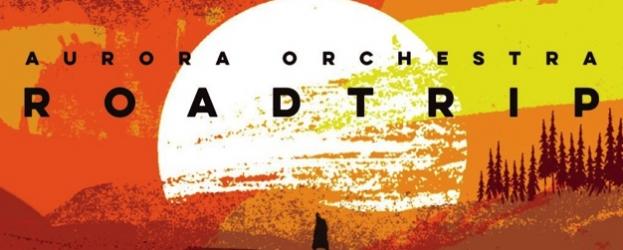
Featured recording: Aurora Orchestra – Road Trip (Warner Classics)
road-trip

In which London’s Aurora Orchestra head for the open prairies of America, sampling folk and pop song in between modern classical music from John Adams, Charles Ives and Aaron Copland. The folk and pop arrangements are done by Nico Muhly.

What’s the music like?

Very accessible. There are folk tunes arranged by Nico Muhly, who has worked with US bands like Grizzly Bear in the past, as well as establishing himself as a talented composer blending a love of old church music with a tuneful modern style, and the orchestra’s viola player Max Baillie,

The classical pieces are nicely contrasted – from the hectic Chamber Symphony by Adams to the luminous Appalachian Spring, Copland’s ballet. This features American folk tunes in fresh, open-air orchestral scoring, peaking with an arrangement of the song Simple Gifts.

Added to these we have a piece by Ives, The Housatonic at Stockbridge, taken from his Three Places In New England. Ives is incredibly difficult to describe, as he operates with so many different orchestral styles, but there are always tunes – and the slow beginning to this piece brings a tear to the eye.

Does it all work?

By and large, yes. The performances are excellent, expertly marshalled by Nicholas Collon, and are closely recorded to get the intimacy of the Copland in particular. The Adams is brisk and punchy – a good listen while running, no doubt! – and has bags of rhythmic interest. The Ives is unlike anything else, though, packing into its short duration a lifetime’s worth of feeling.

Sam Amidon and Dawn Landes sings the folksongs well but I found Nico Muhly’s orchestrations had too much going on – in part a deliberate tactic from the composer – but the ear was often distracted from the tunes themselves. The subjects are a bit macabre, too – especially The Brown Girl, with its dark tales of death and divorce.

Is it recommended?

Yes, overall. The Aurora Orchestra do these sort of themed presentations very well, and as a starting point for modern American music this can be either self-contained or open out into further exploration of the composers on the disc.

Listen on Spotify