On Record – Barry Adamson: SCALA!!! Original Soundtrack (Mute)

Reviewed by Ben Hogwood

What’s the story?

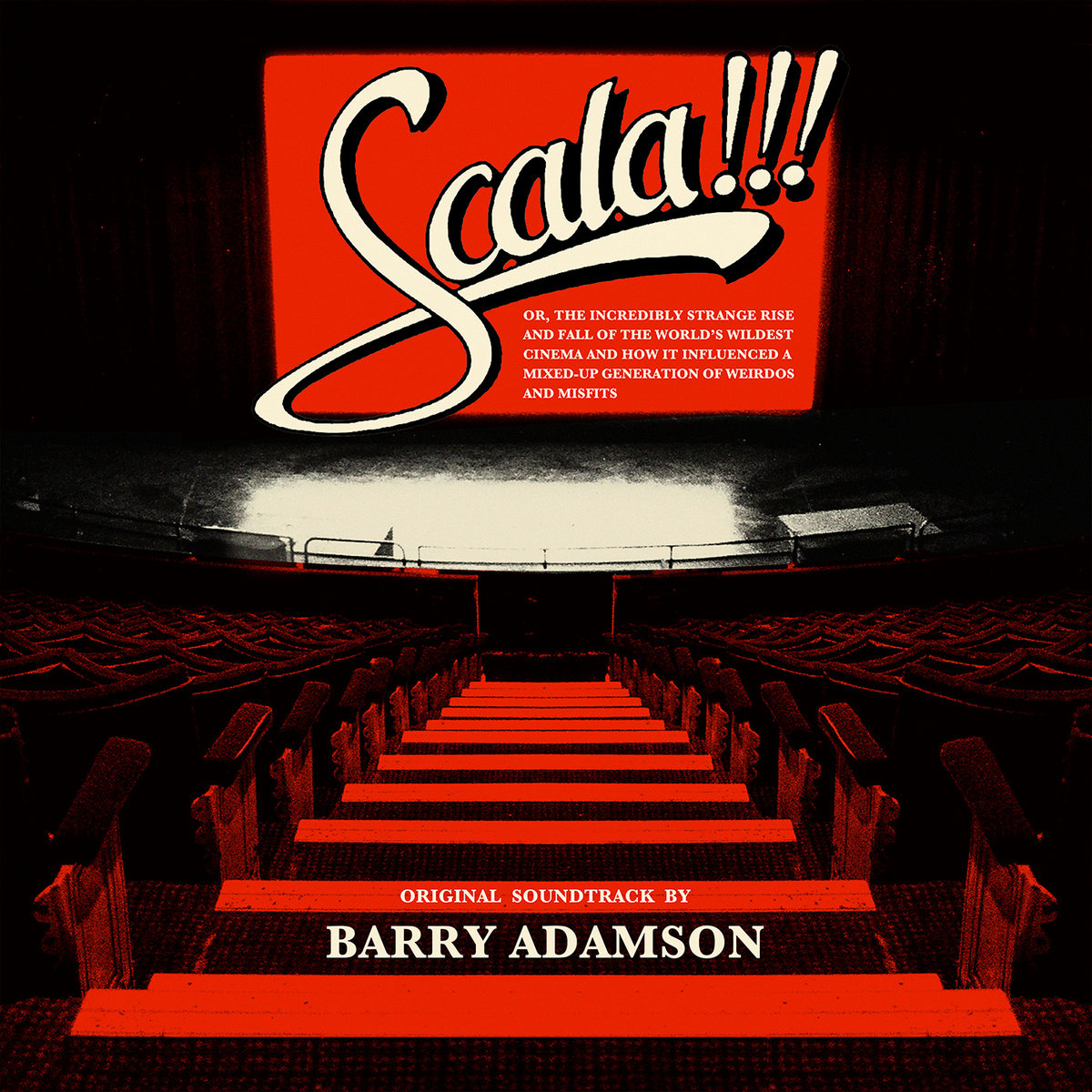
Barry Adamson and the Scala cinema in London’s King’s Cross were made for each other. The former Magazine and Nick Cave and the Bad Seeds member has thrived in a solo capacity, where his work has painted vivid pictures and scenes, many of them cinematic – so he was a natural choice for this project.

Dubbed “The Incredibly Strange Rise and Fall of the World’s Wildest Cinema and How It Influenced a Mixed-Up Generation of Weirdos and Misfits”, SCALA!!! Is a tribute to the adventurous programming, the all-night screenings and live performances that became synonymous with the building. The docu-film itself features interviews with John Waters, Peter Strickland, Mark Moore, Ben Wheatley and Adamson himself, a natural choice to portray these figures and so much more in music.

His score includes references to the cinema’s resident cats, some of the films the cinema screened and a few of the artists that played there.

What’s the music like?

Full of character. Adamson’s score teems with life and is packed with musical incident and colour, painting his subject with uncanny accuracy and using references that knit together really well.

The styles vary wildly and entertainingly, with tracks that range from barely longer than half a minute to fully fledged instrumental songs, each one evoking a scene. The loose limbed funk of Scala Posters (Mondo Bongo) is a highlight, like an excerpt from a detective soundtrack. The dubby As Steve Woolley Sees It and the swirly Acid Celluloid are pocket-sized bits of fun, while the excellent Barry’s Iranian Embassy Blues has a compelling urgency. Spandau Politics is a lot of fun, a kind of one-fingered keyboard bossa nova cousin to Joe Jackson’s Stepping Out.

On occasion some of Adamson’s brief but brooding interludes create a spirit of paranoia and expectation, looking nervously around.

Contrasting with this are the booming drums of Another All Nighter, while the baleful trumpet leading the crashing cymbals of the End Title is definitely calling time on the night, especially when we cut to the lithe bass on its own.

Does it all work?

It does. Short but sweet, this is a fine set of intoxicating music.

Is it recommended?

It is – with the proviso that you should watch the film, too! Barry Adamson has clearly had a lot of fun here, and his musical versatility brings great colour, humour and unbridled funk to proceedings. An old school pop soundtrack, in the best possible way.

Listen / Buy

Published post no.2,789 – Thursday 5 February 2026
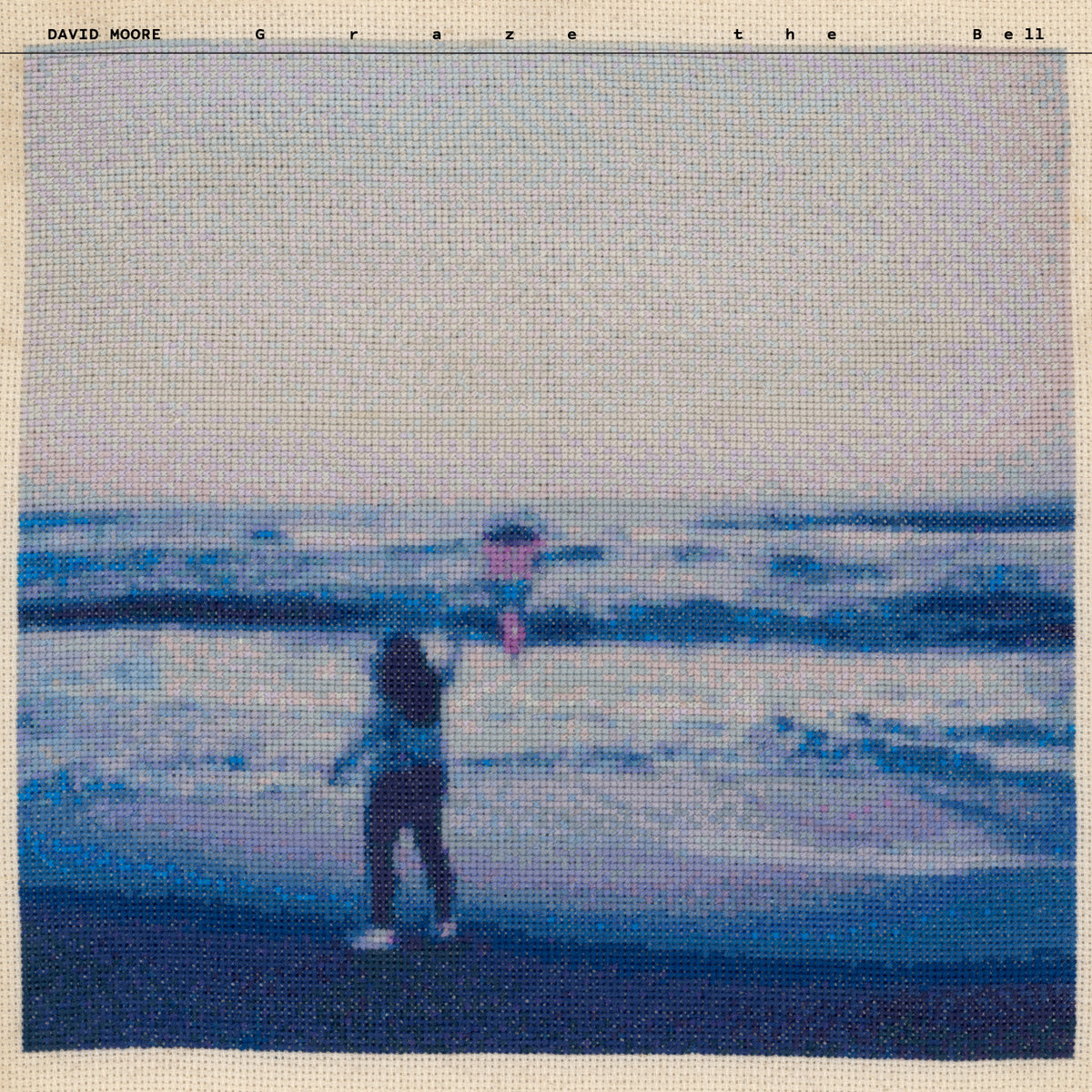
On Record – David Moore: Graze The Bell (RVNG Intl.)

Reviewed by Ben Hogwood

What’s the story?

David Moore is best known for his work as part of New York-based Bing & Ruth, yet here goes it alone on his first official solo piano release.

The cover, designed by Moore and embroidered one stitch at a time, reflects the care Moore takes with his music, looking to reflect personal experiences in transcendental piano music.

The album was recorded live on a Steinway piano at the Oktaven Audio studio in Mt. Vernon, New York. The press release reveals that producer Ben Kane and assistant Owen Mulholland, “reinforcing Moore’s experimental approach…creatively misused pitch-correcting software to orchestrate the different registers of the piano’s tonal profile”.

What’s the music like?

Moore’s signature flowing style is present and correct here, once again turning the mind inwards in a rather magical way. After a hesitant start, Then a Valley releases a torrent of notes, flowing downstream and down the piano with an easy yet inevitable progress. Moore controls the ebb and flow of these waters with expert ease.

It is an immensely reassuring yet subtly powerful sound, a bottomless well of notes that contains a great deal of positive energy but also a subtle, lasting melancholy, explored most explicitly on All This Has To Give through the rumble of the piano’s lower register.

Moore’s intimate explorations create a world of emotion, privately expressed but often giving the impression that he is projecting wide into the natural world. Offering and Rush Creek are powerful examples of this, but there are still moments of contemplation to offset the rapids, with No Deeper and Will We Be There suggesting the softer side of Satie or Debussy.

Does it all work?

It does. Moore’s world is a private yet accessible one, quelling the anxious mind with its thoughts.

Is it recommended?

Yes, enthusiastically. If you have enjoyed the music of Bing & Ruth then David Moore’s solo work is a natural progression. Beautifully played and recorded, it is a welcome antidote to the stresses and strains of modern living!

Listen / Buy

Click here to read Arcana’s interview with David Moore from summer 2020.

Published post no.2,788 – Wednesday 4 February 2026

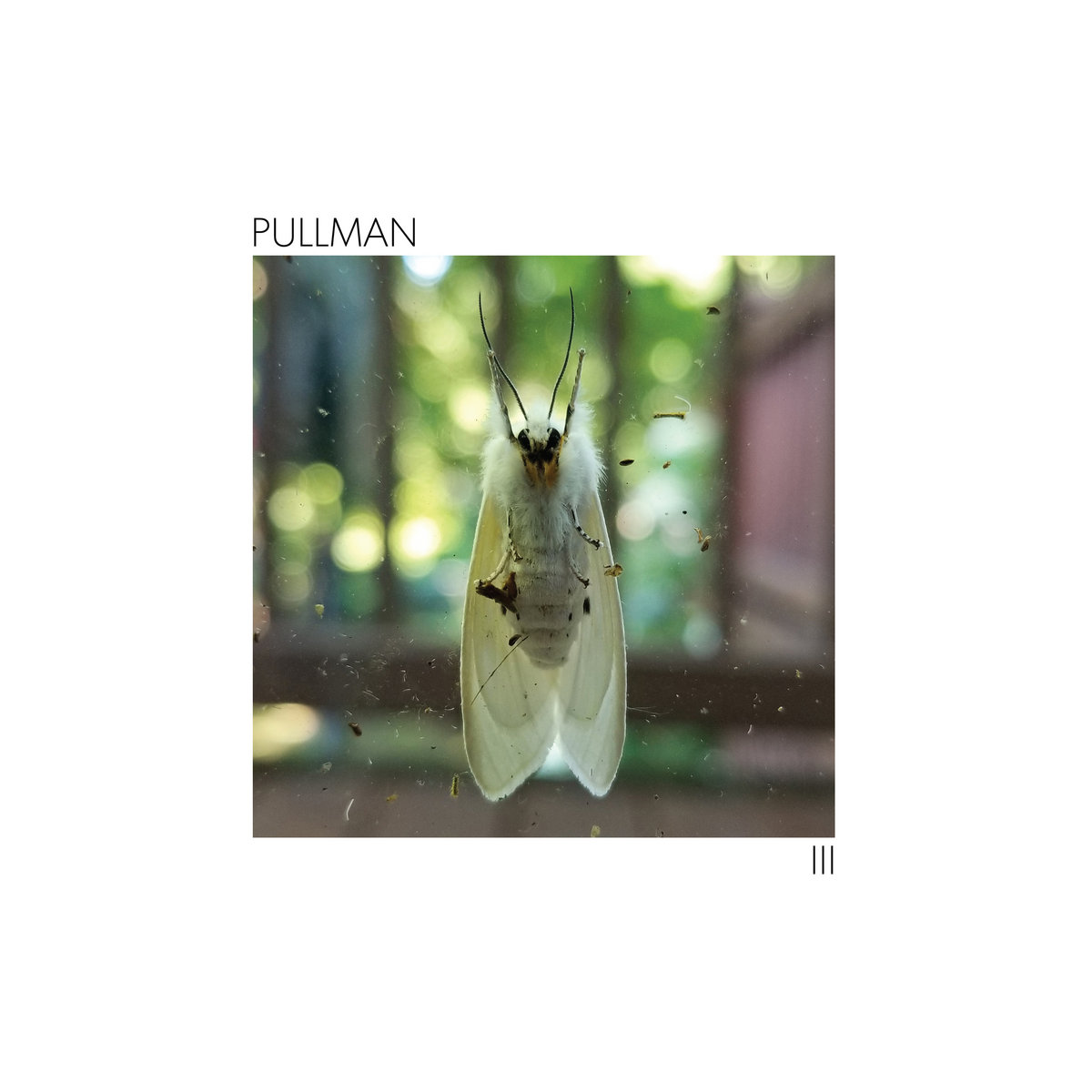
On Record – Pullman: III (Western Vinyl)

Reviewed by Ben Hogwood

What’s the story?

This is the keenly awaited follow-up to Pullman’s second album Viewfinder, released a whole quarter of a century ago.

In that time a lot has changed for the quintet supergroup, not least the diagnosis of drummer Tim Barnes with early onset Alzheimer’s disease. It was this that inspired his colleagues – Ken ‘Bundy K.’ Brown (Tortoise / Directions in Music), Curtis Harvey (Rex), Chris Brokaw (Come), and Doug McCombs (Tortoise / Eleventh Dream Day);– to get on with finishing and recording III, a task with which they were occupied from 2016 to 2023.

What’s the music like?

The press release gets it right, describing the ability of III to “carry forward the group’s signature intimacy and space while embodying the spirit of community that has always defined their work”. These different elements bring a natural push-pull throughout the album.

This is the shortest of the band’s three albums, and the quietest too – but if experienced in the right environment, III is still able to cast a spell.

An early blast of sound and distortion from Bray sets up Weightless, a shimmering tale of woozy guitars, subtle drumming and a musical structure like a densely packed hedge, through which can be glimpsed an active bass line, thoughtfully realised percussion and guitars blowing in the musical breeze.

Thirteen is in the wide open air, building up a head of steam with guitars and percussion on full, but then unexpectedly cutting to nothing more than a flickering candle, sustained by treble guitars and keyboard, which gradually subsides to silence.

October, meanwhile, is an enchanting study in long form, gradually spinning longer, arching melodic figures, before Kabul steps forward with a confidently picked guitar figure and a stronger rhythmic profile, momentum gathering through to the end.

Does it all work?

It does, and III is a rewarding listen, but its relatively short duration means the spell isn’t entirely cast.

Is it recommended?

In spite of the above, yes. III is often a sonic treat, its studies in sound and colour creating pictures that are consistently engaging.

Listen / Buy

Published post no.2,787 – Tuesday 3 February 2026

On Record – Cast: Yeah Yeah Yeah (Scruff Of The Neck)

Reviewed by Ben Hogwood

What’s the story?

Cast are celebrating 30 years as a band by building up an impressive momentum. Fresh from the high of supporting Oasis on their UK tour, the Liverpool band follow up Love Is The Call from 2024 by renewing their acquaintance with Youth, who produced that album.

What’s the music like?

Affirmative, upbeat and positive! There is a swagger to John Power and his band that really suits them, and Youth has added a low-slung funk that they rarely had even in their mid-1990s heyday. Now they have gone with both barrels on production, adding spiritual undertones to the early Primal Scream groove of 2, then packing in the harmonies and distortion on single Poison Vine, where P. P. Arnold adds a thrilling top line and Jay Lewis a fulsome bass.

John Power’s vocals are also a strong feature, lending songs like Free Love an extra dash of feeling. Say Something New is typical cast – straight to the point, but with the added bonus of one of the many catchy melodies this album holds. At the other end, Way It’s Gotta Be is entirely bass-driven, reeking of Second Coming-era Stone Roses – in a good way. As if that isn’t enough, Weight Of The World has an excellent chorus and Birds Heading South is a warm-hearted closing track.

Does it all work?

It does. Yeah Yeah Yeah is no-frills and all the better for it!

Is it recommended?

If you like Cast, then this is a no-brainer, and if you’re approaching from the direction of early 1990s Manchester, then it’s also a recommended stopping point. John Power sounds more confident than ever, and the ten songs here are guaranteed to raise the mood, as Cast continue to strengthen their hand.

Listen / Buy

Published post no.2,784 – Saturday 31 January 2026

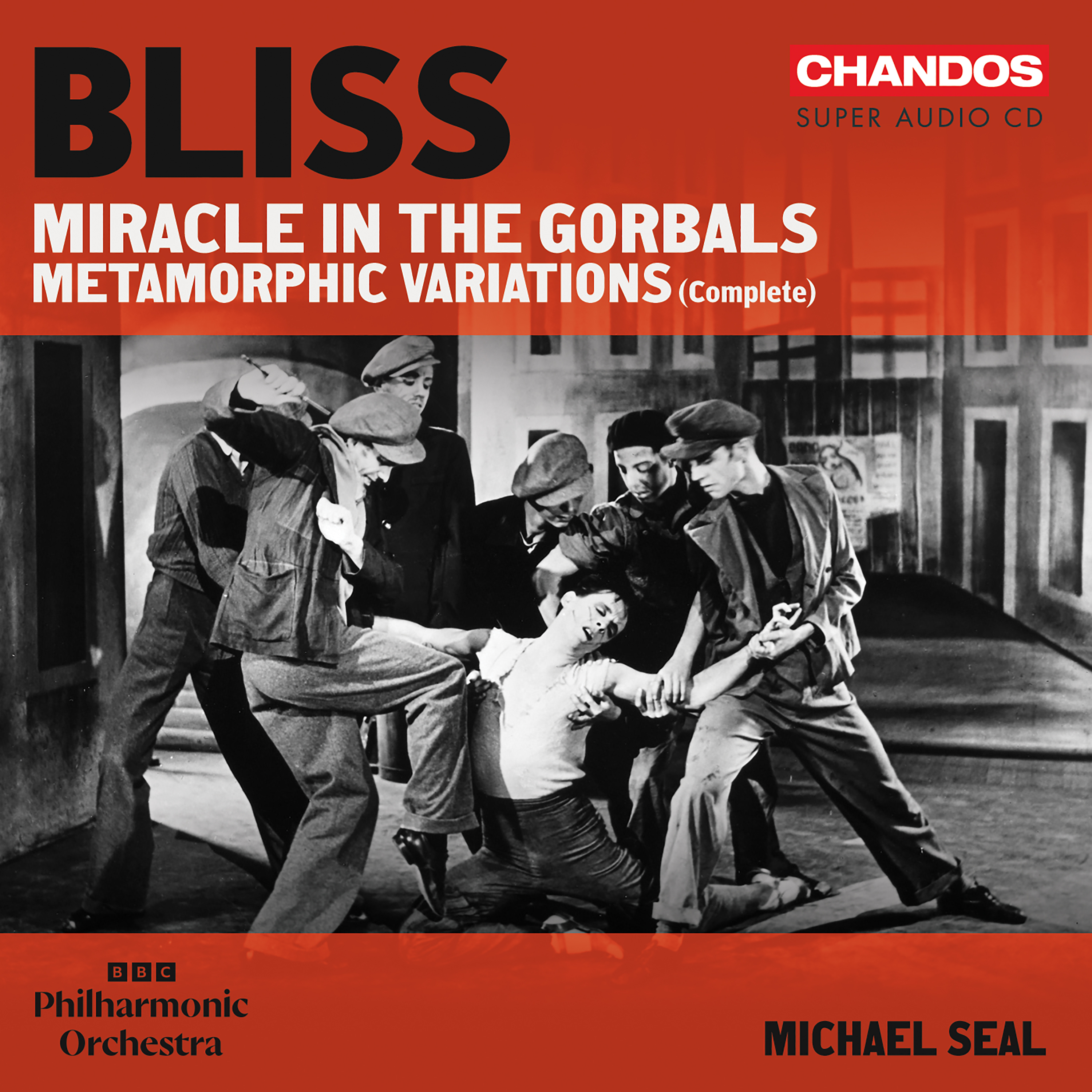
On Record – BBC Philharmonic Orchestra / Michael Seal – Bliss: Miracle in the Gorbals, Metamorphic Variations (Chandos)

BBC Philharmonic Orchestra / Michael Seal

Bliss
Miracle in the Gorbals, F6 (1944)
Metamorphic Variations, F122 (1972)

Chandos CHSA5370 [79’57”]
Producer Brian Pidgeon Engineers Stephen Rinker, Owain Williams (Miracle in the Gorbals), Amy Brennan (Metamorphic Variations)

Recorded 27 February 2025 (Metamorphic Variations), 1 March 2025 (Miracle in the Gorbals), MediaCity UK, Salford, Manchester

Reviewed by Richard Whitehouse

What’s the story?

Chandos issues the most important release of music by Arthur Bliss for the 50th anniversary of his death – coupling the second of his four ballets, in its new critical edition, with the last as well as the most ambitious of his orchestral works in what is its first complete recording

What’s the music like?

With its striking choreography from Robert Helpmann (after the story by Robert Benthall), Miracle in the Gorbals was initially even more successful than its predecessor Checkmate – being revived annually between 1944 and 1950. Other than a 1958 revival, however, there was no more stagings until that by Birmingham Royal Ballet in 2014; not least because the magic realism that transcends an otherwise grimly realistic scenario and struck a resonance in wartime Britain became passé soon afterward. Yet the quality of a score as finds Bliss at his most populist but also most uncompromising cannot be denied, and this new recording conveys these extremes in full measure. Hearing sections III (The Girl Suicide), X (Dance of Deliverance) and XV (The Killing of the Stranger) ought to banish any lingering doubts.

Premiered at Croydon’s Fairfield Halls during April 1973, Metamorphic Variations is Bliss’s lengthiest orchestral work. Shorter than intended, even so, with two sections being omitted at its first hearing and subsequently. This recording sees their belated and rightful reinstatement.

The three primary ideas are outlined in Elements: an oboe cantilena, a phrase for horns then strings, and a cluster from woodwind – melodic, rhythmic and harmonic possibilities that are explored intensively in what follows. The additional sections are an atmospheric Contrasts, whose absence has been to the detriment of overall balance, then a Children’s March which pivots from innocence to experience. Highlights include an increasingly animated Polonaise and Funeral Processions with its anguished culmination. Towards the close, a proclamatory Dedication duly underlines the inscription to artist George Dannatt and his wife Ann, then Affirmation draws those initial elements into a sustained peroration that pointedly subsides into a return of the oboe cantilena which, in turn, brings the closing withdrawal into silence.

Do the performances work?

Although the concert suite from Miracle in the Gorbals has received persuasive accounts by the composer (EMI/Warner) and Paavo Berglund (Warner), the complete ballet has only been recorded by Christopher Lyndon-Gee with the Queensland Symphony (Naxos) – compared to which this latest version, aside from its using the critical edition by Ben Earle, is superior in playing and recording. Here, as in Metamorphic Variations, the BBC Philharmonic responds assuredly to Michael Seal whose interpretative stance is distinctively his own. This latter has been recorded by Barry Wordsworth (Nimbus) and David Lloyd-Jones (Naxos), along with a broadcast from Vernon Handley (BBC Radio Classics), but the newcomer’s conviction gives it an advantage apart from those variations whose reinstatement enhances the work’s stature.

Is it recommended?

Very much so, not least given the spaciousness and realism of its SACD sound, together with informative notes from Ben Earle and Andrew Burn. Is it too much to hope Chandos will yet tackle either of Bliss’s operas which, along with The Golden Cantata, are his only significant works still to be commercially recorded? Michael Seal would be the ideal candidate to do so.

Listen / Buy

You can hear excerpts from the album and explore purchase options at the Chandos website, or you can listen to the symphonies on Tidal. Click on the names to read more about the Arthur Bliss Society, conductor Michael Seal and the BBC Philharmonic Orchestra

Published post no.2,783 – Friday 30 January 2026