On Record – Alev & Jas : Bring Your Friends (Bring Your Friends)

by Ben Hogwood

What’s the story?

One of the great things about music is its community spirit; the possibilities it offers for making art with friends. Such is the case with Alev Lenz and Jas Shaw, who have been friends for a decade or thereabouts, and have put that friendship on record with a quintet of songs.

Alev Lenz is a talented singer-songwriter whose credits include songs for the screen (Black Mirror and Dark) and also production work with Anoushka Shankar and Roomful of Teeth. Jas Shaw has a good deal of previous with the band Simian, who then morphed into Simian Mobile Disco. He may not have undertaken as much production work as his bandmate James Ford, but his work with Gold Panda as Selling yielded the fine album On Reflection.

This five-track mini-album is described as ‘dreamy lullabies that confirm the pair’s perfect match’, with Lenz saying the album ‘is about friends talking about the state of the world and their souls.’

What’s the music like?

This is light music – but not necessarily in a pop sense, more in its economical use of texture in music and the endearing vocal that floats up top.

The five tracks are very subtly dressed with starry textures, lighting A World Beyond with pinpricks of melody in response to Lenz’s dreamy vocal. Between Two Breaths is even more effective, the voice mulitracked in very close harmony, with comfortable dissonances that pan out beautifully against a spacious backdrop.

Overstrung but Underdamped is a beauty, a meditative track that becomes a calming mantra, Lenz’s voice used to its maximum effect by Shaw who allows only the minimum counterpoint.

Does it all work?

Yes – if only there was more of it! This is definitely a case of quality rather than quantity, with the five songs over in 25 minutes – but they do leave a very positive impression.

Is it recommended?

It is – a brief encounter this may be, but there is a special musical chemistry between these two friends.

For fans of… Beth Hirsch, Cocteau Twins,

Listen and Buy

Published post no.2,114 – Monday 11 March 2024

On Record – Sheherazaad: Qasr (Erased Tapes)

by Ben Hogwood

What’s the story?

This is the first music on Erased Tapes from American artist Sheherazaad, a native to the Bay Area who brought together a number of musicians in New York to record this mini-album.

Sheher has North and South Indian heritage, and became disorientated by moving between the two and America, though when she settled in New York for study she discovered the city’s South Asian arts community and an electronic culture emanating from the UK, which brought her into contact with Arooj Aftab – who produced this record. Singing in Urdu, she was joined by musicians including Basma Edrees (Egypt), Gilbert Mansour (Lebanon), and Firas Zreik (Palestine). The result, Qasr, translates to ‘castle’, or ‘fortress’, and is a deeply personal document of Sheherazaad’s own unique origins.

What’s the music like?

Compelling. There is an outdoor feel to this music, as though recorded barefoot in the very places Sheher sings about.

The first song, Mashoor, features the guitar of Ria Modak – and it proves the ideal foil for the voice, both low in pitch but conversing intimately. Dhund Lo Mujhe brings a burst of energy, though not necessarily positive, for the outbursts of the fiddle are there to help portray ‘a very specific insanity, that of the immigrant experience’. Sheher’s inflections and the pizzicato play off against each other before the voice soars, its vibrato inspiring the fiddle to greater heights.

Koshish (Try) is conversational, the reverberant acoustic capturing the Californian heat, while Khatam (Finished) travels back through time to the accompaniment of rich improvisation on the sustained piano. The final Lehya, the most substantial of the five songs, takes us to a mythical city, its nocturnal beginning the basis for growth to all sorts of colourful shades, before the closing chant, a soft but moving call for freedom.

Does it all work?

It does – though the levels of intensity mean that for full appreciation you need to listen in an environment where you can give Sheherazaad’s music the level of attention it deserves.

Is it recommended?

Yes. This is an artist with a huge amount to say, and the feeling is that on this mini album she is just dipping her toe in the water. There is a whole lot more to come from this explosive and original talent.

For fans of… Khruangbin, William Onyeabor, Shida Shahabi

Listen and Buy

Published post no.2,094 – Sunday 25 February 2024

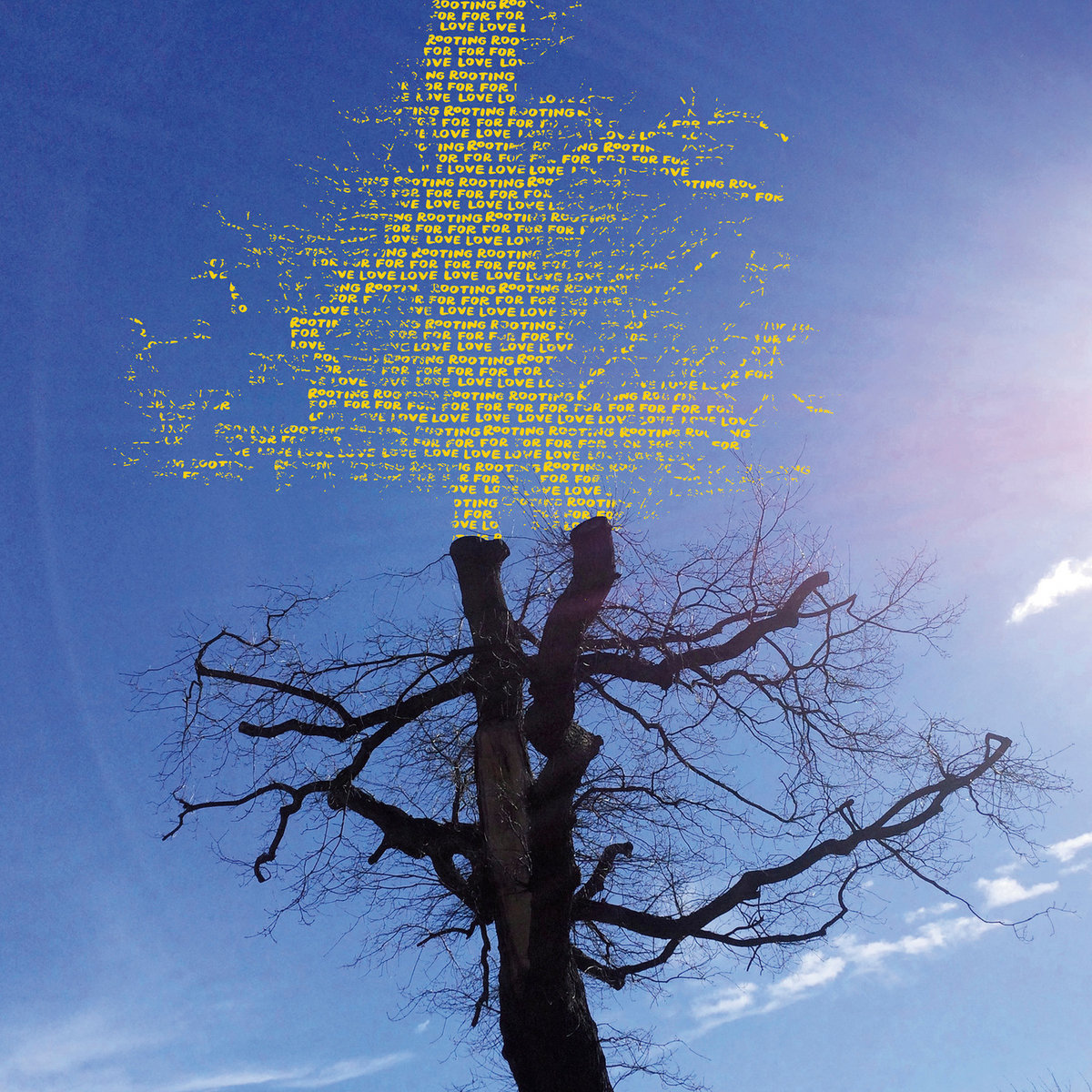
On Record – Laetitia Sadier: Rooting For Love (Drag City)

by Ben Hogwood

What’s the story?

Laetitia Sadier is best known as the frontwoman of Stereolab, the band who have carved a wholly distinct niche for themselves in pop music over the last 35 years. Yet now and then she delves into some interesting side projects, including the band Monade – or her own solo work. Rooting For Love is her first such album in seven years.

On it, Sadier’s quest is to provide for the listener a way out from the state of the world today, looking for an end to suffering and moving towards healing of the traumas the human race has been suffering of late.

What’s the music like?

With such ambitious aims, the worry would be that Sadier’s work would be regarded as pretentious or having ideas way above its station. Happily neither is the case, for this is a deeply felt set of songs that really do go some way towards making their listener feel more empowered and less downtrodden.

Typically, Sadier sings some of the album in French and some in English, and it is easy for the listener to follow. Musically, however, the language is some of the most exploratory we have yet heard from her. There are still plenty of references to the pop, funk or bossa nova that frequently seeps into her work with Stereolab, but here the results are even less constrained, totally in response to the lyrical material.

As the album progresses, so the intensity heightens. While first song Who + What shows how much instrumental colour she has at her disposal, it also sets the scene for what lies ahead. La Nageuse Nue (The Naked Swimmer) has a starry backdrop, while sonically The Inner Smile makes a very strong impact, not just through Sadier’s resonant voice but the block organ chords surrounding it.

Yet the peak of intensity comes with the last song, Cloud 6. Here the rich brass and fuzzy atmospherics provide a backdrop to a strong vocal motif that gains in power, rather like a Philip Glass offshoot, and lyrics that culminate in Sadier’s striking pronouncement that “I’m not fucking around, you’re halfway dead.” With that the music suddenly cuts off, leaving silence in its wake.

Does it all work?

It does – and the way the intensity builds as the album progresses is rather striking. Sadier has much to say, and does so with poise and no little power.

Is it recommended?

It is. A mandatory purchase for Stereolab followers, but a great standalone purchase too. Laetitia Sadier remains at the peak of her powers.

Listen and Buy

Published post no.2,098 – Sunday 25 February 2024

On Record – Elena Setién: Moonlit Reveries (Thrill Jockey)

by Ben Hogwood

What’s the story?

Basque artist Elena Setién last released an album two years ago, the understated but incredibly powerful Unfamiliar Minds – a set of songs begun before 2020 but honed during lockdown.

Glenn Kotche, drummer and percussionist with Wilco, was a fan of the album – and when he was touring Spain with the band, he met up with Setién. The two began collaboration, Setién using a series of drum patterns from Kotche’s series A Beat A Week, after which the drummer started sending in more patterns. Setién enjoyed the irony of her music taking on more rhythmic direction. In her words, “funnily enough, I, being a Spanish artist, sought inspiration in the rhythms of a Chicago drummer to reach something with a Latin feel to it. A somehow surrealistic way to get there.”

Another influence at play in the album was that of Bridget St. John, who Setién sought to emulate in a low register vocal delivery. It became the instrument through which the singer / songwriter could express the dreamlike state of the songs, though her own instrumentation – guitars and keyboards – played a large part too.

What’s the music like?

In a word, dreamy. Yet that is not the only story behind Moonlit Reveries, for these songs often have a feverish quality. Setién has a knack of making intense music from minimal means, but when you listen closely her music is suffused with clever effects and details that give the music a semi-conscious appearance.

She holds her vocal with remarkable poise, and it cuts through clearly, but the instrumental accompaniment that she uses is often haunting and frequently shifts the perspectives of the listener. The gentle undulating guitar of Hard Heart laps like water against the resonant vocals, while Losing Control gets a rippling effect from its shimmering electronics and pizzicato violin. Strange is especially enchanting, Setién singing very slightly out of tune over a throbbing guitar line.

Moonlit Reveries itself is particularly vivid, a hypnotic harpsichord dancing on the horizon as Setien coos softly. Mothers is a deeply immersive song, a tribute to Low’s Mimi Parker with minimalist loops and concentrated, layered vocals that end above delicate cymbals.

Does it all work?

It does – and the more you listen to it, the more Moonlit Reveries has to reveal.

Is it recommended?

Enthusiastically. Elena Setién is a compelling artist, and the restraint in her music is deceptive – for this is an album of great intensity, a set of dreams that take place in slightly balmy conditions but leave their listener with vivid and lasting impressions.

Listen and Buy

Published post no.2,094 – Wednesday 21 February 2024

On Record – William Doyle: Springs Eternal (Tough Love)

by Ben Hogwood

What’s the story?

William Doyle returns to the LP format with this response to the ‘ecstasies and agonies of the 2020s’ . On it, he is assisted by Brian Eno, Alexander Painter and Genevieve Dawson.

What’s the music like?

This time Doyle shows his musical versatility through a collection of intricate art pop songs. Drawing on late 1960s pop and psychedelia for inspiration, he updates them with cultural references for today, a kind of coping mechanism for life in the digital age.

Doyle’s lyrics show an awareness of the changing climate, and as he found nearly all the songs mention water in some way. They are clever and well written, with songs like Relentless Melt that are knowing commentaries on modern life dressed with catchy tunes. The orchestration is bright and suits Doyle’s delicate tones.

Does it all work?

Largely – though on occasion the feeling persists that the music on this album is just a bit too bright eyed and bushy tailed, that darker thoughts below the surface are not fully expressed.

Is it recommended?

It is. Springs Eternal is an optimistic statement proving once again how versatile William Doyle can be.