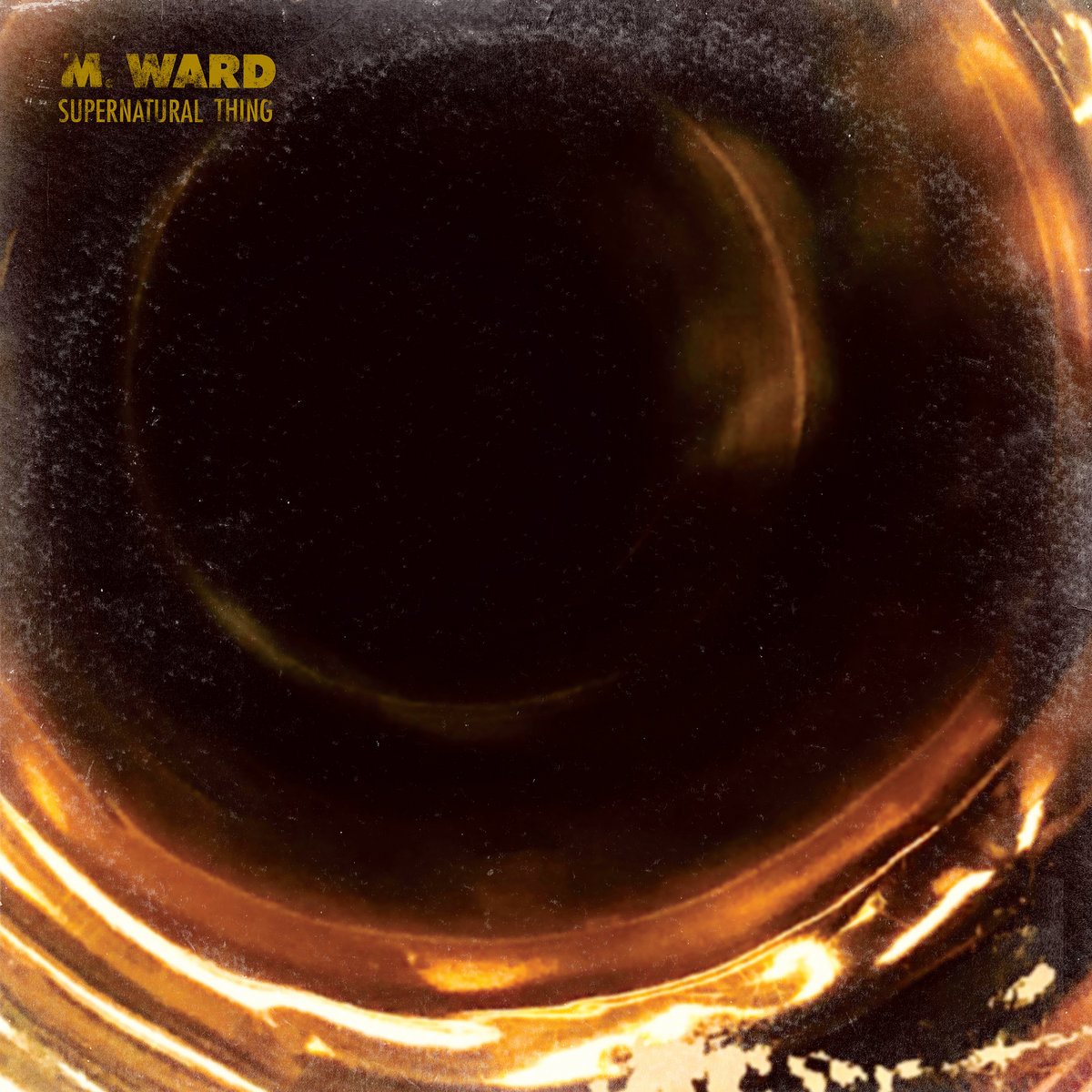
On Record – M-Ward: Supernatural Thing (ANTI-)

by Ben Hogwood

What’s the story?

Portland singer-songwriter Matthew Ward is not yet 50, yet he has already racked up 12 solo albums in a prolific musical career. These are alongside his work as part of She & Him (with Zooey Deschanel), not to mention his Monsters Of Folk project.

The spirit of collaboration is prominent here too, for Supernatural Thing includes two tracks made with Swedish sister duo First Aid Kit, and a track each with Scott McMicken, Neko Case and Gabriel Kahane, Jim James and Kelly Pratt, and last but not least Shovels and Rope).

The album title is inspired by a childhood thought that radio airwaves are also used by messages from the supernatural – with music caught up in the crossfire. Ultimately the radio element is the crucial factor, celebrated here.

What’s the music like?

Winsome. Ward puts his listener at ease right from the amiable guitar strumming of Lifeline, the mood enhanced by his sotto voce delivery.

That’s not to say there is a lack of emotion here, however, and in the collaborations especially he finds poignant lyrical couplets and yearning harmonies. The husk of his tone fuses rather beautifully with First Aid Kit’s sharper insights, and in Too Young To Die they have made a song to stop the listener in their tracks. The more upbeat Engine 5 taps into the album’s theme, entreating the listener to “stay with me on the radio”.

Jim James and Kelly Pratt join for a late Bowie cover, I Can’t Give Everything Away taken from the Blackstar album, and fashioned with an appropriately doleful saxophone solo. Meanwhile Scott McMicken joins for a breezy, upbeat New Kerrang. Dedication Hour, with Neko Case and Gabriel Kahane, is enjoyably woozy.

It’s easy to sing along with or harmonise the solo songs, too, with the title track a prime example. Story Of An Artist, with which the album closes, is a reflective, softly voiced crooner.

Does it all work?

It does – the album hangs together really well, and its changing perspectives give it the feel of a radio program, which was almost certainly the intention.

Is it recommended?

It is. M. Ward’s output is remarkably consistent, and this is a strong addition to the discography. A breezy summer album, too!

Listen

Buy

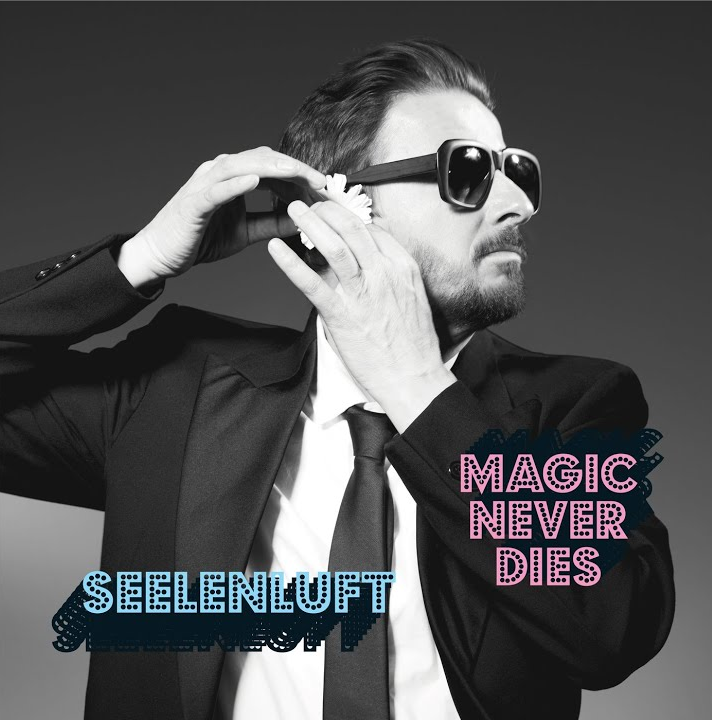
Switched On – Seelenluft: Magic Never Dies (Champion Bunny Recordings)

by Ben Hogwood

What’s the story?

Seelenluft is the name by which the Swiss producer Beat Solèr is known to legions of electronic music listeners. The Zurich-born artist has a discography tracing back to the 1990s.

Solèr’s piano is the instrument taking centre stage for Magic Never Dies, though he is keen to surround it with a rich production of analogue instruments as well as electronics. With that in mind he has revisited his film music legacy and sourced string arrangements with the SIF309 Symphony Orchestra of Sofia.

What’s the music like?

Warm and inviting. The opening strains of the title track beckon the listener in, the live arrangements giving extra life to the subtle grooves teased out by Solèr. There are persuasive piano lines, mellow flute textures and curvy string figures – all in accompaniment to Lou Vahou’s vocal.

Vahou shares vocals with Komi Togbonou, who brings sonorous layered harmonies to Come Holy Spirit, a smoky cut with its roots in the jazz club. Toys Toys Toys is another story entirely, Togbonou flexing his vocals over a springy piano riff. The instrumental tracks are if anything even more appealing. Why Is Everybody So Full Of Love is beautifully arranged, textures seemingly glinting in the late sunshine – but Ride The Pram and Nest suggest that Solèr has been listening to and enjoying the music of Debussy, but adding his own slant to things. Homecoming has a lovely, slightly nostalgic feel for signing off.

Does it all work?

Mostly. The vocals might be an acquired taste for some, but Solèr’s arrangements are consistently fresh and rewarding, and invite the mind to wander.

Is it recommended?

Yes – something different for a summer evening’s listening.

Listen

Buy

Switched On – Creep Show: Yawning Abyss (Bella Union)

by Ben Hogwood

What’s the story?

The second album from Creep Show follows five years after their debut – in which time a great deal has changed. The line-up remains the same, with John Grant the charismatic vocalist to beats and soundscapes fashioned by Wrangler – who are synth and electronics wizard Benge (Ben Edwards), Cabaret Voltaire frontman Stephen Mallinder and Phil Winter, creator of many weird and wonderful sounds for Tunng. Their 2018 debut, Mr Dynamite, is described by the four protagonists as ‘a fairground ride into the dark corners of a world that was on the brink of being blitzed in a blender’.

With so much source material for the follow-up, Yawning Abyss would seem to be all about the impending disasters seemingly awaiting the world, as well as the one big disaster – Covid – which has been with us during the period of composition.

And yet, the quartet make room for optimism. Mallinder and Grant headed to Iceland to make some unfiltered vocals, while Winter and Edwards were given the task of bringing it all together for the final cut.

What’s the music like?

Creep Show make some incredibly varied music! At times this album feels like a reflection of the times in which we live, being wildly unpreditable and disfunctional, but then at other turns with an elegance and poise that shows the craft with which it was made.

The two immediate stand-out tracks are Moneyback, with a brilliant couplet from John Grant (“You want your money back? I don’t think so!”) and then the madcap Yahtzee!, which pretty much sums up the state of play in the media at the moment! Sitting on the more elegant side is Bungalow with a mellifluous and stately vocal, while Stephen Mallinder excels up front on Matinee.

Does it all work?

It does – assuming you have the bandwidth to accommodate the wide range of styles on offer!

Is it recommended?

Yes. While sometimes far from easy listening, Yawning Abyss is very much an album for our times.

Listen

Buy

Switched On – Warrington-Runcorn New Town Development Plan: The Nation’s Most Central Location (Castles in Space)

by Ben Hogwood

What’s the story?

Gordon Chapman-Fox moves onto his fourth album under the alias Warrington-Runcorn New Town Development Plan, which finds him in a conflicting position. “I’m nostalgic for an optimistic future”, he writes on his Bandcamp page, pining for the time when the future really did seem a boundless set of opportunities rather than a state in which to be fearful.

As before this is a wholly solo album, one man and his electronics – but painting vistas far beyond those means.

What’s the music like?

Wonderfully moody. There are some dark thoughts here, shot through with a windswept beauty that gives them impressive grandeur.

The stern countenance of Just Off The M56 (J12) sets the slightly industrial scene, and though the initial impressions are stern, the way Chapman-Fox works his ideas together brings out the optimism in his thinking as the synth line cuts through the cloudy texture.

There is a winsome elegance here, very English in its restrained but telling emotion, coming through most obviously in the excellent Rocksavage, with its steadily oscillating figures, and then allowed more mechanical energy on Thelwall Viaduct.

Chapman-Fox secures a wonderful ebb and flow, and on brooding soundscapes such as London’s Moving Our Way there is a sinister undertow bringing John Carpenter to mind, not to mention a powerful sense of occasion.

Meanwhile Europa Boulevard presents a colder climate, the airiness and relative dead air of industry captured in music, though it soon warms up when extra layers are added.

Does it all work?

It does. These are vivid evocations of cityscapes that we would maybe rather not have but which are an intrinsic part of English life. Chapman-Fox treats them with respect but also highlights their unexpected angles of beauty. There is also, in the closing A Brighter And More Prosperous Future, a stern yet assured hope for better times ahead.

Is it recommended?

Very highly. This music has its roots in the 1980s, and the likes of Cabaret Voltaire or John Foxx, but Warrington-Runcorn Development Plan is a gateway to some accomplished and very meaningful electronic music.

Listen

Buy

Switched On – Peter Kruder & Roberto Di Gioia – ,,——–,, (PEYO Records)

by Ben Hogwood

What’s the story?

Peter Kruder and Roberto Di Gioia are old acquaintances, with a friendship going back nearly 20 years, but they have never worked together in music until now.

The two created a number of demos, with Munich-based Di Gioia playing piano against his Viennese-based friend on electronics. They discovered the impact of their music when playing to friends, all of whom were impatient to hear the new album. Said album was not a thing then, but thanks to good-natured nagging it became a project, culminating in the release of ,,——–,,.

The origin of the album name is not known, retaining its air of mystery.

What’s the music like?

Conversational. These two artists have a knack of finishing each other’s sentences, even though the musical means they are using are very different. Di Gioia, naturally, will often lead with his thoughts on the piano, but Kruder more than matches him with electronic insights and studio perspectives.

The music itself is deceptively simple but searching too. Bella Arp has softly oscillating arpeggios with a searching melody, while Endless has a bell-like figure that Di Gioia spins through some atmospheric sound patterns from Kruder. Sequenz shows that the pair can do movement too, spinning a syncopated figure that steadily gains momentum.

Kusine Limusene, the most substantial track on the album, contrasts a thoughtful piano phrase with very low electronics, the two elements striking up a conversation before the second stage of the track features block chords on the piano, which suggest Di Gioia to be an admirer of Claude Debussy. This is backed up by Rache, where those full-bodied chords assume greater prominence, before retreating to the background so that Kruder’s spacious backdrops can be admired.

Clock Tick Tock is a little more sinister, its minimal material stripped back to suggest the onset of time. Meteoriten Schluckauf is more fragmented still, but even more effective, as the piano and electronics talk in a kind of musical morse code.

Shorty shows how effective and meaningful these two areas can be, with an elegant line on the keyboard in octaves from Di Gioia shadowed at a difference by a low bass drone. Lonely Jupiter has a similar balance, though Kruder pans out the production for a more expansive view. On occasion Kruder places the piano in a kind of weather system, or goes further still by suggesting the instrument might be falling through space, as in No Love On The Enterprise.

Does it all work?

It does, in a way that having an intimate conversation can make each party feel better. There is music of deep feeling here, and the relative simplicity of the music means it is expressed that bit more powerfully.

Is it recommended?

It is. A fascinating meeting of musical minds.

Listen

Buy

You can explore purchase options and listen to clips at the Decks website