On record – William Wordsworth: Orchestral Music Vol.4 (Toccata Classics)

wordsworth-4

Liepāja Symphony Orchestra / John Gibbons

William Wordsworth
Jubilation Op.78 (1965)
A Spring Festival Overture Op.90 (1970)
Confluence Op.100 (1976)
Symphony No. 7, Op. 107, ‘Cosmos’ (1980)

Toccata Classics TOCC0618 [59’21”]

Producer Normands Slāva
Engineer Jānis Straume

Recorded 4-5 February and 16-18 June 2021, Amber Concert Hall, Liepāja, Latvia

Written by Richard Whitehouse

What’s the story?

Toccata Classics continues its survey of William Wordsworth’s orchestral music with a fourth volume featuring the composer’s Seventh Symphony, alongside three other pieces that reflect his increasing concentration and refinement of thought during those latter decades of his life.

What’s the music like?

If the Fifth Symphony and Cello Concerto (recorded on TOCC0600) represent a highpoint of Wordsworth’s orchestral output, the works that follow are only relatively less ambitious and equally personal. The four heard here appeared at five-year intervals. Subtitled ‘A Festivity for Orchestra’, Jubilation is akin to a ‘concerto for orchestra’ in its intensive while unshowy pursual of those possibilities inherent in its opening fanfare-like idea; one which returns near the close of this engaging piece to provide a rounding-off of good-humoured decisiveness.

A Spring Festival Overture is even more self-contained in its demeanour, though the gradual emergence of activity out of the sombre introduction is a telling metaphor for the coming of this season and the musical discourse attracts attention purely through its dexterity of thought.

Had Confluence been Wordsworth’s ‘sixth symphony’, no-one could surely have doubted its rightness given this music’s motivic density and textural subtlety. As it is, these ‘Symphonic Variations’ are a notable staging-post in the composer’s odyssey towards ever more distilled expression – the variations proceeding as distinct yet interrelated episodes where most of the instruments have a soloistic spot. The penultimate section, with its allusion to Elgar’s Violin Concerto, finds Words worth at his most felicitous and the final build-up at his most visceral.

Scored for comparably sizable forces, the Seventh Symphony continues a process of formal elaboration across a single, unbroken span – its seven sections less a series of variations as a succession of paraphrases on ideas which are nothing if not rarefied. Appropriate, then, that its ‘Cosmos’ subtitle should embody a lifelong fascination with the universe – whether in its astronomical or spiritual dimensions. Inclusion of a prepared tape suggests something more radical than is the case – pre-recorded material limited to two slowly repeating string chords that recur at crucial formal and expressive junctures to channel underlying momentum over   a course inevitable as to its ultimate destination. Paul Conway’s booklet note implies this as being Wordsworth’s most original orchestral work and the present writer would not disagree.

Does it all work?

Yes, though this is not the place to start for anyone new to Wordsworth’s music (the previous instalment with the Fifth Symphony makes for an ideal point of entry). Playing the works in chronological order (rather than Opp. 90, 107, 78 and 100 as on this disc) reveals ever greater focus on motivic essentials allied to an understated while often questing harmonic sense that may have reflected their composer’s immersion in the Scottish East Highlands or the wisdom accrued with age, yet the experience feels never less than absorbing and sometimes profound.

Is it recommended?

Indeed. The playing of the Liepāja Symphony Orchestra is comparable to that on earlier volumes, while John Gibbons directs with his customary ear for detail and care for balance. Hopefully a fifth volume, perhaps including the hitherto unheard Sixth Symphony, will not be long in coming.

Read, listen and Buy

You can read Richard’s review of the first three volumes in the Wordsworth series on Arcana, clicking here for the first volume, here for the second and here for the third

You can listen to clips and purchase this disc from the Toccata Classics website. For more information on WIlliam Wordsworth, click here. For more on the performers on this recordings, click on the names for websites devoted to John Gibbons and the Liepāja Symphony Orchestra respectively.

On Record – Broadcast: Mother Is The Milky Way / Maida Vale Sessions / Microtronics Vols. 1 & 2 (Warp Records)

mother-is-the-milky-way

written by Ben Hogwood

What’s the story?

Broadcast were one of Warp Records’ treasures in the label’s earlier years, yet their output came to a sudden halt with the tragic early death of singer Trish Keenan in 2011. At that point the band were at the peak of their creative powers, which makes this set of reissues and rarities all the more poignant.

The triple pack of rarities is effectively a companion piece to the band’s discography, bringing forward a lost album (2009’s tour-only release Mother Is The Milky Way), a set of BBC sessions from Maida Vale, including three appearances for John Peel, and Microtronics, a two-volume set of 21 instrumentals released as tour-only specials in 2003 and 2005.

What’s the music like?

Fans of the band will not be disappointed – and while many will surely own a good deal of this music, having it reissued in a single pack with due love and attention gives it extra special appeal. It is instructive to be reminded just how imaginative the band were, and how their Englishness shines through in the meeting point of acoustic and electronic.

Mother Is The Milky Way makes a strong impression, and could almost have been recorded during lockdown given its quotient of birdsong and field recordings. The murmured awakening of In Here The World Begins makes a strong impression on headphones, while scenes such as the fuzzy backdrop to Elegant Elephant evoke dappled sunlight. Meanwhile I’m Just A Person In This Roomy Verse has a low register musing but also interference as the listener crosses the dials on the imaginary radio.

maida-vale-sessions

The Maida Vale Sessions are special. Drawn from four different sessions between 1996 and 2003, they have poise and elegance, but also macabre elements and psychedelic tendencies that give the music an appealing unpredictability. The autumnal waltz of The Note (Message From Home) is the perfect place to start, while the wonderful Come On Let’s Go is great to hear again. The insistent phrases of Look Outside make a strong impression, as do the willowy, chromatic arpeggios of the harpsichord on The Book Lovers. A stately Long Was The Year, and the exquisite twilight shadows of Echoes Answer, with an extended coda, are highlights of a session from 2000, while the twinkling lights of Pendulum are the highlight of a session from August 2003.

microtronics

The Microtronics album is fascinating. These snippets are descriptive musical postcards, colourfully shaded and showing off a broad range of styles. The electronic bossa nova of Microtronics 2 is striking, while Microtronics 3 – as with many of the recordings – give a strong sense of eavesdropping in the band’s workshop. Microtronics 6 throws some sonic grenades, while other snippets of note include the clattering drums of Microtronics 12 and the playful keyboard stabs of Microtronics 17.

Does it all work?

Yes. These three documents give a fascinating look under the bonnet of Broadcast’s creative process, while the fully formed songs prove their worth in the sessions. The pastoral element of Mother Is The Milky Way, meanwhile, are full of springtime vitality and promise.

Is it recommended?

Yes – to fans and newcomers alike, providing the newcomers avail themselves of the band’s studio albums too. They will not be disappointed.

Stream & Buy

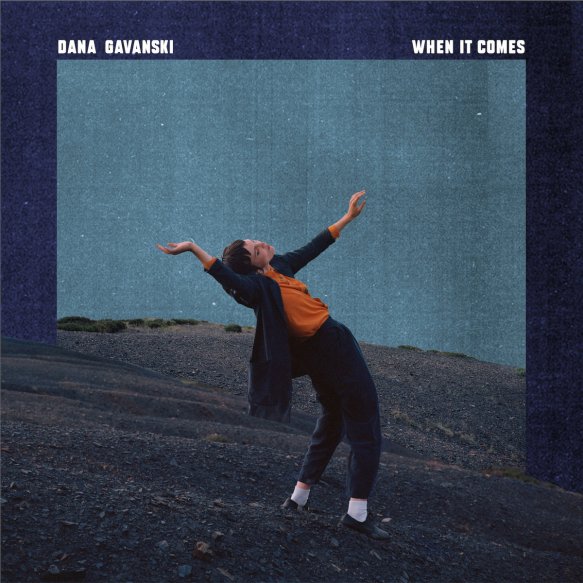
On Record – Dana Gavanski: When It Comes (Full Time Hobby)

written by Ben Hogwood

What’s the story?

The story behind When It Comes is a powerful one. The second album from singer-songwriter Dana Gavanski, it celebrates the voice as an instrument, from the perspective of recovering lost vocal cords. She uses the album to bring her voice back to a musical way of thinking, a celebration of music itself.

The story explains the album’s precise but very natural vocal style, with strong communication the name of the game.

What’s the music like?

Bewitching. Gavanski has a lovely voice, bolstered by an accent that celebrates her heritage – Canadian raised and of Serbian descent, recording in the UK – as much as it celebrates her voice as an instrument. Gavanski’s partner James Howard deserves a great deal of credit for the instrumental support, and how he makes the voice the star of the show but creates a lovely tapestry behind it.

There is simplicity to this music, but welcome quirks too. I Kiss The Night, with its pure arpeggios, is the most obvious example, rooted in the ‘simple’ key of C major but actually revealing more layers with closer listening. The Reaper finds subtle humour in its straight faced delivery, with increasingly hypnotic offbeat vocals as it progresses. Gavanski’s vocal is beautifully weighted throughout both songs, as it is for Letting Go, an expressive admission that “I need your love” with hints of vulnerability around the edges in the oblique harmonies.

Bend Away & Fall has a different atmosphere entirely, powered by metallic harpsichord but with comforting sighs in the vocal line. It is a charming song. By contrast, Lisa – the most substantial song on the album – creates a portrait from the viewpoint of the sea, watching subjects pass by day after day. For the author it is about recognising what’s in front of her, in this case a richly coloured and textured seascape, brought to life in multicolour.

There are elements of Stereolab vocalist Laetitia Sadier in her delivery, also a little Jane Birkin and Cate Le Bon, but these should be used as guides rather than influences, as Gavanski’s style is very definitely her own. Knowing To Trust, the closing song, shows the voice at its purest and most romantic, bringing the listener in close with its often hushed delivery. “I know your face”, she coos at the end.

The instrumentation is often worth listening to on its own, responding to the voice with music of dexterity and colour. The Day Unfolds gets locked into a charming, hypnotic repetition, and the same fate befalls Indigo Highway, its gentle triple time oscillations complemented by Gavanski’s longer phrases.

Does it all work?

It does. There is both strength and vulnerability in Gavanski’s singing, and the album works its magic through this combination, with a rich mixture of styles and moods.

Is it recommended?

It is. When It Comes is often a memorising album. Dana Gavanski has created a rarefied atmosphere that offers us a route in to the very soul of her music. She is a profound singer and songwriter whose emotive music deserves to be heard far and wide.

Stream

Buy

Warp Records website

On Record – Daniel Rossen: You Belong There (Warp Records)

daniel-rossen

written by Ben Hogwood

What’s the story?

To say You Belong There is an eagerly awaited album would be an understatement. Daniel Rossen, a key member of both Grizzly Bear and Department Of Eagles, made a strong impression with his Silent Hour/Golden Mile EP in 2012, and finally follows up that release with a fully-fledged long player for Warp.

What’s the music like?

Compelling. Perhaps inevitably Rossen brings elements of the two bands’ music to his writing, but there is plenty of room for exploration of his own. The songs on You Belong There live and breathe a heady air, with twists and turns in the music and narrative that keep the listener hooked.

‘The truth is always brighter than you say’, runs the repeated hook through Shadow In The Frame, a song where Rossen’s storytelling has the vivid references of a band like Fleet Foxes or Midlake. With carefully studied guitar work and sumptuous orchestration – never overdone – the song is a beauty, its coda especially moving.

On the title track percussion flits back and forth, the music panning out as the harmonies intensify, while Celia is a remarkable song, with a multi-layered choir of Rossens confessing that “I’m still staggering as you once did”. I’ll Wait For Your Visit goes further still, the singer in a lower range with long phrases above excitable piano and guitar.

Sometimes Rossen appears to be in the same room. Unpeopled Space begins with intimate phrases picked on the guitar before striding forward with a strong sense of purpose. Tangle, meanwhile, is out in the white water, a torrent of piano notes flowing around his vessel. The music is virtuosic but wholly relatable, especially at the song’s apex. However the best song – arguably – is Keeper And Kin, another gripping story told over descriptive guitars and percussion. After this, the final two songs form an effective coda.

Does it all work?

Yes. The blend of carefully studied guitar work and instinctive melodies is a strong one, each song a windswept beauty – and the virtuosity of Rossen should be commended, for over lockdown he learned a number of new instruments to add even more colours to his music. The songs blossom in his hands.

Is it recommended?

Without question. Fans of Grizzly Bear will find a great deal to enjoy here, as Rossen gives us the debut his initial promise suggested he would achieve.

Stream

Buy

To hear clips from You Belong There, and for purchase options, visit the Warp Records website

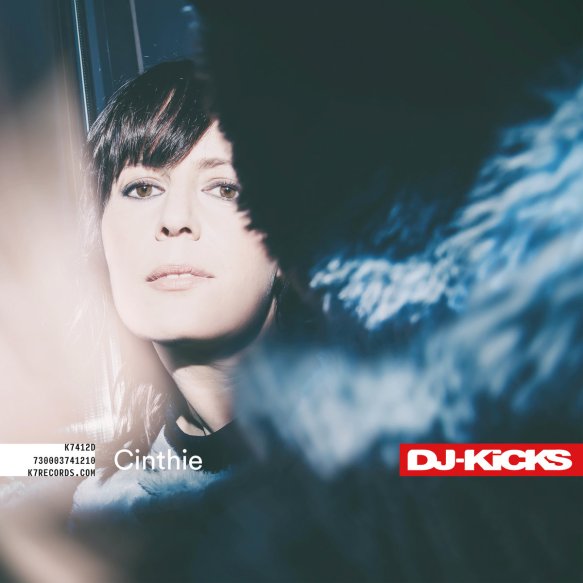
Let’s Dance – Various Artists: DJ Kicks: Cinthie (!K7)

cinthie

written by Ben Hogwood

What’s the story?

Berlin DJ Cinthie steps up to take the baton for the latest in !K7’s ever-successful DJ Kicks series. She has been busy of late as a producer, releasing her debut album Citylights, under the Skylines alias, on Will Saul’s Aus label in 2020. Since then she has been producing a wealth of excellent house music singles on her own labels.

Her aim with this generous 24-track selection was to bring together a sequence including her old heroes but also new house music sounds. In her words, the music ranges from ‘deep to Detroit, from banging to smooth, from jazzy to stomping, from Disco to Chicago, from dubby to big room’.

That means big names from Chicago, New York and Detroit – including Paul Johnson, Boo Williams, Amir Alexander and Spencer Parker – and new ones too, such as Amy Dabbs, Logic1000, Lis Sarocca, Anna Wall and Cinthie herself.

What’s the music like?

Hugely enjoyable. From the moment Terence Parker’s I Love The Way You Hold Me bursts out of the blocks, the mood is set for over an hour of good, uptempo grooves, and Cinthie gets a brilliant mix together to ensure the momentum is never broken.

Highlights include the bouncy, vibrant start from Parker which gets a complement from the suitably uplifting Oldtown Dub from Niles Cooper and Shinichiro Yokota’s Time Lapse. The home-style piano and springy beats of Sandilé‘s Jammin and Slammin work well, while  Amir Alexander‘s Blessed Are The Meek is really good, transitioning beautifully into UC BeatzCrash Nerd. Later on the heavier, rolling beats of Adryiano’s Non___Stop lead into a brilliant choice, Paul Johnson’s Y All Stole Them Dances. The music is motoring now, the beats broken up more for selections such as the funky Logic1000 selection I Won’t Forget, the momentum carrying through a fine finishing pay-off of Amy Dabbs, Chevals and Anna Wall.

Does it all work?

Yes, so much so that you’ll be more than happy to go round again. The ratio between old and new feels just right, and Cinthie’s enjoyment throughout is clear as day.

Is it recommended?

With gusto! A feelgood selection celebrating house music’s power to inspire, and acknowledging along the way the part disco has played in its evolution. Absolutely top stuff.

Stream

Buy