Harrison Birtwistle – some thoughts

by Ben Hogwood

I can well remember my first encounter with the music of Sir Harrison Birtwistle, as it left me with a headache. It was part of Sir Simon Rattle’s groundbreaking Towards The Millennium series with the City of Birmingham Symphony Orchestra, back in the 1990s at the Royal Festival Hall.

After a first half of Gubaidulina’s Offertorium had moved me to tears, I was not quite prepared for the sheer force of Sir Harrison’s Earth Dances. The work hit me square in the face, and not in a good way – I found it industrial to the point of confrontation, and could not see a way in to liking his music in spite of many admirable qualities.

More fool me. As time has gone on I have realised how it is possible to respect a composer’s music without necessarily liking it. I could sense the craftsmanship running through Birtwistle’s work, the expert hand in knowing the forces he was writing for, the drama unravelling in each of his pieces. More and more, I realised respect was turning into admiration and – in some cases – appreciation.

An encounter with Silbury Air at the Proms was a memorably mysterious occasion, falling under the spell of some beautifully written music – as English as Vaughan Williams, it seemed to me, and wholly descriptive of the countryside in a very different way to what we usually call ‘pastoral’. Verses, too, I found to be intensely dramatic, full of interesting event and persuasive musical phrase.

I also warmed to the Moth Requiem, premiered at Cadogan Hall in the same year, a touching piece with remarkably pictorial textures. To me it implied a slight mellowing of older age.

At this point I sense I have not yet spent enough time or effort with the music of Birtwistle to fully appreciate it, but it is clear that this is not music that gives up its treasures easily. Its respect has to be earned. I am full of admiration for Birtwistle, and can see how he has come to be revered in the way he has. I look forward to the penny dropping in the future.
Nicholas Angelich – An appreciation

by Ben Hogwood

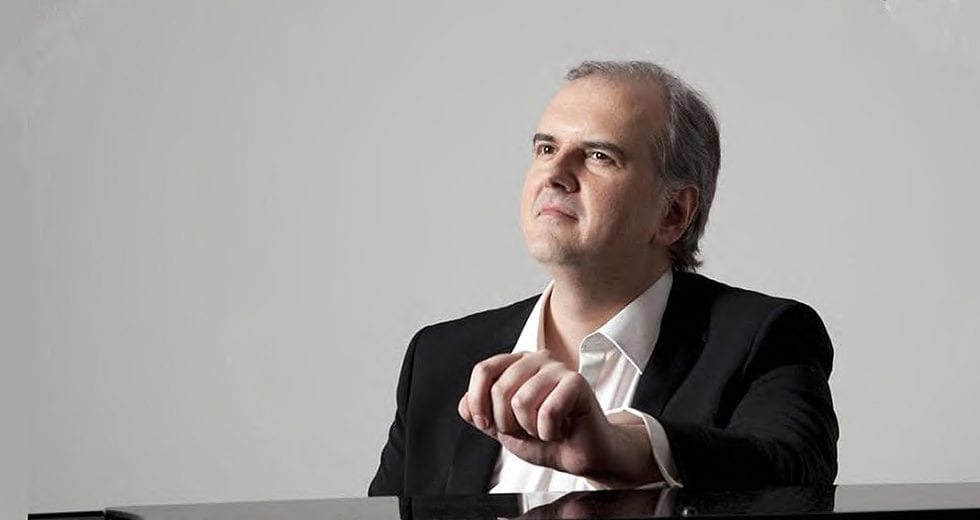
Earlier this week the very sad death of Nicholas Angelich was announced, at the age of just 51. Thankfully the highly-regarded pianist made a good deal of recordings for Virgin Classics and later Warner, many of which included the music of Beethoven and Brahms, at whom he excelled.

This playlist includes the late set of Fantasias published by Brahms as Op.116, then a sparkling clip from Prokofiev’s arrangement of music from his ballet Romeo and Juliet. I was lucky to see Angelich perform Brahms’s Piano Quartet no.1 in G minor at the Wigmore Hall with violinist Renaud Capuçon, viola player Antoine Tamestit and cellist Gautier Capuçon, around the time of their excellent recording for Virgin Classics. You can hear that as part of the playlist, which ends with Angelich in Beethoven’s Emperor Concerto, a lean account with the Insula Orchestra and Laurence Equilbey:

Radu Lupu – An appreciation

by Ben Hogwood

Yesterday was a particularly sad day in the world of classical music, and over the next few days Arcana will be paying tribute to three musical figures.

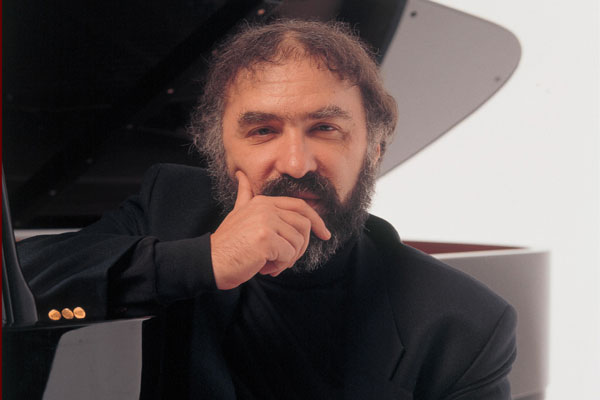
Sadly the death of Romanian pianist Radu Lupu (above) was announced, at the age of 76. A full tribute can be found on the Gramophone magazine website, where Lupu’s standing as an artist of great repute and dignity can be fully appreciated.

I did not see him perform live, sadly, but have looked back over Lupu’s relatively small and perfectly formed discography to choose a few personal favourites. I have chosen purely solo piano music, as this is where I have encountered his wonderful storytelling most often – and include music by Schubert, Schumann and Brahms. Here the extent of his storytelling ability can be witnessed – not to mention his instinctive musical phrasing.

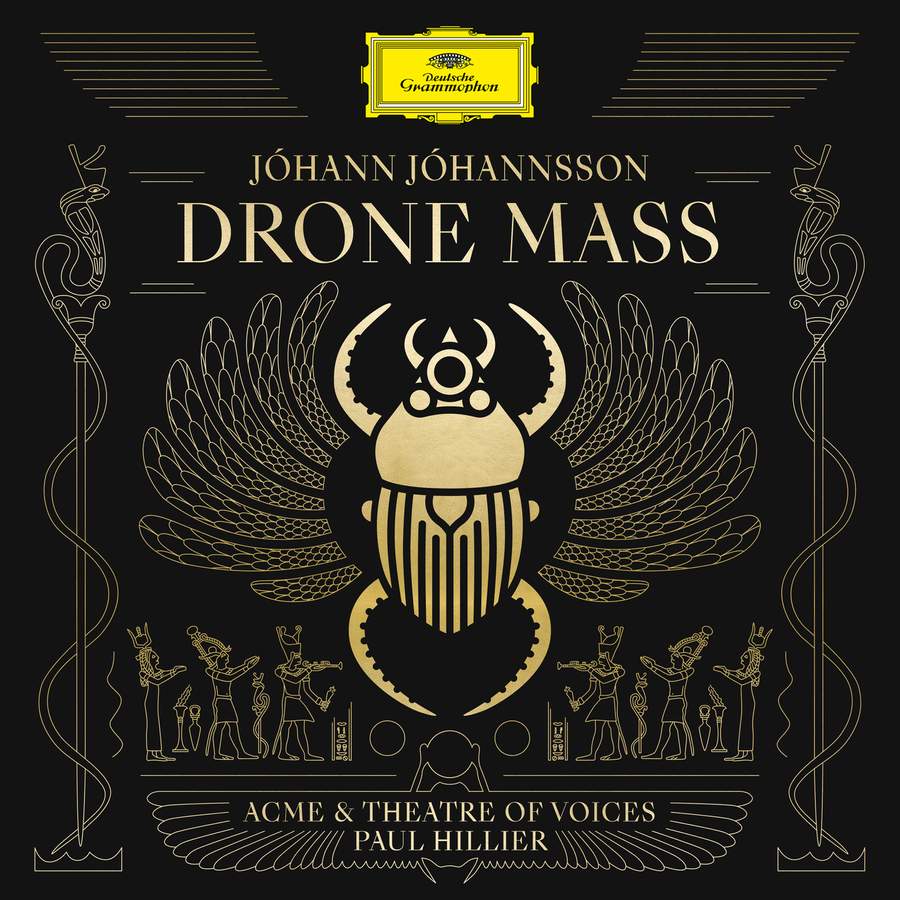
On Record – Jóhann Jóhannsson: Drone Mass (Deutsche Grammophon)

drone-mass

written by Ben Hogwood

What’s the story?

Drone Mass is one of the last completed works from the late and much missed Jóhann Jóhannsson. It was commissioned by the American Contemporary Music Ensemble, and given its first performance in 2015, at the Temple of Dendur in New York’s Metropolitan Music of Art. Jóhannsson took part in early performances of the work, but due to his sudden and sad death in 2018 was not present for this recording, made by ACME and their director Clarice Jensen in 2019. Joining the members of the ensemble were Theatre of Voices, conducted by Paul Hillier, who also took part in the early performances.

As Jensen makes clear in the booklet, Drone Mass is ‘neither a setting of the mass nor a piece that simply drones’ – but it is a sacred piece that has recurring drones throughout the work. It also has new technology as a background theme, Jóhannsson using his mastery of electronic music to write about drones as a force in the world today. The work’s vocals are drawn from the ancient Nag Hammadi scriptures and are written in Coptic, leading to a billing for Drone Mass as ‘an electroacoustic oratorio’.

What’s the music like?

The music takes its lead from the vocals, bringing together elements of ancient polyphony and new, drone-filled electronic textures. Because of this it is possible to approach Jóhannsson’s music from several directions, hearing old, unaccompanied melodies that can switch to electronics with little to no warning. The two work well together, especially as Jóhannsson’s music moves at a relatively slow pace. His language takes its lead from the ‘holy minimalism’ of Arvo Pärt and John Tavener, but is never derivative, searching as it does for a successful fusion of old and new methods of communication.

That search breeds a great deal of tension, which brings depth to the Drone Mass. The work starts with what sounds like an old, ornamented melody on One is True that gradually evolves into a substantial statement from all performing forces. Two Is Apochryphal is a meditative study with high, remarkably pure vocals, then Triptych In Mass contrasts plaintive violin arpeggios with two vocal lines, one drone like and the other much more mannered. The emotional centre of the work, however, lies in the two Divine Objects settings. Part one has a particularly haunting motif which develops into a powerfully wrought statement.

Does it all work?

It does. Although its constituent sections work well out of context, the Drone Mass is at its most effective when heard beginning to end in one sitting, taking shape and growing slowly but surely as it proceeds. The standard of performance is commendably high, too – thanks to outstanding singing from the Theatre of Voices, holding the sustained notes with impressive surety and accuracy. Meanwhile ACME provide the exquisitely shaded instrumental contributions.

Is it recommended?

Yes, without hesitation. Often pieces like this go for too many gestures or try to hit the harmonic sweet spots too often. Jóhann Jóhannsson is different, writing fluently to a larger scale, with music that grows in stature across its hour-long length. It leaves us with much to ponder, the only shame of course being that its composer is no longer around to hear what a fine recording has been made in his honour. In Drone Mass, he leaves a deeply felt and starkly effective representation of our times.

Stream

Buy

You can purchase this compilation at the Deutsche Grammophon website, where you can hear more clips and read more about the project.

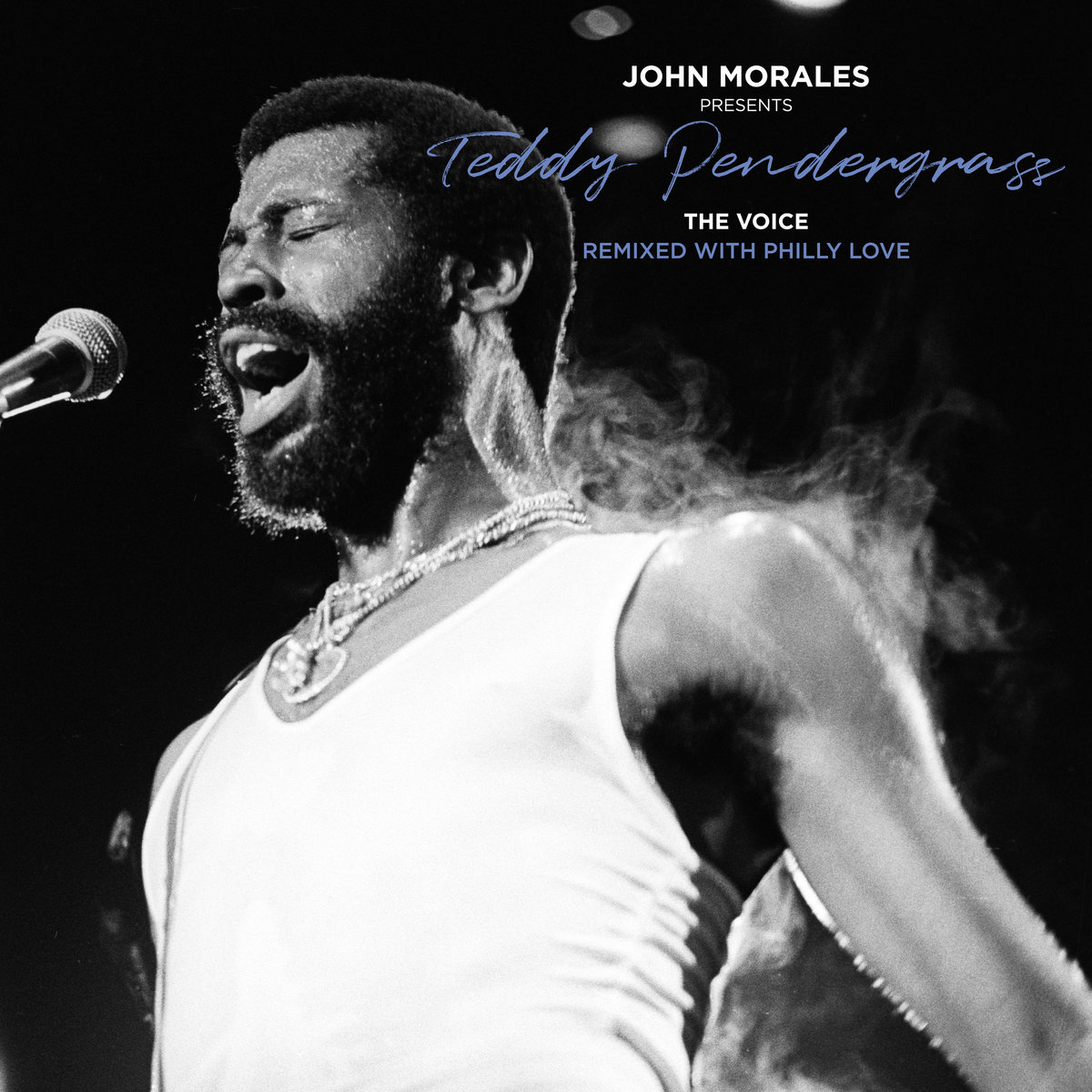
On Record – John Morales Presents Teddy Pendergrass – The Voice – Remixed With Philly Love (BBE)

teddy-pendergrass

written by Ben Hogwood

What’s the story?

Teddy Pendergrass was the main voice of Philadelphia soul in the 1970s, whether as front man of Harold Melvin & the Blue Notes or as a solo singer. Remix engineer John Morales has looked to recognise that in the latest installment of his remix projects with BBE Music, keen to bring improved clarity to each of the 18 songs he has selected. This involves highlighting individual musical contributions without losing the spirit of the original, while keeping the utmost respect for the principal instrument – which of course is Teddy’s voice.

The project has the blessing of Gamble & Huff, founders of Philadelphia International Records in 1971, and the Teddy Pendergrass estate.

What’s the music like?

Once you’ve experienced Teddy Pendergrass as a singer, you don’t forget it – and John Morales ensures each of these tracks captures that formative experience.

He gets the good vibes flowing immediately, with arrangements that give the music all the breathing space it needs. There is a sumptuous orchestral introduction bookending Don’t Leave Me This Way, while the piano powering If You Don’t Know Me By Now is the icing on the cake where the pleading vocals are the star of the show. Two classic songs, with their instrumental craft illuminated by Morales. The Love I Lost may be a bittersweet song but it is wholly uplifting here, while the impassioned vocal of Where Are All My Friends is given an active counterpoint from brass and strings that respond to its changing harmonies.

These instrumental touches elevate the songs still further. Do Me has a nicely pointed sax solo. I Don’t Love You Anymore has a brilliant vocal hook, the strings bubbling under. There are some lovely string flourishes taken up by the brass on If You Know Like I Know, and a beautifully crafted orchestral intro to Now Is The Time. Some of the songs are still powered by their meaningful lyrics – with Life Is A Song Worth Singing and Is There A Place For Me especially pertinent.

Morales has chosen carefully, selecting some of the outright classics from this era, but also delving deeper to bring out lesser-known songs such as Come And Go With Me and If You Don’t Love Me.

Does it all work?

Very much so. The love John Morales has for these tracks is clear in the painstaking work bringing each component to the fore – and his work is rewarded with some noteworthy tracks, giving this music wonderful clarity and renewed energy.

Is it recommended?

Yes – Morales fans will already be on it, but fans of soul music in general will love the collection in its sparkly new clothing.

Stream

Buy

You can purchase this compilation at the BBE Music website, where you can hear more clips and read more about the project.