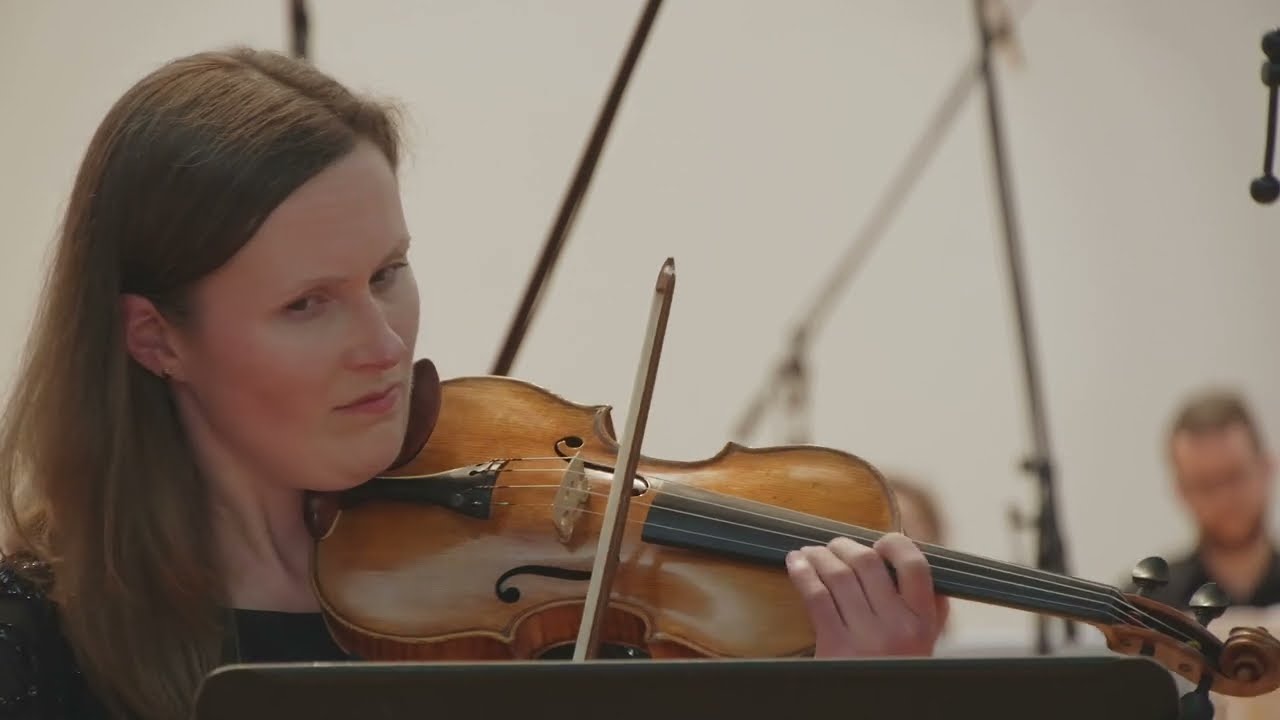
Online concert – Daniel Rowland, Maja Bogdanović, English Symphony Orchestra / Kenneth Woods: Sawyers: Concerti

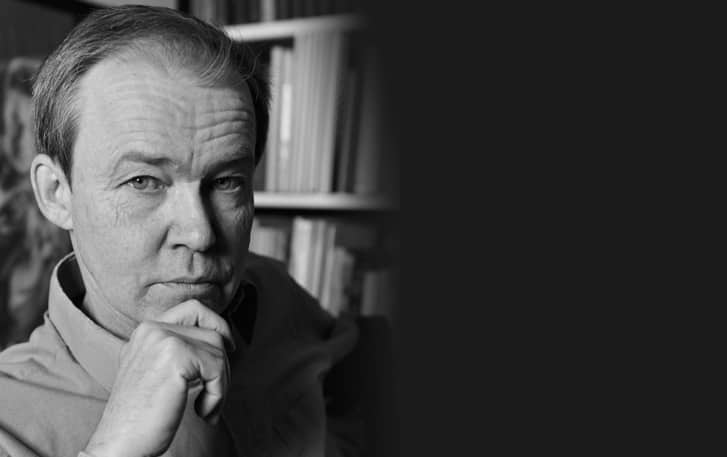
Philip Sawyers (above)
Double Concerto for Violin and Cello (2020)
Viola Concerto (2020)

Daniel Rowland (violin, viola), Maja Bogdanović (cello), English Symphony Orchestra / Kenneth Woods

Filmed at the Wyastone Concert Hall, Monmouth, Thursday 3 March 2022. Producer Phil Rowlands / Videographer Tim Burton

by Richard Whitehouse. Photo of Daniel Rowland and Maja Bogdanović (c) Stefan Bremer

Since returning to composition with a vengeance almost two decades ago, Philip Sawyers has created a varied output dominated by six symphonies along with five concertos that between them confirm the professionalism of his writing and a sensitivity to the instrument(s) at hand. Two of them were written, one after the other, in 2020 and received their public premieres at Hereford and Great Malvern in March last year.

Daniel Rowland (violin), Maja Bogdanović (cello)

Before that, they were recorded at one of the English Symphony Orchestra’s Wyastone sessions and it is these accounts which feature here. The live performances were covered when part of their respective concerts (see the reviews of the Double Concerto and Viola Concerto respectively), hence it only needs to be added that the studio recordings more than compensate for any lack of spontaneity with what they gain in subtlety of characterization.

The conviction of these readings should only be abetted when they are commercially issued on 6th March, as part of the ESO’s latest Sawyers release which also features his Octet for ensemble and Remembrance for strings (its public premiere to be given by the Leamington Chamber Orchestra at Holy Trinity Church, Leamington Spa on Sunday March 26th). Good news, moreover, that his oratorio Mayflower on the Sea of Time, whose premiere at the 2020 Three Choirs Festival fell victim to the pandemic, is to receive its first hearing later this year.

This concert can be accessed free until 28 February 2023 at the English Symphony Orchestra website, but remains available through ESO Digital by way of a subscription. Meanwhile click on the names for more on the English Symphony Orchestra and Kenneth Woods, or on composer Philip Sawyers. Meanwhile the new recording release mentioned above can be viewed and purchased in advance here

Online Concert: Jean-Efflam Bavouzet plays Haydn @ Wigmore Hall

Jean-Efflam Bavouzet (piano)

Haydn
Piano Sonata in D major Hob.XVI:24 (c1773)
Piano Sonata in A flat major Hob.XVI:46 (c1767-8)
Piano Sonata in E flat major Hob.XVI:49 (1789-90)

Wigmore Hall, Monday 20 February 1pm

by Ben Hogwood

Haydn’s piano sonatas remain an underappreciated corner of his output as a composer. This is understandable on one hand, given the sheer volume and consistency of his output in other forms. The symphonies, string quartets and piano trios all enjoy higher billing, but gradually the sonatas are coming up on the rails.

This is in part due to recent recordings from pianists such as Jean-Efflam Bavouzet, Marc-André Hamelin and Peter Donohoe. Bavouzet, however, has gone further, completing a cycle of the sonatas in eleven instalments for Chandos. If they are all as stylishly played as this BBC Radio 3 Lunchtime Concert, then many treats await.

First of three works in this recital was a D major sonata full of vim and vigour. Bavouzet enjoyed its brightly voiced start, securing a lovely articulation to the right hand while bringing the historical connections through. The energy of Domenico Scarlatti was in evidence, while in the aria-like slow movement there was an operatic air. With an expressive right hand and softly alternating left, Bavouzet found Haydn’s soft centre, before enjoying the florid right hand and the playful nature of in the finale.

In the second work we enjoyed classic, ‘exploratory’ Haydn, the composer experimenting with different forms and far flung keys – such as the D flat major chosen for the slow movement. Here the influence is more C.P.E. Bach, heard in a captivating Allegro, adorned with ornaments in the right hand. Bavouzet once again showed off a bright, clear sound and lightness of touch, with sleights of humour visible at every turn. The slow movement did indeed travel further afield, creating an air of mystery, with exceptional playing in the upper reaches of the right hand. The finale was crisp and clear.

Proof that Haydn sonatas are starting to make themselves better known came with the third work. This was not the E flat sonata placed 52 in Haydn’s output – often chosen as an example sonata in a concert programme. Instead we had a winsome and deeply personal work, written for the composer’s personal friend and confidant, Maria Anna von Genzinger at the turn of 1789 and 1790. As the musicologist Daniel Heartz notes, we know more about the composition of this piece than any other in Haydn’s output, due to the correspondence between the pair, where the composer gives uncharacteristic outpourings of feeling and loneliness.

Bavouzet’s performance immediately took on a conversational air, wit and underlying tenderness lying just beneath the relatively grand gesture of the opening. The intimate, thoroughly enjoyable dialogue between the hands spoke of two people enjoying a one-on-one rapport, before the first movement ended with a flourish and an exclamation mark. The second movement had a lovely disposition to its main theme but then a darker tint to the central section, moving to such ‘un-classical’ keys as B flat minor. The finale also stressed the importance of the silences between the notes, Bavouzet observing these just as closely in the overall phrasing.

This was a wonderful recital, a reminder that Haydn’s importance and influence within the piano sonata medium should not be overlooked. The music had an endearing freshness throughout, communicated with persuasion by a pianist on top of his game.

As an encore, Bavouzet switched styles to Massenet, dedicating his performance of the French composer’s whirlwind Toccata to his dear friend Paul Westcott, a much-missed presence with whom he worked in the beginnings of his career with Chandos, and through to the Haydn itself. Paul would have loved the pizzazz of this version, and Bavouzet’s virtuosity and brilliance would have been appreciated from afar – of that there is no doubt!.

For more livestreamed concerts from the Wigmore Hall, click here. Meanwhile the Spotify playlist below contains recordings made by Jean-Efflam Bavouzet of all the repertoire in this concert:

Online Concert: Christian Poltéra & Kathryn Stott @ Wigmore Hall – Prokofiev & Chopin

Christian Poltéra (cello, above), Kathryn Stott (piano, below)

Prokofiev Cello Sonata in C major Op.119 (1949)
Chopin Cello Sonata in G minor Op.65 (1845-6)

Wigmore Hall, Monday 13 February 1pm

by Ben Hogwood

Christian Poltéra and Kathryn Stott are a long-established duo who have provided us with a richly rewarding discography including works by Fauré, Saint-Saëns, Barber and Schumann. Their encounters with Russian music appear to have been less frequent to date, and it was good to hear their poised account of one of the form’s most popular works. Ukrainian-born Prokofiev wrote his sonata, a late work, for Mstislav Rostropovich, who had impressed him with his larger than life playing. It is the first of a late burst of works for the instrument, including the Sinfonia Concertante, Solo Cello Sonata and Concertino.

Poltéra began the sonata with a solemn intonation on the lowest register of the cello, emphasising the ‘grave’ aspect of Prokofiev’s tempo marking rather than going for an epic sound. This thoughtful approach bore fruit in the slower sections, and with Stott an attentive partner there was plenty to enjoy in Prokofiev’s baleful writing, and impressive clarity in the more expansive passages.

The second movement danced attractively, tapping into Prokofiev’s ballet credentials, with some enjoyable exchanges between the two, if not always making the most of the composer’s frequently humourous asides. The third movement sang out more, Poltéra projecting further without losing any of his admirable control or intonation, and Stott getting to the heart of Prokofiev’s combination of percussive cut and thrust and soft-centred lyricism.

Chopin’s Cello Sonata came as something of a surprise to his fellow composers in the mid-1840s. Written for the French cellist Auguste Franchomme, it is a substantial work, which unsurprisingly asks a great deal of the pianist in a full-bodied, almost orchestral role.

Poltéra it was who led the first movement most impressively, with a consistently attractive sound singing subtly but meaningfully. Technically he is a superb cellist, with tone unflinching, but praise should be levelled at Stott’s ability to bring beautiful phrasing to even the most congested piano writing. The searching legato theme in the second movement was a case in point for the cellist, beautifully played with flowing piano figures. The lovelorn third movement was tinged with sadness, finishing lost in thought. The last movement showed determination to break from this soul searching, looking outward as it powered through to a major key finish.

This was an excellent performance, ideally balanced and capturing the right balance of regret and resolve – and was balanced by the encore, Saint-SaënsRomance in F major Op.42. A Monday lunchtime treat.

For more livestreamed concerts from the Wigmore Hall, click here

Online concert – Zoë Beyers, English Symphony Orchestra / Kenneth Woods: Elcock: Violin Concerto

Elcock Violin Concerto Op.13 (1996-2006)

Zoë Beyers (violin), English Symphony Orchestra / Kenneth Woods

Filmed at the Wyastone Concert Hall, Monmouth, Thursday 26 May 2022. Producer Phil Rowlands / Videographer Tim Burton

by Richard Whitehouse

The English Symphony Orchestra’s online schedule got off to a fine start for this year with a studio account of the Violin Concerto by composer-in-association Steve Elcock. It may have taken shape across nearly a decade, but the work is no less impressive for that. It also marks something of a transition from less ambitious pieces, often conceived with local musicians in mind, to the symphonic works as have recently been performed and recorded to great acclaim – whose formal as well as expressive concerns it anticipates and shares in various instances.

The concerto opens with an Allegro vivo whose rhythmic energy is maintained throughout, yet with sufficient contrast for its second theme to assume greater emotional emphasis in the reprise, prior to a forceful conclusion. The undoubted highlight is a Molto tranquillo whose haunting main theme, first unfolded by the soloist over undulating upper strings in a texture evidently inspired by change-ringing techniques, is a memorable inspiration. A pavane-like idea latterly comes into focus and the closing stage, which opens onto an eloquent plateau before evanescing almost regretfully into silence, lingers long in the memory. The finale is a relatively taut passacaglia whose theme accelerates through five variations from Andante to Presto, culminating in a combative ‘cadenza’ for violin and timpani then a decisive pay-off.

A tough challenge, indeed, for any soloist and one such as Zoë Beyers and the ESO, under Kenneth Woods, met with assurance over its 33 minutes. Aside from its sheer velocity, the first movement is notable for a close-knit interplay between soloist and orchestra here brought off with admirable precision, while the modal subtleties of the slow movement were deftly rendered as enhancements to its overall tonal trajectory. If its sequence of accelerating variations seemed to be over rather too soon, the finale was nevertheless a cohesive entity that saw this piece to a defiant conclusion.

Good to hear that this performance will be released commercially in due course, as a coupling for the Eighth Symphony which the ESO premiered in 2021 and the tone poem Wreck it gave last year – hence making for a persuasive overview of this increasingly significant composer.

This concert can be accessed free until 7 February 2023 at the English Symphony Orchestra website, but remains available through ESO Digital by way of a subscription. Meanwhile click on the names for more on the English Symphony Orchestra and Kenneth Woods, or on composer Steve Elcock

Online Concert: Doric String Quartet & Brett Dean @ Wigmore Hall – Haydn & Beethoven

Doric String Quartet [Alex Redington, Ying Xue (violins), Hélène Clément (viola), John Myerscough (cello)], Brett Dean (viola)

Haydn String Quartet in F major Op.50/5 ‘The Dream’ (1787)
Beethoven String Quintet in C major Op.29 (1801)

Wigmore Hall, Monday 23 January 1pm

by Ben Hogwood

Is there a better musical tonic on a grey Monday in January than a Haydn string quartet? Not in this case, as the Doric String Quartet built on the solid foundations of their recent recordings of the composer’s music for Chandos with a well-crafted and nicely weighted account of one of the composer’s middle-period works.

Haydn wrote so many symphonies, string quartets and piano trios – to name just three disciplines in which he was prolific – that nicknames are helpful in identifying the works. Some of them can be quite spurious, but in the case of The Dream the label describes the serene slow movement of the quartet, and its carefree violin fantasies. The work is placed fifth work in a set of six quartets written for King Frederick William II of Prussia, and finds Haydn making further strides in the development of this new form.

The Doric captured that sense of discovery, although they took just a little while to settle, with a couple of relatively coarse moments at the start. This was however a beautifully played account, with an enjoyable lightness of touch in the outer movements and an airy account of the ‘dream’ movement itself. The players were clearly sticking to the first principles of chamber music, enjoying the conversational exchanges between the instruments but bringing the audience in on their enjoyment too. This was most evident in a lively third movement Menuetto and Vivace finale.

Brett Dean is one of the most-performed living composers, but he also has a formidable CV as a viola player, playing in the Berlin Philharmoniker for 14 years. While composing is his primary discipline these days he remains active as an instrumentalist. The Doric Quartet’s current tour includes his String Quartet Hidden Agendas, while welcoming Dean as a notable addition to the ensemble for Beethoven’s String Quintet.

The five have an easy musical chemistry, Dean effortlessly slotting in to play a work that is beginning to get the recognition it deserves, both within Beethoven’s output and in context as a fine continuation of Mozart’s innovations in the form. This performance got to the heart of Beethoven’s energetic writing in a flowing first movement, enjoying the melodic exchanges, while the second movement explored the richer mid-range colours available in music of elegiac quality, as well as enjoying the composer’s excursions to further flung keys.

In the third movement Scherzo there was a notable raising of the stakes, and an upsurge in kinetic energy. The demands were comfortably matched by the five players here, who built on this with a finale of high drama and stormy countenance.

For more livestreamed concerts from the Wigmore Hall, click here