Online concert – English Symphony Orchestra / Kenneth Woods: Adrian Williams: Symphony no.1

English Symphony Orchestra / Kenneth Woods

Adrian Williams Symphony no.1 (2018-19, rev. 2021)

Wyastone Concert Hall, Monmouth
Studio recording 1-2 December 2021

Written by Richard Whitehouse

The 21st Symphony Project, launched five years ago by the English Symphony Orchestra and Kenneth Woods, has seen several impressive premieres – with this First Symphony by Adrian Williams its most ambitious yet, whether in terms of underlying conception or overall impact.

Now in his mid-60s, Williams has been a notable presence – albeit on the periphery – of music in the UK for several decades (more information can be found via the web references below); his advocates including Raphael Wallfisch and the Amsterdam Sinfonietta. Regular listeners to the ESO’s digital concerts will have encountered his striking Chamber Concerto ‘Portraits of Ned Kelly’ and intricately wrought eloquence of Migrations for strings; aspects from both resurfacing here, if on a considerably larger scale and exuding correspondingly greater force.

Playing almost 50 minutes and scored for a sizable orchestra including triple woodwind, five horns, four trumpets and four percussionists with harp, piano and celesta, the present work is evidently a summation of where its composer has reached over the course of his musical (and likely extra-musical) odyssey. Not that there is anything gratuitous or self-indulgent about the outcome; indeed, for all its formal complexity and emotional reach, this is music created out of inherently basic motifs – its initial three notes and their rearrangement generating the first movement’s main themes as well as outlining a long-term tonal trajectory which, though not pursued as systematically as in the earlier symphonies of Robert Simpson, remains as a focus throughout the intervening activity and the focal-point toward which such activity is directed.

From its imposing Maestoso epigraph, the opening Stridente unfolds against the background of, without thereby adhering to, sonata-form principles – its motivic components drawn into a continuous and frequently combative evolution necessarily left unresolved at the close. There follows a Scherzando that eschews ternary design for a through-composed format proceeding by tension and release to its decisive ending. To say the ensuing Lento is the expressive crux of this work might detract from the plangent, desolate tone of music whose frequently sparse textures and elliptical harmonies re-affirm that ‘less is more’. Despite its Energico marking, the finale unfolds with slow-burning momentum made cumulative by channelling its motivic evolution towards a Dolente apotheosis whose outcome is as inevitable as it is transcendent.

An impressive piece in terms not only of ambition but also realization. There are considerable technical challenges on route, but these are met with conviction and no little resourcefulness by an expanded ESO often tested while never fazed during its eventful course. Woods directs with his customary discretion and an attention to detail that goes a long way toward clarifying music which feels ‘complex and luminous’ as much in spirit as by design. Whether or not the outer movements might yield greater panache could only be determined under live conditions.

It might also be noted the designation is no idle boast, Williams having been commissioned to write a successor the ESO will schedule at a future date. Even were it to pursue a wholly different course, the achievement of this First Symphony is one not likely to be diminished.

You can view this concert from 25-29 March at the ESO website, and thereafter for ESO digital supporters here. For more information on Adrian Williams, head to his website or an extensive biography on the MusicWeb International site

Radio 2 Piano Room – a ray of light for February

Written by Ben Hogwood

This is not an advert…but it is a post urging you to listen to some of the sessions in BBC Radio 2’s Piano Room series of concerts if you haven’t already.

Over the last month on Radio 2’s weekday Ken Bruce show, a different act each day has delivered three songs from the BBC’s Maida Vale studios. While the title implies the act will be alone at the piano, the reality is that two of their songs are recast by the BBC Concert Orchestra and their team of expert arrangers. For a bonus the chosen soloist(s) will cover a song of their choice.

The results, quite frankly, have been unexpectedly good and occasionally spectacular. Performers that you might think of as day to day radio fodder have reinvented their songs in this environment. David Gray, for instance, a fine songwriter who arguably suffers from overexposure of his most familiar songs, was transformed. Please Forgive Me (a brilliant arrangement by Tim Bradshaw), This Year’s Love and a cover of Peter Gabriel’s Sledgehammer took on a life of their own in the Piano Room’s first instalment, setting the tone for what followed.

Over the weeks there have been some deeply impressive sessions from newer artists who have raised their game. Radio staples such as Anne-Marie, Ella Henderson and Clean Bandit delivered heartfelt sessions, where every breath could be heard and felt on the airwaves, the musical equivalent to an actor appearing on the West End stage. Anne-Marie in particular deserves great credit for elevating Ed Sheeran’s Bad Habits to another level entirely.

The real stars, dare I say it, have been the BBC Concert Orchestra and their team of arrangers. They have delivered consistently strong and sensitive versions of these songs, lovingly crafted and gaining new qualities through the exquisite string and woodwind writing. Although they have a full orchestra at their disposal the arrangers have never overused them, always keeping the vocalists at the front.

My personal favourites in this month have been David Gray, Simple Minds, Tears for Fears, Jamie Cullum and – unexpectedly – Natalie Imbruglia, who sang a beautifully arranged version of Torn that really cut to the heart.

There are however still a couple of sessions I have yet to hear – and if they reach the same standard as those listed then we are in for a treat.

Take my advice, then, and head for the iPlayer or BBC Sounds, where no less than 60 freshly minted songs await. You will not be disappointed. Now, which other world broadcaster could possibly offer this?

Online concert – English Symphony Orchestra / Kenneth Woods: The music of Saxton & Sawyers

eso-saxton-sawyers

English Symphony Orchestra / Kenneth Woods

Sawyers Remembrance (2020); Octet (2007)
Saxton
The Resurrection of the Soldiers (2016)

Wyastone Concert Hall, Monmouth
7-8 April 2021

Written by Ben Hogwood

For the latest in their online series, the English Symphony Orchestra and their conductor Kenneth Woods presented a trio of works written in the last 20 years. The music of Philip Sawyers, their Composer Laureate, featured in two contrasting pieces.

A recent work, Remembrance for Strings, made an instant impact. This deeply emotive, thought provoking piece has a hint of Elgar in its profoundly elegiac tone and scoring, but unmistakably bears Sawyers’ fingerprints as the theme evolves, gradually creeping upwards. The strings of the ESO were perfectly paced by Woods, giving the theme plenty of room and bringing the important viola and cello lines through the texture. Sawyers finds effective contrasts between notable pain points of discord and an almost complete stillness as the strings collect their thoughts, holding their collective breath in ideally weighted phrasing. This deeply affecting piece deserves to be heard much further afield, its impact comparable (if notably different) to that of Barber’s Adagio for Strings. A note for Emily Davis, the ESO guest leader, who gave a touching final solo.

Sawyers’ Octet was next, a single movement work from 2007 written for the youthful ensemble Liquid Architecture. With a scoring for clarinet, horn, bassoon, string quartet and double bass, its colours provided the ideal contrast to Remembrance, as did its series of compact melodies and increasingly busy exchanges, carefully interwoven throughout the ensemble. Written in a single movement, the Octet is an involving work, treating the eight players as soloists but exploring and enjoying their properties in smaller group discussions. Perhaps inevitably the mind is briefly cast back to Stravinsky’s work for the same number of players, but also the harmonic language of Berg and Hindemith. When all the instruments play together the dense contrapuntal writing is at its most effective, while Sawyers ensures the component melodies can be appreciated in a solo capacity too. Kenneth Woods conducted a fine account here, the ESO soloists playing with flair and sensitivity, all the while gathering momentum towards an emphatic arrival in C major. The instrumentalists’ placing, and some sensitive camera work under the direction of videographer Tim Burton, allowed heightened insight into the speed of Sawyers’ rapidly evolving ideas.

As he approaches his 70th birthday, Robert Saxton is a British composer arguably yet to receive the full recognition of which his music is surely due. The Resurrection of The Soldiers is an illustration of his ability to respond to art from another form with remarkable perception. A 12-minute tone poem for string orchestra, written in 2016 and dedicated to George Vass, The Resurrection of The Soldiers is a powerfully concentrated work, responding as it does to the final panel of Stanley Spencer’s commission for Sandham Memorial Chapel. The set of paintings result from the artist’s experiences in the British army in World War One, depicting soldiers emerging from their graves on the last day.

Clearly this depiction struck a lasting emotional chord with the composer, his response speaking initially of searing pain but progressing to a much more hopeful outcome. The upper strings of the ESO spoke powerfully here, maintaining their intensity in the long notes before digging in to an eventful exchange in the energetic central section. This culminated in a powerful chord, richly scored – and with a reverent pause from which the resurrection itself evolved with increasing surety, reaching an exultant if not un-scarred E major.

You may wish to complement the ESO’s performance with detail from the artwork itself, from the National Trust website, or you may wish to form your own images which the music powerfully imprints. Either way, do catch the whole of this compelling program, for these are three very meaningful pieces of music given in the best possible performances.

You can view this concert from 18-22 February at the ESO website, and thereafter for ESO digital supporters here

Online concert – English String Orchestra / Kenneth Woods: Tchaikovsky: String Quartet no.3

eso-tchaikovsky

English String Orchestra / Kenneth Woods

Tchaikovsky arr. Woods String Quartet No. 3 in E flat minor, Op. 30 (1876)

Wyastone Concert Hall, Monmouth
12-13 July 2021

Written by Richard Whitehouse

The English String Orchestra launched its schedule for 2022 with another premiere – that of Tchaikovsky’s Third Quartet in an arrangement by Kenneth Woods, continuing a line of such rethinking which has previously included Brahms’s Second Piano Quartet (Nimbus NI6364).

Completed early in 1876, this work came about through the premature demise of Ferdinand Laub who led those premieres of Tchaikovsky’s previous quartets and whom the composer held in highest regard. Its tonic-key is unexpected yet influential (notably on Shostakovich), not least in an opening movement where the Andante introduction leads to an Allegro whose fervent striving never quite breaks free of the fatalism from which it emerges and to which it returns. Woods might have made more of that Allegro’s undulating emotions, but his take on its introduction and coda duly enhanced their sombre intensity. Nor was there any lack of wit or urbanity in the next movement, poised unerringly between scherzo and intermezzo, which could become almost as popular as the waltz of the Serenade for Strings in this incarnation.

Interesting that Tchaikovsky belatedly reversed the order of the middle movements, given the Andante funebre is the undoubted highpoint of this work and its impact would be diminished if heard earlier in the overall design. Moreover, Woods’ arrangement was at its finest here in terms of the interplay between solo and ensemble strings – those soliloquys for violin, viola and cello given added pathos by the greater textural depth; not least as the movement reaches its anguished climax then subsides into the chant-inflected elegy of its closing stages. Maybe the finale would have conveyed even more a sense of release at a swifter tempo, but Woods was scrupulous as regards its ‘non troppo’ marking; nor was there any lack of resolve as this movement headed on its impetuous course towards a decisive and life-affirming conclusion.

A convincing new guise, then, for arguably the finest of Tchaikovsky’s chamber works (not least compared to the over-inflated arrangements of Souvenir de Florence), and a welcome reminder of the ESO’s collective prowess whether heard in original pieces or transcriptions.

You can view this concert from 21-25 January at the ESO website, and thereafter for ESO digital supporters here. Meanwhile for information on the ESO’s latest release of the music of Steven R. Gerber, click here

Online concert – Steven Isserlis & Connie Shih mark the centenary of Saint-Saëns @ Wigmore Hall

steven-isserlis

Saint-Saëns Cello Sonata no.1 in C minor Op.32 (1872)
Liszt Romance oubliée S132 (1880)
Fauré Romance Op.69 (1894)
Saint-Saëns Romance in F major Op.36 (1874)
Bizet arr. Hollman Carmen fantaisie (not known)
Willaume La noce bretonne Op.14 (pub. 1924)
Holmès arr. Isserlis Noël d’Irlande (1897)
Hahn 2 improvisations sur des airs irlandais (1894 rev. 1911)
Saint-Saëns Cello Sonata no.2 in F major Op.123 (1905)

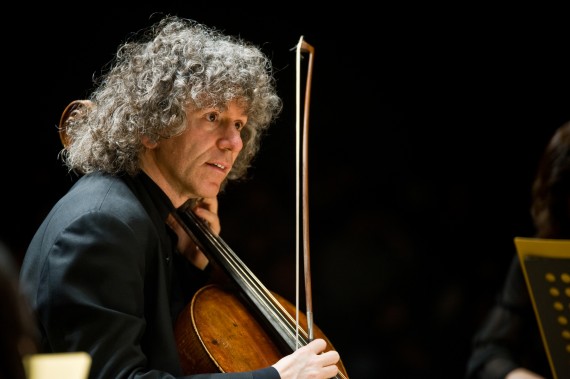
Steven Isserlis (cello, above), Connie Shih (piano, below)

Wigmore Hall, London
Thursday 16 December 2021

Written by Ben Hogwood

This well-devised program to mark the centenary of the death of Saint-Saëns was put together by cellist Steven Isserlis and his regular partner, pianist Connie Shih. They presented the composer’s two cello sonatas, the first of which was recorded by Isserlis back in 1992, in an intriguing historical context.

There is no room for shrinking violets in the first movement of the Cello Sonata no.1 in C minor Op.32, a relatively early work, and both performers threw themselves headlong into the music. Saint-Saëns was a virtuoso pianist, and on occasion his writing for the instrument is as demanding if not more so than the instrument it is ‘accompanying’. Here however the two were on equal terms, with plenty of cut and thrust in a dramatic first movement. The C minor casting and stormy start draw parallels with Beethoven, and these were built upon in the players’ compelling dialogue. The improvisatory slow movement was ideally poised, with an air of mystery in its central section where the cello was in its lowest register, complemented by twinkling figures from the piano. The Allegro moderato third movement returned us to powerful, passionate music, Isserlis’ double stopping passages immaculately delivered and Shih finding the necessary definition and phrasing in a superbly played piano part.

A full 32 years elapsed between the first sonata and its sequel, the Cello Sonata no.2 in F major Op.123. By this time the 70 year-old composer’s style had developed considerably. It is a substantial piece, running over 35 minutes, and is perhaps less-performed on that basis, not to mention the demands made on the performers. Isserlis and Shih showed what a fine work it is, however, in a performance that was gripping from the off, full of passion but also finding the more elusive statements in the quieter music, where Saint-Saëns could be found writing subtle but far-reaching sleights of harmony.

A joyous opening paragraph surged forward with considerable energy, powering an impressive and flowing first movement, Shih harnessing the power of the piano but continuing to hold a sensitive balance. She led off a capricious scherzo, whose variations were brilliantly characterized, from a limpid third variation (marked Tranquille) to a rippling Molto allegro that followed.

The heart of the piece, however, lies in the substantial Romance, a dreamy slow movement with a beautiful melody and a profound middle section turning towards the minor key. Both played with poise and affection, finding the centre of music the audience could fully lose themselves in. The last movement, which the composer promised ‘will wake anyone who’s slept through the rest of the piece’, was terrific, working from its deceptively innocuous opening phrase to throw off the shackles and end in celebratory mood. Isserlis was typically generous with his expression, with Shih deserving credit for her technical command and shapely melodic phrasing. The octaves towards the end were especially well-handled.

While the two sonatas were the main works of the concert, the complementary pieces were no less involving, providing an ideal foil. Firstly we heard from Saint-Saëns’ close friend Liszt, one of his few works for cello and piano. The Romance oubliée began with a recitative, with beautiful tone in the held notes from the cello, setting the (intense) mood. Then another great friend (and pupil), Fauré – whose Romance uses the whole range of the cello, starting in the mysterious depths and ending in the rarefied upper register. Saint-Saens’ own warm-hearted Romance in F major Op.36 was affectionately recounted, before the showstopping Carmen fantasie from Saint-Saëns’ friend and regular recital partner, Joseph Hollman. This was a showstopper, with quickfire dances and a pizzicato Habanera, stylishly done by Isserlis.

Shorter pieces followed from Gabriel Willaume, Reynaldo Hahn and Augusta Holmès, each with fascinating connections to the composer. Willaume’s La noce bretonne (The Breton wedding) was rather moving, its distant drone growing in feeling and power before passing by and disappearing again. Hahn’s 2 improvisations were songlike and affecting in their simplicity, a soulful Willow Tree especially, before an arrangement by Isserlis of Holmès song Noël d’Irlande, its pentatonic language easy to absorb.

This was a very fine concert, with playing of an exceptionally high standard by both artists, but crucially with the involvement that told us how Saint-Saëns, in particular, could combine virtuosity with deep feeling, contrary to some opinion. It is hard to imagine how his centenary could have been better observed – and it ended with a perfectly weighted account of The Swan, one of his most famous shorter pieces – taken as it is from Carnival of the Animals. Isserlis needed only to introduce it with a wave of the hand.

You can watch this concert on the Wigmore Hall website for the next 28 days – and you can hear most of the music played by Isserlis and Shih on the Spotify playlist below, with some of the recordings drawn from their recent album Music from Proust’s Salons. That disc can be heard (and purchased) from the BIS website