Yesterday we marvelled in the wonder of John Cage’s writing for choir, as highlighted in the Gramophone Awards on Wednesday. At the ceremony the magazine also named its Recording Of The Year, choosing Nielsen’s Symphony no.4 (the Inextinguishable) and no.5, as played by the Danish National Symphony Orchestra conducted by Fabio Luisi.
The choice is further evidence that Nielsen’s symphony cycle is acknowledged as one of the finest of the 20th century, having perhaps taken longer to reach its standing than other more immediate successes. You can listen to the recording below – while reading Richard Whitehouse’s verdict on all six symphonies, recorded by the same forces and reviewed on these pages.
Stacey Rishoi (mezzo-soprano), Boulder Children’s Chorale, Women of Boulder Concert Chorale, Colorado MahlerFest Orchestra / Kenneth Woods
Gunning Symphony no.10 (2016-17) [First public performance] Mahler Symphony no.3 in D minor (1893-6)
Colorado MahlerFest 195269164287 [two discs, 114’21”] Live performances on 22 May 2022, Macky Auditorium, Boulder, Colorado
Reviewed by Richard Whitehouse
What’s the story?
The 35th Colorado MahlerFest, the eighth under the direction of Kenneth Woods, reached its culmination with the performance of Mahler’s Third Symphony and preceded in this concert with a first public hearing for the 10th Symphony by the late-lamented Christopher Gunning.
What’s the music like?
In its setting out the creation of the world, from an inanimate state to the dawn of humanity, Mahler’s Third Symphony is his most ambitious conceptually and certainly his lengthiest. It is to Woods’s credit that, though his account at 92 minutes is among the swiftest, there is no sense of haste – not least his handling of the first movement’s vastly extended sonata design, which amply conveys the burgeoning of natural forces with unbridled impetus but equally a fantasy or even playfulness manifest through the irresistible abandon of those closing pages.
Those having watched the online broadcast will recall Woods observing the customary break before the remaining five movements which constitute the second part. Here, though, there is barely a pause going into the second movement, its minuet-like lilt and evocation of all things vernal rarely having sounded so delicate or ingratiating. The ensuing scherzo is almost as fine, the often boisterous irony of its outer sections finding contrast in trios whose post-horn solos are ethereally rendered by Richard Adams, with a frisson of danger emerging in the final bars.
Nor is Stacey Rishoi found wanting in a Nietzsche setting that alternates earnest speculation with heartfelt yearning. She is no less inside its successor’s setting of a Knaben Wunderhorn text, its ambivalence offset by a whimsical response from the women’s and children’s choirs. Others may have found even more profundity from the finale, but Woods ensures it emerges as a seamless totality – the anguish at its centre drawn into a rapt eloquence which is carried through to a coda bringing this disciplined and persuasive performance to its ecstatic close.
Unlike other of his peers, their concert output little more than a rehash of their work for film and television, Christopher Gunning’s symphonies and concertos seem abstract music with a vengeance. The single-movement 10th Symphony is both cohesive in its structure and methodical in its evolution. Woods has recorded it with BBC National Orchestral of Wales (Signum Classics), and while that studio recording has greater formal focus, the Colorado musicians unfold this quixotic score to its serene ending with demonstrably greater spontaneity and impulsiveness.
Does it all work?
Almost always. Those who prefer a more expansive or interventionist approach in the Mahler may be disappointed, but the no-nonsense nature of Woods’s traversal conveys any amount of insight or expressive nuance. Presentation is equally straightforward, but Mahler’s expression markings for each movement should have been included alongside those descriptive headings he later deleted, while the Gunning might have been best placed at the start (as in the concert) with the first part of the Mahler – allowing its second part to unfold as an unbroken continuity.
Is it recommended?
Very much. Boulder’s Macky Auditorium might not have the most spacious perspective, but its clarity and definition audibly benefit a performance that is much more than the memento of an occasion. Indeed, this MahlerFest series is shaping up to be a memorable Mahler cycle.
Buy
For further purchase options, visit the MahlerFest website – and for more information on the festival itself, click here. Click on the names for further information on conductor Kenneth Woods and composer Christopher Gunning
Back in July 2015, Arcana posed the question ‘Is there a less fashionable British composer than Delius?
The thought was a response to the lack of Proms performances for his music over the years, a trend that continues to this day.
The piece played on that balmy July evening, however, made a winsome impression on this particular author, even though it is not one of his best known works. To quote from the review, “Delius’ mastery lies in his orchestration and harmony, with sultry added notes and hazy, impressionistic textures that evoke the laziness of a summer day.”
Since a good deal of Europe has been basking in hot weather this weekend, it is the ideal time to revisit this dreamy piece. Listen (and hopefully enjoy!) below:
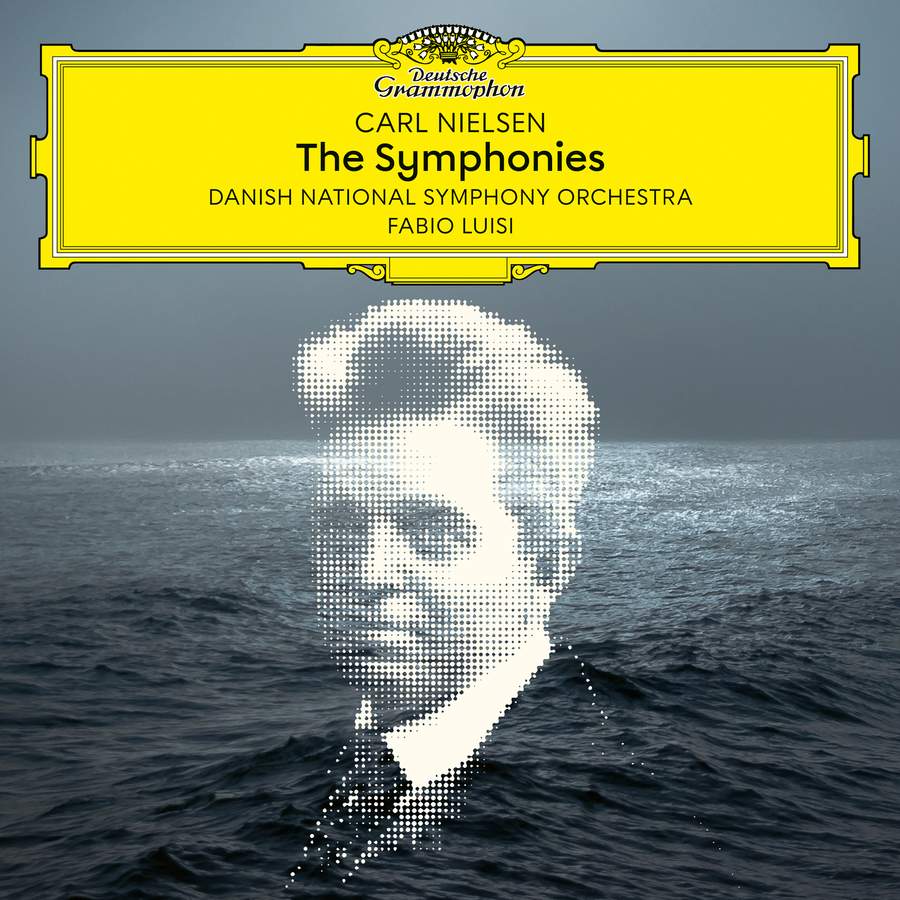
Danish National Symphony Orchestra / Fabio Luisi with Fatma Said (soprano), Palle Knudsen (baritone) (Symphony no.3)
Nielsen Symphonies: no.1 in G minor FS16a; no.2 FS29 ‘The Four Temperaments’b no.3 FS60 ‘Sinfonia espansiva’c; no.4 FS76 ‘The Inextinguishable’d; no.5 FS97e; no.6 FS116 ‘Sinfonia semplice’f
Deutsche Grammophon 4863471 [3 hours 36 minutes] Producer Bernhard Güttler; Engineers Mikkel Nymand, Christoph Stickel
Recorded in live performances at Koncertsalen, DR Koncerthuset, Copenhagen: 1 February (no.4), 3 February (no.2), 3 June (no.6), 17 June (no.1), 26 November (no.3), 28 November (no.5)
Written by Richard Whitehouse
What’s the story?
Deutsche Grammophon continues its latest generation of symphonic cycles (following those first-time traversals of Franz Schmidt and Charles Ives) with that from Carl Nielsen, performed by the Danish National Symphony Orchestra and its incumbent principal conductor Fabio Luisi.
Almost 50 years after the first integral recording of these symphonies (Ole Schmidt with the London Symphony Orchestra on Unicorn/Alto), there are at least 20 such cycles available so that any newcomer needs to bring a fresh perspective on Nielsen’s always distinctive though increasingly unpredictable fusion of innovation with tradition. This pairing of orchestra and conductor is intriguing insofar that the DNSO has been associated with these works from the outset, while Luisi is a musician of broad sympathies with cycles of symphonies by Schmidt (Querstand) and Schumann (Orfeo) plus an incomplete one of tone poems by Strauss (Sony). The result is a Nielsen cycle at times impressive in its conviction if at others dismaying in its inconsistency, and not always in those works or for those reasons one might have expected.
What’s the music like?
Luisi makes his intentions plain at the start of the First Symphony, its initial Allegro launched via an emphatic C major whose impetus is sustained through an impetuous development, with a remorseless acceleration into the implacable coda. Even finer is an Andante by turns elegant and eloquent, strings coming into their own, while only a marginal hesitancy as to the elision between scherzo and intermezzo affects its successor’s stealthy progress. Taut if not inflexible, the final Allegro has innate buoyancy capped with the uninhibited verve generated at its close.
If the Second Symphony is less successful, this is because Luisi does not transcend its status as a symphonic suite. The ‘choleric’ element of the opening Allegro verges on the histrionic, with the humour of the following intermezzo deadpan rather than ‘phlegmatic’. The Andante, though, is superbly sustained over its airily pastoral interlude towards an intensified recall of its ‘melancholic’ opening and coda of fatalistic poise. The ‘sanguine’ trait of the final Allegro is deftly undercut by musing uncertainty, but this yields a slightly tepid resolution in its coda.
Nothing comparable affects the Third Symphony, the ‘expansiveness’ of its opening Allegro abetted by visceral drive in its outer paragraphs and nuanced subtlety in its more speculative passages. The Andante’s interplay of the pastoral and emotional sees a rapturous apotheosis, soprano and baritone vocalises beguilingly intertwined, then the scherzo generates no mean energy prior to its restive ending. Luisi’s steady overall tempo for the final Allegro avoids sluggishness, and not least a coda the more conclusive for its eschewal of wanton triumph.
Despite a properly blazing start to the Fourth Symphony, its opening Allegro emerges as no more than the sum of some admittedly fine parts, with the charm of the ensuing intermezzo just a little too ‘knowing’. The highlight here is a slow movement of real fervency, its dense textures clearly articulated and a transition of simmering intensity into the finale’s headlong fugato on strings. Tension here is ably maintained, but Luisi’s holding back in its peroration replaces that striving onwards Nielsen surely intended with a more generalized affirmation.
This take on the Fifth Symphony is very much a tale of two parts. Luisi audibly locates the ‘tempo giusto’ for the first movement’s opening half – its increasingly ominous expectancy fulfilled in an Adagio of great pathos, albeit with a side-drum cadenza overly reined-in both texturally and emotionally. Too stolid a tempo for the second movement’s initial Allegro is exacerbated by its inhibited Presto, and though Luisi renders its Andante with compassion, his broadening towards the close of the final Allegro is too self-conscious to be convincing.
Is it surprising that the Sixth Symphony rounds off this cycle so perceptively? The complex array of emotions found in its opening movement yields the right ‘innocence to experience’ trajectory, with both the sardonic humour of its Humoreske and the fractured eloquence of its Proposta seria palpably conveyed. Above all, the finale’s outwardly fractious variations unfold with a seamlessness and an inevitability that makes of the coda a culmination whose outcome is held in check until the last bar. A still disputed masterpiece is hereby vindicated.
Does it all work?
Swings and roundabouts. There could be no doubt as to the seriousness with which Luisi has taken on this project, nor of the overall excellence of the DNSO’s playing. Where this cycle falls down is in a lack of focus across the whole, to the extent that there could have been two or even three conductors involved here. Moreover the orchestral sound, warm and immediate but often lacking definition or a consistent balance, feels appreciably different from what this ensemble produces in its home venue – leading one to suspect a modicum of post-production.
For CD adherents the fold-out triple pack is eminently stylish and straightforward, while Jens Cornelius’ note sets the scene adequately enough. The cycle is also available as three separate couplings of Nos. 4 and 5, Nos. 2 and 6 then Nos. 1 and 3 – with the three concertos to follow.
Is it recommended?
Yes, with qualifications. Prospective purchasers are advised to sample the cycle via streaming then proceed accordingly. Certainly, the Third and Sixth Symphonies rank with the finest now available, and listeners should form their own judgement as to the merits of this cycle overall.
A recent survey by the BBC Music Magazine invited 167 performers and composers to choose their five favourite British composers – resulting in a very interesting feature titled The 25 Greatest British Composers of all time.
The results were perhaps inevitable, with a top five comprising (not in order to avoid spoilers!) Elgar, Purcell, Britten, Vaughan Williams and Byrd.
Accompanying this was a gracious paragraph where the magazine included ‘some surprising non-appearances’ – headed by Sullivan, Finzi, Delius and Bax.
However, there were no mentions – at all – for the music of Charles Villiers Stanford. This might have been on account of his birth in Ireland, but Stanford is regarded as one of the key figures in the evolution of British music as we know it today. While none but his fiercest protagonists would expect him to make a top five, I thought it would be nice to recognise his compositional craft, so below are two of his finest works, the heroic Piano Concerto no.2 and the bright sunshine of the Symphony no.6:



 Arcana.fm