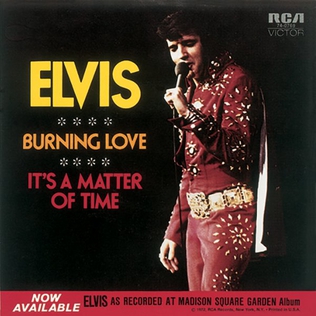
If he were still alive, Elvis Presley would have reached the grand age of 90 today.
We can’t possibly do justice to ‘The King’ in one post, but we can enjoy one of his very best songs, viewed through the prism of the Royal Philharmonic Orchestra in 2015. I’m not normally a fan of re-orchestrations, but this one is a beauty – and BBC Radio 2 must agree, for as I type this post they are playing the very same recording! Of course it’s Elvis who wins the day through sheer charisma, in a song that won’t fail to make you smile. That voice! Enjoy…
Published post no.2,405 – Wednesday 8 January 2025
Ives Four Ragtime Dances (1902-04, rev. 1916) Fugue in Four Keys on ‘The Shining Shore’ (c1903) The Pond (c1906, rev, c1912-13) The Rainbow (first version, 1914) An Old Song Deranged (c1903) Skit for Danbury Fair (c1909, real. Sinclair) The Gong on the Hook and Ladder or Fireman’s Parade on Main Street (c1911, rev. 1934) Chromâtimelôdtune (c1923, real. Singleton) Tone Roads – no.1 (c1913-14); no.3 (c1911/13-14) Set of Incomplete Works and Fragments (ed. Singleton/Sinclair, 1974) March no.2, with ‘Son of a Gambolier’ (c1892) March no.3, with ‘My Old Kentucky Home’ (c1893) March ‘The Circus Band’ (c1898-99, rev. 1932-33) Arrangements (1896-97) – Schubert: Marche militaire in D, D733 No. 1 (1818). Schumann: Valse noble, Op. 9 No. 4 (1834-35). Schubert: Impromptu in C minor, D899 No. 1 (1827)
Orchestra New England, Orquesta Sinfónica de Navarra (arrangements) / James Sinclair
Naxos American Classics 8.559954 [75’43”] Editions John Kirkpatrick, Jacques-Louis Monod, James Sinclair, Kenneth Singleton and Richard Swift Producers Neely Bruce, Jan Swafford Engineers Benjamin Schwarz with Jonathan Galle and Gonzalo Noqué
Recorded 24/25 October 2023 at Auditorio Barañaín, Pamplona-Navarra, Spain (arrangements), 12-14 March 2024 at Colony Hall/Choate Rosemary Hall, Wallingford CT, USA
Reviewed by Richard Whitehouse
What’s the story?
Naxos continues its long-term series devoted to the orchestral music of Charles Ives with this volume of shorter pieces and arrangements, several of them recorded for the first time and conducted by James Sinclair, whose involvement with the composer now stretches back across 50 years.
What’s the music like?
Miniatures for a variety of forces are found right across the four decades of Ives’s composing and range from unformed experiments to perfectly realized exemplars of his idiom. Many of these were collated in the dozen or so Sets that Ives assembled at various stages in his career (recorded on Naxos 8.559917) while there are various others which resist any such compiling, and these can mostly be found here – often in critical editions prepared by a formidable team of Ives scholars, hence rounding out the picture of his creativity in the most immediate terms.
Written at the outset of the genre’s golden age, the Four Ragtime Dances neatly complement each other as regards form and content; elements from each finding their way into the second movement (The Rockstrewn Hills) from the Second Orchestral Set, which builds upon their anarchic humour accordingly. Following the shimmering polytonal ambivalence of the Fugue on ‘The Shining Shore’, the unworldly evocations The Pond and The Rainbow find Ives at his most intimate and confessional – as does the admittedly more genial An Old Song Deranged. Not so Skit for Danbury Fair, its inherent iconoclasm finding greater focus in the graphically descriptive The Gong on the Hook and Ladder or contrasting Tone Roads Nos. 1 and 3 which embody Ives’s thinking on indivisibility of life and music in the most uncompromising terms.
It was once thought Chromâtimelôdtune might be the missing Tone Road No. 2, yet this late and possibly incomplete piece is likely an acerbic response to the Modernism emerging from post-war Europe which seemingly preoccupied Ives in those twilight years of his composing. The three song-based Marches date from an earlier and ostensibly more carefree phase, their debunking couched in humorous terms, while the Set of Incomplete Works and Fragments is a judiciously conceived entity that should not have had to wait 50 years for its first recording. The orchestrations are from Ives’s study with Horatio Parker at Yale: that of Schubert’s First Marche Militaire and Schumann’s Valse noble (from Carnaval) are expert but anonymous, that of Schubert’s First Impromptu results in a ‘theme and variations’ of striking prescience.
Does it all work?
Yes, inasmuch that the effectiveness of these pieces largely depends on the conviction of their performers and, with Sinclair at the helm, this can be taken for granted. As can the excellence of Orchestra New England in repertoire it has often been playing for decades, and if Orquesta Sinfónica de Navarra might appear an unlikely choice for Ives’s undergraduate arrangements, it acquits itself admirably. The sound throughout is unexceptionally fine, and Sinclair’s own annotations are succinctly informative as to the genesis and context of some intriguing music.
Is it recommended?
Indeed, this is a necessary addition to a valuable series – hopefully to be continued before too long with recordings of the Fourth Symphony and Universe Symphony as partially realized by David Porter, of which Sinclair gave a memorable account at the Aldeburgh Festival in 2012.
Listen & Buy
For buying options, you can visit the Naxos website – or listen to the recording on Tidal below:
As today is World Violin Day, here is a suitable piece to take us into the weekend! Hilary Hahn and the WDR Sinfonieorchester Köln under Semyon Bychkov oblige…
Emma Tring (soprano), BBC National Orchestra of Wales / Martyn Brabbins
BIS 2721 [72’51’’] French text and English translation included
Producer Thore Brinkman Engineers Simon Smith, Mike Cox Recorded 29-31 March 2023, Hoddinott Hall, Cardiff
Written by Richard Whitehouse
What’s the story?
BIS continues its coverage of John Pickard (b.1963) with a pertinent coupling of his Second and Sixth Symphonies, heard alongside his song-cycle to poems by Verlaine, in what is the most wide-ranging release – whether chronologically or stylistically – to date in this series.
What’s the music like?
It hardly seems 35 years since the Second Symphony blazed forth at its Manchester premiere, so establishing Pickard’s reputation. The composer had earlier studied with Louis Andriessen, to whose confrontational minimalism this piece is indebted in certain particulars – but, unlike other among his contemporaries who were so influenced, Pickard was alive to its symphonic potential. Unfolding over six continuous sections, the work builds via an intensifying process of tension and release to a seismic culmination as marks a seamless, even inevitable return to its start. Those familiar with that pioneering version by Odaline de la Martínez (on YouTube) will find this new one hardly less attentive to the visceral power of what, given its predecessor remains unheard, is a symphonic debut with few equals and one that urgently warrants revival.
Almost 35 years on and the Sixth Symphony offers a very different though no less involving perspective on what this genre might be. The first of its two movements channels a modified sonata design such that an almost whimsical opening has become brutalized well before the despairing close. Its successor refashions the expected continuity from an even more oblique vantage – the music heading eloquently if funereally toward a plangent climax that subsides into a delicate intermezzo, infused with the sound of nature, then on to a final section which recalls earlier ideas in a mood of rapt anticipation. Not that this understatement offers in any sense an easy way out: indeed, the work concludes with its composer poised at a crossroads as much existential as musical, and from where the whole creative process can begin afresh.
Separating two substantial statements of intent, the Verlaine Songs continues Pickard’s recent involvement with poetic texts and, while Paul Verlaine might seem far removed from Edward Thomas or Laurence Binyon, his evocations fanciful while sometimes unnerving – hence Le sqelette with its graphic aural imagery – finds the composer reciprocating in kind. Coming in between scorings with ensemble or violin and piano, this version with orchestra finds Pickard enriching a lineage of French song-cycles from Berlioz, via Ravel and Messiaen, to Dutilleux.
Does it all work?
It does, not least because Pickard is conscious of the need for his music to determine its own course. However dissimilar these symphonies might seem, the sensibility behind them is the same and any stylistic differences more apparent than real. It helps when Martyn Brabbins is a conductor familiar with this idiom as to inspire a committed response by the BBC National Orchestra of Wales, with Emma Tring alive to the manifest subtlety of the vocal writing, and the recordings consistently heard to advantage in the spacious immediacy of Hoddinott Hall.
Is it recommended?
Indeed, in the hope this series will be continued. Both the First and Third Symphonies await recording, as do Partita for strings and large-scale choral work Agamemnon’s Tomb, so that Pickard’s discography has a way to go even without addition of new pieces to his catalogue.
BBC Scottish Symphony Orchestra / Martyn Brabbins (Birthday Variations); Helsinki Philharmonic Orchestra / Pekka Kuusisto (Symphony)
Various Pictured Within: Birthday Variations for M.C.B. (2019) Jaakko Kuusisto (comp. Pekka Kuusisto & Eskola) Symphony Op.39 (2020-21)
BIS 2747 [66’32”] Producers Andrew Trinick (Variations), Robert Suff (Symphony) Engineers Graeme Taylor (Variations), Enno Mäemets (Symphony) Live recordings, 13 August 2019 at Royal Albert Hall, London (Variations); 8 December 2022 at Music Centre, Helsinki
Reviewed by Richard Whitehouse
What’s the story?
The BIS label issues one of the most fascinating among recent releases, one that juxtaposes a latter-day equivalent to Elgar’s Enigma Variations with a posthumously completed symphony by one of Finland’s leading conductors which now becomes a tribute to his untimely passing.
What’s the music like?
It was clearly a great idea that the BBC commission a piece to mark Martyn Brabbins’s 60th birthday, featuring 14 composers with whom this stylistically most wide-ranging of current British conductors has been associated. The outcome is Pictured Within: Birthday Variations for M.C.B. – each composer having provided a variation on the ‘anonymous’ theme for what here becomes an inverse take on Elgarian procedure in the latter’s Variations on an Original Theme; a work whose ground-plan also furnishes the formal framework of the present piece.
It is worth considering the ways in which these composers seem either inhibited or liberated by their placing (determined beforehand by Brabbins) within the overall scheme. Given this theme – understated to a fault – yields its potential more from the harmonic then melodic or rhythmic angle, the most successful tend to make a virtue of such constraints: thus the ‘Tact 60’ of Variation I finds Dai Fujikura hinting guardedly at ‘C.A.E.’. David Sawer capriciously conjures ‘H.D.S-P.’, while Sally Beamish offers a deftly ironic parallel to ‘R.B.T’ and Colin Matthews rumbustiously complements ‘W.M.B.’ Iris ter Schiphorst captures the pensiveness if not the geniality of ‘R.P.A.’, whereas violist-turned-composer Brett Dean proves a natural fit for the undulating poise of ‘Ysobel’ and Win Henderickx evokes ‘Troyte’ with real gusto.
His ruminative Variation VII finds Richard Blackford emulating more the connection with a country house than ‘W.N.’, while Harrison Birtwistle throws caution to the wind in a darkly inward contrast to ‘Nimrod’, and ‘Sixty Salutations’ finds Judith Weir in an engaging take on the halting charms of ‘Dorabella’. Gavin Bryars rouses himself to unexpected activity in his reading of ‘G.R.S.’, whereas Kalevi Aho is more suited to the sombre eloquence of ‘B.G.N.’ and Anthony Payne ably plumbs the inherent mysteries of ‘***’. John Pickard then takes on the daunting challenge of ‘E.D.U.’ in The Art of Beginning – the mingling of portentousness and humour appearing to make light of its Longfellow association, but whose organ-capped apotheosis confirms real appreciation of the ‘right ending’ as constituting an art unto itself.
The coupling is as unexpected as it proves apposite. Remembered as a notable violinist and a versatile conductor, Jaakko Kuusisto (1974-2022) turned increasingly to composition and, at his untimely death through brain cancer, had planned a symphony for Osmo Vänskä and the Minnesota Orchestra. Acting on behalf of his widow, his younger brother Pekka and copyist Jari Eskola realized this piece from several minutes of extant fragments such that Kuusisto’s Symphony takes its place as the last statement by one who ostensibly had much more to give.
Playing just over 25 minutes, the work falls into two separate movements. Shorter and more outwardly cohesive, the first of these emerges as imperceptibly as it evanesces – taking in a tersely rhythmic central episode, then a warmly expressive melody with more than a hint of American post-Minimalism. Almost twice as long, the Lento seems more discursive but no less absorbing – picking up where its predecessor left off as it builds to impulsive climaxes, separated by an eloquent span derived from a chorale-like theme. Nothing, though, prepares one for the ending – a sequence of quietly interlocking ostinato patterns, evidently inspired by light signals beamed in the Gulf of Finland and underpinned by undulating timpani. The effect is haunting and unworldly but, for these very qualities, wholly fitting as a conclusion.
Does it all work?
Pretty much always. Those expecting an Elgarian ‘re-run’ may be disconcerted by Pictured Within, but this only serves to reinforce the stylistic autonomy and variety of the composers involved (three of whom sadly no longer with us) in what is a tribute to Brabbins’s acumen for involving them in the first instance. Quirky and compelling, the Kuusisto is appreciably more than a labour of love on behalf of those who brought about its completion: both works deserving revival for their intrinsic merits rather than commemorating a particular occasion.
Is it recommended?
Absolutely. These live performances (that of Pictures Within being that of the premiere) have come up well as presented here, while there are detailed notes on each piece by John Pickard and Jaani Länsiö. This fascinating release more than justifies itself musically and artistically.