On Record – Michael Collins, BBC Philharmonic Orchestra / Rumon Gamba – Arnold: Clarinet Concerto no.1, Philharmonic Concerto etc (Chandos)

Arnold
Commonwealth Christmas Overture Op.64 (1957)
Clarinet Concerto no.1 Op.20 (1948)
Divertimento no.2 Op.24 / Op.75 (1950)
Larch Trees Op.3 (1943)
Philharmonic Concerto Op.120 (1976)
The Padstow Lifeboat Op.94a (arranged for orchestra by Philip Lane)

BBC Philharmonic Orchestra / Rumon Gamba

Chandos CHAN20152 [68’50″’]
Producers Brian Pidgeon and Mike George Engineers Stephen Rinker, Richard Hannaford and John Cole
Recorded 5 & 6 December 2019, 29 July at MediaCity UK, Salford

Reviewed by Ben Hogwood

What’s the story?

This collection of six pieces from Sir Malcolm Arnold’s composing career stretches from one of his first published pieces, Larch Trees, to one of his last, the Philharmonic Concerto. Both were written for the London Philharmonic Orchestra, for whom he played trumpet from 1941 until 1948, and with whom he maintained a close association as a composer.

In between these pieces Chandos have chosen a satisfying mix of styles to reveal Arnold as a multi-faceted composer, not just the humourous one of which we hear most. That side of his writing is happily celebrated through The Padstow Lifeboat and the Divertimento no.2 for orchestra reveals the happiness he found through writing for children and young people, being young at heart himself.

The Commonwealth Christmas Overture finds Arnold in commission mode, called upon to write the music for Royal Prologue: Crown and Commonwealth, a programme narrated by Sir Laurence Oliver to preface the 25th Christmas speech by a ruling monarch. Completing the collection is the first of many concertos from Arnold’s pen, and the first of two for clarinet.

What’s the music like?

Chandos have already presented us with a good deal of Sir Malcolm Arnold’s music, and this is further enhanced by a programme giving us first recordings and revealing each side of the composer’s personality.

The Commonwealth Christmas Overture gets proceedings off to a suitably ceremonial start, with plenty of bluster and high jinks, all buoyed by colourful percussion. The influence of William Walton is immediately evident, for the main theme has more than a little in common with his own ceremonial march Crown Imperial, but Arnold goes on to develop it in his own inimitable way.

The Clarinet Concerto is a compact piece, deft and slightly bluesy in the outer movements but pausing for meaningful reflection in the Andante, the emotional centre of the work.

The Second Divertimento, long thought lost, is a fun piece where a lot happens in nine minutes! Using a traditional-sounding structure, Arnold has a lot of fun with the bracing Fanfare, atmospheric Nocturne and grand Chaconne, harnessing the power of the large orchestra.

The two pieces for the London Philharmonic are next, and are vividly contrasting pieces of work. Larch Trees is an evocative musical sketch, reminiscent of Moeran in the way it pans out over the rugged terrain of northern England, while also confiding intimately in its listeners through the woodwind. The Philharmonic Concerto is more obviously noisy and confrontational, this late work utilising the dissonance which will be noted by those familiar with Arnold’s later symphonies. This is not comfortable music but it is brilliantly written, challenging the orchestra to throw off their shackles. The probing violin lines of the Aria offer a chance for deeper reflection.

Finally The Padstow Lifeboat, one of Arnold’s brass band treasures, with its persistent ‘wrong note’ which warns all shipping. It makes for the ideal sign-off.

Does it all work?

Yes, and wonderfully so. Rumon Gamba has enjoyed a long and fruitful association with Arnold’s music and comes up trumps here, leading the BBC Philharmonic Orchestra in some characterful and personal accounts. Arnold could hardly wish for better advocacy and understanding, the conductor charting his youthful prowess in Larch Trees, whose softer contours benefit from excellent recording by the Chandos engineers.

The Clarinet Concerto no.1 is brilliantly played by Michael Collins, negotiating the wide leaps of the solo part with aplomb, while responding with grace in the soulful slower sections. The strings of the BBC Philharmonic exploit the depths of the darker slow movement, its temperature appreciably colder by the end.

Is it recommended?

Enthusiastically. This is an anthology that will appeal to seasoned Arnold listeners, for its mix of the familiar and a curio or two, while it is also the ideal place for those new to the composer. If you are after some music to combat the onset of January, you have come to the right place!

Listen

Buy

For more information and purchasing options on this release, visit the Chandos website
On Record – Various orchestras / Niklas Willén: Alfvén: Complete Symphonies; Suites & Rhapsodies (Naxos)

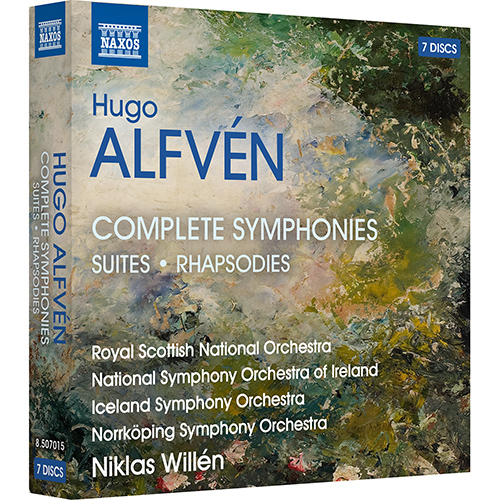
Alfvén Complete Symphonies; Suites & Rhapsodies

Royal Scottish National Orchestra, National Symphony Orchestra of Ireland, Iceland Symphony Orchestra, Norrköping Symphony Orchestra / Niklas Willén

Naxos 8.507015 [7 discs, including a bonus of Swedish Orchestral favourites]

Reviewed by Ben Hogwood

What’s the story?

Swedish composer Hugo Alfvén was born 150 years ago this year, and this attractive box set from Naxos celebrates the anniversary by bringing together the five symphonies recorded under the baton of fellow countryman Niklas Willén. They are presented alongside a number of Alfvén’s suites and orchestral works.

What’s the music like?

Attractive, airy and extremely enjoyable. Before Alfvén came along, Sweden had very few symphonic composers of note, Berwald excepted, and this cycle of substantial musical structures helped bring the symphony to a new audience.

Listening to each of the five works plots a course through Alfvén’s career, revealing him to be a gifted melodist and orchestrator. He writes with a clarity suggesting he studied the music of Mendelssohn and Schumann, but the orchestral works have an opulence closer to Richard Strauss and Wagner.

The Symphony no.1 in F minor Op.7 is laden with drama, if not yet fully confident in its structural steps. The Symphony no.2 in D major Op.11, which firmly established Alfvén as a composer, finds a glowing, lyrical approach. The Symphony no.3 in E major Op.23 is a joy, celebrating love and nature in the brightest E major, with richly tuneful episodes and rapturous outpourings from the strings. The Symphony no.4 in C minor Op.39, subtitled From The Outermost Skerries, has impressive depth, its four movements running continuously as they tell of the unique landscape of the Stockholm archipelago. Finally the Symphony no.5 in A minor Op.54 has a broader melodic platform, darker in some respects but loaded with extra resolve.

The accompanying suites show off Alfvén’s affinity with the stage and a natural aptitude for storytelling – The Prodigal Son, Synnöve Solbakken and A Country Tale all have good tunes and clear, bright orchestration. The shorter pieces included here should be better known, too – the Swedish Rhapsodies are winsome pieces, while the Festival Overture rises well above its functional role and the Elegy is equally meaningful.

Does it all work?

Yes, thanks to vibrant performances from each of the four orchestras used by Naxos in the gradual assembly of this cycle, all under the expert guidance of Niklas Willén. His choices of tempo are instinctively right, backed by an innate understanding for the flow of this music. An extra disc of Swedish orchestral favourites, featuring works from Alfvén, Larsson, Peterson-Berger, Söderman, Stenhammar and Wirén, is a considerable bonus.

Is it recommended?

Yes, with enthusiasm. While other composers may be ahead of him in the symphonic popularity contest, Alfvén’s music is highly attractive and full of good things for the casual or the attentive listener. Take this chance to explore further and you will not be disappointed!

Listen / Buy

You can find out more about this recording, and explore purchase options, on the Naxos website

Arcana’s best of 2022

by Ben Hogwood

How has 2022 been for you? It has been a difficult year for so many, and I don’t know about you, but I find music takes on an even more important part of our lives when the going gets tough. This year we have been able to rely on a consistently strong line of releases, giving us extra resolve and relief from the day-to-day.

Arcana has reviewed a lot of music this year. What we tend to do on these pages is concentrate on music and artists that we know are likely to be good – and we assemble our thoughts on them so you can then make your own investigations. Classical music is usually our starting point, but from there we travel afar to the outer reaches of electronica, dance and contemporary music.

It was another strong year for electronic music of an ambient dimension. Switched On is the area of Arcana concentrating on new music in this area, and without putting too many musical names on these albums, we really enjoyed a good deal of slower stuff. Starting with a single instrument, Vanessa Wagner’s Study of the Invisible (above) made an understated but lasting impression, particularly with Caroline Shaw’s Gustave Le Grey at its heart. Vanessa plays with poise and expression, and this wonderfully curated selection worked so well.

Meanwhile long term favourite Erland Cooper charmed with his pure, still music written to soundtrack the Superbloom installation at the Tower Of London, Music For Growing Flowers (above). Speaking of earthy sounds, Sonic Cathedral gave us twilight wonders from Pye Corner Audio and, with a little more country in the mix, Sunset Dreams from Mark Peters.

At the hottest part of summer, Arthur King’s music was extremely evocative in Changing Landscapes – as was that of Deepchord, making a return to the long player from Detroit with Functional Designs. Steve Davis, meanwhile (yes, that Steve Davis!) was busy enhancing his reputation as part of the electronic trio Utopia Strong and their excellent album International Treasure

More studied electronica gems should also be shouted from the rooftops – we are lucky to have British artists of the calibre of Bibio, Gold Panda and Plaid, each returning with excellent new albums. Meanwhile Clarice Jensen took her cello as a starting point on new album Esthesis, making music of great colour and descriptive power to counter the onset of lockdown. Also facing the elements head-on was Daniel Avery, whose new album Ultra Truth was a powerful statement indeed:

There were some very strong releases on the classical side of things, as record companies dusted themselves down and started to include orchestral recordings again on their release schedules post-pandemic. Leading the way were the Sinfonia of London under John Wilson, a throwback to the golden age of orchestral recording in their challenging schedules for Chandos. With Hollywood, British and French music all covered, one in particular stood out, with the orchestral music of John Ireland given its rightful place in the spotlight:

Speaking of French music, a charmer from the Orchestre National des Pays de la Loire and Pascal Rophé proved the ideal hot weather soundtrack as it explored orchestral versions of Debussy keyboard works. Their accounts of the Petite Suite, La boîte à joujoux and Children’s Corner were full of colour and character.

This year saw the 150th anniversary of the birth of Ralph Vaughan Williams, one of the finest British composers of the 20th century. Somm Recordings made a memorable tribute by way of the undervalued string quartets, these lovely autumnal works given vibrant performances from the Tippett Quartet.

Contemporary classical music put in some very strong appearances this year, and few more than Stuart Macrae, showing off the quality of his chamber music on an album from the Hebrides Ensemble on the excellent Delphian label. We enjoyed a number of online and in-person concerts from the English Symphony Orchestra and Kenneth Woods, which were capped by an outstanding recording of Adrian Williams’ Symphony no.1, a commendable raising of the flag for new British music

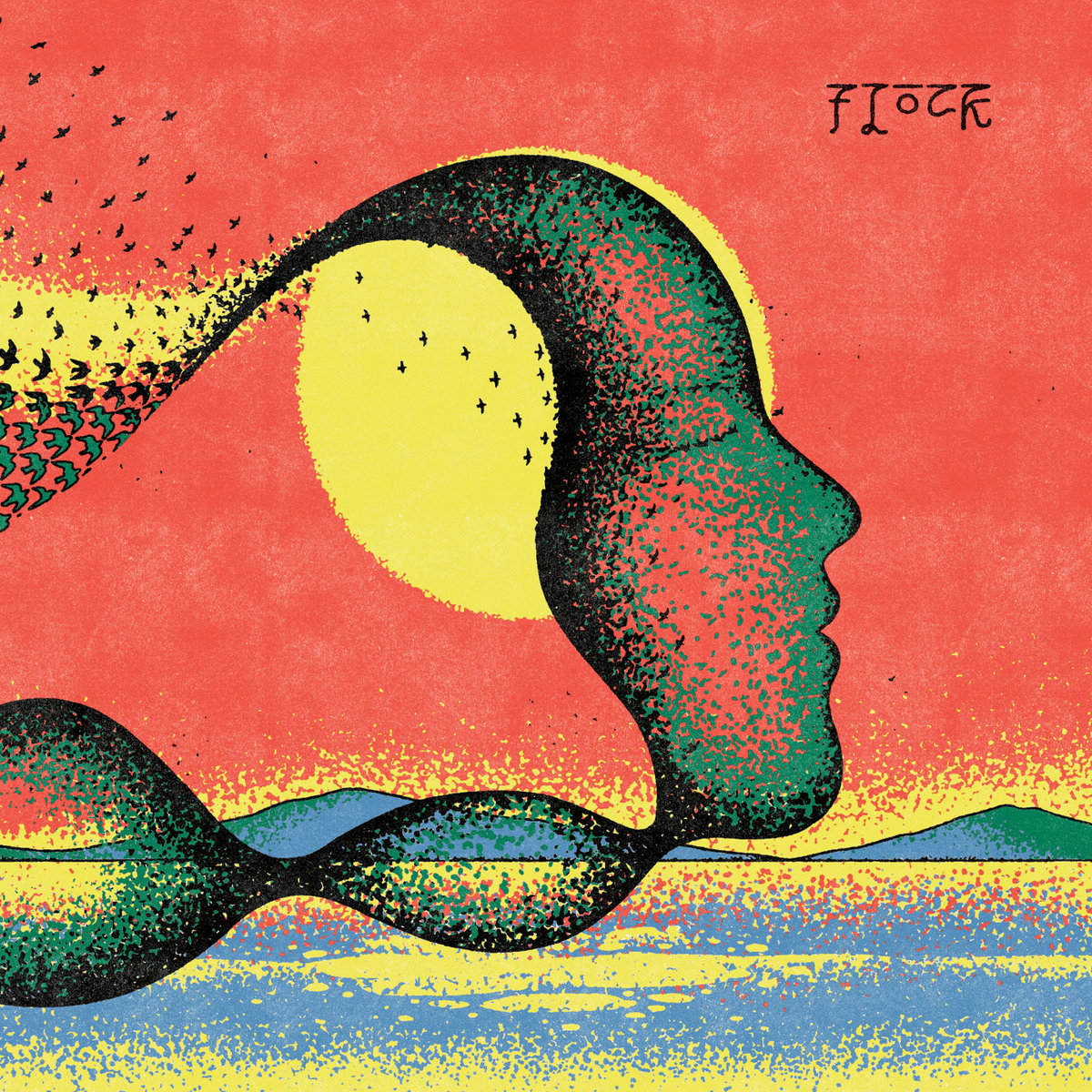
During 2022 we made a couple of visits to the outskirts of jazz, in the company of super group Flocktheir excellent self titled debut – and a triumphant and experimental return from Szun Waves.

On the dancier side of things, Heavenly Recordings excelled themselves this year with no fewer than six collections of remixes! We loved the first two instalments, which acted as a prelude to the utterly essential third and fourth volumes which brought together remixes from the much missed Andrew Weatherall.

The Haçienda celebrated 40 years since its inception with a handsome package from Cherry Red, while the best DJ mix honour goes to Cinthie – her contribution to !K7’s DJ Kicks mix series really was a thing of pure dancefloor enjoyment. So, too, was a John Morales-edited compilation devoted to the art of Teddy Pendergrass, vocalist for Harold Melvin & The Blue Notes.

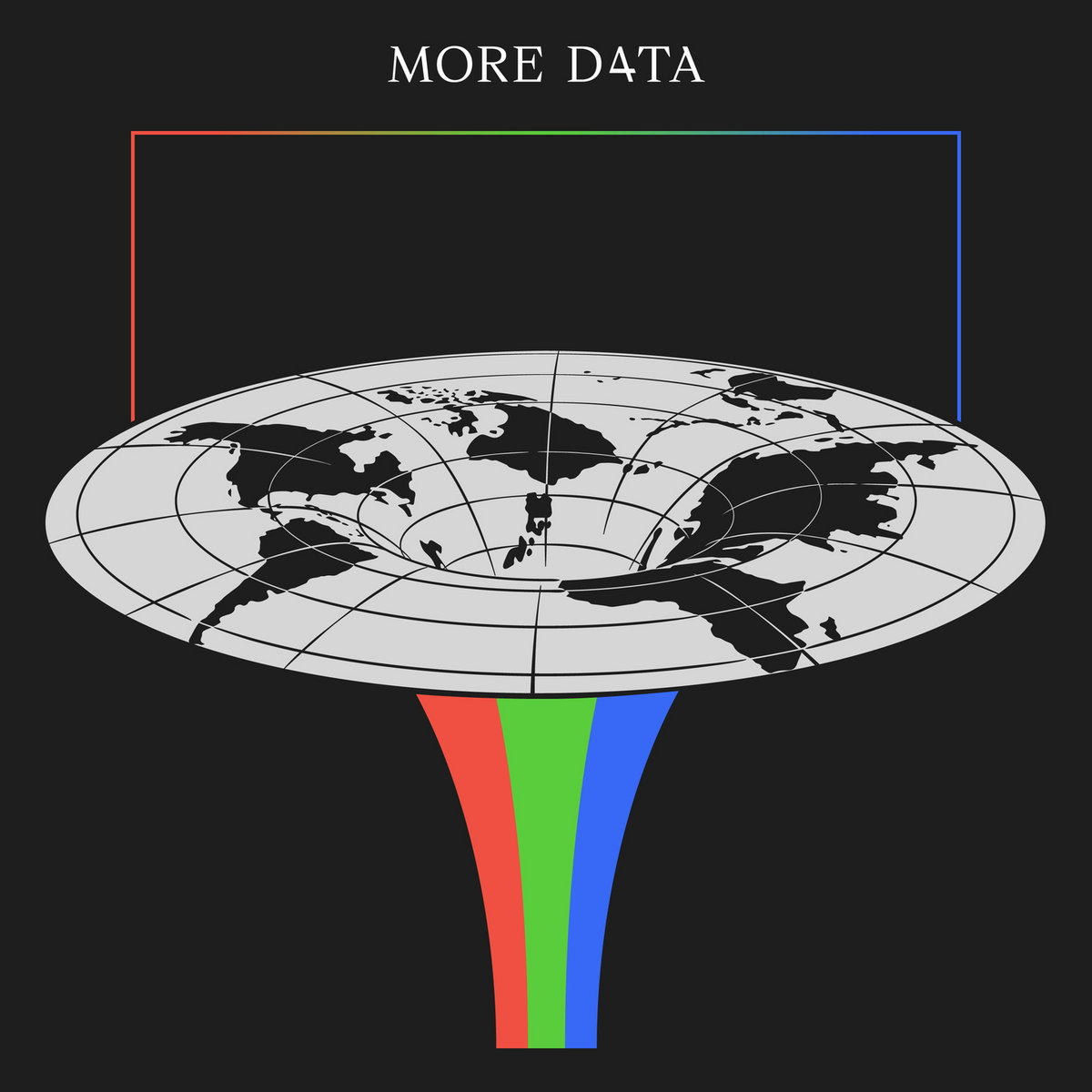
Cultured music for the discerning dancefloor came our way from Au Suisse, a welcome reunion for Morgan Geist and Kelley Polar, and also from Hot Chip, who further explored their emotions with an excellent and heartfelt eighth album. Moderat, returning after a long absence, went more for the jugular with the thrilling More D4ta

With all that said and done, what would an Arcana album of the year look like? Something like this…the most listened to long player of the year in these parts, Fleeting Future – a vibrant offering from Akusmi which channelled all sorts of intriguing influences into something wonderfully original:

We will have a few more reviews to come over this week – but for now, we thank all our readers for your visits and wish you a happy, peaceful and regenerative Christmas holiday season. Oh, and a Happy New Year for 2023!

On Record – BBC Concert Orchestra / Bramwell Tovey – Poulenc: Les Animaux modèles, Sinfonietta (Chandos)

Poulenc
Sinfonietta (1947-48)
Two movements from ‘Les Mariés de la Tour Eiffel’ (1921, revised 1957)
Pastourelle from L’Éventail de Jeanne (1927)
Les Animaux modèles (complete ballet) (1940-42)

BBC Concert Orchestra / Bramwell Tovey

Chandos CHSA5260 [74’22″’]
Producer Brian Pidgeon Engineers Ralph Couzens, Alexander James
Recorded 10-12 March 2022 at Watford Colosseum

Reviewed by Ben Hogwood

What’s the story?

This collection of colourful works for orchestra by Francis Poulenc has as its main work the ballet Les Animaux modèles, based on The Fables of Jean de la Fontaine. A vibrant work, it clearly had huge significance for the composer, who started on its composition after the Nazi occupation of Paris in 1940, his aim ‘to find a reason to hope for the future of my country’. It received its first performance at the Paris Opera in 1942.

The ballet is symbolic, summarised in Nigel Simeone’s excellent booklet note about ‘a celebration of France’s past at its most lustrous’ than a collection of charming animal stories. It does however bring the story to life from the outset, with a vivid description of the dawn cutting to sharply characteristic portrayals of The Bear and The Two Companions, the former portrayed through an excellent horn solo, The Grasshopper and the Ant, The Amorous Lion, The Middle-aged Man and His Two Mistresses, Death and the Woodcutter, The Two Cockerels and finally The Midday Meal.

Complementing the ballet is the Sinfonietta, written for the BBC Third Programme and first heard in 1948. Initially the main themes of the work were to be part of a String Quartet that Poulenc was working on in 1945, but after its abandonment his friend and fellow-composer Georges Auric recognised the potential of the musical material. The work is dedicated to him in acknowledgement.

Completing the disc are two movements from Les Mariés de la Tour Eiffel, a collaborative single act ballet with Auric and the other members of composer collective Les Six, of which Poulenc was a leading member. There is also a soft-centred Pastourelle from another such collaborative piece, L’Éventail de Jeanne.

Very sadly this is the final recording made by the BBC Concert Orchestra’s principal conductor, Bramwell Tovey – completed just four months before his sad death from cancer at the age of 69.

What’s the music like?

In a word, colourful. Les animaux modèles is unquestionably the star turn, brilliantly played and characterised in this recording. Poulenc’s music is richly tuneful and beautifully orchestrated, often showing the influence of Stravinsky but realised with his own flair and mischievous humour. The central section of The Grasshopper and The Ant is a case in point, where a thrillingly brisk section cuts to an enchanting violin cadenza, the music briefly held in a spell until its release by shrill trumpets.

The Amorous Lion is a scene of great contrasts, with orchestral outbursts and volleys of percussion cutting to tender asides from string and woodwind choirs. The most substantial section – and arguably music – can be found in The Two Cockerels, where Poulenc realises music of great power and depth to portray the combat of the two birds. The surging climactic point, halfway through, is music of particularly strong feeling and resolve, Poulenc’s sentiments against the war reaching their heartfelt climax – before powerful exchanges between brass and the final toll on low piano. With passions largely spent, The Midday Meal provides a regal epilogue.

The slighter movements are no less fun, and The Middle-aged Man and his Two Mistresses scurries along furtively. Following Poulenc’s synopsis is enormously helpful, signposting the composer’s pictorial responses to the storyline as well as emphasising his wit.

In spite of its name, the Sinfonietta is one of Poulenc’s most substantial compositions. Far from being a slight, frothy work, it has a big-boned structure easily outdoing those dimensions, lasting nearly half an hour. Its convincing melodic arguments are led by the assertive first theme, drawing parallels with the Organ Concerto for its bite and resolve, while the second theme, beautifully realised here, brings mellow woodwind colouring. The second movement is a lively scherzo, balanced with tender asides that are fully realised in the slow third movement, a lyrical and colourful Andante cantabile. The brisk finale signs off with a flourish.

The two movements from Les Mariés de la Tour Eiffel are short but mischievous and entertaining, with humourous trombone interventions, while the Pastourelle is a charming addition.

Does it all work?

Yes. These are fresh, vibrant performances given with evident affection by the BBC Concert Orchestra. Bramwell Tovey brings out the colourful orchestrations, allows the lyrical melodies a bit of heart-on-sleeve approach where appropriate, and brings rhythmically sharp responses too. Poulenc’s colourful writing is brought to the fore, along with the melancholic undertones his music often carries.

Is it recommended?

Yes, on many levels. The quality of the music, the excellent Chandos recordings from Watford Colosseum and some very fine performances from which Bramwell Tovey takes his lead. The icing on the cake is the choice of Henri Rousseau’s Monkeys and Parrot in Virgin Forest as cover art. It is the ideal complement for a wonderful album.

Listen

Buy

For more information and purchasing options on this release, visit the Chandos website
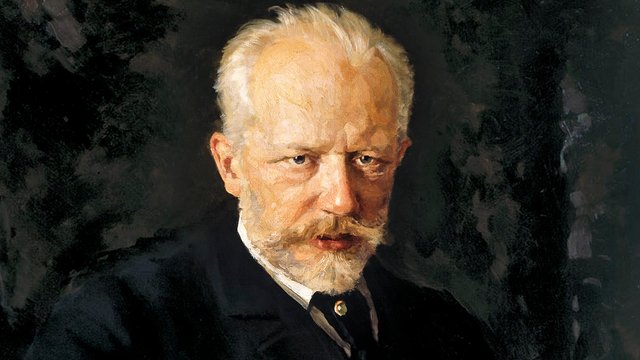
Music for today – Tchaikovsky’s Symphony no.1 ‘Winter Daydreams’

by Ben Hogwood

With the weather taking a sharp turn for the colder in the UK today, thoughts turn to wintry music. An underrated gem in this area is the first symphony of Tchaikovsky, which the composer subtitled Winter Daydreams.

This is a tuneful and highly appealing work from 1866, showing the influence of Mendelssohn but also revealing Tchaikovsky’s own individual grasp of symphonic form, and his aptitude for writing programme music.

The full subtitle of the first movement is Dreams of a Winter Journey, while the second movement, Land of Desolation, Land of Mists, is the emotional heart of the symphony with a yearning slow theme. The cool, slight melancholy of the untitled third movement Scherzo is swept away by a jubilant Finale, bringing Tchaikovsky’s first symphonic structure to a satisfying end.

There was much more to come, of course! You can enjoy the symphony in a performance from the Berlin Philharmoniker and Herbert von Karajan below: