BBC Philharmonic Orchestra / Michael Seal
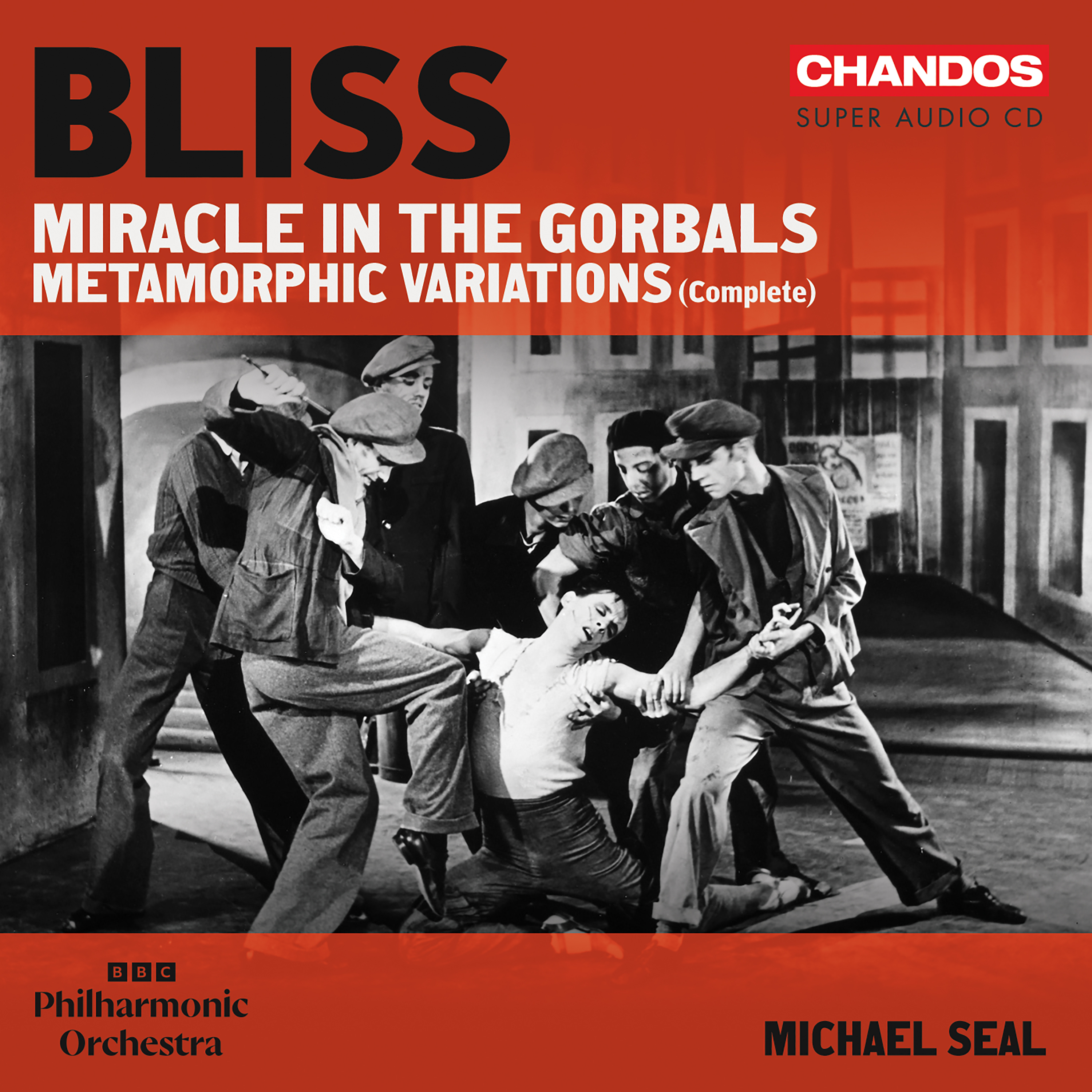
Bliss
Miracle in the Gorbals, F6 (1944)
Metamorphic Variations, F122 (1972)
Chandos CHSA5370 [79’57”]
Producer Brian Pidgeon Engineers Stephen Rinker, Owain Williams (Miracle in the Gorbals), Amy Brennan (Metamorphic Variations)
Recorded 27 February 2025 (Metamorphic Variations), 1 March 2025 (Miracle in the Gorbals), MediaCity UK, Salford, Manchester
Reviewed by Richard Whitehouse
What’s the story?
Chandos issues the most important release of music by Arthur Bliss for the 50th anniversary of his death – coupling the second of his four ballets, in its new critical edition, with the last as well as the most ambitious of his orchestral works in what is its first complete recording
What’s the music like?
With its striking choreography from Robert Helpmann (after the story by Robert Benthall), Miracle in the Gorbals was initially even more successful than its predecessor Checkmate – being revived annually between 1944 and 1950. Other than a 1958 revival, however, there was no more stagings until that by Birmingham Royal Ballet in 2014; not least because the magic realism that transcends an otherwise grimly realistic scenario and struck a resonance in wartime Britain became passé soon afterward. Yet the quality of a score as finds Bliss at his most populist but also most uncompromising cannot be denied, and this new recording conveys these extremes in full measure. Hearing sections III (The Girl Suicide), X (Dance of Deliverance) and XV (The Killing of the Stranger) ought to banish any lingering doubts.
Premiered at Croydon’s Fairfield Halls during April 1973, Metamorphic Variations is Bliss’s lengthiest orchestral work. Shorter than intended, even so, with two sections being omitted at its first hearing and subsequently. This recording sees their belated and rightful reinstatement.
The three primary ideas are outlined in Elements: an oboe cantilena, a phrase for horns then strings, and a cluster from woodwind – melodic, rhythmic and harmonic possibilities that are explored intensively in what follows. The additional sections are an atmospheric Contrasts, whose absence has been to the detriment of overall balance, then a Children’s March which pivots from innocence to experience. Highlights include an increasingly animated Polonaise and Funeral Processions with its anguished culmination. Towards the close, a proclamatory Dedication duly underlines the inscription to artist George Dannatt and his wife Ann, then Affirmation draws those initial elements into a sustained peroration that pointedly subsides into a return of the oboe cantilena which, in turn, brings the closing withdrawal into silence.
Do the performances work?
Although the concert suite from Miracle in the Gorbals has received persuasive accounts by the composer (EMI/Warner) and Paavo Berglund (Warner), the complete ballet has only been recorded by Christopher Lyndon-Gee with the Queensland Symphony (Naxos) – compared to which this latest version, aside from its using the critical edition by Ben Earle, is superior in playing and recording. Here, as in Metamorphic Variations, the BBC Philharmonic responds assuredly to Michael Seal whose interpretative stance is distinctively his own. This latter has been recorded by Barry Wordsworth (Nimbus) and David Lloyd-Jones (Naxos), along with a broadcast from Vernon Handley (BBC Radio Classics), but the newcomer’s conviction gives it an advantage apart from those variations whose reinstatement enhances the work’s stature.
Is it recommended?
Very much so, not least given the spaciousness and realism of its SACD sound, together with informative notes from Ben Earle and Andrew Burn. Is it too much to hope Chandos will yet tackle either of Bliss’s operas which, along with The Golden Cantata, are his only significant works still to be commercially recorded? Michael Seal would be the ideal candidate to do so.
Listen / Buy
You can hear excerpts from the album and explore purchase options at the Chandos website, or you can listen to the symphonies on Tidal. Click on the names to read more about the Arthur Bliss Society, conductor Michael Seal and the BBC Philharmonic Orchestra
Published post no.2,783 – Friday 30 January 2026