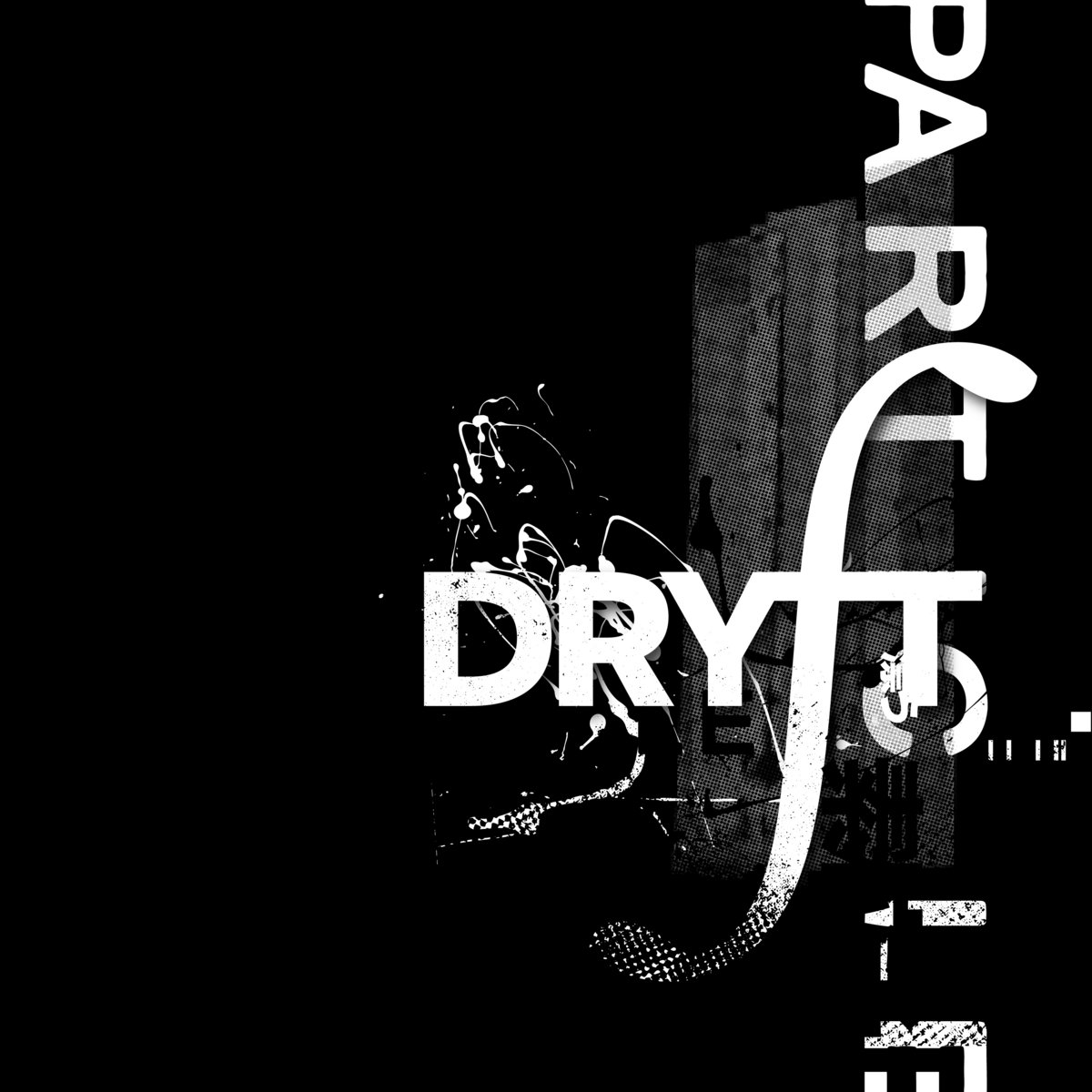
Switched On – Craven Faults: Sidings (The Leaf Label)

Reviewed by Ben Hogwood

What’s the story?

Craven Faults is proving to be a particularly fertile source of long-form instrumental music. Created by a single, anonymous hand, its pictorial approach leans on industry for inspiration but looks beyond that, creating an intriguing form of descriptive ambience. This has already been shown in double-length albums Erratics & Unconformities and Standers, and a number of EPs.

“The journey on Sidings isn’t made with people in mind. It begins in an isolated community which has built up around one of the great engineering projects of its age. The work is slow and perilous – thousands of men at the mercy of the elements. The ground is frozen or flooded for months on end, while red kites circle overhead. 14 tunnels and 22 viaducts to open up the north. The on-beat and the off-beat interchange. Recorded in 1969, Olympic Studios – a precursor to the ships we built.

We walk northeast in search of a distance marker. When it first comes into view, it looks similar to where we commenced our journey on ‘Bounds.’ The open moorland gives it away. This particular trip will take considerably longer, by foot and packhorse, before the land and power is redistributed by order of parliament. Just shy of fifteen minutes between 1952 and 1964 – from J&M Studio, New Orleans to the San Francisco Tape Music Centre. Rapid progress and consistently fertile ground.

As the sun rises, we make our way by road to a junction. There is a livestock market and an inn for travellers. It’s important to make the journey before the seasons change and this area becomes inaccessible. An idea almost lost in the mists of time – a West German prototype unearthed twelve years later. A little way due south, we arrive at another crossroads. We find a maestro labouring over his masterwork – Gold Star Studios, United Western Recorders, Columbia Studios and Capitol Studios. October 3rd, 1966 to November 20th, 1968. Inspired by the story of another community building the railways. The circle is complete and encompasses continents.

We continue south, hitching a ride on a finely turned-out cart. We help to unload the churns onto the platform and wait for the train to arrive. Our cargo will head east before switching tracks to be delivered into urban areas. Hundreds of thousands of gallons per year. The Black Ark, 1977.

From there we head north and west a little way and find ourselves near to where we began. Another temporary settlement built up along the line, where each chord occupies its own space. Wally Heider in 1967 and finished off at home a year later. Spikes driven into the frozen ground and the Kirkstall Forge hammer in the dead of night. Finding order in the chaos.

We strike a deal with the local farm and walk a thousand heads of cattle to market. The ground is heavy and it’s slow going – it will take the best part of a week. We stop to graze at Suma Recording Studio, 1978 and then Sunwest, 1969. We reach the end of our journey via a final rest stop – an enclosed field on the moor we hovered over on ‘Standers.’ 1858. An outgrown coda and proof that two chords will suffice. Three is a luxury. A radio enthusiast intercepts government secrets – Cargo Studios, 1980.

What’s the music like?

Once again, the music matches the story – and Sidings unfolds in subtle yet compelling form, finding a meditative sweet spot on Ganger that never lets up, with shimmering figures in the half-light above a supportive, broadly phrased drone.

The start of Stoneyman is initially like the summons of a bell, above a drum with an ominous tread, while Three Loaning End slows the tempo, with an oddly persuasive lilt. Incline is scattered with melodic fragments that have the quality of settling snow, again over the reassurance of a supportive bass drone. Far Closes, meanwhile, operates with a steadying kick drum pulse beneath subtly shifting figures.

Does it all work?

It does. This is an album to get thoroughly engrossed in, rewarding its listeners with vivid and captivating imagery.

Is it recommended?

Very much so. Craven Faults’ music is distinctive and forward looking, yet extremely conscious of its recent past. The blend is both fascinating and rewarding, becoming a form of 21st century English electronica with an uncanny awareness of its surroundings.

Listen / Buy

Published post no.2,776 – Friday 23 January 2026

On Record – Ben Marc: Who Cares Wins (Innovative Leisure)

Reviewed by Ben Hogwood

What’s the story?

This is the second album from Ben Marc, the pseudonym for Neil Charles – who uses it to bring together two split musical personalities. ‘Ben’ covers his jazz side, playing bass, guitar and keys as a member of the groups Tomorrow’s Warriors and Zed-U, with Shabaka Hutchings and Tom Skinner, as well as touring experience with Mulatu Astatke. ‘Marc’ brings in the hip-hop, reggae and soul from Birmingham, where he grew up, and covers the appropriations of J Dilla that worked so well in debut album Glass Effect.

Who Cares Wins is a play on the British SAS motto, and captures Marc’s musical personality, featuring carefully thought-out instrumentation and subtle humour. It is perhaps telling that one of his key influences in writing the album was Peter Falk’s detective Columbo.

What’s the music like?

Consistently engaging. This is music for the brain and the feet, with spoken word that is both thoughtfully compiled and instinctive. At times there is a classical purity to Marc’s scoring, which we hear in the extended string quartet episodes of the title track, or even the long-breathed guitar line on Love.

The musical language is fresh and interesting, a cosmopolitan approach that isn’t afraid to mix it up between West Coast warmth, a bit of East Coast grit and English humour. At times the music is reminiscent of Arrested Development, which is fitting as Back Again, the album’s choice track, features them alongside Speech.

Confucius MC is a telling presence on Days & Nights, which closes out the album, but by the time we get there Ben Marc has given us plenty of music and words for thought.

Does it all work?

It does, thanks to an ideal ebb and flow between each track that benefits the greater good. Profound insights and humourous asides sit comfortably hand in hand.

Is it recommended?

Enthusiastically. Who Cares Wins might have been lost in the release schedule, dropping as it did at the start of December, but it is a fine album that deserves to grace many a player.

Listen / Buy

Published post no.2,771 – Sunday 18 January 2026

Switched On – Mary Lattimore & Julianna Barwick: Tragic Magic (InFiné)

Reviewed by Ben Hogwood

What’s the story?

This is the first chance for Mary Lattimore and Julianna Barwick to realise their ‘musical telepathy’ in recorded form. The two artists, who have been friends for years, use their own instruments of voice and harp, but augment them with contributions from the instrument collection of the Musée de la Musique in the Philharmonie de Paris.

Tragic Magic was recorded in the space of nine days in 2025, just after the two friends had arrived in Paris from Los Angeles and is in part a response to the wildfires in California that they witnessed first-hand.

Instrumentally, Lattimore uses harps that trace the instrument’s evolution from 1728 to 1873, while Barwick, along with her vocal contributions, used analogue synthesizers including the Roland JUPITER and Sequential Circuits PROPHET-5. There is a striking cover in the form of Rachel’s Song, from Vangelis’s soundtrack to Blade Runner, while Roger Eno contributed Temple Of The Winds specially for the album.

What’s the music like?

Magical. It is clear there were some very special musical happenings in these sessions, with an unusual synergy between the two forces that reflects both their long-standing friendship and their pained response to the natural disasters occurring on America’s West Coast.

And yet much of the music here has a restrained beauty that is immensely soothing. This comes in part from the freeform improvisation, but also from the sheer space producer Trevor Spencer helps to secure. Barwick’s vocals move in perspective from foreground to a spacious backdrop, while Lattimore’s gently oscillating harp lines are often supported by drone-like bass movements, as in The Four Sleeping Princesses.

Haze With No Haze is richly expressive, Barwick’s harmonies like snowflakes falling slowly towards the ground, while Eno’s striking Temple Of the Winds looks east in its musical focus. Stardust has a thrilling rush of synthesizer colour at its outset, panning far and wide, its massive sound enveloping the ears, while Lattimore’s intricately plucked harp line makes Melted Moon a special epilogue.

Does it all work?

It does. Voice and harp have always made for a winsome musical combination, but the addition of electronics gives Tragic Magic a rare, ethereal quality.

Is it recommended?

Wholeheartedly. Already Tragic Magic can be declared one of the albums of the year, a document of often stunning beauty where the musical chemistry between Mary Lattimore and Julianna Barwick is laid bare.

Listen / Buy

Published post no.2,769 – Friday 16 January 2026

New music – Daphni: Good Night Baby / Talk To Me (Jiaolong)

by Ben Hogwood, with quotes taken from the press release

Daphni recently announced his first album since 2022’s Cherry, which Arcana reviewed here. The Dan Snaith pseudonym – which he somehow operates alongside Caribou – will release Butterfly on 6 February via Jiaolong. To give fans a couple more tasters ahead of the album, having already shared Waiting So Long (feat. Caribou) and Lucky, today he releases two new tracks, Good Night Baby and Talk To Me.

Good Night Baby has enjoyably skittish beats and a warm, playful side. Snaith says it is “a good illustration of how far a finished track can end up from its origin / of how rudderless I am when making music most of the time. This one started out more like the mostly drums only track that you hear towards the end… but somewhere along the way turned into a big mushy loved up track with all the feels.”

Talk To Me is very different, with a slightly sinister vocal that speaks of AI gone wrong. Snaith calls it “the polar opposite of Good Night Baby. It’s rare that I manage to keep my tracks as sparse and spare as this one—just wubs, drums, voices and occasionally a little synth melody. I didn’t think that this was done until I played it out but on a big soundsystem it struck me that this was all it needed.” Minimal is the word here, though there is still plenty going on with the beats and lightly ethereal backdrop.

Adding to the single releases, Snaith has prepared a BBC Radio 1 Essential Mix under his Daphni pseudonym, premiering on 17 January. It will feature music from Miles Davis, Liquid Liquid, Floorplan, Underworld through to MPH, Flava D, Champion, Mala and unreleased music by Daphni himself.

Daphni will also be hosting three radio shows on NTS leading up to the release:
21 January, 1-2pm GMT
28 January, 1-2pm GMT
6 February, 4-5pm GMT

Listen / Buy

You can listen to all the available audio from the Butterfly album below:

Published post no.2,765 – Monday 12 January 2026

Switched On – Craven Faults: Yard Loup (The Leaf Label)

by Ben Hogwood

What’s the story?

As the new Craven Faults album Sidings nears release, The Leaf Label have teased another of its eight tracks. Yard Loup is much shorter than the previous single Far Closes, but gives an indication of the sonic world in which the producer is operating.

What’s the music like?

Picturesque – in that it paints many images in the mind’s eye. Craven Faults has a way of working that combines long drone phrases and quicker, less defined movements, in this case a gently shimmering treble. In this case the image conjured up is a wintry, watery scene.

Does it all work…and is it recommended?

It does, though I suspect it will work a lot better in the context of the album. It certainly whets the appetite.

Listen & Buy

You can listen to the two tracks from Sidings below:

Published post no.2,760 – Wednesday 7 January 2026