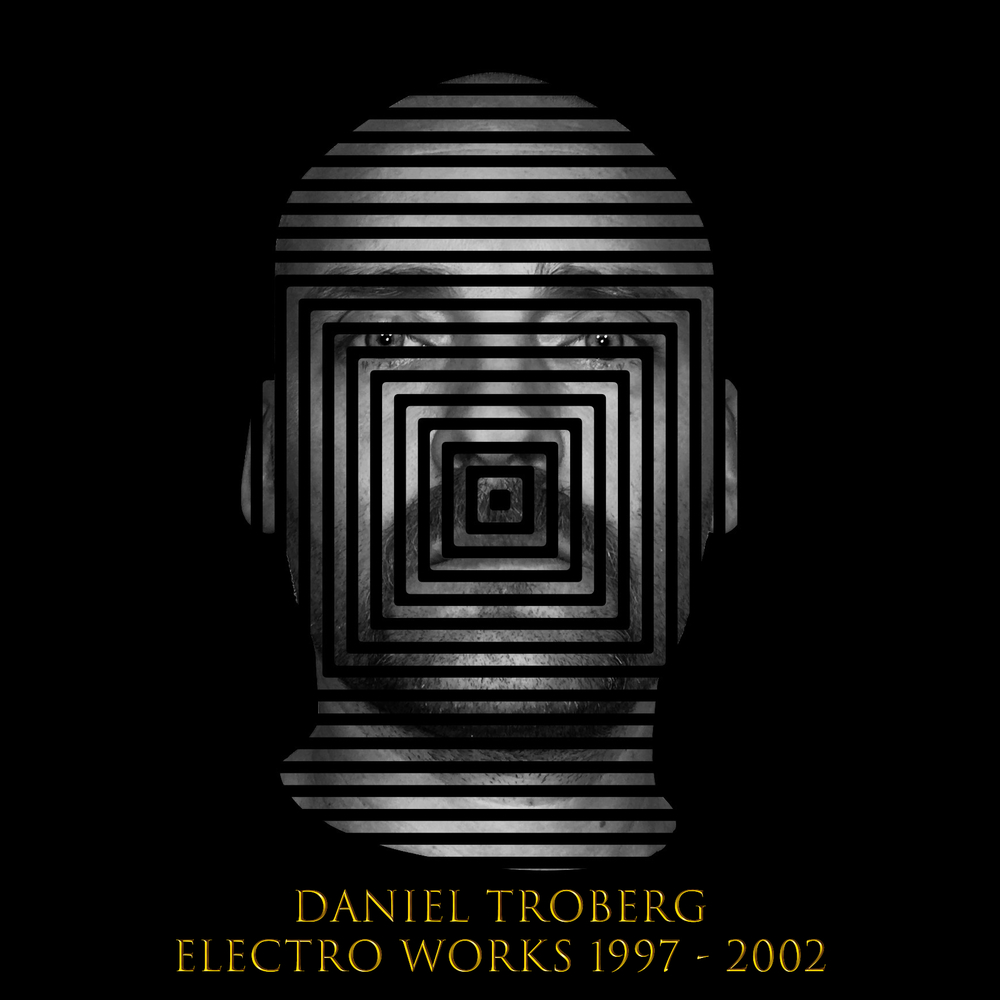
Switched On – Daniel Troberg: Electro Works 1997-2002 (Sonidosys)

reviewed by Ben Hogwood

What’s the story?

A trip down memory lane for Daniel Troberg, the Finnish DJ and producer now located in Los Angeles  where he is resident for Transition @ Dublab. A lot has changed for him musically since 2002, but this collection brings together his solo output from the turn of the century.

What’s the music like?

Troberg explores a mixture of approaches. At times his music feels very minimal, and certainly is in the melodic department, but the variations in texture and clumps of activity behind the front line means there is actually a lot going on.

Some of these tracks are more experimental, and pull at the outer reaches of rhythm and melody. The cinematic Bad Dream is one of these, setting a weird and at times unsettling scene with its unusual harmonies. The slower Abyss looks down similar avenues.

On the other side, Zzz proves its worth as one of the best tracks with a combination of driving rhythms, friendly chatter in the midrange and a backdrop of cool keys. The more minimal Talkback gives off a rich array of colours from its dancing synth lines, while the propulsive Epax is a chunky piece of electro, again with minimal melody but punching its weight comfortably. Intruder is cut from similar cloth, while OBX2 is notable for a distinctive, thick chord that recurs at regular intervals.

Does it all work?

Largely. Troberg’s electro tracks are well crafted and impeccably scored. They generate a good deal of kinetic energy, if not always getting beyond a darker and minimal melodic approach.

Is it recommended?

Yes. It’s easy to see why figures such as Laurent Garnier, The Hacker and Marcel Dettmann have expressed support for Troberg’s collection, as fans of those artists will find much to appreciate here.

Listen & Buy

Electro Works 1997 – 2002 will be released on July 15 on Sonidosys. In the meantime, visit Daniel Troberg’s Soundcloud page for more tracks
Switched On – Jimi Tenor: Multiversum (Bureau B)

reviewed by Ben Hogwood

What’s the story?

After two collections of career-spanning retrospectives, Jimi Tenor teams up once again with Bureau B. This time the material is brand new, and the label have allowed him free reign within the slight confines of synthesizer, flute and saxophone. He has such a diverse musical history that he could turn his hand to pretty much any form of electronic, jazz or even modern classical, but here his choices tend towards a blend of electronic and jazz.

Working with a typically instinctive approach, Tenor delivered the album within a few months from his Helsinki studio, using drum machines and synthesizer loops as a support for all sorts of treble-range activity.

What’s the music like?

Full of character. Jimi Tenor writes with a good deal of flair and always with a sense of humour, and his solos are packed with melodic content but also unexpectedly poignant moments.

The range of music is impressive, from the ultra-cool Gare du Noir and Monday Blue, with their easygoing vibes, to the upfront Slow Intro, where Tenor employs a fake choir. This leads to Life Hugger, with a flute-led swagger to the Krautrock groove. When the vocals are employed the approach is the same, with Unchartered Waters more song-based and Birthday Magic adding a humourous nod and a wink.

RajuRaju has a short attention span, with frenetic beats countered by rich ensemble passages. It is followed by the longest track, The Way To Kuusijärvi, a lovely slice of mellow flute and keys that give us the chance to kick back and indulge. This being Jimi Tenor, though, there is always some activity underfoot, and the skittish beat means we can’t relax too much! The saxophone solo, when it comes, is a beauty.

Does it all work?

Yes. With most constraints off the table, Jimi Tenor’s ability to think instinctively makes for consistently involving listening. His music is always interesting and full of melodic content, and the humour tops it off. On occasion Multiversum can get a bit ragged, but that’s a small price to pay for some infectiously good vibes.

Is it recommended?

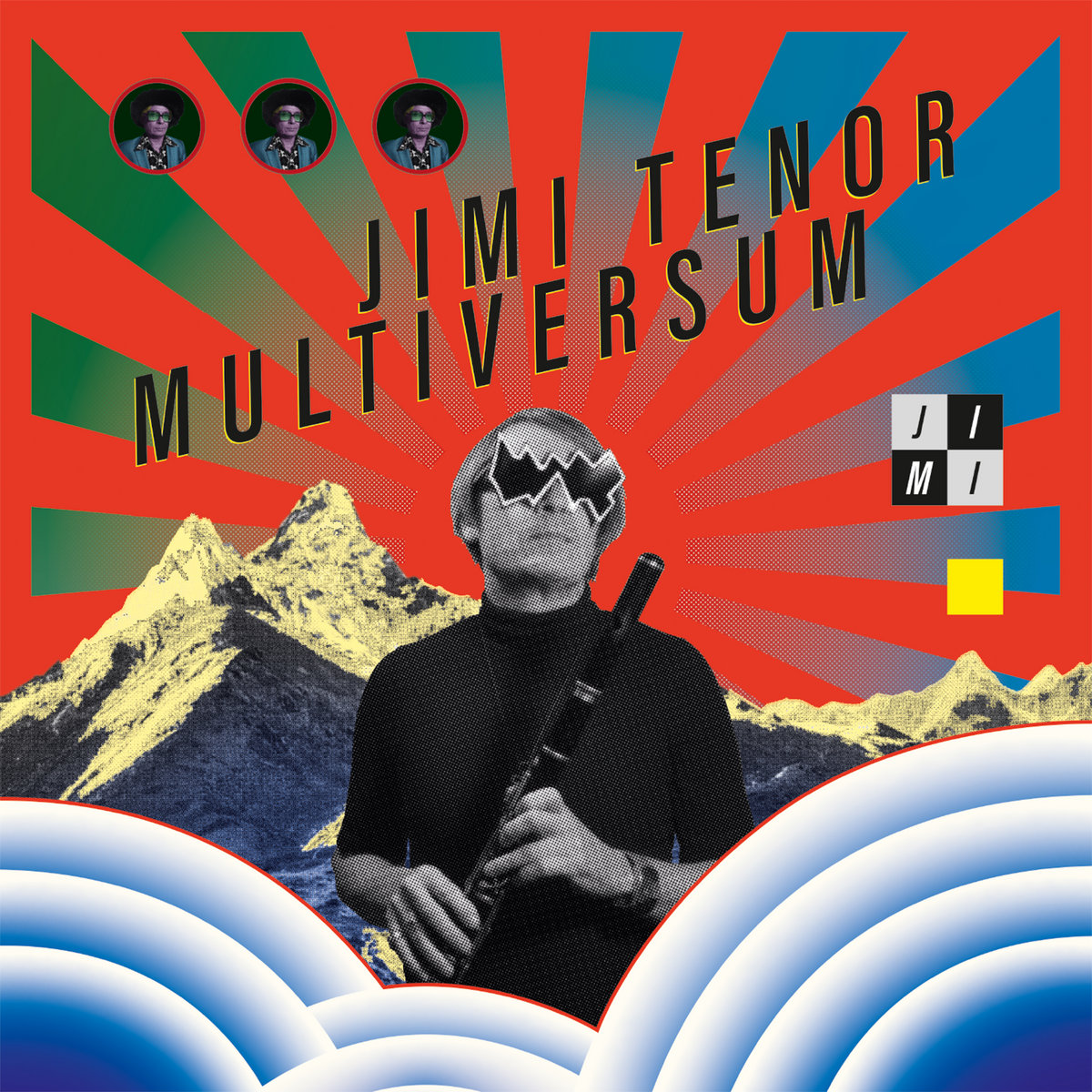
It is. Jimi Tenor’s partnership with Bureau B is clearly good for him – and with the music as colourful as its cover, we can expect a good deal where this came from.

Listen

Buy

Switched On – Various Artists: Air Texture VIII with Anthony Naples & DJ Python (Air Texture)

reviewed by Ben Hogwood

What’s the story?

For its eighth episode the rightly lauded Air Texture series relocates to Brooklyn, where it is picked up by DJs and sometime housemates Anthony Naples and DJ Python. Python is one of the many aliases under which Brian Piñeyro operates, and he has been working with the intriguing combination of ambient music soundscapes and reggaeton beats.

Naples, meanwhile, worked at an indie label but discovered techno through artists such as Theo Parrish, Omar S and Actress – and met Piñeyro when returning to New York after stints in Los Angeles and Berlin. The two were housemates for a little while before starting the Incienso label together.

Air Texture appears to be their first official compilation together, and as the biographies imply it is a cosmopolitan and very open musical affair.

What’s the music like?

Just when you think you have the Air Texture series nailed and pigeon-holed, it goes off in a new direction, indicating how essential it has become.

Volume eight, in the company of the New York-based pair, varies wildly in tempo but makes perfect sense when heard from start to finish. It starts with thick ambience and loping beats from Parris and Aurora Halal & DJ G., whose Off The Top has a particularly squelchy bass. The profile is dubby but not for long, as DINA’s Skin Shed unleashes an unexpected volley of rapid fire beats, comfortably the fastest thing yet heard in the Air Texture series.

It signals another change of tack, leading into the Naples-Python collaboration Entouré, where the reggaeton sway takes hold. Things then turn mysterious with the spaced out Per Ounce, an excellent spaced-out contribution from James Bangura with a strong percussive drive. Bitter Babe & Nick León continue with the thick, hot weather ambience but add some simmering tension, though by the time we get to DJ Trystero’s Palisade a warm, comforting ambience has descended. After some intimate beats and humorous touches on downstairs J’s 1000 dumplings, another Python-Naples collaboration – Final Speaking – complements short riffs with warm colours. Finally Vertical Silence finds a weird, levitating profile in Antonyms For Us, and 5AM’s Years signs off with a lazy, semi song-based finale, scattering into the ambient dust.

Does it all work?

Pretty much. There will be something for everyone to discover, which is a compliment you could level at each instalment of the Air Texture series so far. These are imaginative choices, and while the best are arguably the most ambient the collision course set by dancehall-influenced beats and ambient backdrops is truly intriguing.

Is it recommended?

Yes – and the more you listen the more there is to discover. Air Texture continues to be one of the few compilation series still going that is required listening. Once again, it proves an experience to broaden the musical mind.

Listen

Buy

Switched On – The Utopia Strong: International Treasure (Rocket Recordings)

reviewed by Ben Hogwood

What’s the story?

Steve Davis, Kavus Torabi and Mike York made a strong impression on their debut in 2018 as The Utopia Strong – but International Treasure confirms they were only just getting started.

Now their line-up is established, Davis has confirmed what it all means: “I see myself as a strong midfielder, or a centre back. Kavus and Mike are like the Lionel Messi or Ronaldo in the equation, and I’m setting situations up for them.” This modest appraisal gives a clue to Davis’s own role with the modular electronic backdrops, which are so important to the more improvisatory work that goes on up front.

International Treasure, the trio’s second album, takes them further along a journey which has already explored more musical dimensions than they thought possible.

What’s the music like?

International Treasure has a strong emotional pull throughout its nine tracks. It is also difficult to place stylistically, which proves to be one of its strongest selling points. At no point does it feel like the record was placed under any restrictions, and yet its musical progress is carefully managed at every turn, creating a rare intensity.

Another feature of the trio’s work is the vivid colouring they apply to the sounds, which operate as strong primary musical colours. This is in part due to Torabi’s acquisition of a guzheng (a Chinese plucked zither) which is used on Shepherdess, and the set of pipes and wind instruments York brings to the table, like an updated version of the Penguin Café Orchestra.

Does it all work?

It certainly does. There are some fascinating colours and tableaus presented here, each of them handsomely rewarding repeated listening.

Is it recommended?

Yes – as indeed is the first album. If you’re an electronic music devotee then this is a mandatory purchase, and a sign that even greater things lie ahead for the unlikely trio.

Listen & Buy

Switched On – Gabriel Prokofiev: Howl! (Oscillations)

reviewed by Ben Hogwood

What’s the story?

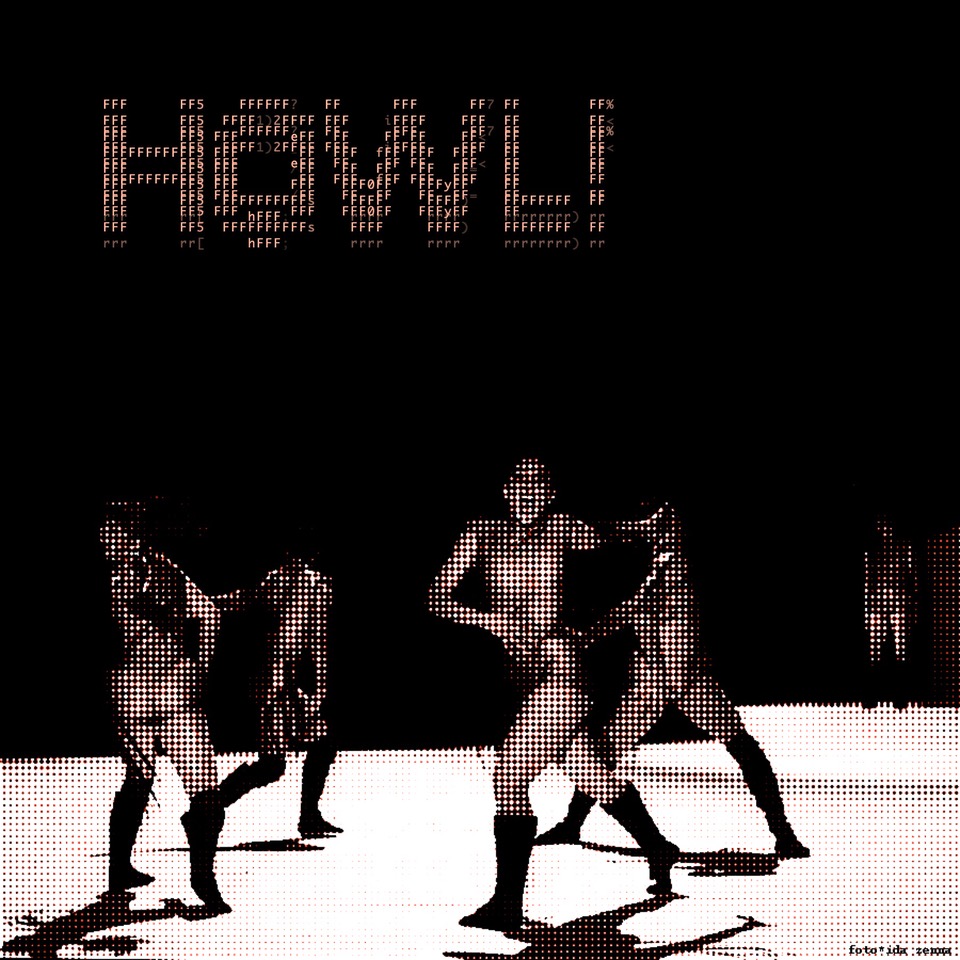
The roots of Howl lie in the ‘Arab Spring’, and also Allen Ginsberg’s poem of the same name from the mid-1950s. It is a five-part composition exploring the use of recent technological forms for protest and expression, and has already made itself a history in terms of real life protests.

Gabriel Prokofiev originally conceived the piece as a score for the choreographer Maurice Causey, and its first performance in Hong Kong was sadly adjacent to the independence protests. Now it has a raw significance in opposition to the Russian invasion of Ukraine, especially with protesting forbidden in Russia.

Prokofiev uses the rich tones of an ARP Odyssey synthesizer, filtering and layering its sounds to produce a wide variety of tones. Complementing these are the clarinet of Linus YS Fung, who took part in that first Hong Kong performance, and Yury Revich, whose violin adds a sensitive, songful treble to the wrought second part, Separation.

What’s the music like?

There is a great deal of first-hand angst in this music, and Prokofiev makes his protest in the strongest possible musical way.  The synthesizer tones fulfil several functions here – first of all to confront, which they do from the outset, but also to provide unexpected comfort when the sounds swell and get warmer.

Howl springs forward with purpose, its first section (Agitprop) crackling with serrated figures that ricochet across the stereo picture. The all-encompassing synth tone dominates to start with, on occasion sounding like the malfunctioning of a big machine or a computer program gone wrong.

Linus YS Fung makes striking contributions to the Separation section, where the interference from the electronics contrasts with the clarinet’s probing, sonorous tones. The following Swarm section is extremely descriptive, painting the assembling of an ominous army like the Martians in War Of The Worlds.

Pulse presents a bleak picture in response, with harmonies that are watchful and fearful but then grow in timbre and intensity. Finally Afterlude feels like an injection of positive energy, offering a step out of trouble.

Does it all work?

Yes, emphatically. This is uncompromising music, facing its problems with unwavering surety. It certainly isn’t for every moment in the day, but Prokofiev offers enough light amongst the shade to make an effective five-part suite.

Is it recommended?

Yes, and with a little necessary caution due to its intensity, volume and frequency. What is beyond doubt is that Howl – sadly – is music of necessity, made for these inhumane times.

Listen

Buy