This is a second album for the Munich-based, Chinese-German musician Robin Wang, who records under the name Sam Goku.
Goku is reaching a lot of admirers, his eclectic approach to electronic music reaching the DJ sets of Four Tet and Ben UFO among many others. For this second album he switches to a ‘home’ label, the acclaimed Munich imprint Permanent Vacation.
What’s the music like?
A notch up from the average. Goku’s music continues to use attractive textures and loops with something a little different or distinctive added.
This can be heard in the lush title track, rich in Eastern promise, or the ambience of distracted voices and busy, watery loops on Mangrove Railways. He also works different tempo variations into the mix, with Libellenflug a nippy, percussive track that still retains its ambience, and the busy Orchids. The album evolves gradually, the quiet Yellow River Drone picking up more momentum as Goku moves into Cycles, with its softly resonating melodic nuggets. The momentum builds further, the album progressing as a strongly unified single composition, but also rewarding more fragmented listening.
Does it all work?
It does, convincingly – Goku securing a colourful canvas and plenty of musical interest.
Is it recommended?
Yes. Goku’s beat making skills and ability for creating colourful scenes in his music are a great match, and listening on headphones only opens out the possibilities. A fine sequel to his promising East Dimensional Riddims debut.
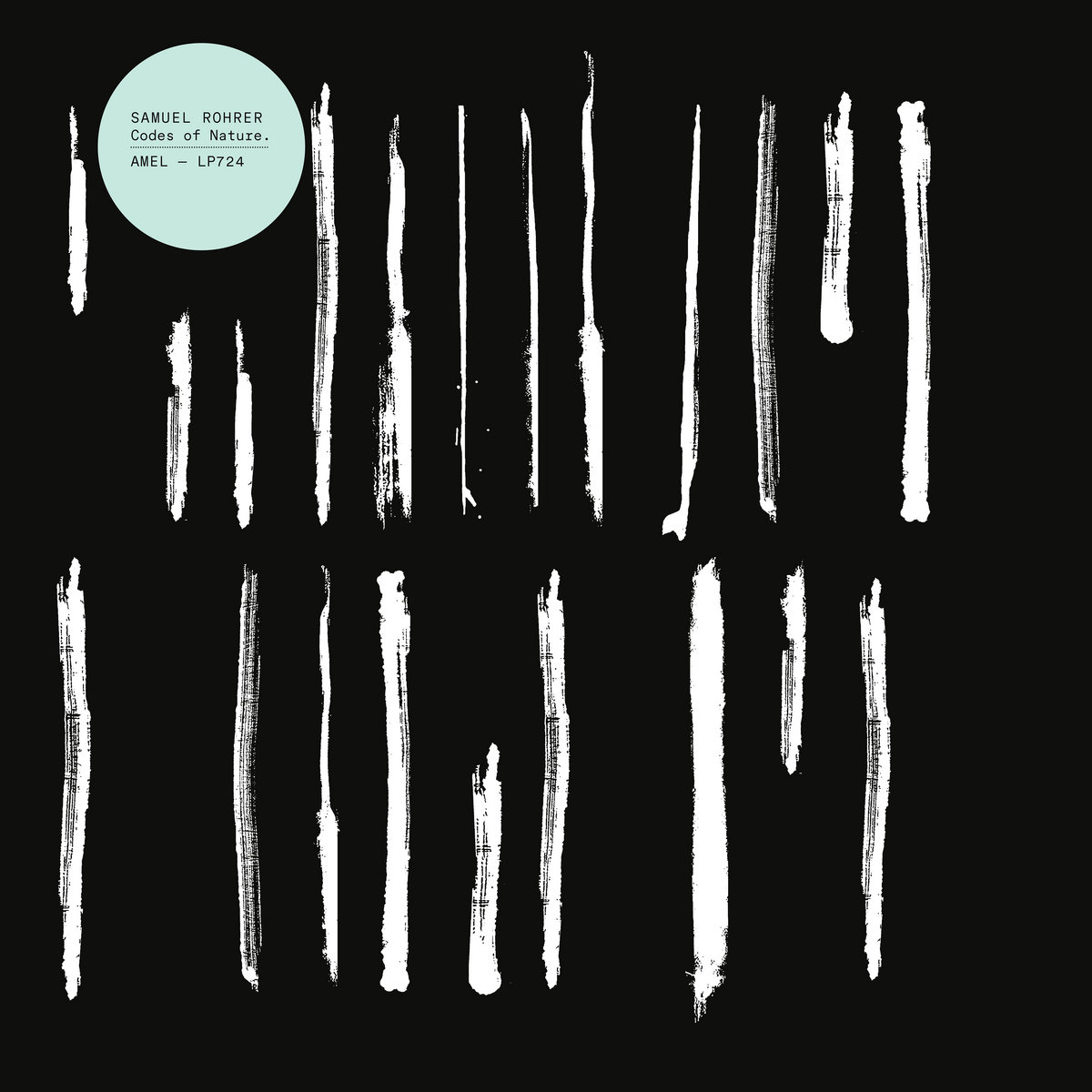
Samuel Rohrer thrives on collaboration within music. His credits are a veritable roll call of electronic and percussive music, listing Ambiq, Ricardo Villalobos, Max Loderbauer, Tobias Freund and Oren Ambarchi among his co-workers. On Codes Of Nature, however, the multi-skilled instrumentalist closes ranks and delivers an album as a one-man band.
His Bandcamp page credits Rohrer for contributions on drums, modular synths, electronics, keyboard, cymbals and percussion – a tightly knit unit that the prolific composer has wound into an album of six extended tracks.
What’s the music like?
Rohrer’s music is deceptive, a bubbling cooking pot of invention. On the surface the casual listener might think there is little going on, but delve deeper into his workings and all the percussive nuances and compressed melodic loops are revealed.
Body Of Lies is carefully moulded into a living, breathing organism, with plenty of small musical figures competing for space but complementing each other. Rohrer carefully adds light and shade to the track, with brushed percussion and trimmings of a slightly dubby nature.
Scapegoat Principle travels further afield, using distant vocal samples and stretched out, syncopated figures to create tension. The open-air approach gives the feeling of approaching a distant tribe, especially when Rohrer introduces a busy, shimmering figure.
On Fourth Density the textures open out, presenting a spacious sound before long melodic lines and intricate synth / percussion interplay take over. Clocking in at nearly eleven minutes, The Banality Of Evil is the longest track on the album, and it shows once again Rohrer’s easy grasp of bigger structures. The layer of percussion underneath the surface keeps things ticking over nicely, while drone-like figures drift in and out of focus above. Gradually the treble gets busier and the sounds become displaced, leaving a slightly woozy but oddly compelling outlook.
Talking To Nature Spirits is very easy on the ear, nearly ten minutes of aural balm with its oscillating loops and outdoor sounds. The pitch is firmly rooted but Rohrer plays clever tricks with cross rhythms, creating bursts of positive energy above the static undercarriage. Final track Resurrection responds to this with a more improvised outlook, scattered sounds and consonant harmonies creating an ambient collage.
Does it all work?
Yes, provided the right listening conditions are met. Listening to Codes Of Nature when on the move is unhelpful, for unless you have the right headphones a lot of its subtleties are lost to the surrounding noise. Better to be listening in a confined space, when all the workings can be revealed.
Is it recommended?
Yes – an atmospheric album that reveals more of its finely wrought treasures with each listen. A thoroughly intriguing and involving addition to Samuel Rohrer’s already impressive body of work.
Described as a ‘technicolour companion piece’ to last year’s Flicker album, his second release, Strange Loops & Outer Psych is a collection drawn from the EPs he has released in the intervening period.
To quote Bell himself, “Influences, stripped down acoustic reworks and remixes by my friends, comrades and heroes all hopefully help the listener see where my head was when I made Flicker, but also it stands up as a decent listen in its own right.
What’s the music like?
Bell is absolutely right – this is a really effective standalone piece in its own right, thanks to some judicious placing of extra tracks and quality remixes.
Maps in particular turn in an excellent contribution to the second category, James Chapman’s take on It Gets Easier presenting a starry-eyed throwback towards Hacienda days that complements the opener, David Holmes‘ dreamy rework of The Sky Without You. Richard Norris, meanwhile, uses a walking-pace beat to bring good vibes to Something Like Love. Claude Cooper adds a winning break beat to Sidewinder, while bdrmm bring sparkling treble and dubby bass to Way Of The World.
Meanwhile the original tracks find Bell in really strong vocal form, too – as good as at any point in his career. Listen, The Snow Is Falling is an evocative piece, while The Way Love Used To Be is unusually tender and affecting in its outlook. Bell’s voice is unforced in a similarly touching acoustic versions of She Calls The Tune, Love Is The Frequency, Lifeline and Something Like Love.
Countering this is the ‘psych’, a pulsing mix of World Of Echo from A Place To Bury Strangers.
Does it all work?
It does. An ideally named and appropriately dreamy collection.
Is it recommended?
It is. Andy Bell is in a particularly creative phase of his career, even for him – and whether it’s his instrumental GLOK project or this hazy, slightly retrospective workout, he is on fine form at every turn. Strange Loops & Outer Psych is a blissful, uplifting listen.
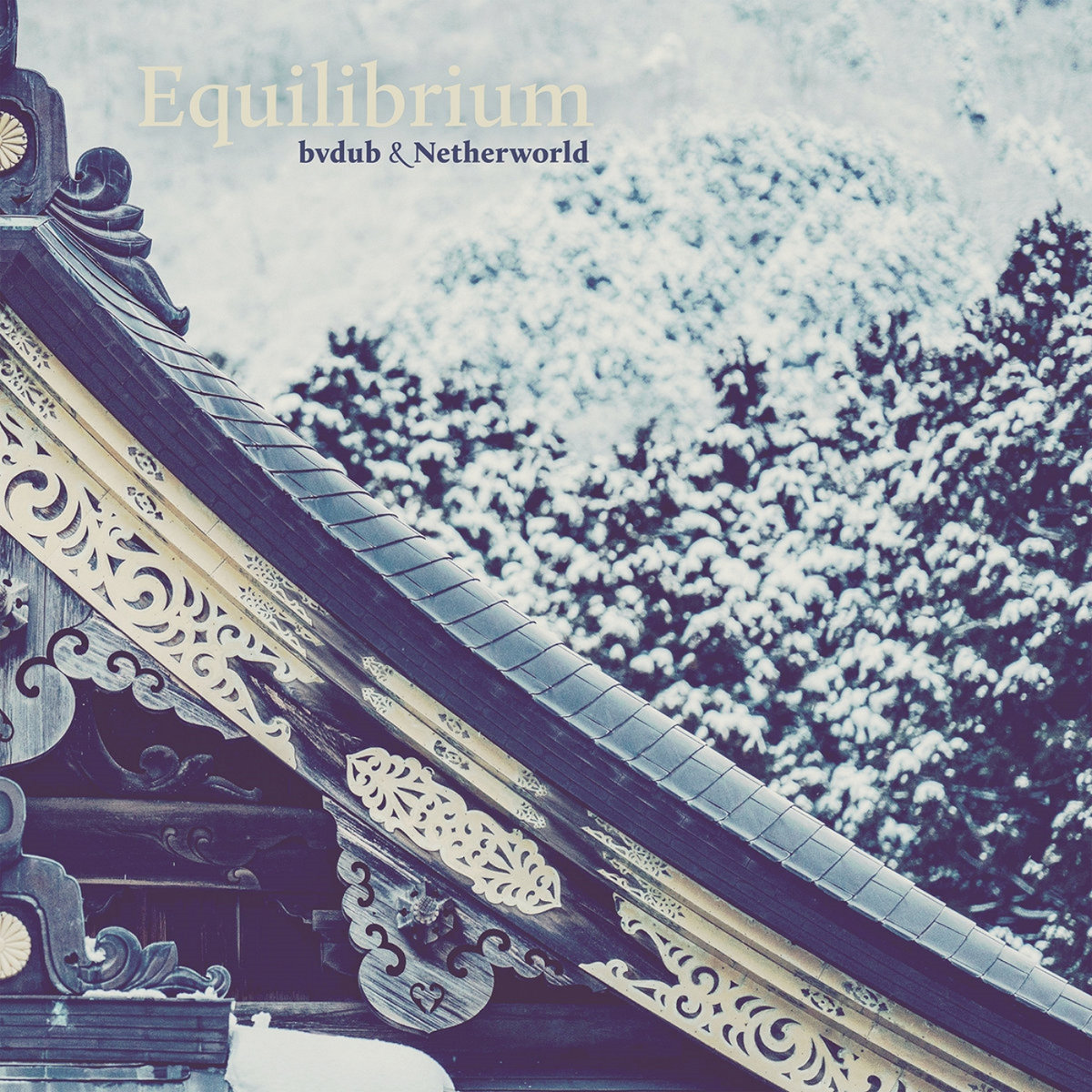
This is the first official collaboration between bvdub (Brock Van Wey) and Netherworld, otherwise known as Glacial Movements founder Alessandro Tedeschi. It is described as ‘a testament to a friendship that has endured and grown for well over a decade’.
The ‘equilibrium’ of the title is used in the context of a glacier, describing the point at which it achieves a perfect balance between the mass of snow and ice that comprises its mass. This means it is never advancing nor retreating, with the gritty warmth (bvdub) above, and the glacial cold (Netherworld) below.
What’s the music like?
It is to be assumed that bvdub and Netherworld stuck to the description above, and that the former took on the more variable elements of the music while the latter stretched out the harmonic outlines beneath. However they did it, Equilibrium works beautifully as a quartet of intense yet deeply ambient compositions.
Each piece is of equivalent length, weighing in around the 20 minute mark, and the music within casts a lasting spell.
The evocatively titled No Trees For Miles establishes the cold climate through its icy textures, and secures a strong home melodic pitch to contain the broad canvas above. The melodic lines, such as they are, move very slowly, like birds circling on the wing, though when the wordless vocals appear there is greater activity, as though zooming in closer to the mass.
Darkness From The Sun works as a gradual crescendo, like a huge keyboard getting itself into gear, before long pauses enable the listener to take in the scene around, with a massive echo giving us an idea of the sheer scale of the glacier, working up to slab of white noise at the end. Seas of Stones and Sand adds an air of mystery, its wordless voices forming weird and ethereal mini-melodies. The slowly evolving scenery takes on a vast scope with a blast of treble from an organ-like instrument, which proves overwhelming for a while before dropping back to distant, calming echoes.
Finally Ice on Fire creates the most movement, underpinned by long notes as the treble arpeggios dance like flames. Again it paints an uncannily vivid picture, one that proves extremely striking on headphones or with surround sound. As with the other pieces, it gradually subsides to silence.
This combination of rapt stillness and subtle movement is ideal for mindful meditation, but along with that the two artists paint a very vivid sound picture of the environment. The scratchy, grainy exterior maps to the hard edges of the glacier, while the stretched-out harmonies places it in stasis rather than outright movement.
Does it all work?
It does. Equilibrium is a highly descriptive quartet of works, intense yet deeply restful at the same time.
Is it recommended?
It is. Both artists have clearly spent a lot of time in getting Equilibrium just right – which in itself makes sense. What they have made is an exquisite, lasting musical stillness to ease the mind.
How appropriate that Hannah Peel should be placed in Hall One at Kings Place for the live premiere of her 2021 album Fir Wave. The hall is, after all, constructed with the material from a single, 500 year-old German oak tree named Contessa – and here it absorbed music that could have been written in its honour, as part of Peel’s artist residency in the venue’s Sound Unwrapped series.
Fir Wave originated in lockdown, its open air textures providing solace for many – your reviewer included – during several different phases of isolation. Its appeal lies both in the past and the future. Peel based her musical inspiration on the music of Delia Derbyshire and the Radiophonic Workshop, re-sampling and regenerating their work, and absorbing it into her own style and processes. The resultant work is an emotive one, celebrating the environment while fully aware of the issues it faces.
Peel’s deeply felt electronic music is often achieved through a ‘less is more’ approach – as the vocals on first track Wind Shadow demonstrated. With her live accomplice, Hazel Mills, she proceeded to sculpture and layer some beautifully earthy sounds, the melodic motifs coming up from the ground itself but becoming airborne through their expression by voice, synthesizer treble, violin or piano. For Peel is a multitalented artist, her roots nearer to folk music but now fully embracing the electronic idiom.
This included the intricate and sensitively handled beats. These cut through the smokescreen in Hall One with clear precision, drawing back to enable the appreciation of bigger vistas, both in the title track and Emergence In Nature. Peel was an endearing presence, addressing the audience only occasionally as she preferred to let her music do the talking. While understandably nervous at the reaction to music that hadn’t played in public since its release two years ago, the warmth of the reception confirmed she need not have worried. Patterned Formation had an angular beauty to its repeated loop, while Reaction Diffusion packed a heavier punch.
The attentive audience became fully immersed in the music, transported to the natural spaces it was portraying. Fir Wave itself was a treasure, describing a remarkable process found on certain mountains in the world. When the wind hits a mountainside full of trees, it starts to kill off the front arm of the fir trees, allowing the ones at the back to grow. Over years and years, the steady pattern creates a beautiful sound wave across the mountainside that shifts through a long period of time. Peel somehow described this in her music, which left a lasting impression.
With the album ingrained in our thoughts, Peel returned for two charming encores given with the aid of a music box. This gave her the appearance of standing in a cosmic post office, preparing to dispatch a lettercard to a significant other. The music told compelling stories through a charming cover of Cocteau Twins‘ Sugar Hiccup, dating back to 2010, and a revelatory interpretation of New Order’s Blue Monday, turning the music on its head in duet with Mills.
Even these were not the emotional peak of the evening, however, for in a final encore of Unheard Delia Part 1 we heard the voice of Derbyshire herself, caught in an interview in a sunlit room. This detail, imparted by Peel before we heard the music, helped us to capture the moment itself, and the track remained in thrall to a pioneer of electronic music taken too soon. Peel, to her enormous credit, stepped back at this point to ensure Derbyshire’s voice could, at last, be fully heard and appreciated.