Switched On – Llyr: Biome (Mesh)

llyr

reviewed by Ben Hogwood

What’s the story?

‘Nature is the ultimate composer’. This is the standout quote from Berlin-based Gareth Williams, aka Llyr, as he introduces his first full-length album Biome. Natural sounds are the first things we hear, the birds and monkeys of the Borneo rainforest making themselves known and setting the scene for Williams’ thoughtful piece of work.

For Biome is an environmental album as well as a musical one, split into two distinct sections called Pre-Anthropocene and Anthropocene. The first four tracks constitute an ambient celebration of nature and its many qualities, while the second group of four are disrupted by human involvement.

What’s the music like?

Llyr allows the field recordings to flow beautifully from the start, with minimal involvement from his own electronics, but he prompts the slight changes of mood with a natural instinct for structure. The sounds are lovely on headphones, the listener allowed to revel in the unhurried natural processes of the jungle. Particularly striking is the fourth track, Courtship Signal, where the mating calls of frogs in Kubah National Park are replicated and developed.

When the humans get involved the electronics come to the fore, and so do the dance beats. Llyr manages the crossover really well, and unleashes a form of primal energy through the kinetic Intrusion #509, the bubbling of The Hawthorne Effect and a rush of percussion on Interject, featuring Private Agenda, that sweeps all before it. Llyr uses this to show the chaos of the human imprint, having a good time but sweeping away the ambience that went before. Finally Encroachment powers to the finish, and we realise all the while that we have been held under the dense canopy of the forest. The white noise of the percussion enhances this effect.

Does it all work?

Yes. Biome is an imaginative look at the so-called developing world today, and its structure works really well. Essentially it is a sequence of natural ambience, followed by 25 minutes of busy dancefloor action, like moving between two stages in a forest festival.

Is it recommended?

It is. Electronics and field recordings can work together really well in the right circumstances, and this is definitely a case in point. Llyr makes a number of powerful observations about the state of the world today without ramming them down the listener’s throat, communicating them in a very musical way. This means Biome works on several levels, a journey in the truest sense of the word.

Stream

Buy
 

Switched On – DJ Food: Kaleidoscope Companion (Ninja Tune)

dj-food-kaleidoscope

reviewed by Ben Hogwood

What’s the story?

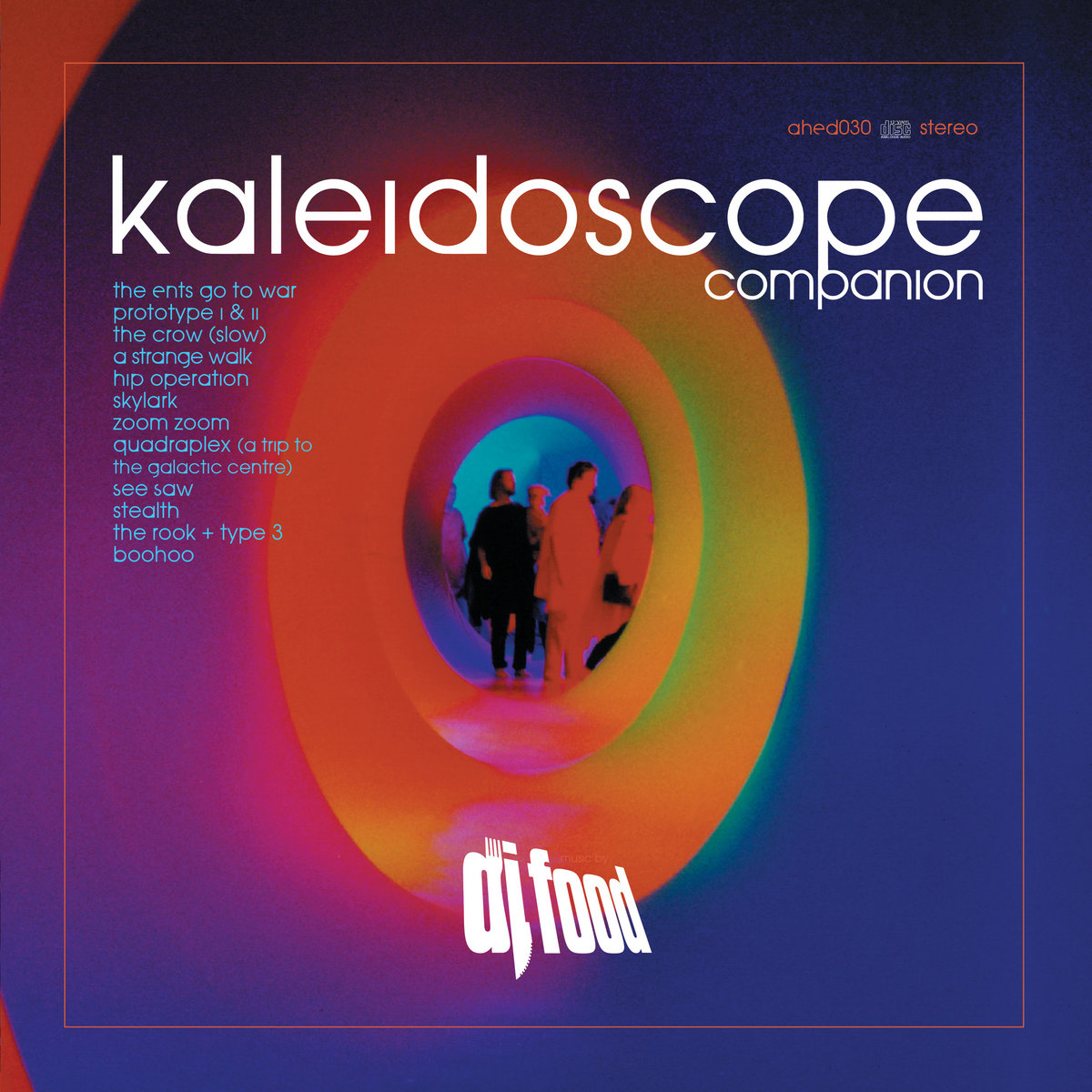
Strictly Kev and PC, the men behind DJ Food, can reveal just how productively they spent last year’s lockdown. Aware that it marked two decades since the release of Kaleidoscope, when DJ Food was a mysterious incarnation conceived by Ninja Tune founders Coldcut, the two rounded up music from their archives of the recording sessions. To their surprise the volume and quality of the material was such that Kaleidoscope Companion became possible. It is a collection of unreleased tracks, remixes and alternate versions, all closely related to the album but structured in such a way that a whole new opus has been created. Kev explains it best, as ‘not a new DJ Food album’, more ‘an old one that never was’.

What’s the music like?

Given that this electronic music is essentially 20 years old, Kaleidoscope Companion could have been written yesterday. That says much for the staying power of DJ Food, and how inventive the beats and sound pictures were in the year they were released. Here the quality of the compositions is immediately evident.

Take Skylark, exposed as a mini-masterpiece. With the crackling of the outdoors effectively evoked, an elastic bass line is established before a stringed instrument climbs through the textures and floats on the air effortlessly.

The Crow (Slow) is one of the welcome alternate versions, stretching its material into a gorgeous panoramic view that could easily last double the length it is given here. See Saw also offers reassuringly thick textures of an ambient persuasion, as does the closing Boohoo, with a serene string line that segues into softly humourous pitch bends at the end.

There are elements of spatial jazz here. Hip Operation (great title!) is an active story, building with white noise beats and detective-drama trumpets. Stealth, an alternative version of the Gentle Cruelty remix of The Ageing Young Rebel, is a nocturnal scene with a mellow but quite mournful flute tone. Its spoken word vocal, telling of self-obsession, is remarkably prescient for today’s times. The Rook + Type 3 takes a more cinematic turn, with another flexible bass and brief figures from strings and clarinet, while offbeat percussion flickers and flares in the background.

The collection’s centrepiece is Quadraplex (A Trip to the Galactic Centre), which starts without beats but then wanders seemingly into the middle of a clearing and a meditation in full swing, with thrumming percussion and a series of spatial effects. Blended from several different takes, it is a mesmerising piece of work.

Does it all work?

It does. The structure of Kaleidoscope Companion has been carefully thought through, and the positioning of Quadraplex in the middle splits the collection into three parts, with a meditative quarter of an hour at its heart.

The analogue clicks and crackles around the edges of many of the tracks are welcome, and the refusal of the music to comply to stricter digital confines serves it well too.

Is it recommended?

Yes. If you listened to this without knowing the author, you would bookmark it as a talent to keep an eye on, a source of new and exciting electronica. The fact that it is a companion to an already excellent and revered album only heightens the appeal, showing just how durable electronic music has proved to be. Fans of the Ninja Tune label will love it.

Stream

Buy


Switched On: John Sellekaers: Observer Effect (Glacial Movements)

john-sellekaers

reviewed by Ben Hogwood

What’s the story?

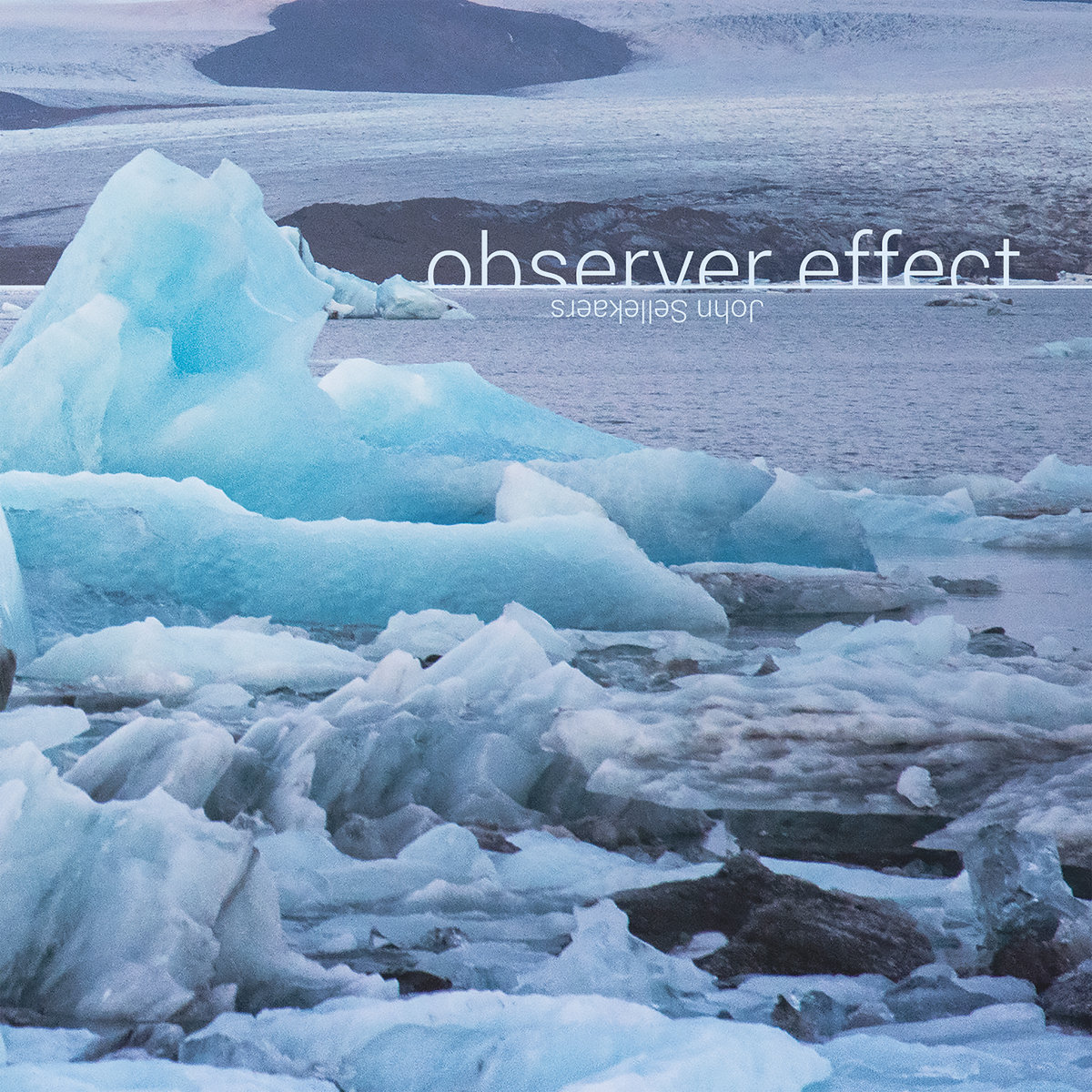
Observer Effect is an album fed by history, countless stories and books’, reports John Sellekaers. The Brussels-based musician, who also works in other art forms as an engineer, photographer and designer, is approaching this album through the view of a pioneer explorer. He is imagining the experience of visiting a new region for the first time in history, pondering how his arrival in an undiscovered area changes the previously unseen habitat – and exploring the effect it has on him. Given Glacial Movements‘ musical history the points of reference that come to mind are the North and South poles, and the remote areas on their approach – or even another planet entirely.

What’s the music like?

Observer Effect starts like an extended tidal system. Big, single chords ebb and flow with a reassuring regularity. Occasionally a less certain sound imposes on the cycle but generally the outlook is one of vast ambience. Slowly the landscape passes by, the listener seemingly positioned on a slow moving method of transport with the scope to take in wide vistas. Gradually the scenes change over time, but occasionally a darker side is revealed, as though the introduction of man-made elements is threatening the natural change.

A thicker treble pitch makes itself known at the start of On The Trail, an intense and sustained note, and as this track evolves a more distorted sound, like a long guitar note, creeps into the consciousness. After this burst of intensity, a dense blanket of sound descends for Shelter, which takes on more definitive brush strokes. In The Lightest Night takes on eerie harmonies and a strong current of uncertainty, heightened by the displaced harmonies of Optical Haze Pt. 1, which plays with the listener’s perspective, especially on headphones, before charting a much deeper course towards the end.

Parasomnia creaks as though under stress from something, before the substantial Water Sky takes a repeated phrase of one note and runs with it, the tidal system returning to the listener’s consciousness. Finally Optical Haze Pt. 2 offers a calmer scene and ultimately rest.

Does it all work?

It does – and is most effective when listened to as a whole. Sellekaer’s music is unusual, for it manages to imply melodies while using very few notes, and emotions are portrayed through texture just as much as harmony. It is coldly effective, difficult to always relate to on a human level but compelling all the same.

Is it recommended?

Yes. Observer Effect proves a worthy addition to the Glacial Movements canon of immersive ambience, telling a powerful story in its relatively few notes. Fans of the label need not hesitate.

Stream

Buy

Switched On: Kasper Bjørke: Sprinkles (hfn Music)

kasper-bjorke

reviewed by Ben Hogwood

What’s the story?

Kasper Bjørke is a prolific producer, with two decades’ worth of music under his belt. Much of that has been in a solo capacity for the Copenhagen artist, who has proved himself equally effective as a songwriter and instrumentalist.

His new album Sprinkles falls into the latter category, and appears to have its roots in a lockdown climate. Recorded and produced on his laptop, in a cabin by the beach in Denmark, the aim is to draw on energy and positive feelings from Bjørke’s experience gigging worldwide. It should provide music to fill the considerable hole left by empty dancefloors over the last year and a half.

What’s the music like?

Polished, dancefloor-friendly, and summery. Bjørke writes with a fluent, listener-friendly approach, providing plenty of hooks but working them in to textures as suitable for a Balearic poolside as they are for the darker club. Elements of house, techno and electro combine with instinctive ease.

The three singles already released – Baybi, Running and Kites – are excellent, and the way Baybi unfolds with a lazy saxophone is especially attractive. Grace has bubbling synths, its analogue approach working well, while Mirage flickers brightly at the edges, with some nicely applied textures.

As the album progresses so does Bjørke’s tendency to experiment, and RDVSpecial sharpens the synth tones to good effect. Finally Viewwws throws a few longing looks back towards 1990s ambient, with its loping, dubby tread.

Does it all work?

It does. Nothing here is too demanding, but nor is it lacking in substance. The Danish seaside gives itself away in the warm textures, and the sepia-tinted edges to some of Bjørke’s tracks are attractive.

Is it recommended?

It is. Kasper Bjørke’s output has been consistent and varied up until now, but there is room for the deeper side in his output – and the productions here are linked together rather nicely. Sprinkles is an ideal summer album.

Stream and Buy

Sprinkles  is released on 30 July. To hear the first three singles and to purchase, you can visit Bandcamp here:

Switched On: Arandel: InBach Vol.2 (InFiné)

arandel

reviewed by Ben Hogwood

What’s the story?

The second instalment of Arandel’s InBach project comes just a year after the first. The French producer, who chooses to remain anonymous for now, has been discovering a wide range of raw material beyond last year’s reinterpretations, and has enjoyed the new perspectives offered by live performance of the first album material.

Now the music takes on more spoken word contributions, as well as using rare instruments recorded at the Musée de la Musique in Paris. The record also features Ondes Martenot player Thomas Bloch and the cello of label mate Gaspar Claus.

What’s the music like?

Extremely varied. Arandel has an orchestral mind, which means he can approach music from many different directions. The stripped-back woodwind of Invention 5, for instance, builds from almost nothing to a full, symphonic climax with electronic choral voices, showing how the French producer ‘gets’ Bach’s increase in intensity.

Concerto for No Keyboard, on the other hand retreats to the lower end of the spectrum and applies the sort of electronic squiggles you would expect to hear from Wendy Carlos – whose Switched On Bach was a big influence on Arandel’s working.

The starry-eyed Doxa Notes is a beautiful way to start the album, and develops into a lush palette of electronics, with a spoken word top from Myra Davies. It is a reinterpretation of Aux Vaisseaux, itself based on Bach’s 14 Canons on The Goldberg Ground, BWV 1087.

Spoken word is an important component of this album and Nos Contours is an even better vocal number. Developed from Bodyline, a track on the first album, it features bubbling electronics under Ornette’s low but steady vocal, both bending under the weight of increased percussion towards the end.

Arandel’s handling of Bach’s original material is always respectful but is more than happy to take risks. Capriccio is otherworldly but in a good way, a reworking of Bach’s Capriccio on the departure of a beloved brother which is in fact a memorial to Arandel’s own brother. Its spectral voicing is almost overrun by a large electronic choir, but is in fact swept up by its power.

Praeludium takes a dubby, four to the floor beat and pushes resolutely onwards, while the autotune of Fabula’s vocal over Bach’s Meine Seele Warter Auf Den Herrn will be more divisive, but it is nothing if not effective.

Confirmation of Arandel’s more adventurous approach can be found in Octobre, a pleasingly unconventional take on the famous Air. Luxurious in its Hamlet cigar promotion, this music is stripped back to a chamber organ and oboe sound here, together with well chosen atmospherics and a time-taken voiceover from the producer’s nephew, with a dreamlike story of an ominous gang of children.

Finally Myriade provides a soothing and rather moving close, with another voiceover – from no less than Bridget St.John – complementing the slow-moving, majestic harmonies.

Does it all work?

Yes. Some of the interpretations are more divisive than others, but this is a good thing, as Arandel is showing a wide range of possibilities when working with Bach’s music. When it comes to electronic music his is surely the most flexible of original material with which to work, and the fact it can be reproduced more or less faithfully says a lot about its staying power.

Is it recommended?

Yes. An essential purchase for those familiar with Arandel’s way of working, InBach Vol.2 suggests that the ideas are only just getting going rather than drying up! These powers of invention and imagination will surely serve the producer well as he moves on to even more ambitious things.

Stream

Buy