In concert – Music For Youth Proms 2022 @ Royal Albert Hall

Review and photos by Ben Hogwood

There is a justified amount of doom and gloom in the arts at present, with organisations striving for increases in attendance figures while clinging to the hope that their funding will not fall through the trapdoor, as it effectively has done in the recent Arts Council England announcements for English National Opera, Britten Sinfonia and London Sinfonietta, to name just a few.

Art forms are nothing if not resilient though, especially when powered by raw talent, enthusiasm and hard work – as this night of Music For Youth Proms clearly was. How inspiring it was to see hundreds of young performers create their own bookmark experiences at the Royal Albert Hall, delivering performances of power, confidence and poise, fuelled by a clear and sheer enjoyment of music.

There was no evidence of stage nerves as performers ranging from aged six to 25, from Gwent to Ukraine (via London) united together in music, each and every one of them doing themselves proud under the Music For Youth umbrella. The registered charity works, in its own words, ‘to provide young people aged 21 and under across the UK with free, life-changing performance and progression opportunities, regardless of background or musical style’.

The range of musical styles here was testament to this approach, creating an environment where genres can be celebrated rather than restrictive. The word ‘Proms’ may still conjure images of seated classical concerts, with a smattering of world music maybe, but here it stood for hip hop, soul, brass band, solo vocals, choir, classical for small and large orchestras and even jazz fusion bands.

To pick out a single performer would be unfair, as each one was fully deserving of their moment in the spotlight. For raw, upfront sass, the Sedgehill Academy Rap Collective from Lewisham excelled, especially when three soloists came forward to take the game to the audience, their sparky wordplay in original compositions making the Girls Rap Collective a thrilling live experience.

Illustrating the breadth of this country’s music, an affecting performance of Vaughan WilliamsFantasia on a theme of Thomas Tallis followed from Musica Youth Strings, the Huddersfield-based ensemble giving true depth of feeling in their cleverly abridged account.

Cantilena from the Abbey Junior School in Reading were next, utterly charming as they sang The Puzzle and Silver Moon. They were complemented in the second half by the remarkably accomplished singing of the Northamptonshire County Youth Choir, whose accounts of music by Bob Chilcott (The Isle is Full of Noises) and Ola Gjeilo (Northern Lights) were breathtaking in both accuracy and emotion.

The brass players excelled, too – Gwent Youth Brass Ensemble in 3 Brass Dances by Ryan Linham, and the Mountbatten Big Band bringing exuberant lines to their Brooklyn medley. That the ensemble made such a big impression after No Trixx, a London fusion band of formidable musical capability, said much for their spirit.

The lasting image of the first half was provided by Ukrainian students from LPMAM (The London Performing Academy of Music, above), cleverly working Queen’s The Show Must Go On into the torch song Melody, from Ukrainian composer Skoryk. The students are on permanent placements at LPMAM, thanks to an initiative headed by conductor Stefania Passamonte, whose initiative and drive continues to bring more funding to enable more students to come over and base themselves in London. Judging by this performance they are revelling in the experience – typified by oboist Lola Marchenko, whose solos in both songs stayed long in the memory.

The second half of the Proms was similarly spectacular, with hundreds of singers and orchestral players forming the Lincolnshire Massed Ensemble (above). They delivered a Beyoncé medley of eye-opening power and positivity, headed by a group of girls whose vocals and dance moves showed just what a positive influence the former Destiny’s Child singer has exerted on them. As a celebration of 30 years of the Boston Music Centre, this took some beating.

From hundreds to just two, and the Emeli Sandé-influenced duo Chris and Baaba, whose intimate odes to friendship struck a very different but equally affecting chord, drawing the audience in closer to the round of the Albert Hall. We then heard remarkably assured solos from the York Music Forum Youth Jazz Ensemble, their Blue Matter a collection of cultured solos. A bracing account of the Overture to Hérold’s opera Zampa followed, given an excellent account by the City of Belfast Youth Orchestra. Finally, The Spy Game brought us full circle back to rap with Wag1Fam, a Stormzy-esque anthem to which the group bounced across the stage, never missing a note or a word.

The finale, a specially composed song Back Together, united all artists in a celebratory mood, a show of resolve and unexpected defiance.

Clearly this country – in the face of apparent efforts from on high to downplay the importance of music education – continues to nurture music making of astounding ability and refreshing confidence. Music For Youth is the ideal platform from which these artists can grow – but what needs to happen now is for them to get the ongoing support their talent craves and deserves. Politicians take note – music is a force for so much good and should be treated as such.

In Concert – Soloists, Choir and Orchestra of the Age of Enlightenment / John Butt: Haydn: ‘Nelson’ Mass and ‘Trauer’ Symphony

Haydn
Symphony no.44 in E minor Hob.I:44 ‘Trauer’ (1772)
‘Ganz Erbarmen’ from The Seven Last Words of our Saviour on the Cross Hob.XX:2/2 (1786, choral version 1796)
Missa in angustiis (‘Nelson’ Mass), Hob.XXII:11 (1798)

Sofie Ticciati (soprano), Bethany Horak-Hallett (mezzo-soprano), Hugo Hymas (tenor), Robert Davies (bass), Choir and Orchestra of the Age of Enlightenment / John Butt

Hall One, Kings Place, Friday 30 September 2022

Reviewed by Ben Hogwood

Full marks should go to the OAE and Kings Place planning teams for this concert. Somehow they anticipated that what was required on the last day of September 2022 was a ‘mass in time of fear’ – and in doing so unwitting delivered the ideal response at the end of a week of great political uncertainty. The subtitle was given by Haydn to a substantial work better known as the Nelson Mass, so called because it was performed in the presence of Nelson and Lady Hamilton when they visited the composer at Eisenstadt in 1800.

First, though, we heard a work from the composer’s Sturm und Drang period. His Symphony no.44, the only one of his 104 in the key of E minor, has the nickname Trauer on account of the performance of its slow movement at Haydn’s funeral. It falls in the middle of a particularly rich vein of creativity in the Haydn symphony, where he was exploring less common key centres and instrumental possibilities. This performance was given by just 17 players but they gave a sound that could have been made by an orchestra double the size. They caught the dark undertones of its lean and jagged first movement, reminding us of how dramatic Haydn symphonies can be. John Butt was an embodiment of the vigorous performance, drawing the wit and dance rhythms from the Menuetto but also enjoying the relative sweetness of the trio section, with outstanding high horn playing from Ursula Paludan Monberg. The muted Adagio was beautifully done, finding the serene corners of the major key, while the finale had terrific drive, the strings digging in with gritty staccato.

A curious inclusion followed, the second movement of the choral version of Seven Last Words of our Saviour on the Cross. Concentrating on Christ’s promise to his fellow crucified prisoners that they too would see paradise, Haydn offers a vision of redemption that the four vocal soloists portrayed after a period of initial solemnity. The choir, positioned around the balcony, sang down to the audience and were ideally balanced by Butt, who was always cajoling them on to more.

He did likewise in an outstanding performance of the Nelson Mass, which was compelling from first note to last. Described by no less than Haydn scholar HC Robbins Landon as ‘arguably his greatest composition’, it began with a dramatic Kyrie, laying an immediate sense of occasion. With brass and timpani alongside the 17-strong chorus on the balcony, there was fear and tumult in the music, which reached an apex in the Benedictus, an extraordinary passage of writing for the time. Soprano Sofie Ticciati was a subtly commanding presence, especially in this section, and she had sterling harmonic support from fine mezzo-soprano Bethany Horak-Hallett, who came into her own with a terrific solo at the start of the Agnus Dei. Hugo Hymas and Robert Davies were excellent too, the latter’s burnished bass tones matching the sweet violins in the Qui tollis section of the Gloria.

The choir sang with composure but with great passion, too, mirroring the input of their conductor, who had the measure of the Kings Place acoustic. This gave the big numbers – Gloria, Credo and Agnus Dei especially – the reverberation they needed at the end to follow their emphatic conclusions. By the end of the latter movement the darkness was completely vanquished, Haydn’s firm beliefs given their surest possible foundation. This was an outstanding concert, and a memorable contribution to the Voices Unwrapped series at Kings Place. Here the voices were not just unwrapped, they were ringing in the venue’s recesses long after the audience had departed.

Switched On – VLSI live @ The Marquis – BUNKR & Echaskech

VLSI @ The Marquis, Dalston

by Ben Hogwood

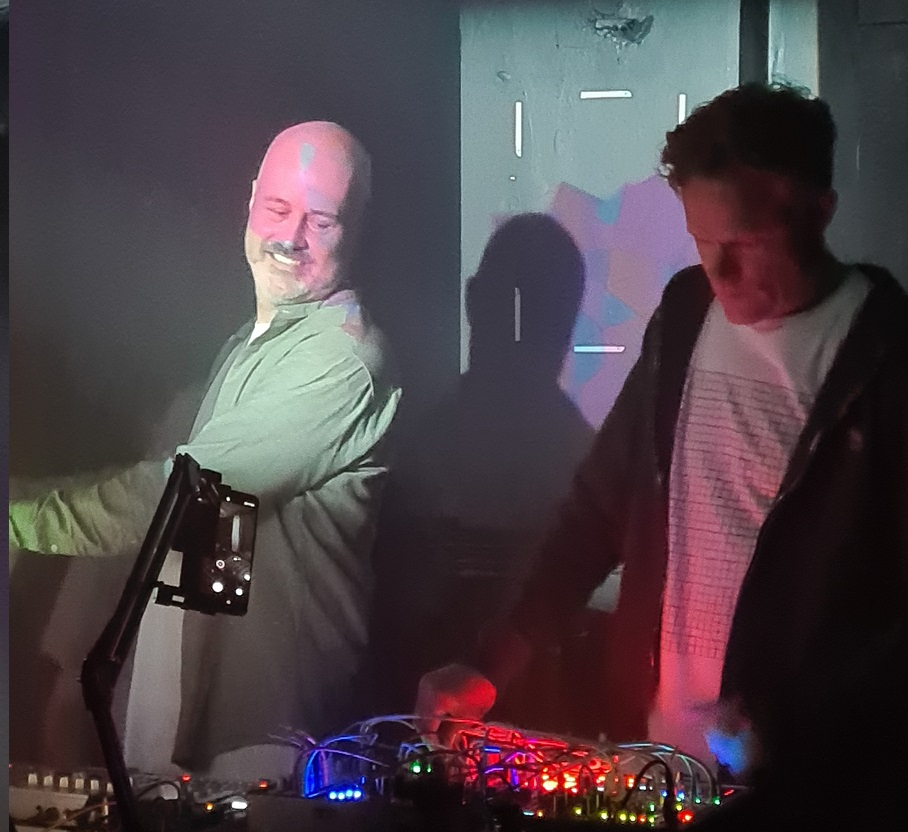
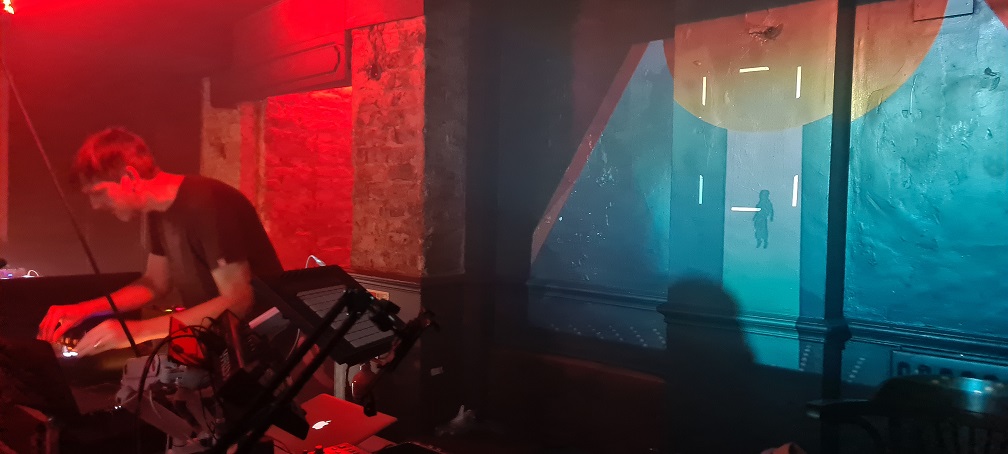
If atmospheric electronic music is your thing, the VLSI label have it in abundance – as they demonstrated in the dark recesses of the newly refurbished space downstairs in The Marquis on Dalston High Street.

The label is run by Dom Hoare and Andy Gillham, who together are Echaskech. They positioned themselves mid-evening in a packed schedule, giving a superb set of concrete-heavy beats, fulsome bass and impressive widescreen vistas, creating urban panoramas under moody skies. The music of the duo (below) has aged with impressive surety since their arrival nearly 20 years ago, complementing their descriptive music with sharply voiced keyboards and some intricate and brilliantly realised rhythm tracks.

BUNKR – Brighton’s James Dean – is an excellent addition to the VLSI roster, and his headline set was notable for its creators energy and passion at the controls. As with Echaskech, he makes descriptive music of real substance, and if anything his viewpoint has a wider perspective. He does this through spacey keyboards and sonorous melodic lines, while the beats were reassuringly solid once again. Dean’s live tweaking served up a treat to remind us how good his two albums for the label – The Initiation Well and Graveyard Orbit – really are. The evening at the Marquis was ideally paced, punctuated by involving and stimulating DJ sets from just b & Rossscco, alternating deep breakdowns with bigger, rolling beats.

This was an invigorating night, punters wreathed in smiles as they enjoyed the darkly tinged music and celebrated the creativity of a label that deserves to go a long way. Make sure you have a listen to their latest offerings below – including music from Octavcat, who also made a strong impression at the night but unfortunately Arcana was not on hand to tell you how much!

Summer heat – Josef Suk’s A Summer’s Tale

by Ben Hogwood

As you will no doubt be aware, this week has seen record breaking temperatures in the UK, which has inspired something of a hot weather classical music sequence.

After works from Debussy and the Danish composer Poul Ruders, I have been reminded of this substantial orchestral piece A Summer’s Tale, by the Czech composer Josef Suk.

Suk, the son-in-law of Antonin Dvořák, has been given greater appreciation in the last few decades for an orchestral output notable for its descriptive and emotional powers. Perhaps his best known work is the tragic symphony Asrael, mourning the loss of both his wife and father-in-law. Operating on a very large scale (lasting 70 minutes in most performances) it is an incredibly powerful work of Mahlerian dimensions. A Summer’s Tale is the work that builds on the hope offered by the end of Asrael, becoming a positive celebration of our sunniest season.

Certainly the first movement, Voices of life and consolation, becomes a heady exultation with full orchestra, a true celebration of nature. The small scale third movement, Blind Musicians, is an account of the composer’s encounter with a small-scale band, playing repetitive folk music – and he sets it for smaller orchestral forces here. Meanwhile the fourth movement, In the Power of Phantoms, is a joyous and almost riotous affirmation. For the fifth movement, Night, Suk employs a sultry nocturne, the music finding rest from the sun but also exploring the richness of the lower strings in a surging chorale episode.

You cab listen to A Summer’s Tale below in a particularly fine version from the Czech Philharmonic Orchestra conducted by Sir Charles Mackerras:

Summer heat – Poul Ruders’ Solar Trilogy

by Ben Hogwood

After yesterday’s languid summer overtones made by Debussy, I have opted for a very different portrayal of heat in today’s selection. The Danish composer Poul Ruders wrote his celebrated Solar Trilogy between 1992 and 1995, describing in it the life and behaviour of the Sun.

This time we get an immediate sense of the overwhelming heat generated by our nearest star from the off. It is fascinating to compare Ruders’ writing with that of Holst in The Planets. Here Ruders portrays the sheer solar energy at work, using all corners of the orchestra to create some truly vast sounds. This is modern music that responds really well to repeated listening, and could easily be used as part of a film or game soundtrack.

The trilogy begins with a stunning stroke in the form of Gong, a piece that seethes with activity and rhythmic drive, before moving onto the central Zenith, whose atmosphere grows very gradually but with considerable tension.

Finally Corona describes an eclipse of the sun, with a ‘sizzling’ start, to quote the composer, before running off at a terrific pace. With an insistent drive it radiates outwards, the orchestra effectively a supergiant star.

Danish composer Ruders continues to write a great deal of music with orchestra, and his work is incredibly descriptive and rewarding. To find out more and to hear more of his music, visit his website here – while at the bottom of this page you will find a dedicated Spotify playlist including the Solar Trilogy and the most recent recording of Ruders’ music, with Mahan Esfahani in the recent Harpsichord Concerto. In contrast, the orchestral piece Nightshade of 1986 completes the selection: