In Concert – Alina Ibragimova & Cédric Tiberghien @ Wigmore Hall: Janáček, Enescu, Barry & Beethoven

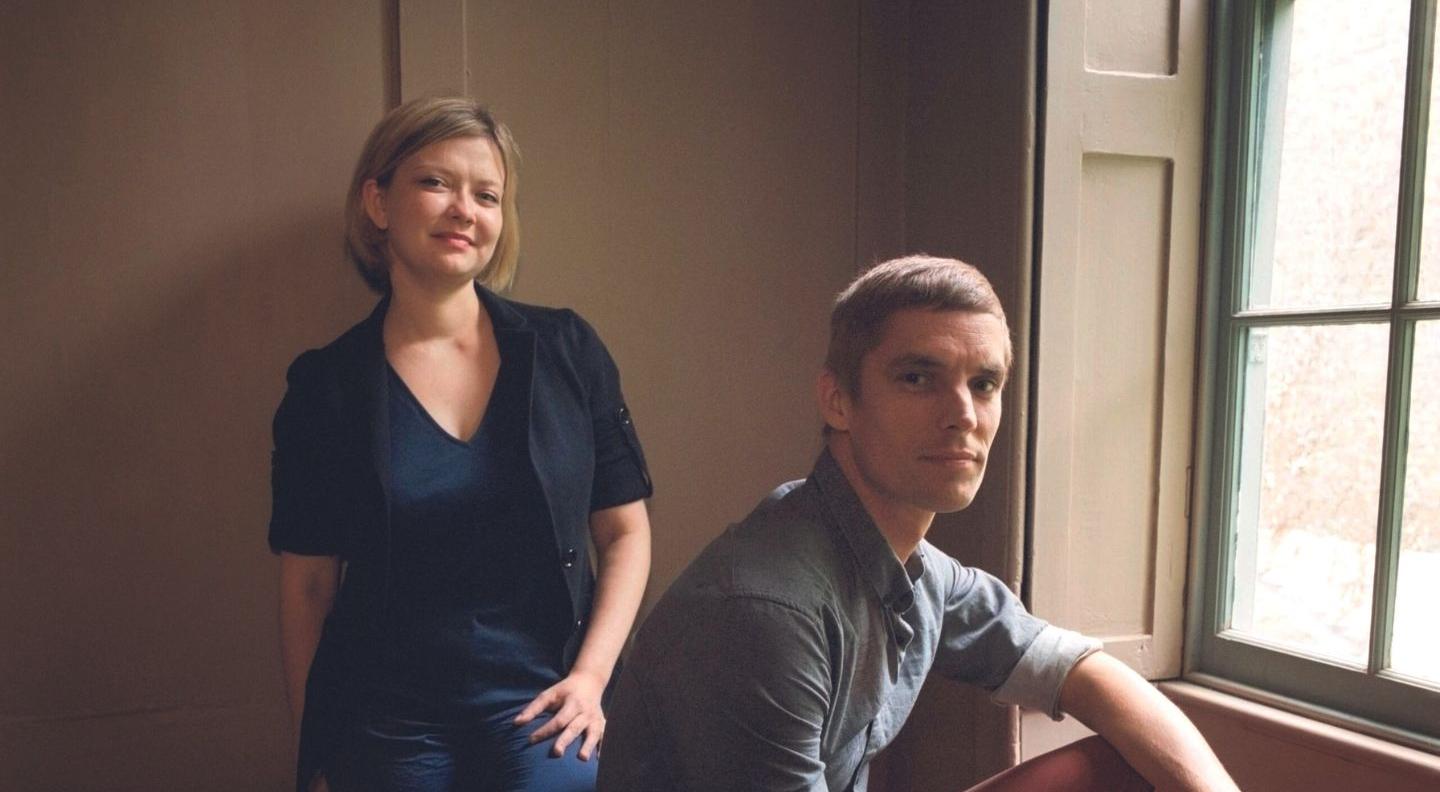
Alina Ibragimova (violin), Cédric Tiberghien (piano)

Janáček Violin Sonata in G sharp minor JW VII/7 (1913-15, rev. 1916-22)
Enescu Violin Sonata no.3 in A minor Op.25 ‘Dans le caractère populaire roumain’ (1926)
Barry Triorchic Blues (1990, rev. 1992)
Beethoven Violin Sonata no.9 in A major Op.47 ‘Kreutzer’ (1802-03)

Wigmore Hall, London
Saturday 28 September 2024

Reviewed by Richard Whitehouse

The duo of Alina Ibragimova and Cédric Tiberghien has offered some memorable recitals at Wigmore Hall during the past few seasons, with this evening’s typically diverse programme ranging over almost two centuries of compositions for the combination of violin and piano.

A first half of complementary opposites began with the Violin Sonata by Janáček. Ensuring cohesion across its four highly contrasted movements is no easy task, but the present artists succeeded admirably in this respect. Thus, the opening Con moto had an edgy ambivalence which was allayed in the Ballada – its relative repose and expressive warmth infused with a nostalgia as likely reflects the composer’s youth (and may indeed derive from one of those long-lost sonatas written while studying in Leipzig and Vienna 35 years earlier). Despite its marking, the Allegretto is a tensile scherzo whose frequently combative interplay was much in evidence here; the final Adagio then pivoting between stark plangency and a heightened eloquence which subsided into an ending whose muted regret was unmistakably to the fore.

Whatever the conceptual or aesthetic gulf between them, Enescu’s Third Sonata followed on with some inevitability. This was inspired by and recreates without quoting traditional music, as its subtitle duly indicates, and Ibragimova was alive to the musing inwardness of an initial Moderato whose ‘malinconico’ consistently undercuts any formal or expressive resolution up to a close where the songful and dance-like themes disperse into silence. The highlight was a central Andante of sustained though unforced intensity, its improvisatory aspect a stern test of coordination violinist and pianist met head-on. Almost as compelling, the final Allegro lacked a degree of inevitability in its unfolding – Tiberghien’s superbly articulated pianism less than implacable at the close, for all that Ibragimova conveyed its ominous ecstasy in full measure.

Beginning life as a test-piece for solo piano and adapted for numerous media, Triorchic Blues is Gerald Barry at his most uninhibited and would have made an ideal encore in this context – but its ever more scintillating opposition of instruments was not out of place after the interval.

This second half ended with the grandest of Beethoven’s violin sonatas, its ‘Kreutzer’ subtitle misleading yet indicative of this music’s inherent virtuosity. Ibragimova and Tiberghien made an impressive cycle of these works for the Wigmore’s own label, so it was surprising to find them at slightly below their best here. Not in the central Andante con variazioni, its judicious fusion of slow movement and scherzo rendered with unfailing poise and an acute sense of the profundity drawn out of so unassuming a theme. Yet, after its suitably arresting introduction, the first movement lacked drama – the duo playing down its rhetoric not least in a less than impulsive coda. The relentless tarantella-rhythm that underpins the finale felt similarly reined in with, again, too little of an emotional frisson as this music vividly reinforces the home-key.

What was never in doubt was their quality of playing individually and collectively, making one anticipate future recitals by these artists which will hopefully find them exploring more of that extraordinary corpus of music for violin and piano of the early and mid-20th century.

For more on the Autumn season visit the Wigmore Hall website. For more on the artists, click on the names Alina Ibragimova (violin), Cédric Tiberghien (piano), and click here for more on composer Gerald Barry

Published post no.2,316 – Sunday 22 September 2024

In concert – BBC Symphony Orchestra / Sakari Oramo: Mahler Symphony no.6

BBC Symphony Orchestra / Sakari Oramo (above)

Mahler Symphony no.6 in A minor (1903-04)

Barbican Hall, London
Thursday 26 September 2024

Having just extended his contract with the BBC Symphony Orchestra until 2030, which at 17 years will make him its longest serving chief conductor after Sir Adrian Boult, Sakari Oramo began the new season with this frequently impressive account of Mahler’s Sixth Symphony.

Impressive but equally unpredictable – not least in an opening movement whose tensility and even terseness was emphasized by mostly swift tempos and the nowadays rare omission of its exposition repeat, which predicated martial aggressiveness over any more yielding expression. There was no lack of deftness in the central interlude, for all that the off-stage cowbells were distinctly unevocative in their tinkling, yet the developmental passages either side exuded an unwavering purposefulness so that the arrival of the reprise more than usually made its mark. Stealthily launched, the coda duly emerged rather than burst forth though this was audibly in accord with the ambivalence of its affirmation as Oramo perceived it. Those closing bars had no lack of finality, for all that there was more of ruthlessness than joyousness in their arrival.

Speaking recently, Oramo stated his conviction in the revised order of the central movements with the Scherzo placed second. He might profitably have headed into this without pause, as to underline the consistency of rhythmic profile with what went before, but there was no hint of inflexibility here or in the trio sections which effortlessly elided between the winsome and sardonic. Equally in evidence was that fatalistic sense pervading the music as it unfolds, and so made possible a coda whose evanescent poise could not conceal more ominous portents.

From this vantage, the Andante provided if not balm to the soul, then a measure of unforced pathos. Enticingly rendered with some notably felicitous playing by the BBCSO woodwind, it was shaped by Oramo with unerring rightness through to a climax whose emotional force was the greater for its being held in check. Surprising that this movement has never attained the popularity of the Adagietto from the Fifth Symphony: then again, its salient qualities are conveyed even more completely when experienced within the context of the work as a whole.

By a similar token, it arguably matters less in what order the middle movements are played if the finale proves a culmination in all respects. That it certainly was here – Oramo imbuing its lengthy introduction with acute expectancy balanced by the visceral impact of what followed. Nor did tension fall off in those quiet but eventful interludes, strategically placed between the larger formal sections, and in which cowbells are overlaid by tubular bells for what became a haze of resonance as affecting as any more demonstrative expression elsewhere. Oramo also restored that third hammer-blow which does not so much alter the course of this movement, as confirm its resignation before fate in even more graphic terms. Nothing could have sounded more matter of fact than the baleful rumination of brass prior to that explosive closing gesture. While not the most inclusive performance, this was undoubtedly one to renew admiration in the audacity of Mahler’s conception or his conviction in bringing it off. It also gave notice of continued rapport between Oramo and the BBCSO as they begin their 12th season together.

For more on their 2024/25 season head to the BBC Symphony Orchestra website – and click here to read more on their chief conductor Sakari Oramo

Published post no.2,315 – Saturday 28 September 2024

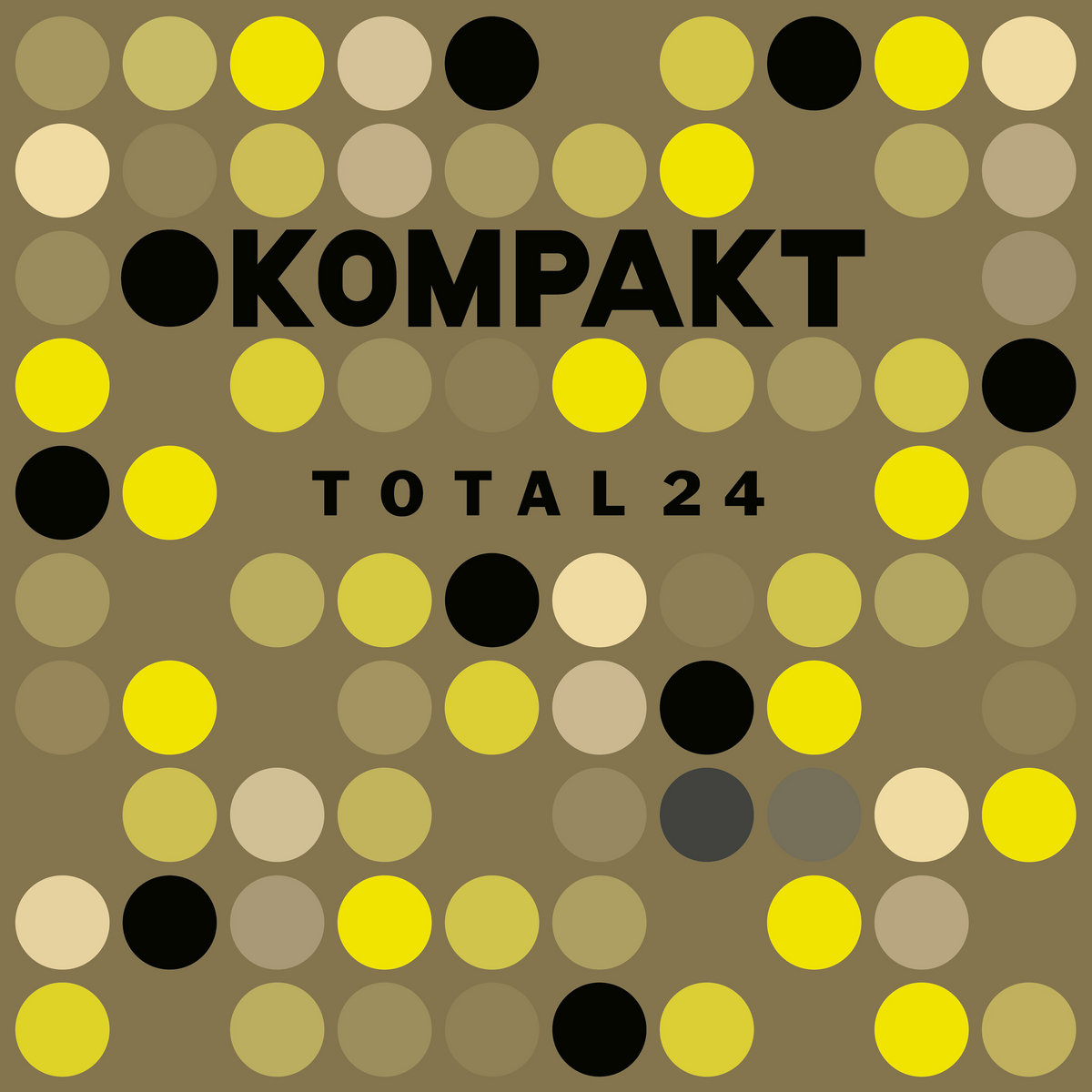
Switched On – Various Artists: Total Kompakt 24 (Kompakt)

by Ben Hogwood

What’s the story?

Kompakt’s annual compilations are a very reassuring presence in the world of electronic music, and this one is no different, as Michael Meyer assembles a typically inventive and varied set of tracks.

What’s the music like?

With the quality threshold high, Kompakt always find something to tickle the fancy of any electronic fan. The familiar names from the label are here again and deliver the goods – headed by Meyer’s own excellent Urian.

Tee Mango’s So In Love is an English signing, delicate minimal beats orbiting a warm-hearted song. Jürgen Paape introduces a lightness of touch and humour to Chee-Caruso that works really well, while on a slightly tougher course Rex The Dog contributes a distinctive hook to his nocturnal Laika.

Sascha Funke is pretty delicate, with some interesting offbeat play on The Heck, but Jörg Burger’s Legacy of Ashes is a bit too monotoned to hit the spot. By contrast Wassermann’s Die Goldene Zeit is a warm wash of colour over a serrated bass.

Does it all work?

It does, pretty much – reliably good music from a reliable source. Digital customers get the bonus of another seven tracks, which include Deer Jade’s easygoing, piano-led winner Jukurpa and the strident The Shell, a collaboration between Gui Boratto and Darren Emerson. Meanwhile electro-goodness is found from Raxon’s Your Fault.

Is it recommended?

It is, enthusiastically. Keeping up with Kompakt’s output is strongly advised, and as this compilation shows they are still on very good form!

Listen & Buy

Published post no.2,314 – Friday 27 September 2024

In Concert – PRS Presents – Classical Edition: Manchester Collective @ LSO St Luke’s

Manchester Collective [names not given in the programme but assumed to be Rakhi Singh (violin, director), Jonathan Martindale (violin), Alex Mitchell (viola), Christian Elliott (cello)]

Mason Muttos from Sardinian Songbook
Finnis String Quartet no.2
Wallen Five Postcards
Campbell 3AM
Mason Eki Attar from Tuvan Songbook
Tabakova Insight
Hamilton In Beautiful May
Glass String Quartet no.4 ‘Buczak’ (2nd movement)
Meredith Tuggemo

Wigmore Hall, London
Wednesday 25 September 2024

Reviewed by Ben Hogwood

This inspiring concert, the first in a series presented by the enterprising team at the Performing Rights Society (PRS), revealed the innovation afoot even in the most traditional classical music forms. The string quartet has been an established medium for close on 300 years, but the four players assembled by the Manchester Collective showed where future possibilities lie.

Christian Mason’s work reproduces throat singing for the medium, often with vocal contributions from the players themselves – and the Collective’s performances of Muttos and Eki Attar were gripping and rhythmically vital.

Grabbing the attention in a very different way were quieter works by Edmund Finnis and Jocelyn Campbell. The former’s String Quartet no.2 inhabited the rarefied atmosphere that Finnis seems able to conjure at will, with interlocking phrases and melodies given an unexpectedly tender accent. The Manchester Collective played with beautiful sonority, enhanced by microphones – which in the case of Jocelyn Campbell’s 3AM was an asset, portraying the streets of London in the hour of the day where they are at their most deserted. The slights of hand, the nocturnal rustlings, the shadows we couldn’t quite make out – all were beautifully rendered and sculpted by a composer whose painting in sound is uncommonly vivid.

This was before the elephant in the room – Andrew Hamilton’s In Beautiful May – was dealt with. A piece for solo violin and electronics, it was delivered with great virtuosity by Rakhi Singh, who warned us ahead of the performance that it would be a ‘marmite’ piece. She was absolutely right, playing music that was definitely not for everyone’s enjoyment – and certainly not this reviewer. Hamilton’s collage of jarring violin phrases and pop song snippets meant we jumped between Singh and snatches of Shalamar’s I Can Make You Feel Good, Take That’s Back For Good and Will Young’s Evergreen. The short attention span of the music was infuriating, its cut and paste approach chopping the music into small bits and spitting it against an unforgiving wall. Yet personal feelings should be qualified, as Hamilton’s piece got one of the strongest reactions of the night!

Perhaps surprisingly the second movement from Philip Glass’s String Quartet no.4, Buczak, provided some much-needed balm, with an elegance not normally associated with the American composer. The Manchester Collective gave a beautiful legato performance allowing time for reflection.

Meanwhile Dobrinka Tabakova’s Insight made a strong impression, its folk melodies and rhythms winningly played and melded into an extremely convincing whole, offering further proof of the Bulgarian composer’s assured and compelling writing for strings in particular.

Errollyn Wallen’s Five Postcards, for violin and viola, were given a brilliant performance by Singh and Alex Mitchell. These were a lot of fun, ranging from bluesy musical chats to intimate asides, and a reminder that the combination of violin and viola – used so effectively by Mozart but surprisingly few composers since – is well worth revisiting.

Finishing the concert was Tuggemo by Anna Meredith, using the old English word for a swarm of birds or flies. It made for a suitably hedonistic note on which to finish the concert, with its driving four to the floor beat and jagged quartet riffing. While meant to be loud, the beat swamped the quartet on this occasion, its ultimate destination the middle of a dancefloor before the piece broke off and left us hanging.

This was, however, another example of Manchester Collective’s remarkable virtuosity and further evidence of their clever programming. Both elements combined to make this a memorable and highly stimulating concert.

Published post no.2,313 – 26 September 2024

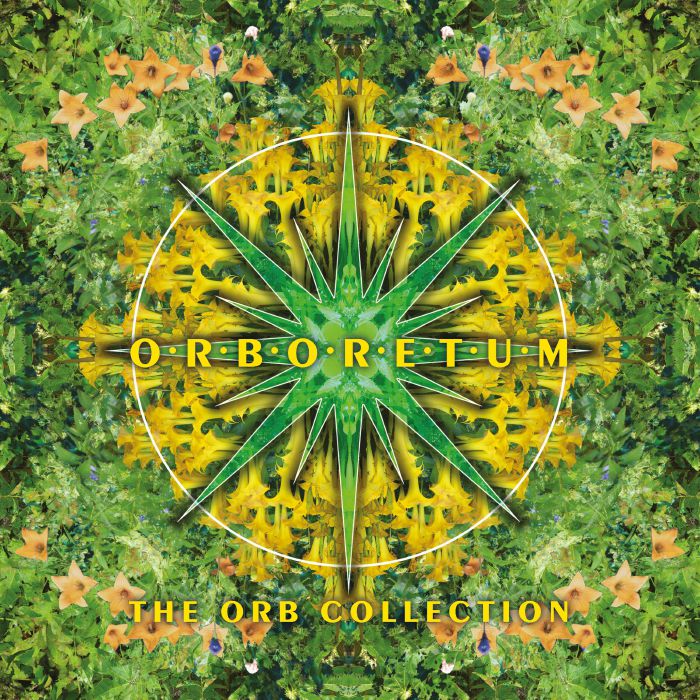
New music – Orboretum: The Orb Collection (Cooking Vinyl)

published by Ben Hogwood, with text appropriated from the press release

Flanked by a large colourful cast of ‘characters’ and an even bigger, persistently prolific output, despite adversity, after 30 years Alex Paterson continues to draw from his infinite well of creativity and drive. He’s constantly in the studio or on-stage as The Orb (and an ever-growing list of side projects too), and it’s especially for this reason that a new ‘Best-Of’ is apt.

Released 25th October via Cooking Vinyl, Orboretum: The Orb Collection is a career-spanning, 2CD & limited-edition quadruple vinyl octagonal set including new and rare mixes, compiled by Paterson himself. It goes way back, but also focusses on recent highlights from albums such as Abolition Of The Royal Familia (2020) and Prism (2023) – which were cited by the media as some of their greatest work – up there with the bonafide gold of yesteryear. “I don’t want The Orb to end up milking it like Roxy Music, who were always cranking out another best-of, although we did release the ‘History Of The Future’ best-of in 2013, and its part 2 in 2015 to be fair”, says Paterson. “We have such a gigantic catalogue though, that sometimes even I need a reminder of what I’ve done, especially these days. This is a sort of director’s cut, reframing our output, making new neuro pathways, and new juxtapositions. Some of these tracks are 30 years apart, but there are clear through lines, a continuum.”

Put simply; this is The Orb: Stop and pause to think about what that means to the culture. Alex is a living legend who’s travelled a clear path through one of the most important journeys of music in recent times; starting with punk, heavily influenced by Jamaican / Windrush generation UK dub and reggae, growing with acid house, inventing chill out, topping the charts, then becoming one of the first arena-sized live electronic acts. This national treasure deserves to be celebrated. With his boundless appetite for recording and collaboration, The Orb is happening right now, still new, still striving; not resting on past laurels or dining out on the Dad rave nostalgia circuit, instead seeing from the stage multi-generational crowds losing their minds, from fresh faced teenagers to war-torn rave fossils, and everyone in between.

Orboretum will be available on colour vinyl, in an octagonal 4LP set, with sleeve notes by Kris Needs. Each side of vinyl is pressed on a transparent colour green, lilac, orange and blue, grouped by Alex to represent the 4 seasons, hence its botanical title. The comp’s “roots and more recent shoots” traverses their work for Universal across discs A and B, whilst discs C and D explore their music for indie labels Cooking Vinyl, Kompakt, Malicious Damage, and Liquid Sound Design. In addition, Orboretum will also be available on 2CD and digitally.

You can pre-order Orboretum from The Orb’s official site

Published post no.2,311 – 25 September 2024