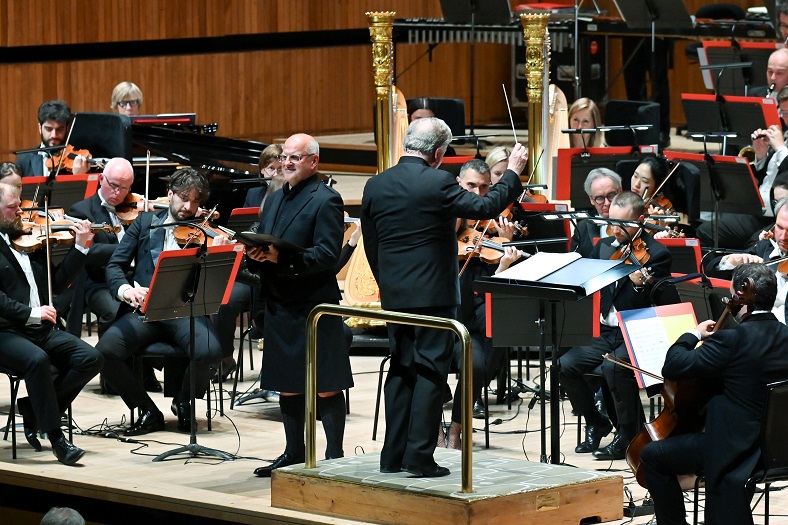
Talking Heads: Steven Isserlis

The cellist talks to The cellist talks to Ben Hogwood about his Wigmore Hall residency, celebrating the music of Fauré, and his new Boccherini album Music of the Angels.

For cellist Steven Isserlis, November 2024 is all about two composers. From the first day of the month he is taking up residence at London’s Wigmore Hall for a five-day exploration of the late chamber music of Gabriel Fauré, who died on 4 November 1924. He has given a valuable insight into his thoughts on the composer in an article just published for the Guardian newspaper, but was generous to spend some time answering specific questions about Fauré’s late music for Arcana.


Arcana: The Wigmore Hall concerts put Fauré (above) in context with his contemporaries
– how did you plan them? It’s especially good to see the music of Nadia
Boulanger, Saint-Saëns and Koechlin included.

Steven: Well, first came the idea of doing the complete (major) chamber music of Fauré for the centenary; then everything else had to be worked out around that. It took some time for the programmes to fall into place – and then I was amazed that the Wigmore said yes to all five of them!

How does Fauré’s writing for the cello develop through his works?

I don’t think of his cello writing as such developing – it’s more the musical content. His first work for cello was the Élégie, which is of course wonderful; but if you compare it to the most similar subsequent piece of his, the slow movement of the second sonata, you see how much more profound his music has become. Which is not to put down the Élégie – any more than saying that Beethoven’s last piano sonata in C minor, op 111, is on a higher level than the Pathétique sonata op 13, also in C minor, is a criticism of the Pathétique.

What are the challenges and ‘do nots’ of performing his music in an ensemble such as a piano quartet or quintet?

We just have to agree on our approach – but we do! I call our team – Joshua Bell, Irène Duval, Blythe Teh Engstroem, myself, Jeremy Denk, Connie Shih – Team Fauré. We’re all in love with his music!

Fauré’s late period has some similarities with that of Brahms. Would you say there is anything in common between their approach, late in life?

I suppose, in that there is a ‘new simplicity’; but I think there’s much more in common between late Fauré and late Beethoven. And not just because both men were profoundly deaf!

There is something very special about Fauré’s melodic writing, and the chromatic harmonies he uses. It must be a joy to play!

It is! So long as one understands the chromatic harmonies – one has to be absolutely sensitive to each change of tonal colour.

Would you say Fauré is a composer where repeated listening brings ever
greater rewards?

Well – yes, of course; but I’d say that of any great composer! But perhaps with Fauré’s late works in particular, familiarity with the style is especially helpful.


The other composer occupying Steven’s uppermost thoughts in the next month is Luigi Boccherini, with Hyperion releasing Music of the Angels, a generous anthology of the composer’s works for cello with members of the Orchestra of the Age of Enlightenment and harpsichordist Maggie Cole. The album explores the very different forms of Cello Concerto, Cello Sonata and String Quintet – where the composer adds an extra cello to the traditional string quartet line-up. Boccherini is a lesser-known light from the 18th century, and his cause has been close to Steven’s heart right through his recording career.

It’s great to see your Boccherini album. Was it most important for you to present the different types of work – concerto, quintet, sonata – in context?

Thank you! Again, the programme just worked out that way; but yes, I was happy to show different facets of Boccherini’s unique world.

You’ve been playing and recording the music of Boccherini for a good while – what was it that first attracted you to his music?

Well, my teacher Jane Cowan was a great Boccherini fan, which I’m sure influenced me. (She was also a great Fauré fan!) But I’ve always loved his elegance, the otherworldly beauty of his music, his gentle, kind musical soul.

At a guess, I think it might have been the Orchestra of the Age of Enlightenment’s first exposure to Boccherini. Did they enjoy it as much as you?

I think they MIGHT have done some of the symphonies; but I’m not sure. They were certainly lovely to work with – committed, enthusiastic and supportive.

You talk in your notes about the virtuosity Boccherini requires from his soloist – he must have been quite a player. Is it quite intimidating using such a high register of the cello to start with?

Yes! He’s among the most demanding composers for cello, because there’s nowhere one can hide. One can’t just add mounds of vibrato to mask the intonation, for instance. And one has to be able to shape the delicate curves of the music in a way that is naturally graceful; a challenge indeed.

Would you say his music is an ideal ‘next step’ for lovers of Haydn and Mozart?

I think that he’s very different from either Mozart or Haydn – roughly contemporaneous, yes, but another personality entirely. In a way, I think he’s more analogous to Domenico Scarlatti – not because they’re that similar, but because they were both Italians who spent much of their lives in Spain where, relatively cut off from the centre of European musical life, they created their entirely individual compositional worlds.

How does Boccherini’s cello writing contrast with that of Haydn?

Very different! Both can make the cello sing, true; but Haydn uses virtuosity for purposes of excitement, whereas Boccherini uses it much more subtly – usually for lightness and delicacy, frequently evoking birdsong.

With your Boccherini album set for release, are you inclined to record the Fauré trio, quartets and quintets?

Actually, yes; we were originally set to record straight after the festival; but we decided that that would be just too much. So nowthe plan is to record at least the late chamber works (which is the Fauré most in need of advocacy, I feel) next summer in the US. We hope…”

You can book the last remaining tickets for Steven Isserlis and friends’ Fauré residency at the Wigmore Hall website, and explore purchase options for the new Boccherini album Music of the Angels at the Hyperion website. The Wigmore Hall are streaming the Fauré concerts live from their YouTube site

Published post no.2,344 – Sunday 27 October 2024

On Record – Hayden Thorpe – Ness (Domino)

by Ben Hogwood

What’s the story?

For his third solo album, Hayden Thorpe has relocated. Until now the former Wild Beasts singer has been closely linked with his home town of Kendal, but, having fallen under the spell of Robert Macfarlane’s book Ness, he felt compelled to write an album about it.

Ness is effectively a portrait of Orford Ness, just down the Suffolk coast from Aldeburgh. A deeply mysterious place, it is a shingle spit used by the Ministry of Defence for weapons development during both World Wars and the Cold War. As the work died out so the place has returned to the wild, and was acquired by the National Trust to aid that very purpose.

It remains a deeply mysterious place, and Macfarlane’s book, aided by the illustrations of Stanley Donwood, brought it to eerie life in print form. Thorpe aims to do the same in music, using a process of redaction to bring Macfarlane’s text to life.

What’s the music like?

In a word, striking.

Thorpe’s voice continues to be the main instrument in his music, a versatile tenor capable of a full-bodied falsetto but also with a soft lower range. Yet here it is joined by an imaginative body of instruments led by Jack McNeill’s clarinet, with which the voice often dovetails, and beautiful choral arrangements from Kerry Andrew. Added to these are instruments fashioned from Orford Ness itself, including the ominous sound of an orchestral bass drum, whose tread brings dread to The Green Chapel.

Robert Macfarlane’s words are gripping. “Listen. Listen now. Listen to Ness!”, goes the text at the start of They, one of several gender-themed songs at the album’s heart, along with She and He. All three are perfectly suited to Thorpe’s voice, which effectively removes the separation between the human and natural worlds, while channelling the half light so effectively found by bands such as Talk Talk.

Does it all work?

It does – and rewards greater time spent with the music, as every contour of the area is brought to life.

Is it recommended?

It is. Hayden Thorpe’s portrait of Ness is a fascinating and compelling experience, one to hear in the context of Benjamin Britten’s music that profiles Aldeburgh in such a vivid way. Thorpe brings every fascinating and ghastly element of Ness to the table, in music of great presence and character.

For fans of… Talk Talk, Brian Eno, Erland Cooper, Benjamin Britten

Listen and Buy

Published post no.2,343 – Saturday 26 October 2024

Switched On – Minotaur Shock: It All Levels Out (Bytes)

by Ben Hogwood

What’s the story?

It All Levels Out is described as ‘a hopeful meditation on getting older’ by its composer, David Edwards. This is Edwards’ tenth album under the Minotaur Shock pseudonym, and by common consensus is his most personal and reflective album to date.

Influences on his compositional approach this time around are quoted to be Hiroshi Yoshimura, Steve Reich, West Mineral Limited, Visible Cloaks and Bark Psychosis.

Edwards describes his music as an acceptance of finally knowing yourself, an approach of equal parts ambience and confidence.

What’s the music like?

This is music where the mind can immediately kick back – though it still rewards close-up listening. Edwards works with a refreshing palette of textures and colours, using quite minimal riffs to power his music but giving them room to grow as the tracks evolve.

Because of that it’s easy to equate his music with living, growing plants – which the title track embodies, with the way it expands gradually from soft, primitive beginnings. The ambling piano is like an easily moving stream.

As the album progresses we get more of Edwards’ subtly voiced creativity, from the melodic ideas that take root on Memory Crates, which is more bleeps and dots, to the brightly lit activity on Moral Progress.

Recognise You Anywhere takes time out, Edwards evoking dappled light through colourings that certainly sound more Japanese in origin, especially when they grow in stature. Molding Physical Air enjoys a similar profile, while Launching The Kids carries greater weight. The closing With Me is initially darker but ultimately wistful.

Does it all work?

It does. Edwards is a subtle companion, shading each piece of music rather beautifully with layers of carefully chosen instrumental colour. When you stand back, you can appreciate the whole as well as the construction.

Is it recommended?

It is, enthusiastically. It’s great to have Minotaur Shock back, and the pastoral overtones of this album are beautifully weighted and suited for this time of year, extending their tendrils into the northern hemisphere autumn.

For fans of… Bibio, Boards of Canada, Baths, Grasscut

Listen & Buy

Published post no.2,342 – Friday 25 October 2024

Let’s Dance – Agoria: Unshadow (Sapiens)

by Ben Hogwood

What’s the story?

Agoria – aka Sébastien Devaud – is in the best possible position to bring us up to date on his sixth album, taking up the theme on his Bandcamp site:

“As a musician and producer, after five albums, I clearly know that my proposition will always be about diversity more than a single crafted sound. This is how I am: multifaceted, nourished by social human exchanges and my encounters in science, art, and technology. I have one life and different bodies. I can be physical and digital, technological and organic, house, techno, and soul. This album is about shedding light in a vertical period where the fight for truth and visibility becomes crucial, where Blockchain might become our right to vote. It’s about making complex things sound simpler, joining the dots. A proposition more than a promise: Unshadow.”

What’s the music like?

As varied as Agoria’s introduction implies, and in the main really well executed.

Agoria oversees a wide range of music, from the moody Heart To Heart, with STS and Sacha Rudy, to the twisty disco house that makes Getaway such a good track, in the company of Madison McFerrin. Olympe is a really good piano led number, with NDRK and Yacine Dessouki on board, while I Feel Good is even better, a hard hitter for the middle of the dance floor.

Atmospheric reaches are explored with Quiero and the dreamy Sunshine, with Dominique Fils-Aimé, and the only track that feels slightly out of place is the closing cover of Sheila B. Devotion‘s Spacer, which is effective in its own way but draws too much attention towards the original.

Does it all work?

Largely – and with no padding, Agoria’s structure for the album is pretty much ideal.

Is it recommended?

It is. Agoria writes music with plenty of hooks that is easy to dance to – and also demands repeated listening. Very nicely done!

For fans of… Cassius, Etienne de Crecy, Dimitri From Paris, Purple Disco Machine

Listen & Buy

Published post no.2,341 – Thursday 24 October 2024

Switched On – Alessandro Cortini: NATI INFINITI (Mute)

by Ben Hogwood

What’s the story?

Nine Inch NailsAlessandro Cortini has established himself as a solo musician and producer of some repute over the years, working alone on impressive electronic scores sich as 2021’s Scuro Chiaro or teaming up with Daniel Avery on 2020’s hugely impressive Illusion Of Time. His list of collaborations and remixes carries some weight, too, either under his own name or the pseudonyms of SONOIO, Blindoldfreak and Modwheelmood.

NATI INFINITI began life as an audio installation for the Museu de Lisboa’s Fábrica da Moagem, running across all four floors of the disused flour mill. To prepare it for this release, it was mixed and mastered by Marta Salogni, and structured into five movements.

Mute’s press release gives all the required detail. “The release utilises the Strega instrument that Cortini co-designed with Make Noise, capturing the ambience of the original piece – commissioned by Sónar Lisboa 2022 – where each of the four floors of the cavernous mill evoked a different state through Cortini’s sound design. Constantly unfolding as the listener travelled through the building, it harnesses the movement of the piece, highlighting the interconnectedness of all things.”

What’s the music like?

Cortini writes with a broad brush, the five tracks stretching over 40 minutes with slow, incremental changes in each.

At least, that’s how it appears on first listen – but further listening reveals more going on just beneath the surface.

The five scenes / movements are brooding, with II especially moody as the musical drones make an approach, gathering white noise, then retreating a little before returning. Here Cortini’s use of quarter tones gives the music a threatening edge, while on III there is a generation of more kinetic energy as the treble pitch wavers while progressing. IV takes on the spirit of an organ, as does V with its really sonorous bass notes – with close listening revealing all sorts of subtle crossrhythms at play as the wave forms bounce off each other.

Does it all work?

It does – and is most effective if all five movements are experienced without a break, in one sitting.

Is it recommended?

Yes. This is a very immersive piece of music, often calming but never retreating to the background, as Cortini gives his voice real stature and presence.

Listen & Buy

Published post no.2,340 – Wednesday 23 October 2024