Arcana at the Proms – Prom 35: BBC Scottish Symphony Orchestra / Ilan Volkov – Ellington, Braxton and Mary Lou Williams

Ellington orch. Gould Solitude (1934), Mood Indigo (1930), Sophisticated Lady (1932), Caravan (1936)
Mary Lou Williams Zodiac Suite (1944-6) [UK premiere]
Braxton Composition no.27 (+ nos. 46, 59, 63, 146, 147, 151 & Language Music) (1972-91) [Proms premiere]

Mikaela Bennett (soprano), Aaron Diehl (piano), James Fei (saxophone/conductor), Gregory Hutchinson (drum kit), Ingrid Laubrock (saxophones), Brandon Lee (trumpet), Chris Lewis (clarinet/saxophone), David Wong (double bass), Katherine Young (bassoon/conductor), BBC Scottish Symphony Orchestra / Ilan Volkov

Royal Albert Hall, London
Thursday 15 August 2024

reviewed by Richard Whitehouse Photos (c) Sisi Burn

Never a conductor to take the path of least resistance, Ilan Volkov centred his latest Prom with the BBC Scottish Symphony Orchestra (whose Creative Partner he remains) around jazz – not that there was anything orthodox about the repertoire or the follow-through in what was heard.

The four Duke Ellington numbers heard tonight became standards in the Depression era, their pioneering spirit stylishly offset in orchestrations by Morton Gould (the first three on 1957’s Blues in the Night and the fourth on 1956’s Jungle Drums). Solitude ranks among Ellington’s most affecting tunes, while his sultry Mood Indigo proved an inspired co-write with Barney Bigard. The present arrangement fully enhanced the teasing elegance of Sophisticated Lady, before the expressive impetus of the Juan Tizol co-write Caravan left its evocative imprint.
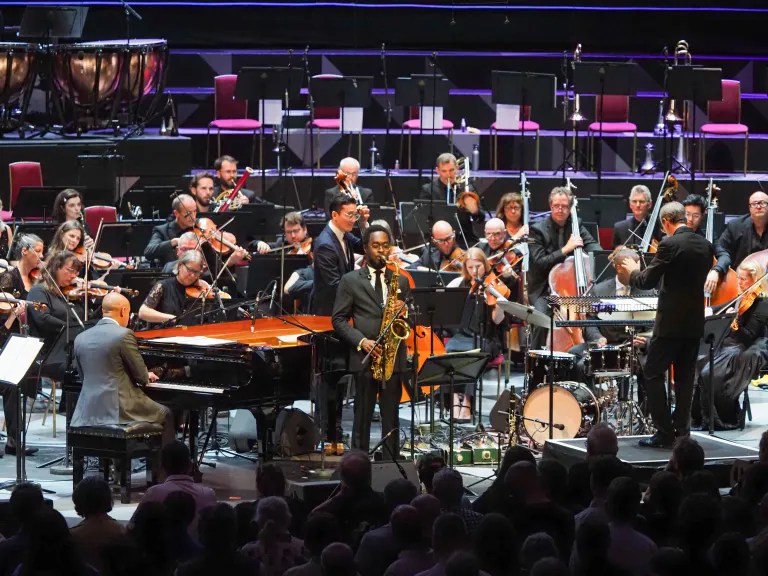
Pianist and arranger for artists from Ellington to Cecil Taylor, Mary Lou Williams’ music only posthumously came to the fore. She wrote nothing more ambitious than Zodiac Suite – a series of 12 tributes to musicians born under various star signs, as went through several incarnations at the end of the Second World War and remains a trailblazer for symphonic jazz. As realized here, each item left room for contributions by the assembled jazz or orchestral musicians: thus the incisiveness of Brandon Lee’s trumpet or mellifluousness of Chris Lewis’ clarinet and alto sax, besides stealthy interplay by the Aaron Diehn Trio (above) or a soulful violin solo by guest-leader Kate Suthers. The sequence concluded with Pisces and an agile vocal (lyrics not printed) by Mikaela Bennett – its manner (surprisingly?) redolent of mid-20th century American art-song.

From here to Anthony Braxton proved a fair conceptual leap, but a meaningful one within this context. One, moreover, for which Volkov has prepared painstakingly across almost a decade – working with several of Braxton’s longer-term collaborators (notably George Lewis), while performing several Braxton compositions duly rendered as the superimposed totality he openly encourages. What resulted was Composition No. 27 as a framework for this performance, into which elements from six later ‘Compositions’ were integrated – this whole entity underpinned by recourse to Language Music, collating 12 musical parameters in what is the codification of Braxton’s practice over six decades. The creative aspect arises at a point when the fullest extent of compositional systematization links with the furthest extent of improvisational spontaneity.
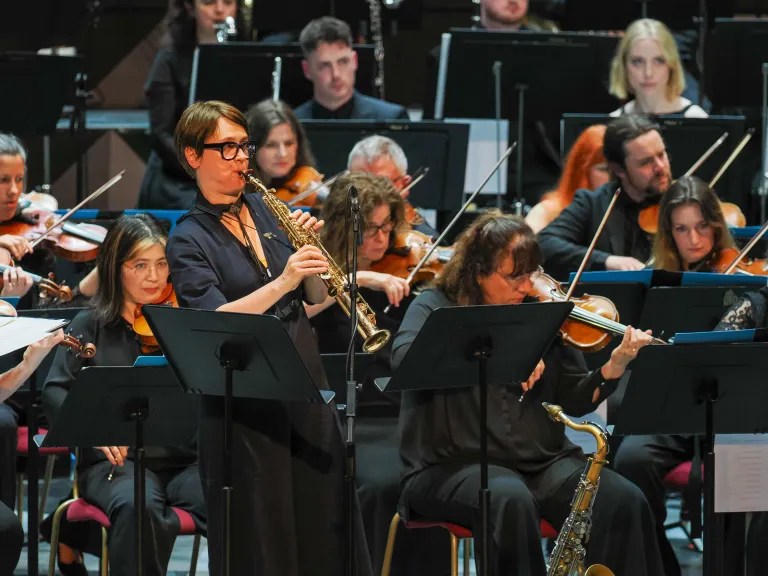
The interaction between jazz and orchestral musicians was intricate and unpredictable, so that saxophonist James Fel and bassoonist Katherine Young – but not the always inventive Ingrid Laubrock (above) – were often conductors next to Volkov in determining the overall trajectory. There were occasions when continuity felt tentative or uncertain, yet these were outweighed by the translucent allure in much of the ensemble playing as well as the resolve with which all those participating headed toward a culmination the more definite for its seeming inconclusiveness. Not that this performance commended itself to all those present, with several dozen exiting the auditorium as though insects under siege. Those who stayed were rewarded with music-making such as encouraged an active participation all too rare in present-day concertgoing.

For more on this year’s festival, visit the BBC Proms website. For further information, click on the artist names for more on Ilan Volkov and the BBC Scottish Symphony Orchestra, and on the composer names for information on Duke Ellington, Mary Lou Williams and Anthony Braxton.

Published post no.2,275 – Monday 16 August 2024
Summer serenades: Barber

If you search for Barber‘s Serenade for Strings on YouTube, the search facility thinks you want to hear the Adagio. This is not a surprise, given the popularity of Barber’s most famous music – but there is indeed a Serenade for Strings, the first published material from the American composer.

Like the Adagio, it was originally written for string quartet but transcribes effortlessly for bigger forces – as here, with the Royal Scottish National Orchestra under Marin Alsop. Lasting just over 10 minutes, it is in three movements:

Published post no.2,274 – Sunday 18 August 2024

Switched On – Wil Bolton – 23 (Courier Sound)

by Ben Hogwood

What’s the story?

Wil Bolton’s interpretation of Courier Sound’s ’23 musical ideas in 23 minutes’ takes its inspiration from a series of walks he made during the year 2023 in East London.

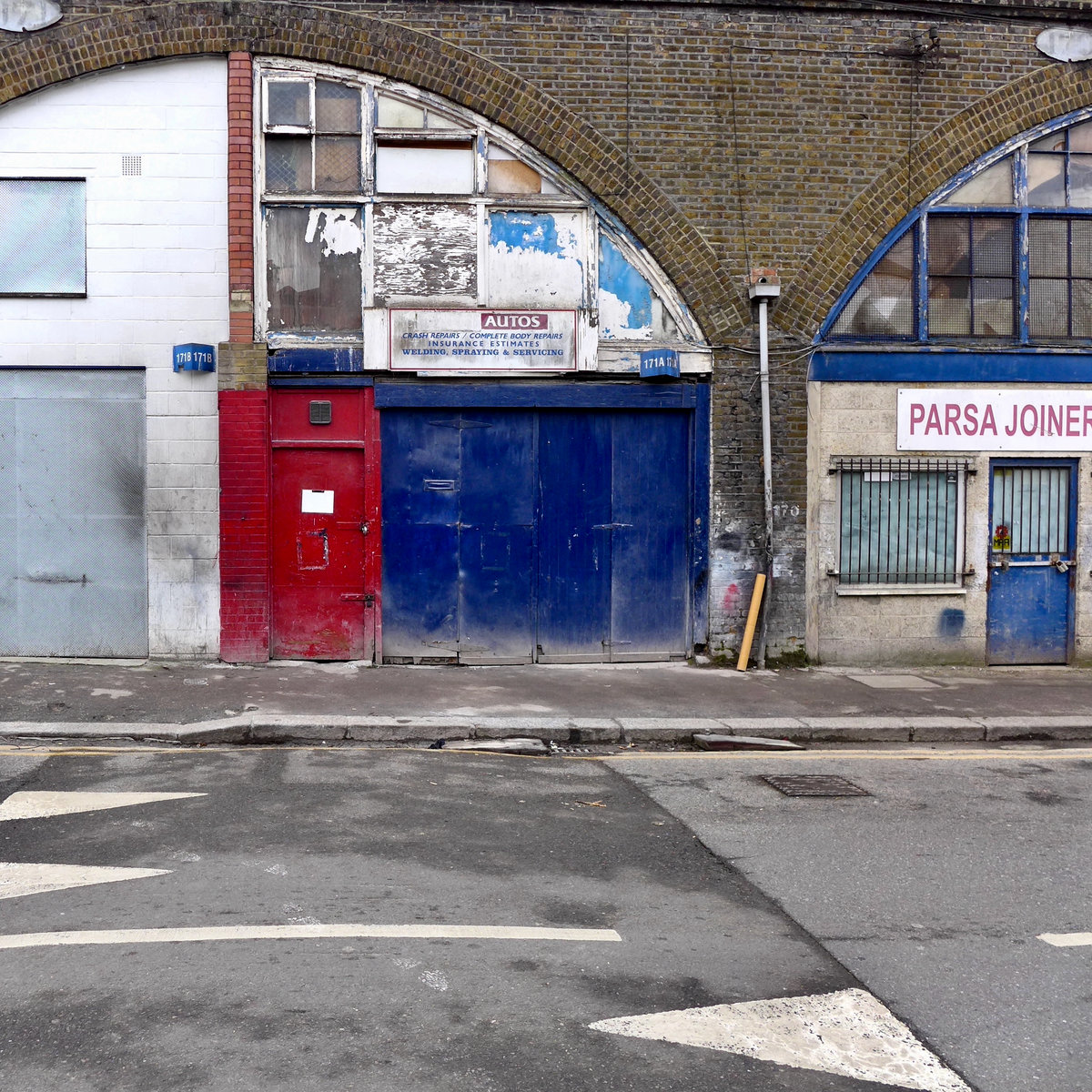
Bolton takes up the story in the press release for the album. “For these walks, I would follow the London Overground railway arches around Leyton, Walthamstow and Forest Gate, fascinated by the mixture and contrast of old and new businesses located beneath the train lines, from mechanics and scrap merchants to micro breweries and artisanal bakeries.

During these walks I also took a set of 23 photographs of these arches and made occasional field recordings on my iPhone. Back in my studio, I combined these lo-fi field recordings of forklift trucks, drilling, welding, pigeons, freight trains, traffic, muffled conversation and birdsong with modular synthesizer sequences and drones, looped Mellotron melodies and effects pedals.”

What’s the music like?

A thoroughly enjoyable listen. Bolton’s musical postcards are varied, colourful and very descriptive of the area in which he walks, and on headphones the listener can get a real sense of perspective – not just from the music but from a few ‘scene setters’ – the opening Freight, the sound of a reversing vehicle on Hazards, the outdoors of the city brought to life.

Elsewhere Bolton uses melodic nuggets or brightly voiced chords to portray his subjects, sometimes in dreamy interludes (Arches) or in fuzzy profiles (Bakers Arms, or the gorgeously voiced Overgrown) These are countered by cautionary asides, or busy electronic activity (Padlocks). There are brief interludes (Hazards, Unauthorised) or slightly extended thoughts such as Boarded Up, where distinctive mottos are introduced.

Does it all work?

It does. The only regret is that some of these pictures and moods are not extended further, as Bolton has a most appealing style, easy on the ear and always creating.

Is it recommended?

Yes. 23 is a colourful, meaningful portrait of an urban borough, but with the relief of natural beauty – all accurately painted in sound.

For fans of… Bibio, Boards of Canada, Future Sound of London, Biosphere

Listen & Buy

Published post no.2,273 – Saturday 17 August 2024

On Record – Pepe Deluxé: Comix Sonix (Catskills Records)

by Ben Hogwood

What’s the story?

Pepe Deluxé like their albums to tell a story, and Comix Sonix is certainly no exception – and extends through to the bare bones of the album’s construction, where an ‘extraordinary array of devices’ are used, each with a unique back story.

For instance, the duo (Paul Malmström and James Spectrum) plundered the ‘Instrumentarium’ collection of Bart Hopkin, not to mention sourcing instruments such as the American Airlines 747 flying coach lounge Wurlitzer, the world’s oldest known musical instrument (a 40,000 BC mammoth bone flute), a 19th-century lithophone ‘once cherished by Queen Victoria herself’, and the piano of the Hindenburg – restored with modern technology.

The credits are long and detailed, extending back to original band member DJ Slow, who brings old school hip hop to the table. Lyrical inspiration is similarly broad, taking in a wide range of cultures, and – in the band’s words – utter nonsense!

What’s the music like?

As eventful as the back story suggests it will be! In fact this is a great example where you can judge a book by its cover, for the colourful and chaotic riot of the Comix Sonix artwork is most definitely a representation of what lies beneath. The signs ‘Weird & vintage’ and ‘Trash & treasures’ are particularly revealing, for the musical inspirations for their work runs a long way.

The book of influences for this album could be large, but in all reality the duo harness their musical loves to make something original. That said, there is definitely a ring of Frank Zappa, The Avalanches and Parliament – George Clinton certainly brings his presence to the chorus of Freedom Flag. Meanwhile the melodramatic Wise Monkeys And The Devil brings opera and Sparks to the table, brilliantly virtuosic and inventive.

While there is a danger that the music might take second place to the novelty value of the stories described above, but thankfully Pepe Deluxé ensure that doesn’t happen, with a fast moving album that peaks with moments like the wistful chorus of Saddle The Wind, and the fairground beats and brass of Earth Boys Are Easy. As with a good deal of their music there is an underwater feel to the sound, felt on tracks like Sweet Baby Sun. The final Le Petit Voyage (Homo Sapiens), however, is suitably epic.

Does it all work?

Not always – there is sometimes too much going on! – but that’s Pepe Deluxé all over, and nobody could emerge from an encounter with Comix Sonix feeling short changed.

Is it recommended?

It certainly is – a lot of fun. Comix Sonix is a dizzying ride through recent pop history, from musical minds who are incredibly clever but also able to pool their resources, making a punchy record with loads of hooks to hang your musical coat on. It will certainly brighten up your summer!

For fans of… The Avalanches, The Go Team, Parliament, Mr Scruff

Listen and Buy

Published post no.2,272 – Friday 16 August 2024

New music – Bonobo: Expander (Ninja Tune)

published by Ben Hogwood, with text appropriated from the press release

Released on Ninja Tune, Expander cuts a slice of unmistakable Bonobo, deftly weaving organic vocals and instrumentation with peak-time dance-floor sensibilities that set it up to become one of the songs of the summer. Following his recent roadblock set on Glastonbury’s LEVELS stage, numerous clips of the unreleased track begin circulating online, with fans clamouring for an ID.

The track is already a staple at his legendary OUTLIER sets, an event series curated by Bonobo which shows his continued influence as a DJ and also the reverence a new generation of artists hold for his own releases. Joining him on DJ line ups over the last year have included Barry Can’t Swim, DJ Koze, Sofia Kourtesis, salute, Kelly Lee Owens, Mall Grab, DJ Tennis, Dixon, TSHA, SG Lewis, Young Marco, Kerri Chandler, Carlita, Elkka, HAAi, John Talabot, Paula Tape amongst others. The 15,000 capacity event at Drumsheds in London was the fastest selling event of the season. Bonobo also recently played “Expander’ when going b2b with Disclosure at their Friends & Family pop-up in LA.

Expander sees Bonobo continue his stellar run of heavier, club-inspired tracks released in between albums. Following, as it does, his 2022 singles Defender and ATK, the subsequent single Fold — a collaboration with Jacques Green — and 2020’s anthemic NYC disco-inspired Heartbreak 12” with Totally Enormous Extinct Dinosaurs.

Published post no.2,271 – Thursday 15 August 2024