Arcana at the Proms – Prom 33: Christopher Maltman, BBC Symphony Orchestra / Martyn Brabbins – Elgar, Holst, Stanford & Vaughan Williams London Symphony

Elgar Overture ‘Cockaigne’ (In London Town) Op.40 (1901)
Holst Hammersmith (Prelude and Scherzo) Op.52 (1930)
Stanford Songs of Faith Op. 97 (1906): no.4 (To the Soul), no.5 (Tears), no.6 (Joy, ship-mate, joy); An Irish Idyll in Six Miniatures Op.72 (1901): no.2 (The Fairy Lough)
Vaughan Williams A London Symphony (Symphony no.2) (1912-13, rev. 1918-20)

Christopher Maltman (baritone), BBC Symphony Orchestra / Martyn Brabbins

Royal Albert Hall, London
Friday 9 August 2024, 6pm

reviewed by Richard Whitehouse

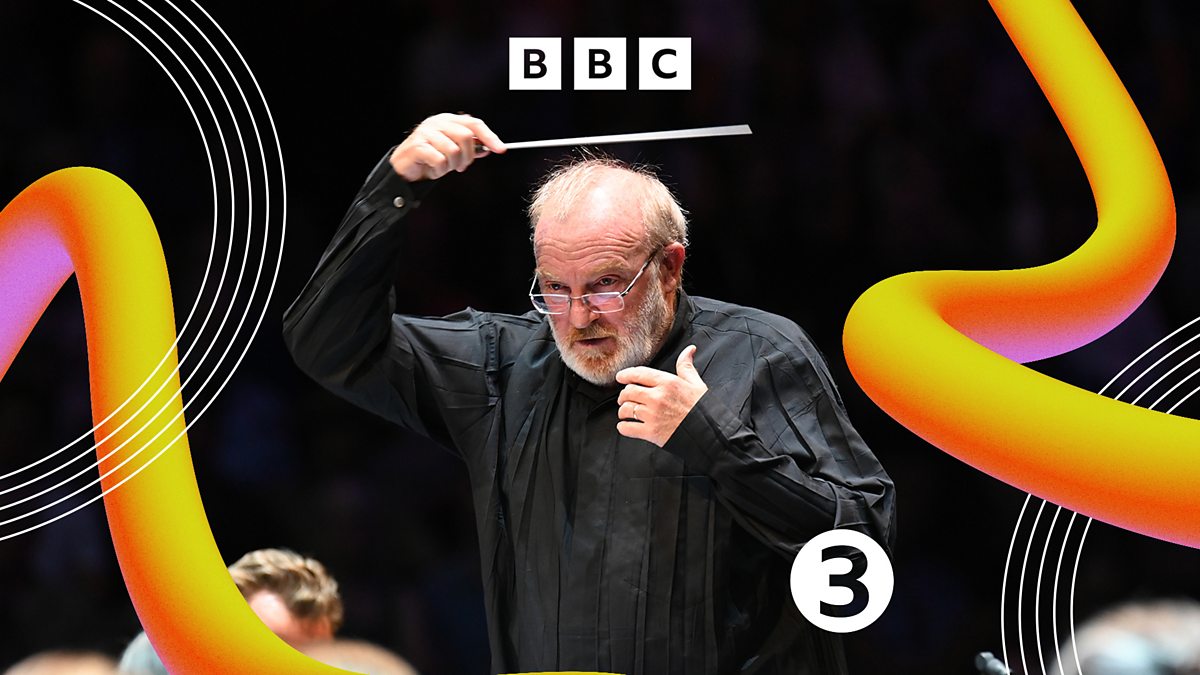
Concerts devoted to British music are by no means an unknown quantity at the Proms, but to have one as judiciously planned as that featuring Martyn Brabbins with the BBC Symphony Orchestra, on the conductor’s 65th birthday, was as unexpected as its realization ‘on the night’ proved consistently impressive.

Whether or not this account of Elgar’s Cockaigne ranked among the best of the previous 70 or so hearings at these concerts, it assuredly did the piece justice. Not its least attraction was Brabbins integrating this evocation of London on the cusp of Victorian and Edwardian eras with due perception of its ingenious sonata design, resulting in a reading as characterful as it was cohesive. Such as the emergence of the marching band at its centre and final peroration (Richard Pearce making his presence felt at the organ console) were the highpoints intended.

Whereas Elgar conveys London in its midst, Holst renders Hammersmith at a remove – his Prelude and Scherzo evoking those sights and sounds where the latter long made his home with a poise and precision no less involving for its objectivity. The orchestral version might be less often revived than its wind-band original but it yields little, if anything, in terms of expressive immediacy; not least with Brabbins mindful to underline how its two sections do not just succeed each other but are juxtaposed, even superimposed, prior to the rapt ending.

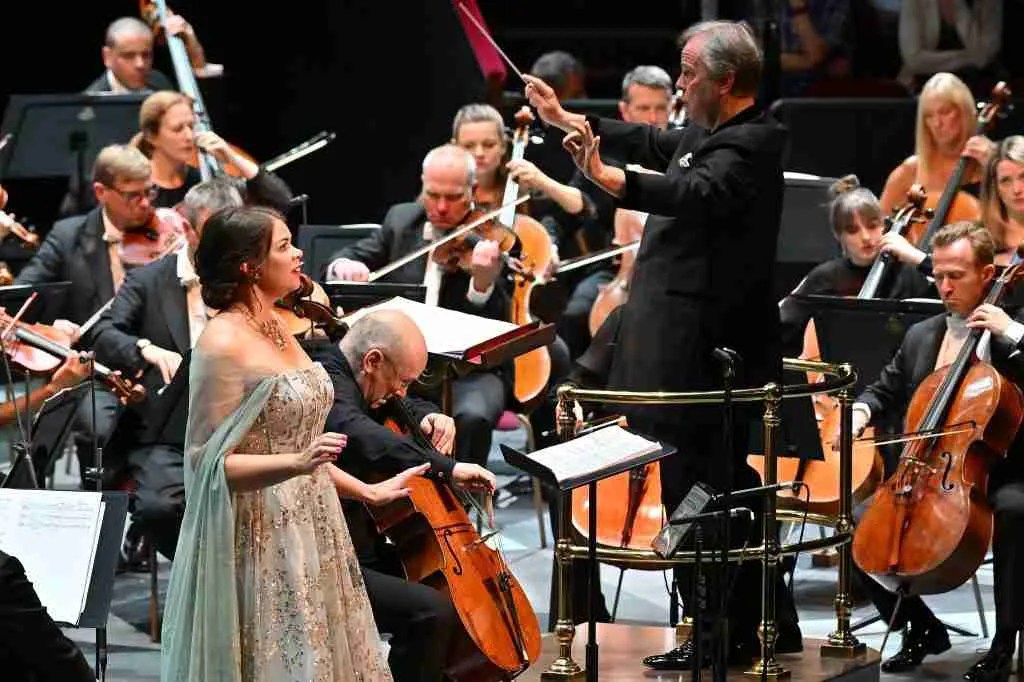
In the centenary of Stanford’s death, this selection of songs provided a welcome reminder of its composer’s prowess in the genre. The final three Songs of Faith denote an appreciation of Walt Whitman comparable to that of the next generation – whether in the eloquent musing of To the Soul, surging anguish of Tears or effervescence of Joy, shipmate, joy. Christopher Maltman then brought his burnished tone and clarity of diction to an affecting take on Moira O’Neill’s The Fairy Lough – proof Stanford could do ‘lightness of touch’ where necessary.

Whereas Stanford’s songs have barely featured here for almost a century, Vaughan Williams’s A London Symphony has accrued 36 performances, but what might be thought its ‘intermediate version’ had not been heard in nine decades. Actually, this is much closer formally to the final version of 1933 than the original – its main differences centring on those more extensive codas in the Lento and finale which, by aligning them more audibly with the introduction to the first movement, arguably ensures a more thematically close-knit trajectory across the work overall.

The performance was very much in accord with Brabbins’ recording (Hyperion). An unforced traversal of the opening Allegro, impetuous in its outer sections and affecting in that rapturous passage for solo strings at its centre, then a slow movement whose brooding introspection did not omit a sustained fervency at its climax. Nor did the Scherzo lack those ambivalent asides that find focus in its sombre close, while the nominally discursive finale built purposefully to a seismic culmination then an epilogue which drew solace from the aftermath of catastrophe.

‘‘The river passes – London passes – England passes’’. Whether the closing words from H.G. Wells’ Tono-Bungay determined or even influenced it, a sense of renewal was palpable as the music faded towards silence at the end of this persuasive performance and memorable concert.

For more on this year’s festival, visit the BBC Proms website – and to read more on the artists involved, click on the names: baritone Christopher Maltman, conductor Martyn Brabbins and the BBC Symphony Orchestra. Click on the name for more on The Stanford Society

Published post no.2,270 – Wednesday 14 August 2024
Switched On – Omar Ahmad: Inheritance Remixed (AKP Recordings)

by Ben Hogwood

What’s the story?

The ‘sonic invention’ and ‘cosmopolitan outlook’ we identified in a review of Omar Ahmad’s Inheritance album get a second look, courtesy of an imaginative remix project where the whole LP is made over by guest artists.

Ahmad is a Palestinian-American artist, a multi-instrumentalist who has proved a perfect fit for the musically open approach of the Californian label AKP Recordings. The original album saw him take on all instruments, from field recordings to cello, synthesizer, voice and percussion – plenty for the assembled artists to build on.

The tracks of the original are presented in the same order.

What’s the music like?

AKP have cast the net far and wide, meaning the remixed Inheritance veers between widescreen ambience and active beat work-outs. Most of these are extremely effective, too, presenting a tableau that stays faithful to Ahmad’s colourful intentions but uses them as the stimulus for vibrant new creations.

These range from the spacey A Little Time For Me, given a strident hip hop beat by Sam O.B., or Lapses, led by some excellent broken beats with rich colouring from Otodojo. The heat soaked Sham Oasis and roomy Descended from a Wanaque Tree (Borrowed Memory) work really well, remixed by Kirin McElwain and Ki Oni respectively – while Solpara goes the other way, applying a wide-screen view of the clattering beats on Losing A Friend.

More mysteriously, Black Gesso is pulled this way and that by ACE, with mysterious sounds from the depths.

Does it all work?

Pretty much. Sometimes the clatter becomes a bit much on the faster tracks but that’s all a matter of preference – the feeling being that Ahmad’s music is most expressive at a slower tempo.

Is it recommended?

It is – a great complement to the original album, and a lesson in how best to approach a remix album.

For fans of… Thievery Corporation, Aim, RJD2, Blockhead

Listen & Buy

Published post no.2,269 – Tuesday 13 August 2024

Arcana at the Proms – Prom 27: Silja Aalto, Anssi Kartunen, Seong-Jin Cho, BBC Symphony Orchestra / Sakari Oramo – Saariaho, Mozart & Richard Strauss ‘Alpine’ Symphony

Saariaho Mirage (2007) [Proms premiere]
Mozart Piano Concerto no.9 in E flat major K271 ‘Jeunehomme’ (1777)
Richard Strauss Eine Alpensinfonie Op.64 (1911-15)

Silja Aalto (soprano), Anssi Karttunen (cello), Seong-Jin Cho (piano), BBC Symphony Orchestra / Sakari Oramo

Royal Albert Hall, London
Friday 9 August 2024, 6pm

reviewed by Richard Whitehouse Photos (c) Mark Allan

Soon to begin his 12th season as chief conductor of the BBC Symphony Orchestra, Sakari Oramo made his second Proms appearance this season for what proved a typically diverse and resourceful programme whose stretching over 230 years of Western music was the least of its fascinations.

Her untimely death last year made a memorial to Kaija Saariaho more necessary and Mirage was a judicious choice, its setting lines by Mexican shaman María Sabina drawing a suitably theatrical response from Silja Aalto (above) – alongside who, Anssi Karttunen (long-time collaborator with this composer) weaved between the vocal and orchestral writing almost as an ‘alter-ego’ of subdued if beneficent presence. Musically the piece is typical of Saariaho from this period in aligning intricate texture with a mounting fervour at times ecstatic and ultimately fulfilled.

It may have been a ‘jeunefemme’ for whom Mozart actually wrote his Ninth Piano Concerto, but this remains its composer’s earliest unequivocal masterpiece and one with which Seong-Jin Cho (below) evidently feels real affinity. Not least in an opening Allegro whose arresting repartee at the start set the tone for an incisive traversal whose pianistic agility, not least in the first of Mozart’s cadenzas, was never without its inward asides. Such introspection came to the fore in the Andantino, its interplay of archaic and ‘modern’ harmonies yielding a plangency which found soloist and conductor as one. Nor was the finale’s central Menuetto without ruminative poise, set in relief by the buoyant Presto sections either side. Impressive music-making, then, that Cho continued with his deftly eloquent take on the second movement of Ravel’s Sonatine.

The last and most inclusive of Richard Strauss’s tone poems, An Alpine Symphony has received more than its share of tendentious reviews (and perfunctory programme notes), so credit to Oramo for emphasizing those purely musical qualities which, much more than its being a ‘bourgeois travelogue’ or even existential statement, duly determine this most formally and expressively integrated of its composer’s such works. As was evident at the outset: Alpine vistas emerged via a preludial crescendo that headed seamlessly into the ascent with its assembly of offstage horns, placed to advantage on the right of the gallery, then frequently arduous traversal above the treeline and on to the glacier prior to the summit. Its attendant ‘Vision’ drew an affecting soliloquy from oboist Tom Blomfield, then resplendent response from a 125-strong BBCSO.

What goes up tending to come down makes the following portion most difficult to sustain in terms of its ongoing momentum. The present account marginally lost focus here, but not in a mesmeric evocation of that eerie calm before the thunderstorm; organ and percussion adding to the overall mayhem before the relative calm of encroaching sunset. Ausklang is no mere epilogue – here, it afforded transcendence in the amalgam between those human and natural domains, while ensuring an overall fulfilment in the face of night with its inevitable closure.

The piece has come into its own since first appearing at these concerts 42 years ago and, if tonight’s reading did not quite touch all relevant bases, it conveyed the work’s measure like few others in tribute to the continuing creative partnership of this conductor and orchestra.

For more on this year’s festival, visit the BBC Proms website – and to read more on the artists involved, click on the names: Seong-Jin Cho, Silja Aalto, Anssi Karttunen, the BBC Symphony Orchestra and their chief conductor Sakari Oramo, and the official website of Kaija Saariaho and her works

Published post no.2,268 – Monday 9 August 2024

Summer serenades: Brahms #2

This Sunday Arcana returns to the serenades of Brahms – his first orchestral works. Having fallen under the charms of the Serenade no.1 in D major, we give you the chance to enjoy the slighter but equally enjoyable Serenade no.2 in A major, completed in 1860 and published as Op.16:

1

Published post no.2,267 – Sunday 11 August 2024

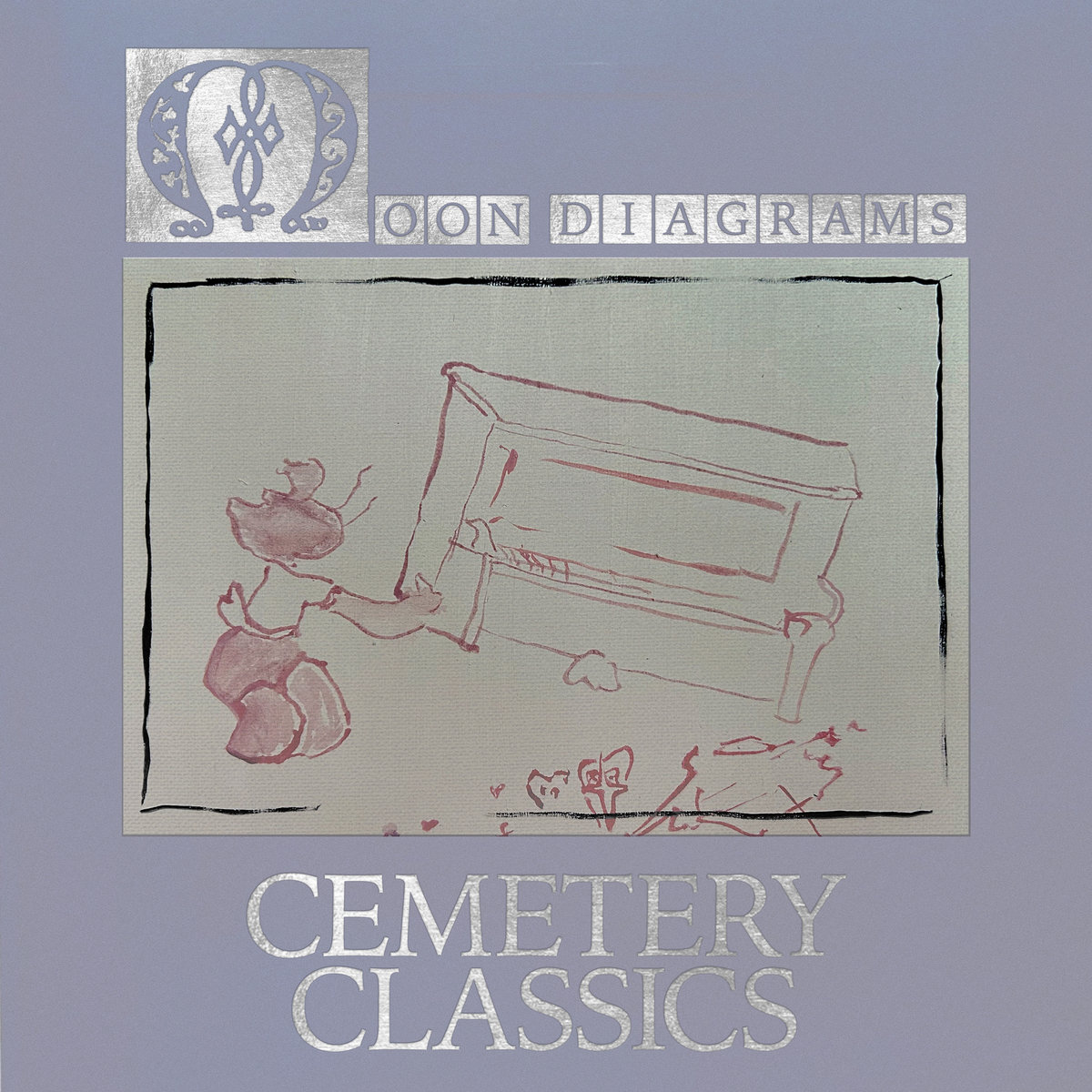
On Record – Moon Diagrams: Cemetery Classics (Sonic Cathedral)

by Ben Hogwood

What’s the story?

Moon Diagrams is the solo project of Deerhunter drummer Moses Archeluta – and Cemetery Classics is his second release, seven years after the acclaimed Lifetime Of Love, also on Sonic Cathedral.

Intriguingly, Moses’ description of the album is that “It’s about finding out your arms are too short to box with God…the inverse of a desert island disc – a graveyard disc. Songs to take into the afterlife.”

Cemetery Classics features guitar from Josh Diamond (Gang Gang Dance) and Patrick Flegel, along with vocals from Anastasia Coope – and, strikingly, keyboards and drum programming from James Ford.

What’s the music like?

The title may imply a gallows humour, but there is some dead good music here from Archeluta, and as Cemetery Classics progresses it delivers a bunch of excellent grooves and tableaus that vary from dark to uplifting.

On occasion his work resembles that of Andrew Weatherall, especially in the murmured vocals and smoky beat of Brand New Effie. The languid guitar and breezy mood of NRG hints at much sunnier climes, while Big Ref and Fifteen Shows At One time present irresistibly groovy music.

Listen To Me and Fragment Rock are compelling, widescreen grooves with more than a hint of dub, the latter featuring some disorientating brass and boomy, bassy vocals.

Does it all work?

It does. On occasion Archeluta’s work resembles Animal Collective or an outtake from an Adrian Sherwood session, but he can turn his work to so many styles, all of which knit together beautifully here.

Is it recommended?

It is, enthusiastically. One of those albums that impresses on first listen but gets you in a musical and emotional hold in the next few encounters. One of the sleeper albums of the year so far.

For fans of… Animal Collective, Andrew Weatherall, Adrian Sherwood

Listen and Buy

Published post no.2,266 – Saturday 10 August 2024