On Friday the sad news of the death of Peter Sinfield was announced, at the age of 80. Sinfield was a member of King Crimson, the legendary progressive rock band, from their founding in the late 1960s. A detailed obituary can be read at the Guardian website.
He would go on to write the number one ballad Think Twice for Céline Dion, an illustration of his versatility, but here at Arcana we wanted to remember him for his part on one of the 1960s’ most dramatic songs, King Crimson’s 21st Century Schizoid Man:
On this day, 174 years ago, the premiere of Schubert’s String Quintet in C major took place in Vienna, Austria.
The string quintet was brought to prominence by Mozart’s masterpieces in the form, using the standard string quartet line-up of two violins, viola and cello with the addition of a second viola. Beethoven wrote an underrated quintet for the same instrumental combination, but Schubert chose to use a second cello. His much-loved quintet, completed three weeks before his death, is a desert island choice for many people on account of its heavenly Adagio. Here it is, played by the Borodin String Quartet and cellist Alexander Buzlov:
As the name implies, Travelogue is a cosmopolitan album from the studio of Egor Antoshchenko, a Russian artist based in Nepal.
While essentially an electronic producer he brings in a wide variety of influences from further afield, inspired by field recordings made in Seoul, Vietnam and Nepal and also from the ambience of Buddhist temples.
What’s the music like?
Very spacious, and great on headphones. Yak 40 uses a successful blend of techno and ambient but adds a more beat-driven approach – before incorporating his surroundings to use Travelogue as a colourful diary, reflecting those journies through the prism of his own style.
Other Shores reflects the beauty of the Koh Chang Island setting where it was written, reflecting the shimmering sea against a spatial backdrop, while Goa was the starting point for the excellent Swirls, with an urgent four to the floor beat. Hummingbirds is suitably colourful and evocative, its broken beat and probing bass sounds giving way to rich colour up above. A similar approach powers the rich tapestry of Mahalaxmi Unltd, while Glassworks shows more of a Detroit influence. Vox En Go is more driven, as opposed to the softly voiced Anatta, a reflective album closer.
Does it all work?
It does, because the music keeps moving, the listener taken on a tour of regions that vary from exotic to more urban.
Is it recommended?
Very much so. This is an album made with love, for the music itself but also for the locations and cultures inspiring it. Because of that, Travelogue is a set of electronic postcards full of colour and personality.
For fans of… System 7, Blu Mar Ten, Ultramarine, Four Tet, Transglobal Underground
Listen & Buy
You can listen to Travelogue below:
Published post no.2,364 – Saturday 16 November 2024
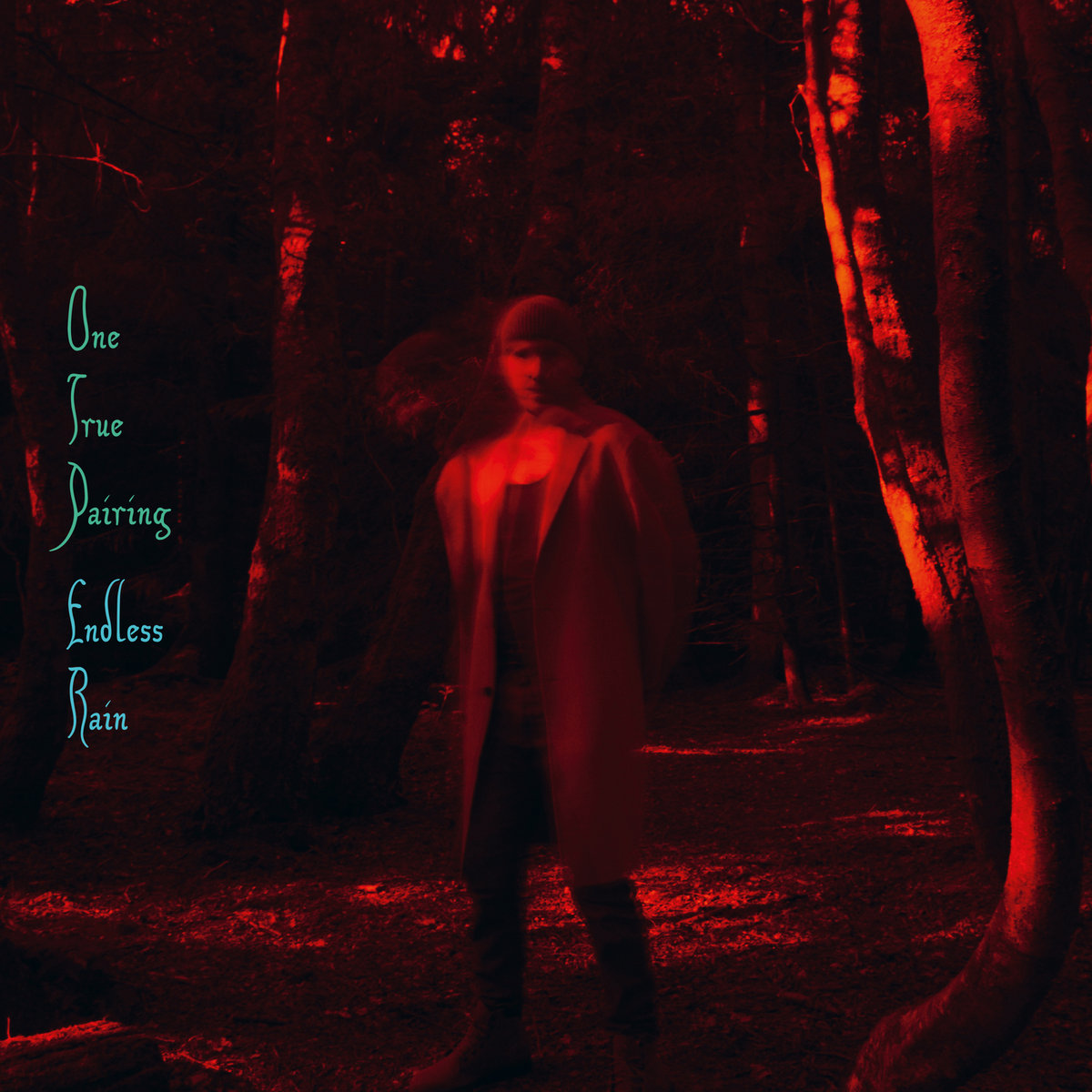
One True Pairing is the moniker for Tom Fleming, once of Wild Beasts – and is a vehicle that he has used for frank and honest commentary on his life.
In some commendably honest interviews, Fleming has spoken of his mental health difficulties, exacerbated by addiction, but has explained too how music has helped bring him round from them to a much safer space.
Having given notice of his solo potential with his self-titled debut record in 2019, Fleming returns with a host of instrumentalists in tow, but with his guitar kept closest to him.
What’s the music like?
Fleming is a confidential songwriter, letting the listener in to all corners of his world. This is most apparent on songs like Doubt, where he honestly offers up the lyric “I will always do what it takes, but there’s a doubt I can’t shake”. I Don’t Want To Do This Anymore goes further, regretting that “again, we’re lying in a puddle that we made”.
That he makes these brave asides is value enough, but when set against the beautiful instrumentation, chosen with regular collaborator Josh Taylor-Moon and producer John ‘Spud’ Murphy, the results are compelling. Prince Of Darkness is like a coiled spring, Fleming’s urgent vocal offering reassurance from the calm bed of guitars around it, before a sweeping harp takes over. Endless Rain is on firmer ground, and Midlife Crisis finds impressive resolve in the face of its doubts.
Throughout, Fleming’s voice is as personal as could be, its husk burning a path into the listener’s soul. At times this can lead to uncomfortable truths – A Landlord’s Death especially – while elsewhere it feels like a consoling hug. Ruthless Streak is darkly coloured but its string harmonics take it through a fever dream.
Perhaps most affecting of all is Frozen Food Centre, a beautiful epic where swirling guitars back a song about childhood, with the reassurance of home but the threat of spectres lurking in the aisles of the supermarket.
Does it all work?
It does. There is some remarkable music here, written out of necessity – and it makes a powerful impact.
Is it recommended?
Very much so. Those remembering Wild Beasts would be well advised to add One True Pairing to their collection if they haven’t already, as would those whose heads might be turned by songs with a folky edge. On this record Tom Fleming is in the same space as the listener, pouring out heart and soul, and his music resonates deeply with both.
For fans of… Wild Beasts, Nick Drake, Elliott Smith, John Martyn
J.S. Bach Brandenburg Concertos: no.1 in F major BWV1046 (dir. Huw Daniel) no.3 in G major BWV1048 (dir. Margaret Faultless) no.5 in D major BWV1050 (dir. Margaret Faultless) no.4 in G major BWV1049 (dir. Huw Daniel) no.6 in B flat major BWV1051 (dir. Oliver Wilson) no.2 in F major BWV1047 (dir. Rodolfo Richter)
Queen Elizabeth Hall, London Wednesday 13 November 2024
Reviewed by Ben Hogwood Pictures (c) Mark Allan
The music of Bach proves a great source of consolation for many in uncertain times, and the underlining feeling from this packed concert was that the Orchestra of the Age of Enlightenment had offered just that, deep into their tour of the great master’s complete Brandenburg Concertos.
The six concertos, written for a variety of instrumental ensembles, were published just over 300 years ago in 1721 and sent to Christian Ludwig, Margrave of Brandenburg. In a crowded field, they have become one of Bach’s best-loved groups of works, and although they were not designed to be played together they respond extremely well to a concert such as this.
It is difficult to imagine a better set of performances than those given by the OAE, playing without a conductor in the spirit of the compositions, assigning the direction of each concerto to the uppermost string player. The program was introduced with a spark by violinist Margaret Faultless, whose enthusiastic demeanour set the tone for the evening. As the notes of the Brandenburg Concerto no.1 in F major lifted off the page Bach’s inspiration was immediately apparent, like walking into a room of animated conversation. The horns of Ursula Paludan Monberg and Martin Lawrence were front and centre, pointed aloft in a necessary but striking pose. The balance between the 13 players was ideal, not just in the busy first movement but in the emotive Adagio, led by the beautiful tones of oboe trio Clara Espinosa Encinas, Sarah Humphrys and Grace Scott Deuchar. Yet the horns took centre stage, powering the bright Allegro, before a perky series of Menuetto dances were bisected by a bracing second trio.
One of the many joys of the concert was the different sonorities of each piece, which changed to nine string instruments for the Brandenburg Concerto no.3 in G major. This had the requisite spring in its step for the quicker outer movements, especially the jovial dialogue of the third. Meanwhile the ensemble elaborated on Bach’s two written chords that make up the slow movement, where the focus was on violin (Faultless) and harpsichord (Steven Devine) Their tasteful improvisations were an ideal foil.
Completing the first half was the Brandenburg Concerto no.5 in D major, in effect an early keyboard concerto. The seven players were positioned closer to the audience, allowing greater intimacy and the chance to appreciate some of the wondrous sequences in the first movement. Taking the lead here were flautist Lisa Beznosiuk, who recorded the concertos with the orchestra back in 1987, alongside Faultless and Devine. They delivered a sublime Affettuoso second movement, a moment of reflection from the fast movements where Devine was a revelation, his virtuosic brilliance never too showy even in the trickiest of cadenzas.
To begin the second half of the concert the mellow sonorities of the recorders took the lead in the Brandenburg Concerto no.4 in G major, with beautiful clarity achieved by Rachel Beckett and Catherine Latham. Violinist Huw Daniel mastered the busy figuration of his part with considerable flair, while the poise of the accompanying ensemble was consistently satisfying. This concerto is deceptively forward looking, with pointers towards Beethoven in the slow movement, which here benefited from the weighty support of viola da gamba (Richard Tunnicliffe) and double bass (Cecilia Bruggemeyer), both ever presents through the evening. The pugnacious finale, with one of Bach’s many earworms, was great fun in the hands of these nine players.
The colours darkened appreciably for the Brandenburg Concerto no.6 in B flat major, whose highest instrument is the viola. Bach’s scoring here is remarkably inventive, and was brought to life as Oliver Wilson led a fluent account of the first movement. The violas showed their versatility as melody instruments in the reduced scoring of the Adagio, reduced from seven to four players and enjoying its elegant dance-like figurations, before the syncopations of the Allegro were winningly delivered.
Finally the Brandenburg Concerto no.2 in F major was a suitably upbeat piece on which to finish, with soloist David Blackadder – having waited an hour and a half to play – enjoying his moment on stage. He made the trumpet line look – and sound – straightforward, when with this instrument it is anything but! Again the balance was carefully wrought, so that the intricate violin contributions of director Rodolfo Richter could be clearly heard. A lightness of touch from the 11 players brought the phrasing of the Andante to life, with some typically spicy harmonies stressed, before the brilliant colours of the closing Allegro assai, and a celebratory closing statement.
It was a treat to hear the six Brandenburg Concertos presented in this way, a reminder that – in the words of Huw Daniel – these concertos deserve to be the centre of attention. The humming of the audience afterwards was testament to their lasting appeal, 300 years on.
You can listen to the Orchestra of the Age of Enlightenment’s recordings of the Brandenburg Concertos from 1987-88 for Virgin Classics below:
Published post no.2,362 – Thursday 14 November 2024





 Arcana.fm