In concert – Quatuor Danel: Shostakovich & Weinberg #4 @ Wigmore Hall

Quatuor Danel [Marc Danel & Gilles Millet (violins), Vlad Bogdanas (viola), Yovan Markovitch (cello)]

Weinberg String Quartet no.5 in B flat major Op.27 (1945)
Shostakovich String Quartet no.6 in G major Op.101 (1956)
Weinberg String Quartet no.6 in E minor Op.35 (1946)

Wigmore Hall, London
Monday 29 April 2024

by Richard Whitehouse Photo (c) Marco Borggreve

Quatuor Danel’s ongoing cycle devoted to the string quartets of Shostakovich and Weinberg reached its fourth instalment this evening with a programme in which two of the latter’s most characteristic such pieces framed what is among the most ambivalent of the former’s works.

Composed in the aftermath of the Second World War, Weinberg’s Fifth Quartet emerges as a divertimento in concept but hardly in substance. The opening Melodia underlines this with its brooding theme on violin that intensifies expressively as the movement expands texturally, while the ensuing Humoreska has a dance-like insouciance that takes on ominous overtones as it unfolds. This accrued tension bursts forth in the central Scherzo with its violent motivic and gestural exchanges between the players, then the Improvisation revisits earlier material from an inevitably more troubled perspective. It only remains for the final Serenata to bring closure via its familiar gambit of summing-up the whole from a likely emotional remove, only to take on greater immediacy on the way to a musing close: something ideally conveyed here.

The mid-1950s was a difficult time for Shostakovich, recently widowed and unsure as to his future direction. Dedicated to his second wife, the Sixth Quartet can seem as tentative as this marriage proved short-lived – the genial quality of the opening Allegretto’s themes assuming much more combative guise as the movement evolves, with the Moderato that follows poised uncertainly between scherzo and intermezzo but without committing either way. The second of its composer’s passacaglias in a quartet context, the Lento unfolds as a processional both fatalistic and doubtful before heading into a final Allegretto whose inherent nostalgia exudes a sepia-tinted regret at its core. As previously, the Danel was mindful to vary the expressive intent of that recurrent closing cadence – one whose finality is ultimately borne of resignation.

The last work proved to be a culmination in all senses. Over six decades might have elapsed between its composition and its premiere (by this ensemble), but Weinberg’s Sixth Quartet is one of his finest and a highpoint of quartet-writing in the twentieth century. Although it runs to six movements, there is never risk of diffusiveness or loss of focus – witness the deceptive equability of its initial Allegro, such equivocation decisively countered by the violent Presto whose unbridled energy has barely been dispelled across the brief and recitative-like Allegro.

Despite its fugal mobility, the ensuing Adagio emerges as a slow movement frozen in intent – something the Danel brought out as acutely as it did that bittersweet anxiety of the Moderato which follows. More than in any of Weinberg’s earlier quartets, the final Andante maestoso is a fitting destination – its almost monumental power fashioning elements previously heard into a cumulative structure whose outcome is one of desperation mingled with defiance. Not hard to fathom why the Soviet authorities should have prohibited even a private performance.

Whether or not it has become a ‘signature work’ for the Danel, the sheer emotional input of this reading assuredly took no hostages. Shostakovich’s 1931 arrangement of Katerina’s aria from the third scene of his opera Lady Macbeth of Mtsensk duly made for an eloquent envoi.

You can hear the music from the concert below, in recordings made by Quatuor Danel:

For more information on the next concert in the series, visit the Wigmore Hall website. You can click on the names for more on composer Mieczysław Weinberg and Quatuor Danel themselves.

Published post no.2,167 – Friday 3 May 2024

On Record – Peter Herresthal, Jakob Kullberg, Bergen Philharmonic Orchestra, John Storgårds – Nørgård: Symphony no.8, Three Nocturnal Movements, Lysning (BIS)

Peter Herresthal (violin) and Jakob Kullberg (cello) (Nocturnal Movements), Bergen Philharmonic Orchestra / John Storgårds

Nørgård
Lysning (2006)
Symphony no.8 (2011)
Three Nocturnal Movements (2015)

BIS BIS-2502 [54’20’’]
Producer Hans Kipfer Engineers Matthias Spitzbarth, Håkan Ekman (Nocturnal Movements)
Recorded 29 & 30 August 2019 (Nocturnal Movements), 4 & 5 February 2022 2022 at Grieghallen, Bergen

Reviewed by Richard Whitehouse

What’s the story?

His activities as a composer may effectively have ceased, but Per Nørgård (1932-) remains a defining figure in post-war European music and this latest release from BIS collates three wholly characteristic pieces, including a double concerto which is also his last major work.

What’s the music like?

Playing a little over 25 minutes, the three movements of the Eighth Symphony each pursues its intriguing take on an established form (sonata, ternary then rondo) which emerge with a renewed fluidity and flexibility. The opening movement continually evolves its main ideas   in a gradual if cumulative curve of activity, culminating in the heightened crystallisation of motifs on tuned percussion. The central Adagio emerges across densely luminous waves of sound that recall earlier Nørgårdian practice from an arrestingly new perspective; one whose expression admits an almost confiding intimacy. The finale deftly complements this with its artfully ratcheting percussion and infectious rhythmic gyrations on route to a coda of purest radiance; the fitting close to a symphonic cycle that ranks with the finest of the post-war era.

A crucial factor of Three Nocturnal Movements is its having been a collaboration with cellist Jakob Kullberg and developed from the viola concerto Remembering Child of three decades earlier. The outcome comprises two substantial movements that frame a ‘nocturnal’ cadenza. The opening Allegro finds the solo instruments deeply embedded within an orchestral texture whose clarity enables motivic interconnections to emerge with due precision, underlining the airy momentum which carries this music towards its predictably unexpected close. Whatever its provenance, the central Andante is of a piece with those on either side – its limpid gestures and intonational punning a throwback to this composer’s preoccupations from more than half a century earlier, but now imbued with an aura no less affecting for its valediction. The final (undesignated) movement is the most demonstrative with its frequently percussive outbursts and those abrupt though never jarring changes in course that keep the attentive listener fully attuned to a discourse such as builds incrementally toward its wistfully fulfilled conclusion.

The earliest work here, Lysning makes for an ideal ending. Its title translating as ‘Glade’, this is the last of its composer’s pieces for strings and takes the Nordic miniature as template for a study in discreet yet potent contrasts of sonority and emotion that lingers long in the memory.

Does it all work?

Yes, not least because Peter Herresthal and Jakob Kullberg have premiered earlier concertos by Nørgård for their respective instruments, while John Storgårds had previously recorded the Second, Fourth, Fifth and Sixth Symphonies and gave the premiere of the Eighth of which he is dedicatee. This recording ideally complements that from Sakari Oramo (Dacapo 6.220574), focussing less on its overall symphonic cohesion than on the continual unpredictability of its renewed Classicism, and it is difficult to imagine more persuasive readings of the other works.

Is it recommended?

Very much so, in the hope Storgårds may yet complete his Nørgård cycle with the First, Third and Seventh Symphonies. Sound is up to BIS’s customary standards in clarity or perspective, while Kasper Rofelt’s annotations evince long familiarity with the composer’s unique idiom.

Listen

Buy

You can explore purchase options for this recording at the Presto website. Click on the names for more on the artists – John Storgårds, Peter Herresthal, Jakob Kullberg and the Bergen Philharmonic Orchestra – and for more on the composer Per Nørgård

Published post no.2,166 – Thursday 2 May 2024

On Record – Solarek Piano Trio – Henriëtte Bosmans: Early Chamber Music (Toccata Classics)

Solarek Piano Trio [Marina Solarek (violin), Miriam Lowbury (cello), Andrew Bottrill (piano)

Henriëtte Bosmans
Arietta (1917)
Violin Sonata (1918)
Piano Trio (1921)

Toccata Classics TOCC0654 [55’22’’]
Producer Ian Dean Engineers Bárbara Santos & Carlos Jesús
Recorded 6-7 April 2022 at Arda Studio A, Porto

Reviewed by Richard Whitehouse

What’s the story?

Toccata Classics continues its exploration of neglected and overlooked figures with a release of early pieces for chamber forces by Henriëtte Bosmans (1895-1952), Dutch composer and pianist whose eventful life drew attention away from her substantial and distinctive output.

What’s the music like?

Although her later music has latterly enjoyed performance and recording, that from Bosman’s formative years has had little exposure, making the pieces recorded here the more welcome – not least for underlining that her journey toward compositional maturity was a successful one.

The Violin Sonata is certainly a statement of intent. Its first of four movements is a substantial sonata design, the impulsive then ruminative main themes duly repeated prior to an extensive development (the transition into which derives from this latter theme rather than being a new idea as such); one whose understated resourcefulness continues throughout an altered reprise then suddenly decisive coda. The other movements (shorter even when combined) comprise a tensile and agitated scherzo, its absence of any trio section making contrast with the ethereal ‘song without words’ of the Adagio the more potent, then a finale that fails less by recycling themes previously encountered as by being too emotionally temperate to round off the whole with quite the resolution needed. This is an appealing and frequently prophetic piece, even so.

A few years later and the Piano Trio finds such promise being amply met. The initial Allegro maintains unflagging impetus that is by no means offset in the second theme, with its sultrily modal colouring, and abetted by the cello’s playing for much of the time in its higher register. After this, the central Andante ably fulfils its role within the overall scheme – the undulating moodiness of its main theme twice contrasted with livelier music, before finding repose at its bittersweet last hearing. It thus remains for the finale, prefaced by a cadenza-like passage, to restore the earlier energy with a dance-like theme which draws an almost orchestral sonority from the three instruments. A secondary idea elaborates on the material of that introduction, while the main theme returns to see this work through to its conclusion with some abandon.

Between these works comes the brief but enticing Ariëtta which is of interest for inhabiting the lower reaches of the violin’s compass (thereby making performances on viola the more common), and which adds to the solemn if not unduly earnest aura of its expressive profile.

Does it all work?

Not entirely, though such failings as there are constitute part of the interest here and the Piano Trio is evidently a minor masterpiece. Performances by the members of the Solarek Trio are never less than sympathetic, but would have benefited from a more sympathetic ambience, as that here has a narrow perspective such as robs them of any subtlety or finesse (those having spent numerous evenings at the British Music Information Centre in London will know what to expect). What is never in doubt is the dedication or the commitment of this music-making.

Is it recommended?

Yes, with reservations as outlined above. The two main works now have rival recordings by the Brundibar Ensemble (Fineline Classics FL72416) but this Toccata release is not thereby outclassed, while its annotations from violinist Marina Solarek are succinct and informative.

Listen & Buy

You can listen to sample tracks and purchase on the Toccata Classics website. Click on the names for more on the Solarek Piano Trio, and on composer Henriëtte Bosmans

Published post no.2,165 – Wednesday 1 May 2024

On Record – George Lloyd: A Litany & A Symphonic Mass (Lyrita)

George Lloyd
A Symphonic Mass (1990-92)
Brighton Festival Chorus, Bournemouth Symphony Orchestra, Philharmonia Orchestra / George Lloyd
A Litany (1994-5)
Janice Watson (soprano), Jeremy White (baritone), Guildford Choral Society, Philharmonia Orchestra / George Lloyd

Lyrita SRCD.2419 [two discs, 60’44” and 49’30”] Latin and English texts included

Producers Ben Turner (A Symphonic Mass), Christopher James (A Litany)
Engineers Harold Barnes, Alan Mosely (A Symphonic Mass), Tony Faulkner (A Litany)

Recorded 19 & 20 June 1993 at Guildhall, Southampton (A Symphonic Mass), 24 & 25 March 1996 at Town Hall, Watford

George Lloyd
Requiem (1997-8)
Psalm 130 (1995)

Stephen Wallace (countertenor), Jeffrey Makinson (organ), Exon Singers / Matthew Owens

Lyrita SRCD.420 [63’22”] Latin and English texts included

Producer Ben Turner Engineer Harold Barnes

Recorded 31 August – 2 September 2000 at Church of St Alban the Martyr, Holborn, London

Reviewed by Richard Whitehouse

What’s the story?

Lyrita continues its reissue schedule of George Lloyd-related recordings for the Albany label – the ‘Signature Edition’ – with those three late choral works which, between them, constitute a worthy culmination to a composing career with few parallels in the annals of British music.

What’s the music like?

While three operas and twelve symphonies are the backbone of Lloyd’s output, choral music came to the fore during his final decade. Few would have demurred had the composer called A Symphonic Mass his ‘Thirteenth Symphony’, given its formal cohesion and harnessing of its liturgical text to a structure in which thematic consistency and cumulative momentum are uppermost. Hence the opposing conflict and consolation in the Kyrie anticipates a struggle reflected, in the Gloria, by the music’s juxtaposing of fervent outbursts with a luminous and otherworldly calm. The Credo becomes an extended development of motifs and expression, informed by an acute relating of textual imagery to musical content – its strenuousness offset by a brief if potent orchestral interlude that is the Offertorium. The piece climaxes with the Sanctus and Benedictus, its rapt intensity heightened by the blazing affirmation at Osanna; after which, the Agnus Dei passes through doubt and apprehension before achieving a new-found though hard-won serenity at Dona nobis pacem. Certainly, a Mass of its time and ours.

Three years on, and A Litany is less inclusive but equally involving – even with Lloyd’s aim of composing a ‘repertoire’ piece likely undermined by the size of its orchestral forces or the demands of its vocal writing. Its words are the first 12 (out of 28) verses from John Donne’s eponymous poem, as set by Lloyd from a spiritual yet non-specifically religious standpoint. Despite being in four movements, this is not an overtly symphonic conception – though the formal follow-through is nothing if not cohesive in its relating of music to text. The opening Allegro Dramatico pursues its respectively passionate then sombre traversal of the first two verses, the ensuing Allegro being akin to an extended intermezzo in its setting the third and fourth verses with a deft yet often oblique eloquence. The brief Adagio focusses on the fifth verse in an intimate acapella setting, then the final Vivace sets the sixth to twelfth verses as   a cumulative sequence in which passing anxiety is gradually overcome; the music accruing the energy needed to hit the ground running for what becomes a decidedly affirmative close.

Written in the months before his death, with a dedication to the memory of Diana, Princess of Wales, the Requiem is an understated if characteristic swansong with, at almost 55 minutes, a scale comparable to those earlier works. This follows the expected liturgical text with just a few pointed modifications (no Libera me at the end), its 16 designated sections falling into three main parts. Requiem and Kyrie sets the reflective if by no means unvaried tone of the whole and highlights the role of the countertenor – occupying the lower end of its compass so that it becomes the subdued complement to choral writing notable for its textural clarity and inwardness. The Dies irae sequence (itself in two halves) has a notably perky Tuba mirum and songful Rex tremendae, while the Lacrimosa seems consoling rather than elegiac. The third part takes in a whimsical Hostias, brief but vibrant Sanctus, elegant and supplicatory Agnus Dei, then a Lux aeterna as sees the whole work through to its close with the voices gradually receding in gently undulating chords for what is a serene yet poignant valediction.

Three years earlier, Lloyd had composed two pieces for unaccompanied choir – of which his setting of Psalm 130 (Out of the depths) is notable for its often circumspect while never aloof manner, the emergence of a soprano in the later stages pointing up its mood of tentative hope.

Does it all work?

Yes, and not least owing to the persuasiveness of recordings made soon after their respective premieres. Lloyd secures a dedicated response in the Mass from the Brighton Festival Chorus (under the redoubtable László Heltay) and Bournemouth Symphony Orchestra while, in the Litany, the Guildford Choral Society (for whom it was written) and Philharmonia Orchestra are no less committed. In the latter piece Janice Watson gives a thrilling contribution, but Jeremy White is not wholly at ease for all his warm nobility. As for the Requiem, the Exon Singers sound tonally assured and Stephen Wallace copes ably with his distinctively conceived role, while Jeffrey Makinson applies a light touch to organ writing as evinces a continuo-like dexterity, though it might yet be worth transcribing this part for woodwind and brass so as to open-out its expressive ambit.

Is it recommended?

Indeed, not least as these reissues come with full texts and detailed notes from Paul Conway. Inherently unoriginal while unequivocally sincere, Lloyd’s late choral works are far removed from the facile disingenuity of much current choral music and are the more appealing for this.

Listen & Buy

For further information visit the dedicated George Lloyd page at the Nimbus website

Published post no.2,164 – Tuesday 30 April 2024

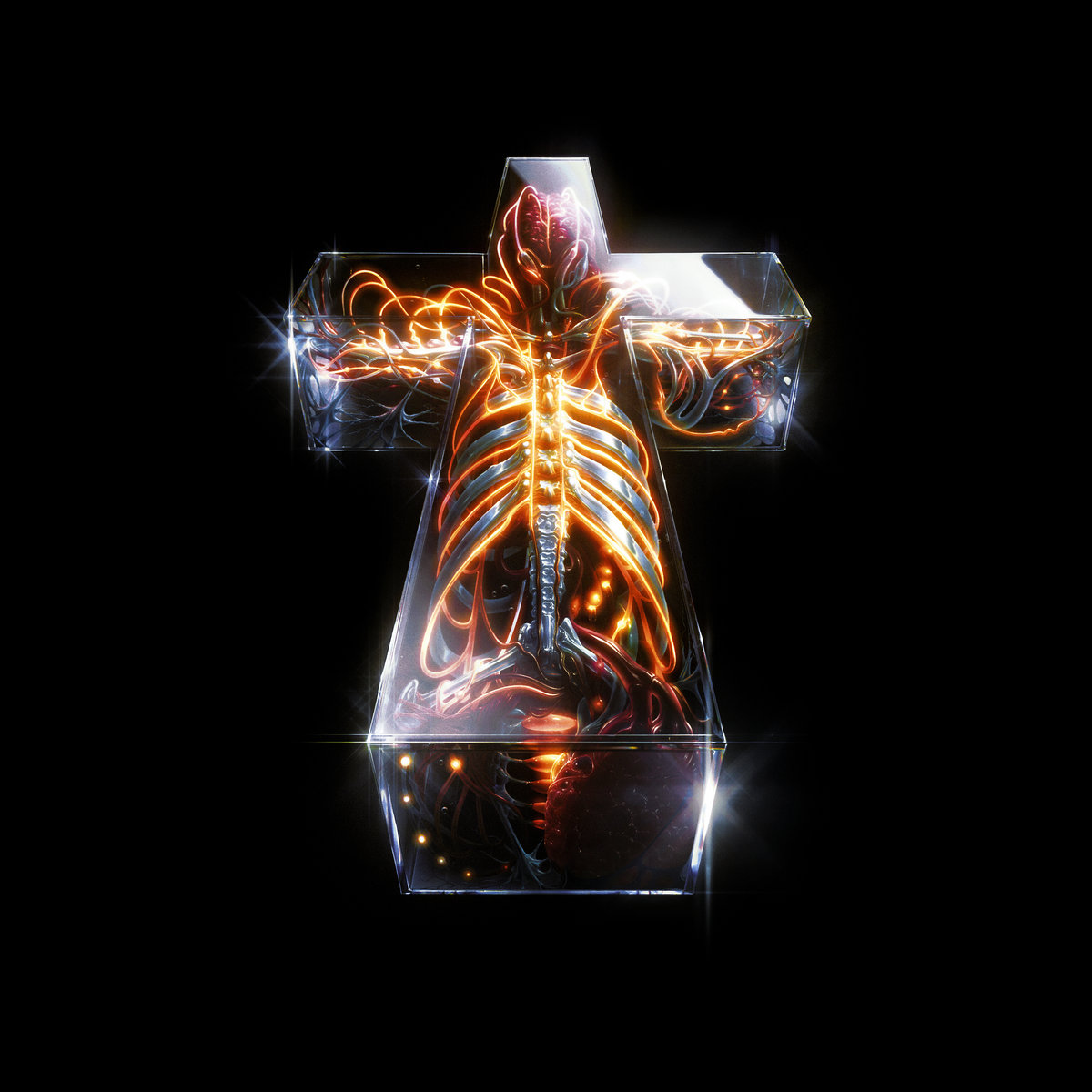
Let’s Dance – Justice: Hyperdrama (Ed Banger / Because)

by Ben Hogwood

What’s the story?

With the dissolution of Daft Punk, Justice are now one of the mainstays of French dance music, flying the flag with their fourth album.

Hyperdrama is their first long player in seven years, but they spent a lot of time recording, enlisting guest vocalists such as Tame Impala‘s Kevin Parker, Thundercat and Connan Mockasin – but also making good chemistry with new talent RIMON and Miguel.

What’s the music like?

The music for Hyperdrama may not be a massive departure from what Justice do best, but that is surely good news for those who love them. The album is well thought out, starting off with a high from the likes of Generator, which is contrasted nicely with the two Kevin Parker tracks, and Incognito, which works the room well.

Then it all changes around half way through, the tempo slowing and the saxophone emerging for the cheesy but enjoyable Moonlight Rendez-Vous, a slow track that nonetheless works a treat as a poolside chillout tune.

Then, gradually, the energy returns – with Saturnine and The End.

Does it all work?

Pretty much – the only reservation being that Justice may have used a bit too much studio gloss in the final production process.

Is it recommended?

It is. Hyperdrama may be a bit more polished than previous work bit it still presses all the right buttons!

Listen & Buy

Published post no.2,163 – Monday 29 April 2024