This month we mark 200 years since the birth of Czech composer Bedřich Smetana in Litomyšl, east of Prague, on 2 March 1824.
Smetana is fondly regarded as the father of Czech music, his output spearheaded by the remarkable cycle of six symphonic poems Má vlast (My Country), containing vivid descriptions not just of the Czech countryside but also its architecture and history.
A new recording of the cycle has just been issued by the Czech Philharmonic Orchestra and their conductor Semyon Bychkov, on the Pentatone label, and it is included on the playlist below. However – as I hope you will find – there is a lot more to Smetana than this wonderful sequence alone.
The String Quartet no.1, subtitled From My Life, is a poignant tale of the composer’s life and subsequent deafness, unforgettably portrayed in the finale by the first violin. Also worth investigating in the composer’s chamber music output are the Second String Quartet and Piano Trio, while the inclusion of Richard III shows a depth of Smetana’s orchestral writing that is yet to be fully exploited in concert or on record. Make a note, too, of his contribution to Romantic piano music, in a series of attractive polkas.
Smetana’s contribution to opera is perhaps his principal legacy. Two works in particular stand out – The Bartered Bride, from 1866, and Dalibor, completed two years later. While very short excerpts from these are included in the playlist, I have included links to complete performances so that you can become acquainted with them.
Hopefully Smetana’s music will be celebrated in the concert hall as the year progresses, for it is generously melodic and passionate. The more you hear, the more rewarding it becomes!
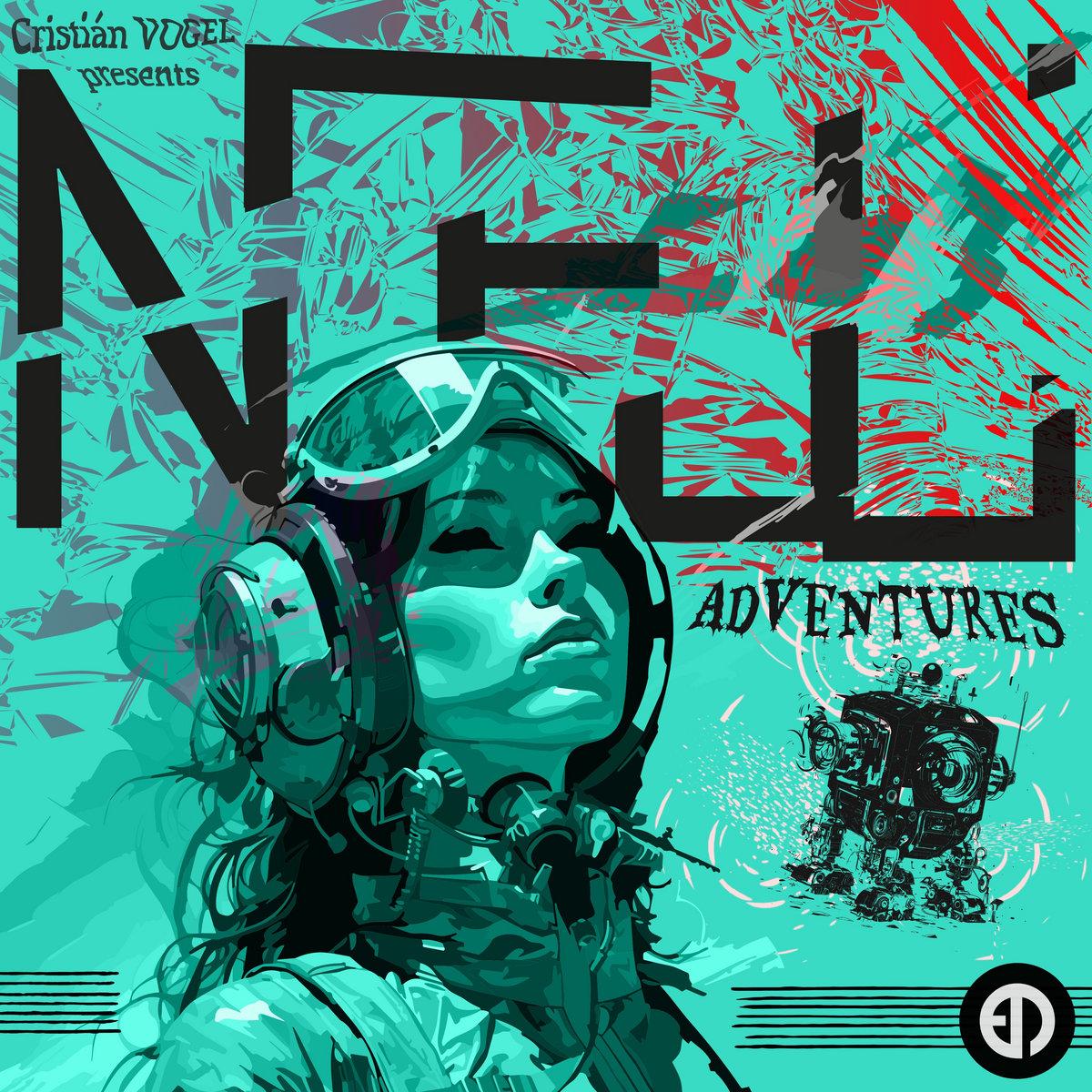
This is a compilation of more recent EPs recorded by Cristian Vogel under his NEL alias. The eleven tracks cover four separate releases, and as a bonus add two new tracks.
The NEL alias has a reputation for enabling the Chilean producer to explore a side looking at tougher rhythmic profiles, largely using modular synthesizers and improvised material.
What’s the music like?
The live approach pays dividends for Vogel on this compilation. Each of the tracks on NEL Adventures teems with life, packed to the gills with plenty of melodic and percussive ideas.
Vogel is very clever with his use of rhythm, not for art’s sake but generating positive energy as the percussive motifs ricochet across the stereo picture. The pinball percussion of Mirabelle is a case in point, the rhythms gradually giving way to a bell-like figure, while The Misty Quay sounds like a much older ‘90s piece of techno, its jagged riffing given counter melodies in a modular extravaganza.
Complementing the bright invention are darker tracks like Shadowgraphs, which explores deeper waters with dark keyboards, and Orchid, which presents a thoughtful exterior in spite of its solid beat. Understory cuts deep with its sharp synth riff and uncompromising beat.
The new tracks make a strong impact. Gullane nips along with constructive mechanical ideas, the ideas bubbling up to the top while the clipped rhythm chugs along behind. Earthsea is full of energetic crossrhythms, initially delicate but developing into bright block chords.
Fortuna is arguably the pick of the lot, its liquid ideas given a strong drum beat and clever sonics that bounce around as though the listener is in a gigantic pipe. Tyrkisk Peber runs it close, a shimmering mass of keyboards that generate even more momentum when the drums arrive.
Does it all work?
Yes. Vogel explores a wide range of colours in his work, though you might find some of the more dizzying cuts – such as The Insight – a bit too ‘heady’ at earlier hours in the day!
Is it recommended?
It certainly is. Vogel has built up an extremely sound reputation in techno circles, but this essential addition to the catalogue shows he is in no way resting on his laurels. His music is still packed full of ideas and invention, with wit and humour round the edges too. There is a whole load to enjoy here!
For fans of… Joey Beltram, Etienne de Crecy, Richie Hawtin
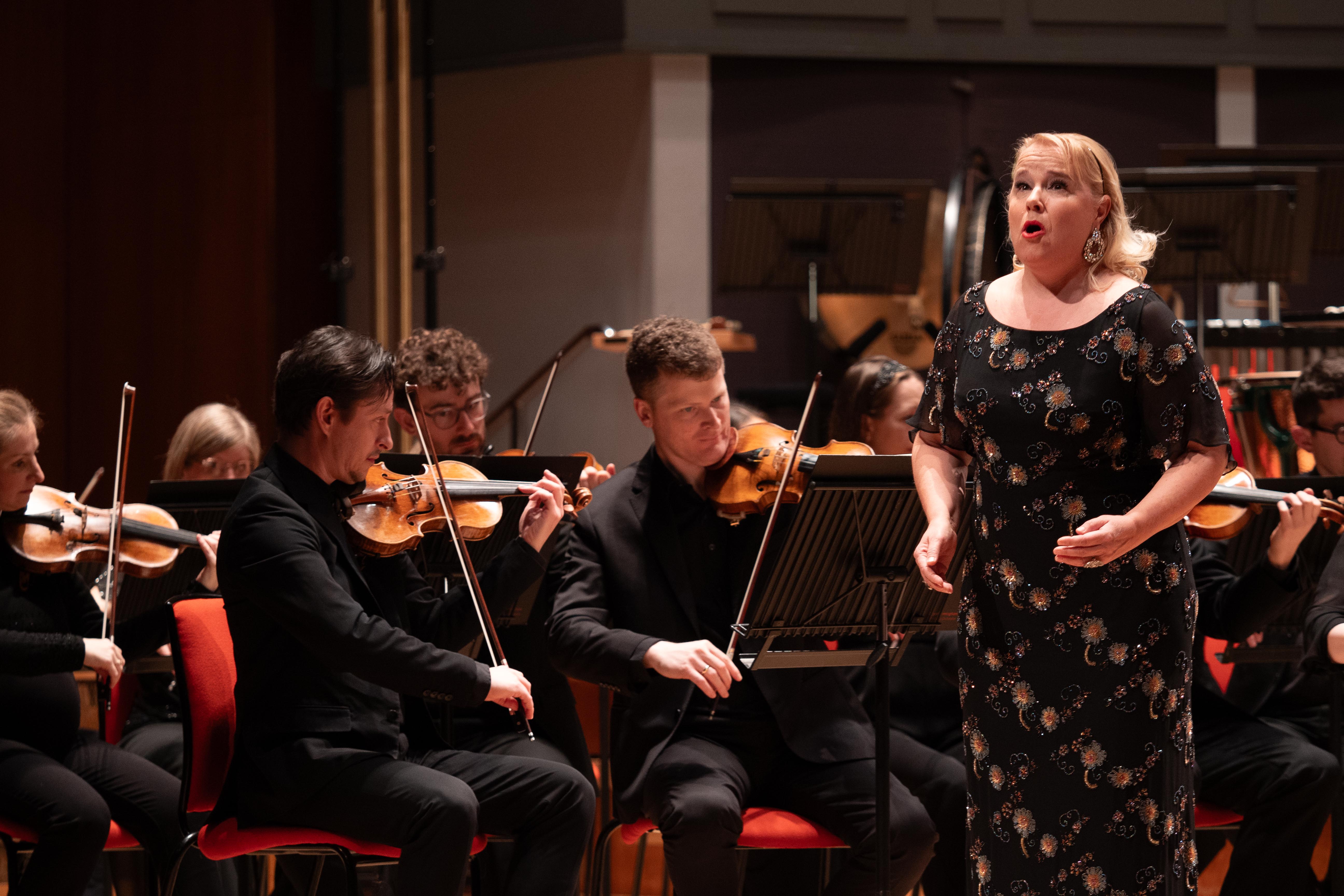
Anu Komsi (soprano), City of Birmingham Symphony Orchestra / Sakari Oramo (above)
Sibelius The Tempest (1925-6) – Suite no.1 Op.109/ 2 Richard Strauss Vier letzte Lieder, AV150 (1948) Merikanto Ekho (1922) Sibelius Symphony no.7 in C major Op. 105 (1923-4)
Symphony Hall, Birmingham Wednesday 28 February 2024
Reviewed by Richard Whitehouse Pictures (c) Hannah Blake-Fathers
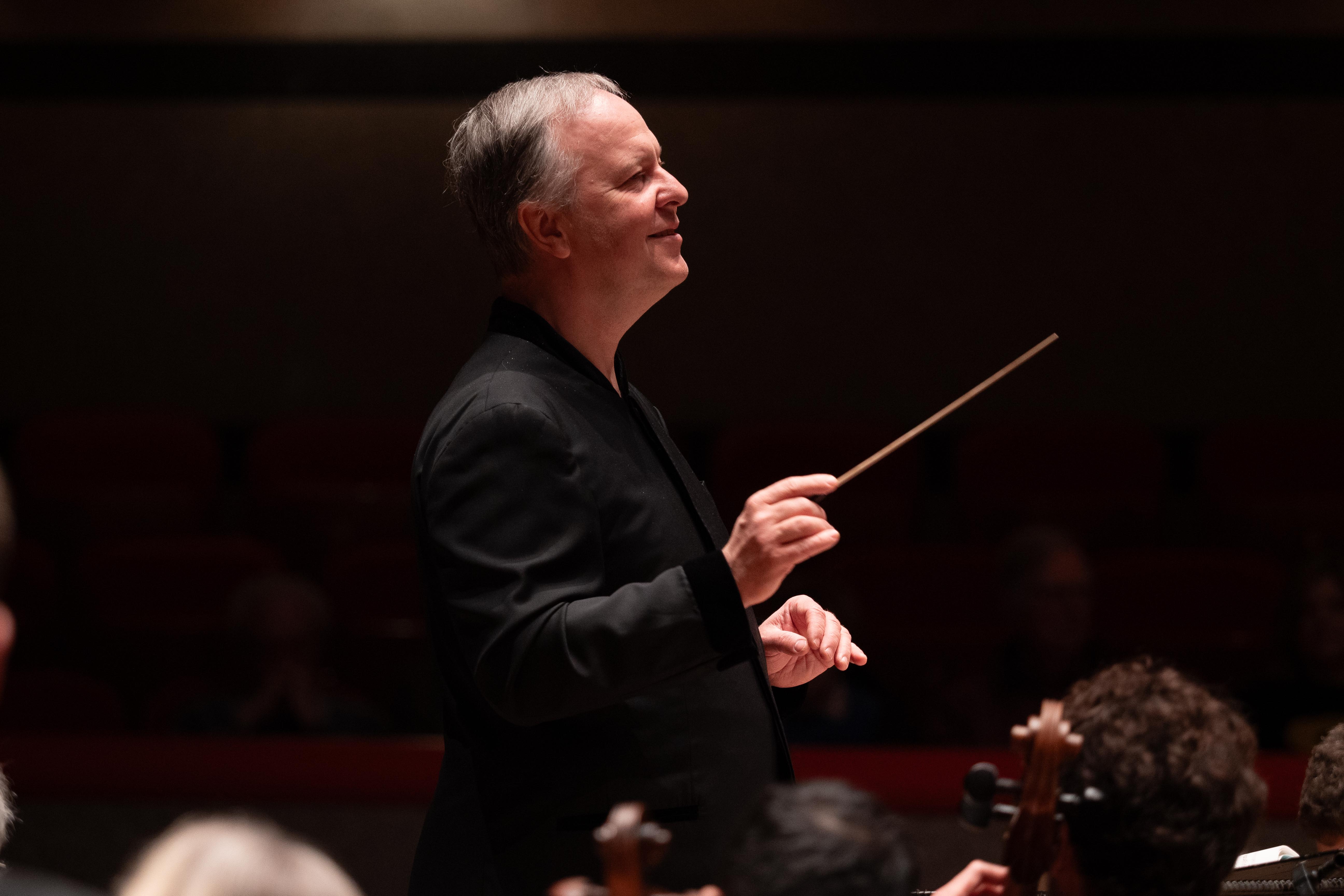
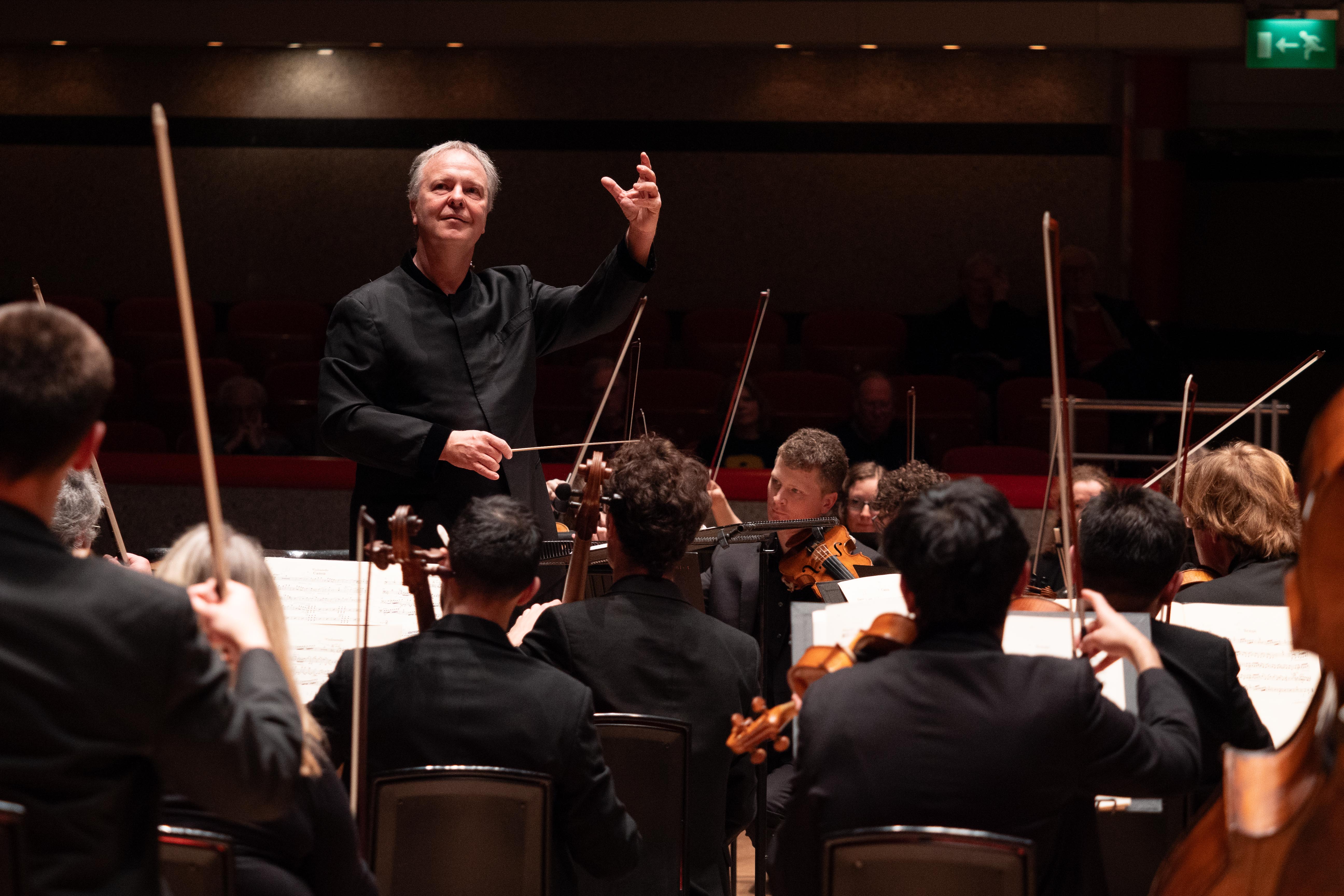
Could it really be 15 years since Sakari Oramo last conducted the orchestra of which he was music director for a decade? Time has passed, but his rapport with the City of Birmingham Symphony Orchestra was evident throughout what proved a well-planned and finely executed concert.
Sibelius featured prominently during Oramo’s tenure, with recorded and live cycles of the symphonies, so it was natural his music frame this programme. His music for The Tempest is the most diverse of his theatre works – the First Suite drawn from this lavish score opening with a searing evocation of The Oak Tree, before heading into a characterful Humoreske then Caliban’s Song with its telling bizarrerie. The Harvesters reminded of Sibelius’s gift for ‘light music’, as too the animated Canon and insinuating Scene, to which the plangent Berceuse then ominous Interlude made for startling contrast. A truncated version of The Tempest music that provided the prelude followed on with due seamlessness – its teetering on the metaphorical edge brought up abruptly if convincingly in this gripping performance.
Anu Komsi (above) then joined the orchestra for Richard Strauss’s Four Last Songs – a sequence which often gains emotional gravitas as it proceeds, though a slight edginess in Frühling gave it greater expressive ambivalence prior to the fatalism of September – the most perfectly realized of these songs. The growing rapture of Beim Schlafengehen featured a poised violin solo from Eugene Tzikindelean, then Komsi gave of her eloquent best in Im Abendrot – its euphonious postlude accorded suitably spacious treatment by Oramo as this evanesces towards eternity.
Komsi returned after the interval with what must have been a first hearing in Birmingham for Ekho, a short but arresting scena by Finnish composer Aarre Merikanto. Written just after his opera Juha, at the start of his most innovative period, this draws on the example of Sibelius’s Luonnotar along with the post-Impressionism of Koechlin and Roussel. Its intricately detailed textures complement a vocal line as virtuosic technically as it is audacious expressively, one with which Komsi was in her element as this music heads almost intuitively to a furtive close.
Fascinating to recall while Merikanto was pursuing so fractured a musical discourse, Sibelius was working towards his most integrated statement. Oramo has given many performances of the Seventh Symphony, but the present one felt exceptional in the ease and inevitability of its formal follow-through. The eliding from one section to the next was realized with a rightness which, as with the motivic constituents from which this work emerges, never drew attention to itself other than during moments of greatest expressive focus – notably those appearances of the trombone theme which ensure unity, even when the music retreats from its emotional apex into a coda not so much final as immovable. Nor was this achieved through conscious interpretation, Oramo setting a course that allowed the musicians simply to play the music.
This impressive performance rounded off a no less impressive evening. Before the last work, Oramo spoke about the significance his CBSO tenure had for his conducting and his regret this ‘reunion’ had taken so long. Hopefully his next appearance will not be so long in coming.
Eric Hilton, a founder member of the much-loved Thievery Corporation duo with Rob Garza, has continued to mine a rich vein of musical inspiration in his solo work.
The Thievery tradition has been retained, using largely down tempo beats as backing for music sourced from around the world, while simultaneously looking back through the decades. For Sound Vagabond Hilton used a public domain sample library, removing the problems of copyright clearance at one fell swoop, but in tandem with that he took inspiration from his travels.
The album, then, becomes what its creator describes as a ‘sonic travelogue’.
What’s the music like?
If the verdict is that it sounds like Thievery Corporation, then that is meant as a compliment for Eric Hilton’s music. The preparation is meticulous, and yet there is plenty of room for manoeuvre, a chance for the listener to enjoy all the sounds and sights of their destination.
Inspiration for the work runs far and wide – Cerro Allegre, for instance, was inspired by time in Valparaíso in Chile, while Mumbai Hustle takes a pinch of that city and blends it in with Detroit, upping the pace as it does so. Hilton orchestrates his source material so beautifully, with the harp that laces Endless Affair and Lumi a beautifully poised instrument, and the strings that dress Nico delivered with typical grace.
Midnight Milan is a suave nocturnal affair, the harp again forward in the mix, while the shuffling beat to The Violet Hour sits behind an exotic cast of strings, keys and languid guitar. The title track takes influences from North Africa, and you can feel the heat in its lazy woodwind and spacious keyboards. Similarly The Mirror Inside, a sultry number with a typically persuasive beat.
Does it all work?
It does. By their nature these soundtracks can be quite fragmented but the sequence here is very satisfying, with some lovely sounds and colours.
Is it recommended?
It is. If you like Austra as a band you won’t need any persuading, though you might be surprised at the extent to which Katie Stelmanis allows her imagination to blossom in what is a striking piece of work.
For fans of… Gazelle Twin, Julia Holter, Laurel Halo
Listen & Buy
Published post no.2,103 – Thursday 29 February 2024
This is the first music on Erased Tapes from American artist Sheherazaad, a native to the Bay Area who brought together a number of musicians in New York to record this mini-album.
Sheher has North and South Indian heritage, and became disorientated by moving between the two and America, though when she settled in New York for study she discovered the city’s South Asian arts community and an electronic culture emanating from the UK, which brought her into contact with Arooj Aftab – who produced this record. Singing in Urdu, she was joined by musicians including Basma Edrees (Egypt), Gilbert Mansour (Lebanon), and Firas Zreik (Palestine). The result, Qasr, translates to ‘castle’, or ‘fortress’, and is a deeply personal document of Sheherazaad’s own unique origins.
What’s the music like?
Compelling. There is an outdoor feel to this music, as though recorded barefoot in the very places Sheher sings about.
The first song, Mashoor, features the guitar of Ria Modak – and it proves the ideal foil for the voice, both low in pitch but conversing intimately. Dhund Lo Mujhe brings a burst of energy, though not necessarily positive, for the outbursts of the fiddle are there to help portray ‘a very specific insanity, that of the immigrant experience’. Sheher’s inflections and the pizzicato play off against each other before the voice soars, its vibrato inspiring the fiddle to greater heights.
Koshish(Try) is conversational, the reverberant acoustic capturing the Californian heat, while Khatam (Finished) travels back through time to the accompaniment of rich improvisation on the sustained piano. The final Lehya, the most substantial of the five songs, takes us to a mythical city, its nocturnal beginning the basis for growth to all sorts of colourful shades, before the closing chant, a soft but moving call for freedom.
Does it all work?
It does – though the levels of intensity mean that for full appreciation you need to listen in an environment where you can give Sheherazaad’s music the level of attention it deserves.
Is it recommended?
Yes. This is an artist with a huge amount to say, and the feeling is that on this mini album she is just dipping her toe in the water. There is a whole lot more to come from this explosive and original talent.
For fans of… Khruangbin, William Onyeabor, Shida Shahabi




 Arcana.fm