
Let’s Dance – Various Artists: 20 Years of Phonica (Phonica Records)

by Ben Hogwood

What’s the story?

When Phonica Records opened in 2003, Soho was a very different place to what it is now. I was working just round the corner, and my initial scepticism at another record shop opening was quickly found to be misplaced. Because Phonica is not just an ordinary record shop, and in fact it has outlasted almost every vinyl-selling neighbour, to our great disappointment. What a treasure it is, though, one of those establishments capable of giving you a musical rush as soon as you step foot in the door. The number of times I have had to enquire to the patient staff what the current tune is (because it’s too new for Shazam!) I could have been saddled with a restraining order. Instead the staff are always helpful and enthusiastic, because they are working in a shop they love.

Why the long intro, you ask? It is because Phonica’s enthusiasm for their art and craft translates directly into the music they sell on their own label, and the tracks appearing on this packed compilation. In their 20 years they have responded to new trends while keeping the old ones happy, and again that is reflected in the music.

What’s the music like?

This is a treasure trove of dance music, a joy from start to finish – and with the added benefit of a fresh track selection that will fill the listener with joy. 18 new tracks is nothing to be sniffed at, and if you read the detailed commentary on the label’s Bandcamp page you’ll see exactly what fits where.

The many highlights can be condensed – only slightly – but include some lithe drum & bass from Tim Reaper & Comfort Zone‘s Subterranean. Daniel Avery contributes the typically brilliant Bells, then the jittery Read My Lips zips along with rushes of euphoria from Paramida & E-Talking. Nyra‘s Broken Needs is a cracker, no messing – while the shuffling beat of Gene On Earth‘s Club Jacket mining the best of 90s garage house. Dam Swindle‘s Alright (Just A Tribute) is also a mid-90s update, a kind of cross between Grace and Crystal Waters. Dauwd‘s Slam is superb, with hushed vocal and leading drum track, while System Olympia‘s Mezzonotte breaks towards 80s electro to very good effect.

The high standard continues, with nocturnal shades from Willow‘s Willbush, and an excellent disco-house hybrid from Austin Ato, Song For Mr Lewis with a great spoken bit in the middle. There is some classy, nippy deep house from Felipe Gordon & Bob The EgoistGet Your Body Movin’ complete with tasteful flute solo. Eli Escobar‘s FindAWay2Day is a really good, zippy track while, Will Saul‘s For Joanie is superb, with vocal displacement and a slightly glitchy house beat and atmospheric pads.

Does it all work?

It does – nothing to quibble with here, other than electronic excellence and energy that translates from the big city to the bedroom studio.

Is it recommended?

Without doubt. Compilations like this are few and far between in electronic music these days, but Phonica have filled the gap with some aplomb.

For fans of… all sorts of house, garage and techno!

Listen

Buy

Published post no.2,073 – Wednesday 31 January 2024
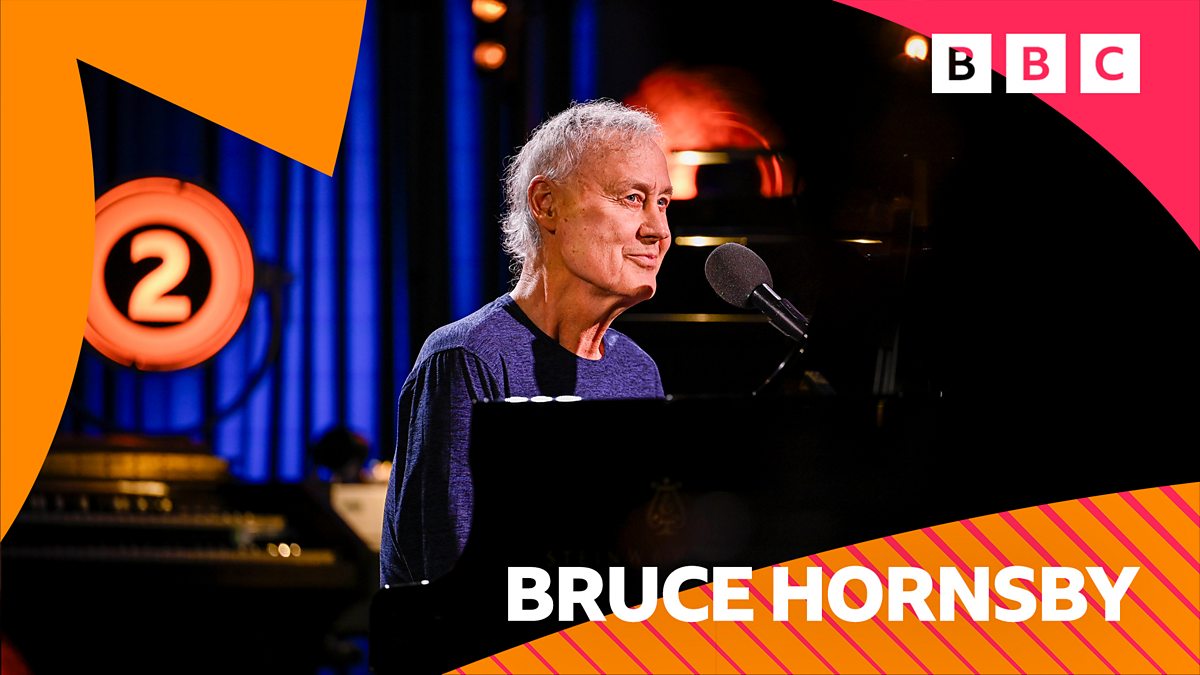
Online review – Bruce Hornsby in the BBC Radio 2 Piano Room

by Ben Hogwood

Anyone listening to Bruce Hornsby‘s music over the last five years will know he is a restless artist in the best possible way, pursuing a direction taking him ever closer to the 20th century classical music he has come to know and love.

With that in mind, his billing at the very front of BBC Radio 2’s Piano Room month was always likely to provide something special – and so it proved.

Hornsby is a fascinating personality, one I was lucky enough to interview for an hour in 2022. We talked about his love of the music of Messiaen and Ives, and how his musical explorations with the New York chamber ensemble yMusic are taking him ever closer to those composers, without forgetting his earlier musical persona as writer of one of the 1980s all-time classic songs, The Way It Is.

His performance with the strings of the BBC Concert Orchestra showed how far that song has journeyed, finding new life through Tupac Shakur and now sounding more relevant than ever in troubled times. What struck here was the lightness of touch Hornsby applied to the piano, softer than the steely edge he used to apply. There was room, too, for thoughtful asides, departing from the song almost completely with the help of the orchestra – whose musicianship should never be undervalued, for they are one of the unsung jewels in the BBC’s creative crown.

Hornsby’s next song was Cast Off, co-written with Bon Iver frontman Justin Vernon. It is one of the many highlights from 2019’s outstanding album Absolute Zero, a quiet number but a frisson of resentment. “Is my back for stabbing?”, Hornsby asks, tellingly.

Then, by way of an enlightening mini interview with host Vernon Kay, Hornsby played The End Of The Innocence, a co-write with Don Henley who originally sang it in 1989. It is a wistful but moving song, and Hornsby did it full justice here, even breaking up the verses for tasteful improvisations with soloists from the orchestra.

His piano playing speaks with even greater conviction than his words, and the mood – while warm and cosy in the studio – reflected a stand against the troubled world outside the studio doors. Hornsby’s piano offers an escape from that, and if you haven’t watched it yet then you will find half an hour in his company wholly beneficial.

You can watch the full set of Bruce Hornsby in the Radio 2 Piano Room by clicking here

Screen Grab: Fargo, Season 5

Currently the Arcana household is in the grip of Fargo, Season 5 – and a couple of musical masterpieces have shown their hand already.

We didn’t have to wait long, either – the opening scene (no spoilers!) took place against the magnificent backdrop of All Good People by Yes. The directors used it brilliantly, too – the build up from the massive organ chorale was the centrepiece of the scene, which then dropped off the edge of a cliff and into a completely different sonic world. If you watch it you’ll see exactly what I mean, but for now you can enjoy the song in its entirety:

Then, in episode four, a reappearance for Bartók’s Music for Strings, Percussion and Celesta, specifically the passage from the third movement Adagio which Stanley Kubrick used in The Shining, when Johnny’s descent into insanity was almost complete:

Here the genius is to follow Bartók almost immediately with a polar opposite, The Prodigy’s Smack My Bitch Up. It works a treat, see what happens when you do the same below!

We await the rest of the series with interest…and it goes without saying there is some superb original music from regular composer Jeff Russo to enjoy as well:

Listening to Beethoven #223 – Leonore Overture no.2 Op.72a

Beethoven’s Leonore as seen in a production by Buxton Opera, 2016

Leonore Overture no.2 Op.72a, used by Beethoven for the first edition of his opera in three acts (1804-05, Beethoven aged 34)

Duration 13′

by Ben Hogwood

Background and Critical Reception

Beethoven’s struggles with writing his first opera extended to finding the right overture. In all he composed four overtures for Leonore / Fidelio – three for the former, and one for the latter.

Lindsay Kemp, writing booklet notes for LSO Live, explains how the problem was not one of musical quality, but one of function. Originally his idea was ‘to provide a programmatic prelude that would foreshadow the ensuing drama and its music in the manner of the overtures of contemporary French opera.’ He describes the results as ‘grand but architecturally loose’.

Confusingly this is known as ‘no.2’ – which was followed the next year by ‘no.3’, then a heavily trimmed ‘no.1’ and finally Fidelio.

Thoughts

Drama is to the fore in this overture, and it is immediately clear that Beethoven’s efforts to find a suitable prelude led to a great deal of invention.

The opening pages are redolent of a French overture; also more than a little reminiscent of the Representation of Chaos that begins Haydn’s Creation oratorio. The tension barely lets up, save for a softer episode where a tender love theme is aired. All too soon, though, we are back in stormy C minor – Fifth symphony territory – from which Beethoven navigates to the major key for an episode of power and precision.

This is a serious orchestral dialogue that operates on the scope more of a symphonic poem than an overture, and the final arguments are thrilling in their execution. The trumpet fanfares towards the end are a case in point, setting the scene perfectly for a triumphant final coda – and also for the action to follow.

Recordings used

Berliner Philharmoniker / Herbert von Karajan (DG)
Cleveland Orchestra / George Szell (Sony)
Chamber Orchestra of Europe / Nikolaus Harnoncourt (Teldec)
Orchestre Révolutionnaire et Romantique / Sir John Eliot Gardiner (DG Archiv)
Freiburger Barockorchester / René Jacobs (Harmonia Mundi)

There are some terrific versions of this overture. Maximum theatricality can be achieved by listening to any of Karajan, Szell, Harnoncourt and Gardiner – though the silky strings of Karajan’s version really do set the tension. René Jacobs, too, in his version of the complete opera, starts with high stakes.

You can listen on the links below:

Also written in 1805 James HookThe Soldier’s Return

Next up Leonore Overture no.2 Op.72a

Switched On – Dau: Gilly’s Wood (Spirituals)

by Ben Hogwood

What’s the story?

Gilly’s Wood is the name for a plot of hawthorn woodland in East Kent – and now it shares its name with an album made by Phil Self in the same spot. This is in complete contrast to Self’s previous record under the Dau moniker, for Zed Zed was made in isolation indoors, with just four walls for company.

No, Self has used his connections with instrumental sextet yndi halda to bring to life a set of improvisations he recorded in the woods two weeks after the Smugglers Festival on the same spot in 2021. The recordings feature Self playing the reed organ alone in the woods, with nothing but a Tascam field recorder for company.

What’s the music like?

There is a rich, pastoral beauty to the music here, and a sense of the slow moving passages of time the trees have taken in Gilly’s Wood itself. The sonorous reed organ lends a stately air to proceedings, especially with the slow moving chord progression of Neu. Not only does the organ feature but the birds and other natural phenomena are round about, giving space and perspective especially on headphones.

Self constructs his portrait in six parts, four of them tracks over eight minutes in length, which gives the music plenty of time to plot its slow course and development. There is a fuzzy, out of focus production which gives the music a soft, grainy texture that proves appealing through Camping and the title track, whose slow progression is a beautifully ambient one.

Only The First Of The Month sounds a little more ominous, with two sonorous tones from the reed organ close together – but this is soon past and we return to fuzzy ambience with Mulberry, which uses musical layers to make a vivid collage of consonant sound. Finally Mary is the most expansive of Self’s musical ideas, its broad canvas reaching to the tops of the trees.

Does it all work?

Effortlessly so. Self’s music does not ask a great deal of the listener other than a suitable environment in which to listen. If you find a restful spot in which to enjoy Gilly’s Wood, the benefits are clear.

Is it recommended?

It is. This is a lovely and rather beautiful suite of English pastoral ambience, a celebration of the outdoors and a positive shot of musical mindfulness.

For fans of… Bibio, Loscil, Kit Downes, Erland Cooper

Listen & Buy

Published post no.2,069 – Saturday 27 January 2024