On Record – Soloists, Transylvania State Philharmonic Choir & Orchestra / Lawrence Foster – Kodály: Te Deum & Psalmus Hungaricus; Bartók: Cantata Profana & Transylvanian Dances (Pentatone)

Kodály
Budavári Te Deum (1936)
Psalmus Hungaricus Op.13 (1923)
Bartók
Transylvanian Dances (Erdély táncok) Sz. 96 (1931)
Cantata Profana Sz. 94 (1930)

Luiza Fatyol (soprano, Te Deum), Roxana Constantinescu (mezzo-soprano, Te Deum), Marius Vlad (tenor, Te Deum and Psalmus Hungaricus), Ioan Hotea (tenor, Cantata Profana), Bogdan Baciu (baritone, Te Deum and Cantata Profana), Junior VIP, Children’s Choir (Psalmus Hungaricus), Transylvanian State Philharmonic Choir & Orchestra / Lawrence Foster

Pentatone PTC 5187071 [64’14”] Texts and English translations included

Executive & Recording Producer Job Maarse Balance Engineer & Editing Erdo Groot Engineer Lauran Jurrius
Recorded May 2022, Radio Studio of Radio Cluj, Romania

Written by Ben Hogwood

What’s the story?

Here is a chance to gain an insight into the choral music of two 20th century Hungarian composers known predominantly for their orchestral works. Bartók and Kodály were born just a year apart, and while their music is fiercely proud of their heritage their musical trajectories extend well beyond Hungary. Kodály stayed largely within Europe but brought back influences from Paris, while Bartók reluctantly emigrated to the US in late 1940.

Psalmus Hungaricus was Kodály’s first major post-war composition, in 1923. It is a landmark in his output, using for its text a Hungarian paraphrase of Psalm 55. Kodály uses a tenor soloist for the central dramatic role, the choir taking up their position as commentators. The Budavári Te Deum, completed 13 years later, marks the 250th anniversary of the liberation of Buda Castle from the Turks. While referencing Gregorian chant, Kodály incorporates references to Hungarian melodies and ornamentations in a dramatic setting.

In 1930 Bartók completed his first major work for chorus and orchestra. Cantata profana has Transylvanian roots, and Oana Andreica’s booklet note gives the context of its libretto, starting from two Romanian ‘colinde’ – ballads sung during the Christmas season but with a wide range of subjects well beyond the birth of Christ. Such is the case here, Bartók dramatising a myth of nine sons turned into stags. The cantata charts their fate and their father’s conflicting emotions, expressed by a baritone soloists. The Transylvanian Dances are a complementary addition, a short trio of works for small orchestra containing five traditional songs.

What’s the music like?

The Budavári Te Deum is a thrilling start to the album. This is red-blooded choral writing, Kodály diving in headlong to a high octane first section. He challenges choir’s higher sections, who respond admirably to the loud dynamic, retaining impressive clarity in the part writing. The work’s climactic points are notable for their power and passion.

This performance of the Psalmus Hungaricus has the authentic inflections to the melody, its bracing start turning to contemplation. Tenor soloist Marius Vlad inhabits the full tone and strong line demanded by Kodály, and sung so memorably by Ernst Haefliger in the legendary recording with Ferenc Fricsay. This makes for a fine digital alternative, with the choral response both full-bodied and unified. The meaningful counterpoint between Vlad and the Transylvanian woodwind in the middle section (Te azért lelkem) is especially memorable.

Bartók’s Cantata profana starts ominously, with an underlying menace that grows steadily as the hunt in the story progresses. Again the choral passages are well drilled, especially when in league with the percussion. The passionate tenor solo (Ioan Hotea) and fulsome bass (Bogdan Baciu) prove to be ideal foils, alighting on some spicy chords. There is little consolation at the end, in spite of the relative calm this performance leaves.

The Transylvanian Dances are over in a flash but leave a charming impression, with rustic themes. The recording is much closer, taking the action indoors to the tavern rather than outside in the wilds.

Does it all work?

Very much so. There is an adjustment to be made for the Transylvanian Dances, with the smaller ensemble and closer recording, but the performances justify the means. The choral works are a resounding success, brilliantly performed and with electric singing from the Transylvania State Philharmonic Choir, especially in the high passages. The orchestra match them under Lawrence Foster, who secures incisive rhythms and impressive clarity from such large forces.

Is it recommended?

It certainly is. This is an enterprising and very accessible coupling of three thrilling choral works, revealing fresh insights into the Hungarian composers.

Listen

Buy

For more information on this release and for purchase options, visit the Pentatone website

In concert – Quatuor Danel: Shostakovich & Weinberg #2 @ Wigmore Hall

Quatuor Danel [Marc Danel & Gilles Millet (violins), Vlad Bogdanas (viola), Yovan Markovitch (cello)]

Weinberg String Quartet no. 2 in G major Op. 3/145 (1939-40, rev. 1986)
Weinberg String Quartet no. 3 in D minor Op. 14 (1944, rev. 1987)
Shostakovich String Quartet no. 3 in F major Op. 73 (1946)

Wigmore Hall, London
Friday 12 January 2024

by Richard Whitehouse Photo (c) Marco Borggreve

Commenced anew last November, after having been abandoned in the wake of the pandemic, the Quatuor Danel’s cycle of string quartets by Shostakovich and Weinberg at Wigmore Hall continued this evening with formative works from the latter and a masterpiece by the former.

Hopefully it will not be long before Weinberg’s Second String Quartet (1940) has entered the repertoire. Written during his two years in Minsk (after having fled a Poland overrun by Nazi forces), its ‘back to basics’ outlook is evident in the initial Allegro’s textural clarity and easy lyricism, but also a compositional flair asserting itself in the movement’s tensile development and combative coda. Revision saw the Andante become a more complex and imposing entity, its fraught central section intensifying the sombre expression either side, along with an extra movement. This taciturn yet wistfully elegant Intermezzo makes for an admirable foil to the Finale, its rondo format energetically traversed through to a curtly decisive close. The Danel was palpably in command of music which transcends any apprenticeship quality with ease.

Shorter and more concentrated, Weinberg’s Third Quartet exudes an overarching emotional intensity. The Danel was mindful to observe those attacca markings such as give the overall design its unity within diversity – the uninhibited energy of the opening Presto by no means offset with the bittersweet poise of the central Andante, its taciturn unease being continued in a final Allegretto as affords only the most tenuous of closes and one which arguably feels too provisional, even in this insightful a reading. One reason, perhaps, the composer overhauled this piece when recasting it more than three decades later as his Second Chamber Symphony, when a completely new and more ‘conclusive’ finale was substituted for the original. Which is not to deny the fascination of this music from a crucial stage in his mastery of the medium.

A mastery as Shostakovich achieved with his own Third Quartet, its five movements drawing on those formal and expressive possibilities of his wartime Eighth and Ninth Symphonies, so the opening movement unfolds almost as a revisiting of that from the latter piece. The Danel undeniably had the measure of its playful capriciousness and brought out the ominous unease of the intermezzo, then headlong aggression of the scherzo which follow. Shostakovich’s first recourse to a passacaglia in his quartets, the slow movement exuded acute eloquence and this ensemble timed to perfection its cumulative approach to the finale’s searing apex. From here, the gradual dissipation of accumulated tension was palpably conveyed through to the numbed fatalism of a conclusion in which Shostakovich seems intent on bowing before the inevitable.

At this stage in the Danel’s traversal one might have expected either or both of Weinberg’s standalone Aria and Capriccio (written 1942-3) to have been given as encores. Instead, the players opted for repeating the finale from his Second Quartet, which at least provided the necessary uplift after the close of the Shostakovich. Hopefully those two pieces will be heard after the next instalment of this cycle, the Fourth Quartets of both composers being followed with the Fifth Quartet of Shostakovich: truly a ‘concert and a half’ as regards string quartets.

You can hear the music from the concert below, in recordings made by Quatuor Danel:

For more information on the next concert in the series, visit the Wigmore Hall website. You can click on the names for more on composer Mieczysław Weinberg and Quatuor Danel themselves.

Published post no.2,057 – Monday 12 January 2024

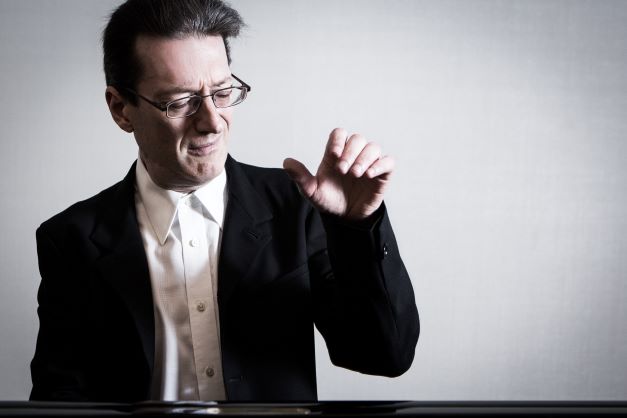
In concert – Llŷr Williams plays Schumann @ Wigmore Hall

Llŷr Williams (piano)

Schumann
Papillons Op.2 (1830-1)
Nachtstücke Op.23 (1839-40)
Faschingsschwank aus Wien Op.26 (1839-40)

Wigmore Hall, London
Friday 12 January 2024 (1pm)

by Ben Hogwood

After extensive examinations of the piano output of Beethoven and Schubert, Llŷr Williams has turned his attention to Robert Schumann. This lunchtime concert at the Wigmore Hall celebrated the release of a double album on Signum Classics starting a series devoted to the composer’s piano works. On this evidence there will be some revelations in store.

That Williams loves Schumann’s music was evident from with the languid introductory chords to Papillons. This early work from the 21-year-old composer is a masked ball, a chance not just to enjoy his love of butterflies but to present a closely connected set of miniature portraits for piano. In a good performance they capture the listener’s imagination, and under Williams’ fingers the music took flight. The clarity of his phrasing was immediately notable, revealing the exquisite details of Schumann’s melodic creations and taking time to let them breathe. With the improvisatory seventh piece (marked Semplice) the ink felt barely dry on the page, while the mood ranged from a relatively stern third piece to a playful eleventh, enjoying the brisk fanfares. Best of all was the Finale, where clever use of the sustain pedal left us with a marching band whose bright melodies hung on the air, the drone of the horns left for the listener to savour.

The Nachtstücke are lesser-known pieces, but Williams revealed just why they should be heard more often. He also revealed something of the turbulent period in which they were composed, with Schumann aware of the imminent death of his brother Eduard and travelling to Vienna in an attempt to alleviate his family’s precarious financial position. Because of this, the nocturnal dreams we might expect from other composers is trumped by active and often troubled thoughts, flitting quickly between moods and contrasting emotions. Williams, though, untangled the knots of Schumann’s musical thoughts. The solemn tread of the first piece, a funeral march, had forward purpose, while the second was a flurry of activity, thoughts running almost out of control until checked by a relatively dreamy central section. At all times Williams was in control of his characterisations, so much so that it was easy to forget the technical demands of this music. This was certainly the case in the outpouring of the third piece, before the chorale and related solos of the fourth were beautifully judged and complemented.

Finally we heard Faschingsschwank aus Wien, companion pieces to the Nachtstücke also written during the ultimately unsuccessful visit to the Austrian capital. These present a different side to Schumann, with Williams enjoying the humour of the first piece, with its catchy motif and cheeky reference to La Marseillaise.  This vigorous start contrasted with a heartfelt Romance and a deeper, flowing Intermezzo – between which the Scherzino reasserted the prevailing mischievous mood. So too, did the Finale, where the virtuosity was again beyond question, the helter-skelter figures once again used for poetic purpose rather than display. Williams proved a revelation in Schumann, bringing even his most complex character pieces to life – and maintaining a remarkable clarity of line as he did so. If he keeps this up, there are many treats in store as he journeys further into Schumann’s poetic and deeply personal world.

You can hear Llŷr Williams’ new recording on Spotify below:

Published post no.2,056 – Sunday 14 January 2024

In concert – Sebastian Rochford & Kit Downes @ Kings Place

Sebastian Rochford (drums), Kit Downes (piano)

Kings Place, London, 11 January 2024

by John Earls. Photo credit (c) John Earls

In January 2023 Sebastian Rochford (drums) and Kit Downes (piano) released A Short Diary, a profound and moving musical expression of loss for Rochford’s father, the poet and academic Gerard Rochford.

A year on, this concert consisted mainly of a performance of that album and was equally touching, not least because Rochford gave a little commentary between tunes, his voice as soft as his brush strokes and no less affecting.

Both Rochford and Downes have been involved in many different collaborations, but this is a particularly satisfying partnership. It is articulate, sensitive and compelling. It is also beautifully expressive, Downes through the keyboard and Rochford with drums and a mix of drumsticks, brushes, mallets, pedal, hands and fingers. The engagement between them and their listening to each other was something to behold.

The set opened, as does the album, with This Tune Your Ears Will Never Hear where the portentous music and heart-rending title set the tone. Communal Decisions is an astute musical illustration of competing demands with Rochford referring to the experience of balancing familial dynamics at the time of his father’s death (he has two brothers and seven sisters).

The more whimsical Love You Grampa was inspired by the notes Rochford’s niece used to leave for his father around the house. The melodic Silver Light was delicate and wistful. In a slight change of tone, the latter part of Ten of Us (remember all those brothers and sisters?) was played with an energy and passion which saw Rochford and Downes at their most animated.

The final number of the set was the only tune not composed by Rochford. Even Now I Think of Her was composed by his father, who sung it into his phone and sent it to Rochford, who passed it on to Downes’ phone for him to transcribe. It’s as endearing as the story behind it.

There were two new pieces performed. The Energy of Light, played midway in the set, is a rhythmic affair with Rochford and Downes both getting into the tempo. To the Country I Was Born was played as an encore and is a tribute to Rochford’s birthplace of Scotland – a fitting choice as this was the opening concert of Kings Place’s Scotland Unwrapped series which runs throughout the year. It was a tuneful and fitting end to this most personal of musical evenings.

John Earls is Director of Research at Unite the Union and tweets / updates his ‘X’ content at @john_earls

For more information on the album head to the ECM website – and click on the names for websites devoted to the music of Seb Rochford and Kit Downes

In concert – Paul Lewis, CBSO / Tabita Berglund: Sibelius, Grieg & Tchaikovsky

Paul Lewis (piano), City of Birmingham Symphony Orchestra / Tabita Berglund

Sibelius Pohjola’s Daughter Op.49 (1906)
Grieg Piano Concerto in A minor Op.16 (1868)
Tchaikovsky Symphony no.5 in E minor Op.64 (1888)

Symphony Hall, Birmingham
Thursday 11th January 2024 [2.15pm]

Reviewed by Richard Whitehouse

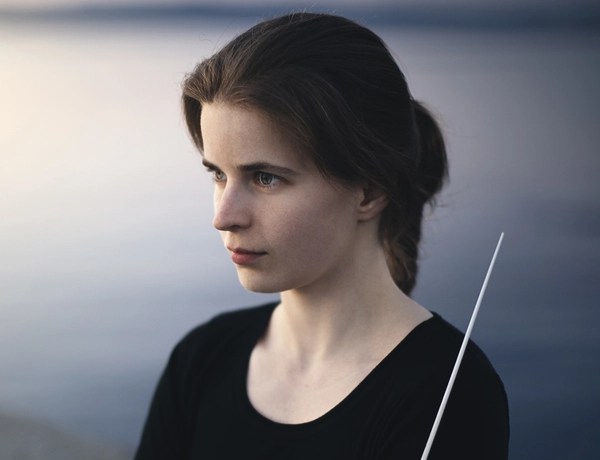
Entering 2024 with this attractive programme, the City of Birmingham Symphony Orchestra was conducted by Tabita Berglund – the Norwegian who, though unrelated to the late, great Paavo, seems certain to become one of the most significant conductors from her generation.

It was with Sibelius that the programme commenced, Pohjola’s Daughter lying on the cusp between its composer’s nationalistically inclined Romanticism and the relative Classicism that ensued. Pointedly so given the composer derived his inspiration from the Kalevala, in which its totemic figure Väinämöinen is outwitted by the ‘daughter of the North’, as the basis for a symphonic fantasia which critiques as surely as it remodels its underlying sonata design. Other interpreters have ensured a more seamless cohesion, but the acute characterization that Berglund brought to each episode, then the emotional frisson when those main motifs come together for a powerful apotheosis, compelled admiration – as did the closing pages in which Sibelius cannily fragments form and texture so all that remains is an all-enveloping silence.

Its ubiquity across 150 years should not distract attention from the innovative qualities found in Grieg’s Piano Concerto, and if his was not a consciously recreative approach, Paul Lewis gave a performance as appealing as it was insightful. Not least in an opening Allegro whose melodic directness was always balanced by a tangible sense of where this music was headed, and culminating in a take on the lengthy cadenza that infused its rhetoric with an inevitability worthy of Beethoven. There was expressive light and shade aplenty in the central Adagio, as too an unforced progress to the heartfelt restatement of its main theme. The outer sections of the final Allegro had no lack of impetus, as if to emphasize contrast with its rapt flute melody that closes the work in a thrilling peroration where soloist and conductor were rightly as one.

After the interval, Tchaikovsky’s Fifth Symphony emerged as a forceful and combative piece with its occasional longueurs convincingly held in check. Not least in an opening movement, the simmering expectancy of whose introduction intensified throughout what followed. Any short-windedness of phrasing was absent in the Andante cantabile, its indelible horn melody serenely intoned by Elspeth Dutch then its interplay between slow-burning eloquence and violent interjections of the ‘fate’ theme astutely judged on route to a warmly resigned coda.

Ostensibly an interlude, the Valse has a charm and, in its central trio, insouciance as belies its formal ingenuity that Berglund conveyed in full measure. Nor was there any sense of overkill as the Finale pursued a purposeful but never headlong course – its initial restatement of the main theme exuding an expressive focus matched by that of its climactic reappearance, here without risk of bathos in what brought the performance to a decisive and affirmative close. Certainly, the composer’s doubts as to any ‘insincerity’ proved unfounded on this occasion. It also confirmed a rapport between Berglund and the CBSO which will hopefully continue. Next week, however, brings the return of Kazuki Yamada for a wide-ranging programme of Berlioz, Walton and the world premiere of a newly commissioned work from Dai Fujikura.

Click on the link to read more on the current CBSO concert season, and on the artist names for more on Tabita Berglund and Paul Lewis

Published post no.2,054 – Friday 12 January 2024