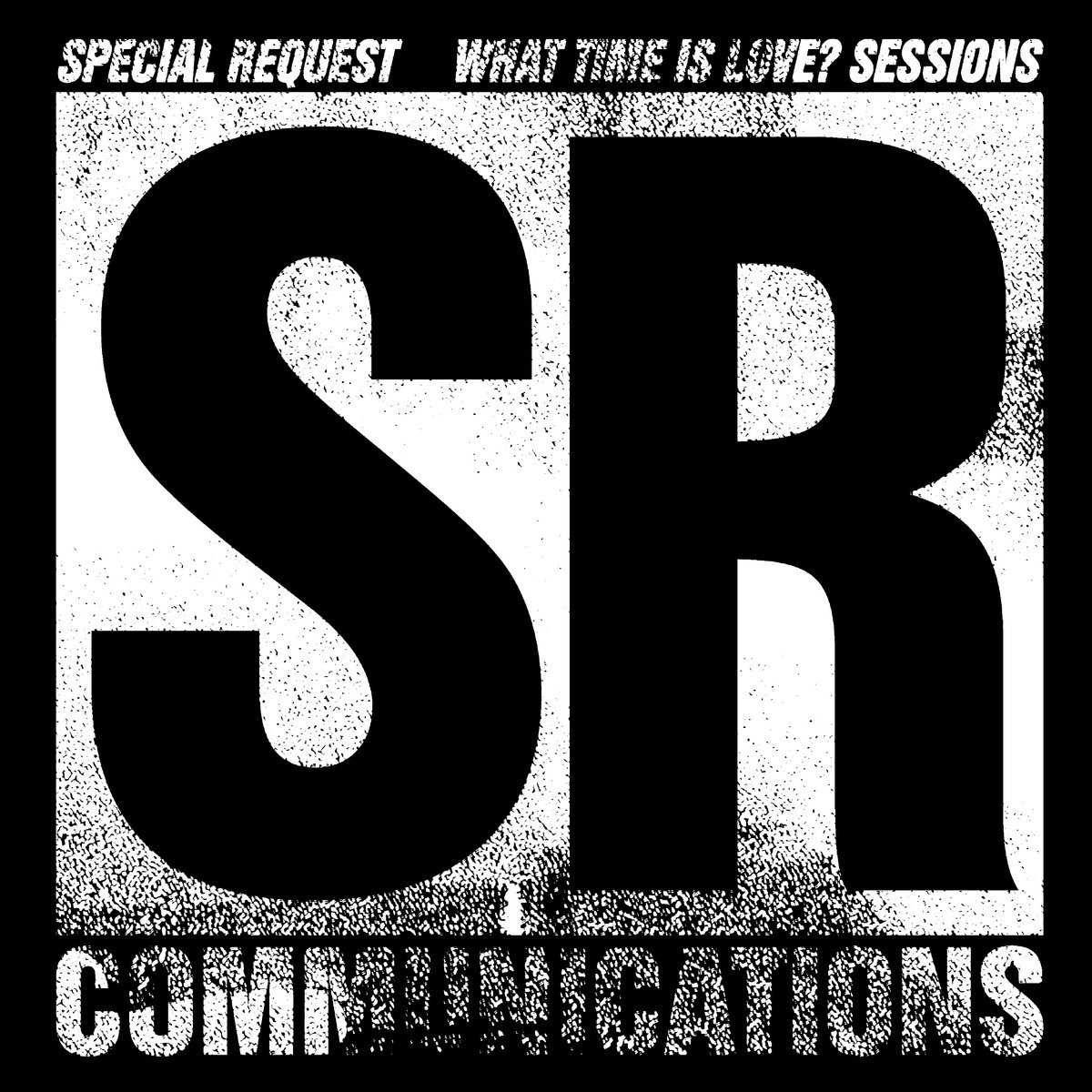
If we know anything about Paul Woolford and his Special Request moniker, it is that he never stops giving. After a prodigious run of albums in 2021 he took his foot off the gas a little in terms of releasing records, but returns with the first in a run of four releases to show he’s been anything but idle.
This is not just any old release, either. With the blessing of The KLF he has reimagined and recast one of their biggest and most influential tunes, What Time Is Love? While remixing the original would surely be foolhardy stuff, Woolford has been far more imaginative. He takes his own spin on the original, putting it in the centre of a new album, around which orbits a number of tracks written and executed in respect to how The KLF were working at the time.
That means a contrast of out and out, acidic rave highs, and ambient dropout patches, where field recordings and relaxing textures combine to soothe the fevered brow. This being Paul Woolford, however, it’s not quite as simple as that – as you’ll find out when you listen.
Released today, the What Time Is Love? sessions are not to be missed – and will be reviewed in full on Arcana soon.
Published post no.2,018 – Thursday 23 November 2023
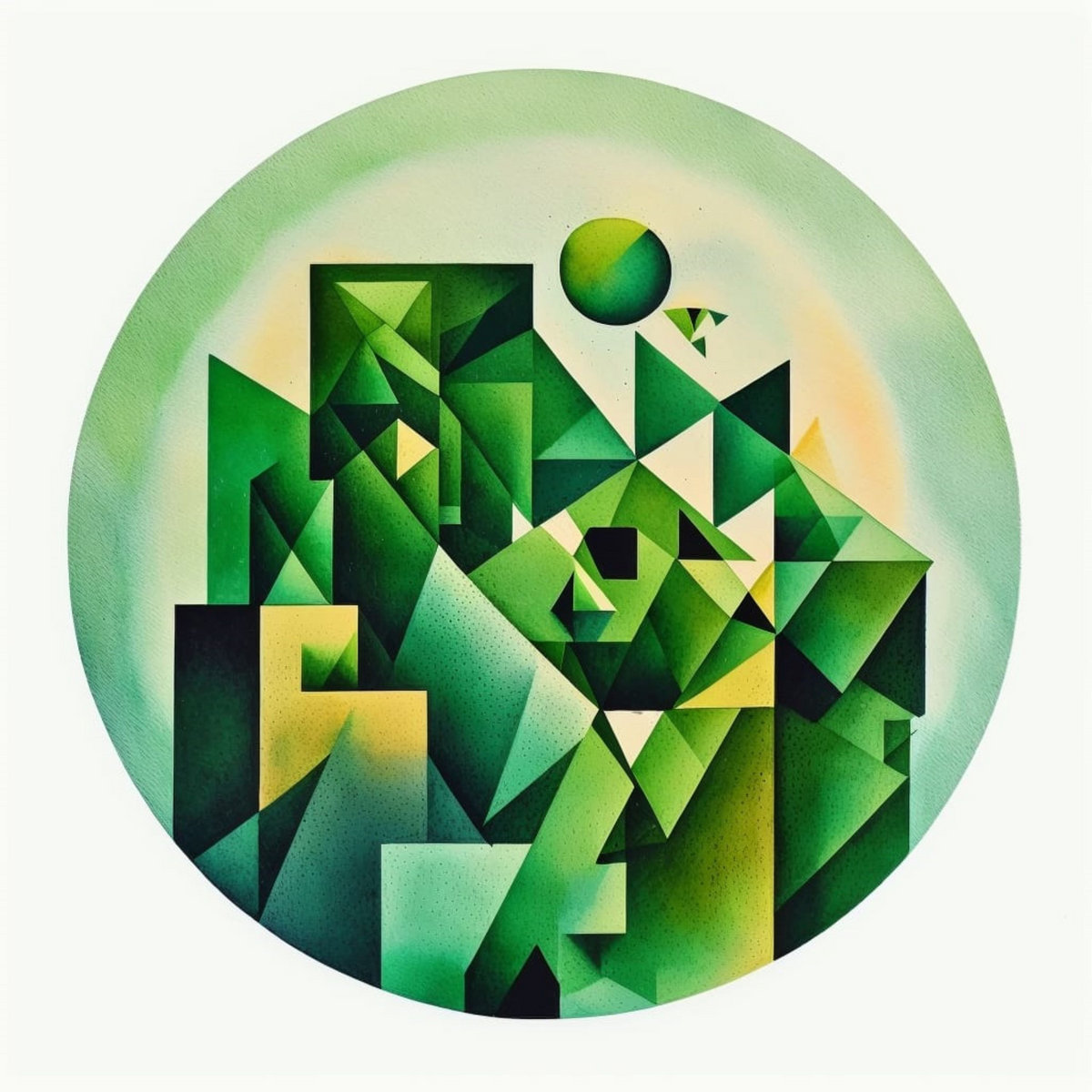
Statement Foliage is described in the accompanying commentary on Bandcamp as ‘a continuation of Jonathan Krisp’s focus on the topography of natural and electronic haunts…merging complex twisting acid lines with glistening synths to evoke hallucinations of a retro-futuristic sun drenched landscape’.
It is his first release since 2019, when Rewilding showed him to be a very adaptable tunesmith, managing his own electronic bedding with flair and imagination.
What’sthemusiclike?
As fresh as the title implies! Statement Foliage picks up where its predecessor left off, with music that throws open the doors and windows to beckon the listener outside. Best heard on headphones, it has an endearingly fresh approach to the scope of its textures, the brightness of the colours, the complex but very danceable rhythms and those twisted acid lines, which are indeed complex but which can wash over the listener like a stream.
A hushed voice and airy sound picture make Vanishing Point the ideal start, on which the warmth of Parhelion and Secret Well Springs Of The Soul build comfortably. Krisp’s music has a friendly tone, but the strength of the beats in Silo, an especially good track, should not be taken for granted, nor the inner power harnessed by Bridgid, with its watery riff and profile.
Krisp’s music is easy to engage with, and presents an optimistic outlook.
Does it all work?
It does. If anything Krisp could afford to make some of the tracks longer, to make the most of the green shoots offered by all the melodic material he has at his disposal.
Is it recommended?
It is indeed. There is a lot of positive energy at work here, and Jonathan Krisp delivers an album with fertile musical imagination and some really attractive colours – not to mention some really satisfying beats. Well worth exploring.
J.S. Bach Cello Suite no.1 in G major BWV1007 (c1720) Saygun Partita for solo cello Op.31 (1955) Britten Cello Suite no.1 Op.72 (1964)
Wigmore Hall, Monday 20 November 2023 1pm
by Ben Hogwood
There is now a wide variety of repertoire from which the unaccompanied cellist can choose, yet this was emphatically not the case in the days of Johann Sebastian Bach. His six suites opened the door for the instrument to become a purveyor of melody and emotion, even if those facets were left largely unexplored until the 20th century.
Writing for solo stringed instruments went out of fashion in the Romantic period, until the rediscovery of Bach’s works by Pablo Casals towards the end of the 19th century – from which this highly original music reached its rightful platform. The First Cello Suite of the six is a delightful work, written at a standard rewarding those of an intermediate ability with music that repays decades of listening and practising.
Jean-Guihen Queyras brought to it a freshness bringing the most from the music. His unaffected manner with the Prelude found serenity amid a relatively relaxed sequence of string crossing, the cellist’s careful thought giving the music space. This set a theme maintained by the nicely voiced Allemande, then a bracing and rustic Courante reminding us of the dance origins of these pieces. The elegant Sarabande was particularly beautiful, with tasteful ornamentation applied on the section repeats, before a spirited first Minuet was offset by the brief but contemplative second in the minor key. A lively Gigue concluded an excellent performance. Bach will always be work in progress for cellists, but it was clear just how enjoyable that process is for Queyras.
From the well-known Bach we travelled to Turkey to experience the relatively unheard Partita of Ahmet Adnon Saygun, a composer regarded as the first exponent of Western classical music in the country, and whose orchestral music has travelled relatively well. Queyras removed the fourth movement of five from this performance, which nonetheless made a powerful impact. Starting with a drone in the lower reaches, the Lento first movement climbed melodically to an expressive outpouring, totally secure in the French cellist’s hands. A restless, edgy Vivo followed before emotive inflections were found in the Adagio, the melodic lines alternately probing or softly turning inwards. The Allegro moderato was deceptive to start with, initially meandering in mid-register before crossing the cello with emphatic lines, before the music relented to the drone of the opening once more. On this evidence, the chamber music of Saygun – a composer with a prolific output – is definitely worth exploring in more detail.
Like Bach, Britten also based his first cello suite in G major – the third of his works dedicated to the great cellist Mstislav Rostropovich, after the Cello Sonata and Cello Symphony. With a mixture of contrasting dances and tempi, the work has a recurring Canto section, on which Britten typically writes a number of varied repeats. This performance began in commanding fashion, before Queyras repeated the melody in a plaintive voice, getting closer to the true heart of the suite.
For although there was music of immense power this is essentially nervy night-time music. In this performance the Fuga often retreated to the shadows, offering some furtive if slightly playful harmonics at the end. The Lamento was lost in thought to begin with while the Serenata, played pizzicato throughout, evoked another world. So too did the Marcia, its ghostly evocations of flute and drum cutting to assertive, red-blooded music. The Bordone was troubled, the pitches of its drone creating great tension in this interpretation – before the scurrying finale found sure-footed ground.
This was a technically flawless recital from Queyras, a captivating trio of pieces atmospherically cast in half light on the Wigmore Hall stage. His encore was music from György Kurtág, a master of solo instrument composition. His typically compressed but intense Az Hit, where a diatonic melody developed outwards before drawing back in, finished with a charming two-note signature.
For more livestreamed concerts from the Wigmore Hall, click here
Released on Friday 17 November, the second album from soprano Katharine Dain and pianist Sam Armstrong for 7 Mountain Records looks set to be every bit as captivating as the first.
You will be reading a lot more about this album soon on Arcana, as Forget This Night delves into seldom visited areas of the song repertoire. The featured composers are Lili Boulanger, Karol Szymanowski and Grażyna Bacewicz – with special emphasis on Lili’s song cycle Clairières dans le cieland, completed in 1914.
Over the course of our interview you will discover how the composers are connected not just in the deeply passionate source material but in their lives too.
For now, here is a preview of the album – and a link to listen on Spotify below:
James Heather’s Reworks sequel is another tale of personal connections. The pianist has returned to his contact book and used his musical instincts to invite a bevvy of artists, bands, ensembles and composers to contribute once again, reworking tracks selected from his last album Invisible Forces and the two Modulations EPs.
Because of Heather’s open minded musical approach, these incorporate a wide variety of styles, including classical, jazz and electronic music from ambient right through to rock – and even including the poet Roger Robinson. The selections also act as something of a musical biography, with the choice of Mogwai reflecting a transformative experience Heather experienced at the age of 21.
There are eleven tracks in all, sequenced logically, reflecting not just Heather’s love of the piano but the way he has channelled all sorts of musical thoughts and styles through it.
What’sthemusiclike?
There is a captivating array of styles and approaches on Reworks Vol.2, which becomes the sort of collection you might expect from a label or a DJ. The responses to Heather’s music range so widely in approach that the piano often plays second fiddle to other instruments or styles – but when the instrument does appear it is all the more prominent for it.
As a contrast we get studies in drone from KMRU, a fuzzy reworking of Ancestral Future Now, and an expansive piece of work from Italian composer Abul Mogard as he refashions Balance. Coldcut, too, contribute a lovely piece of ambience with their wispy, intensely calming interpretation of Passing Soul.
There is a particularly beautiful vocal in Nailah Hunter’s take on Oizys, complementing the expressive piano line, while Meant To Be is turned on its head with an acappella version from Voces8, initially restrained but powerfully moving. Meanwhile Roger Robinson’s contribution brings a whole new dimension to Hidden Angel, in the company of Penelope Trappes and Specimens.
At the other end of the energy scale, Ishmael Ensemble bring a percussive workout to their interpretation of Invisible Forces, while Mogwai’s starry-eyed take on In Your Spirit is both woozy and beautifully lit. A violin on the wing raises Alexandra Hamilton-Ayres rework of Ultraviolet to the heights, while the collection ends with a reflective Immortal Beloved from Freya Arde.
Does it all work?
It does. James Heather’s open musical mind has yielded a fascinating set of new approaches that show just how versatile his music is beyond the piano.
Is it recommended?
Very much so. The piano may be James Heather’s first love, but Reworks Vol.2 shows how his music stretches well beyond the keyboard.



 Arcana.fm