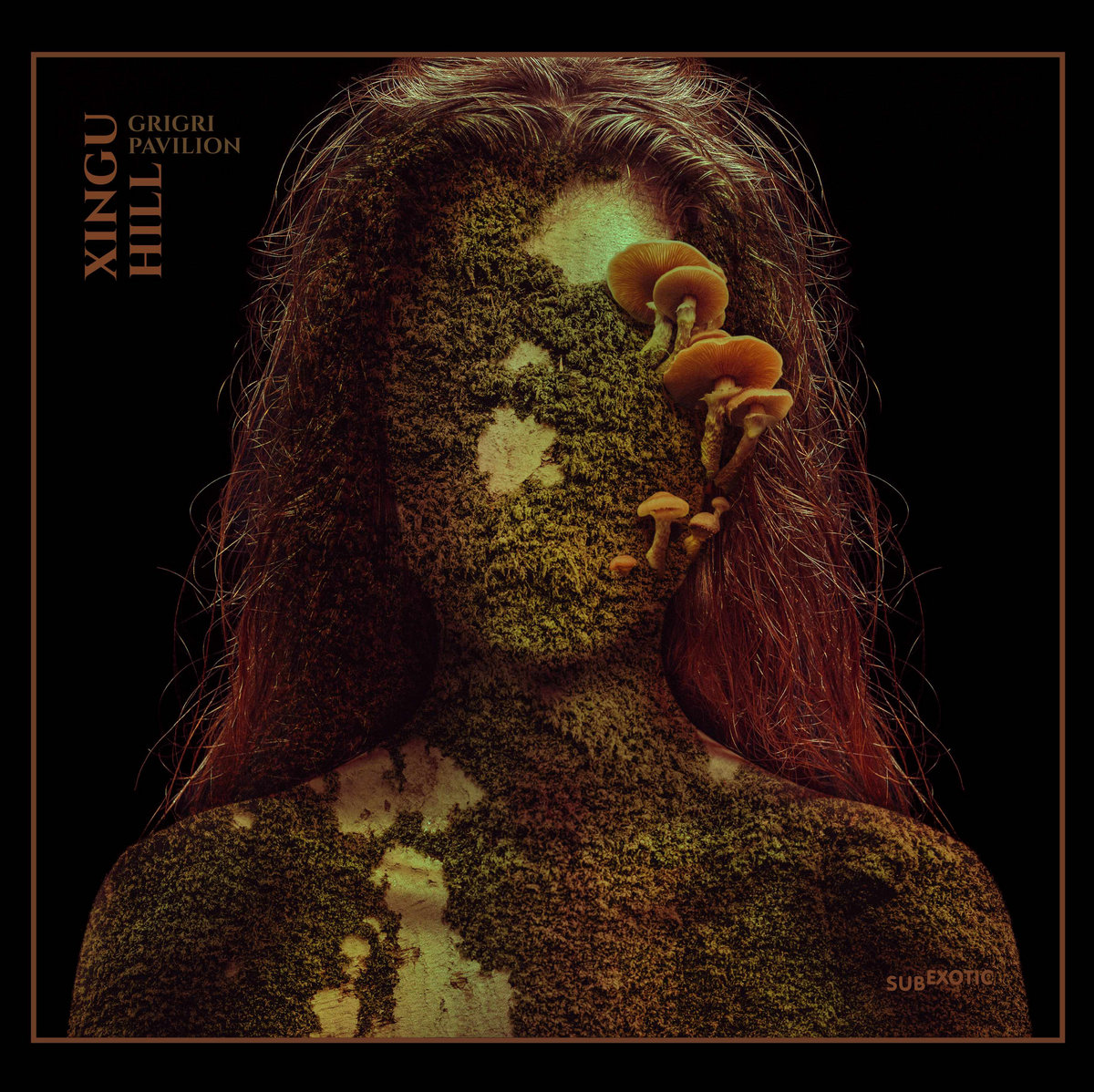
Xingu Hill is a pseudonym from the extremely prolific John Sellekaers, the Canadian-born musician and producer who lives in Brussels.
With Grigri Pavilion his aim was to ‘build a dreamscape, albeit a slightly uncomfortable one’. He recorded the album during the heat-soaked French summer of 2022, before a detailed rework and completion in his Brussels studio.
What’sthemusiclike?
There is indeed an undercurrent of unease to the music here, in spite of its overall ambience. This is in part a reflection on the feverish climate in which it was recorded, with an edgy feel to a number of the mid or lower-range riffs Sellekaers uses. Indeed, when the music is stripped back to its drum track and the motif sits lower in the pitch range, there is the sense of danger around the corner.
Tracks like Eye Contact are a little easier, where the sustained harmonies bring extra depth to the music. Conjectures does the same, but its riff is an insistent, dominating one. While some of Sellekaer’s music brings solace, the likes of Nightcraft explore the shadows, finding industrial processes left on or slightly malfunctioning.
The rhythm tracks hold the key to Girgri Pavilion. Byways & Tunnels is particularly good, channelling mid-90s exploration and a little Cabaret Voltaire through dubby confines. Electrographic Dreams has a similar, low-slung profile but more kinetic energy.
Does it all work?
It does, and is held together well to make a cohesive half-hour suite of electronic portraits and vistas.
Is it recommended?
Yes. Like all Sellekaers’ work, there is plenty of interest here – and his various pseudonyms show an ability to move between a number of different electronic music styles with instinctive ease.
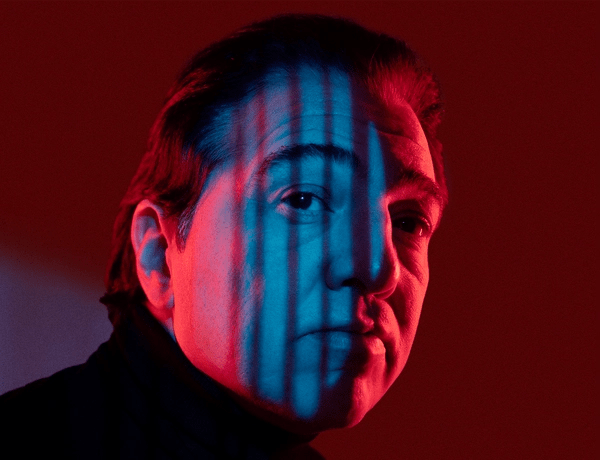
Fazil Say (piano), City of Birmingham Symphony Orchestra / Kazuki Yamada
Prokofiev Symphony no.1 in D major Op.25 ‘Classical’ (1916-17) Saint-Saëns Piano Concerto no.2 in G minor Op.22 (1868) Rachmaninoff Symphonic Dances Op.45 (1940)
Symphony Hall, Birmingham Wednesday 4 October 2023
Reviewed by Richard Whitehouse. Picture (c) Fethi Karaduman
French and Russian music has dominated the start of this season by the City of Birmingham Symphony Orchestra, this afternoon’s programme continuing the trend with early pieces by Prokofiev and Saint-Saëns heard alongside Rachmaninoff’s last and arguably greatest orchestral work.
Prokofiev consigned two earlier such pieces as juvenilia prior to his Classical Symphony, an infectious refit of Haydn in the early 20th century and calling-card for a career that beckoned in the West. If Kazuki Yamada slightly over-egged the humour in the opening Allegro, as too a rather self-conscious take on the Gavotte, the limpid phrasing of the intervening Larghetto was as disarming as was the interplay of wind and strings in the Finale – a reminder, here as throughout, that such musical directness should not be mistaken for mere technical facility.
This could be said of the Second Piano Concerto that Saint-Saëns unleashed on an evidently nonplussed Parisian audience half-a-century earlier. True, the conflation of Bach – given a makeover worthy of Alexander Siloti – with Liszt affords the opening movement an almost makeshift design, but Fazil Say took it firmly in hand from a surging ‘chorale-prelude’ to a tersely decisive coda. A pity his pianism was not applied a little more deftly in the ensuing intermezzo, its ingratiating poise smothered by an almost hectoring insistence, but the final Presto suited this most demonstrative of present-day virtuosi to a tee – its perpetuum mobile undertow maintained with unflagging resolve through to those almost brutal closing chords. Credit to Yamada for enhancing the total effect with his astute and precise accompaniment.
Say, as much composer as pianist, responded to the applause with his Black Earth – a study in sonority alluding to the golden-age of Turkish balladry as well as the Saz (a Turkish lute) in a mood of sombre fatalism which, unlike his orchestral epics, did not outstay its welcome.
The CBSO has given frequent performances over the decades of Rachmaninoff’s Symphonic Dances, but none so incendiary. Not that there was anything overly powerhouse in Yamada’s conception of an initial piece whose outer sections felt trenchant in their energy, with the alto saxophone melody at its centre eloquently given by Kyle Horch and the coda rendered with melting grace. Nor was any lack of suavity in the central piece, its underlying waltz motion poised on a knife-edge of sardonic humour rightly given its head in the hectic closing pages.
Yamada had the measure, too, of the last piece with its dramatic introduction and impulsive continuation, but it was in the lengthy central episode this reading really came into its own – the composer creating music of an intoxicating expression via subtleties of harmonic nuance or textural shading rather than any defining melodic line. From here, impetus was seamlessly restored to a climactic emergence of the Dies irae plainchant then surged on to the explosive closing gesture that might have resounded longer had the audience not unreasonably erupted.
Yamada responded with Lezginka from Khachaturian’s ballet Gayane. An exhilarating close to an afternoon as began for early arrivals with what sounded like a medley from a mid-1970s children’s TV show on the first-floor performance space: it could only be here in Birmingham.
You can read all about the 2023/24 season and book tickets at the CBSO website. Click on the artist names for more information on pianist Fazil Say and conductor Kazuki Yamada
The striking artwork on Ellie Wilson‘s new album is a key for what lies within. Memory Islands explores the power or spirit of remembrance, drawing on a number of first hand sources for inspiration.
The most pronounced of these is a recording of Wilson’s grandfather reminiscing about his experiences and lost years as a Navy seaman in World War II (By the Time I Got Back Pt 1). Other pieces explore the behaviour of the brain when waking from a coma (Delta), or the disappearance of words from our language, as noted by Robert Macfarlane (Unnamed Unseen). Looking forward – in a sense – is Will I Dream, inspired by the film The Year We Make Contact – specifically the moment the onboard computer HAL 900 confronts his digital ‘mortality’– all memories erased.
What’sthemusiclike?
Extremely evocative. Wilson’s twin disciplines are the violin and electronics, the ideal blend of past, present and future to support the album’s themes – and both are used in support of memories lost and regained.
The open strings of the violin on Unnamed Unseen inevitably hark back to time spent learning the instrument but also express a powerful simplicity, her experience in folk music yielding strong communication from the off. The use of rapid pizzicato is especially effective when describing Delta‘s emergence from a coma, its pitter-patter countered by rustic double stopping.
The electronic Mindpop harnesses its power through a rolling drum track, while Will I Dream? has intriguing effects that play with aural perspective.
As you might expect, the tones of Wilson’s grandfather on By the Time I Got Back Pt 1 are particularly moving, complemented by urgent phrases from the violin. The second part spins a web of ideas against a tick-tock rhythm, an open-ended conclusion to the album.
Does it all work?
It does. The album is effectively a seven-part suite of studies on memory, and its half hour fairly flies by, leaving you wanting more.
Is it recommended?
Very much so. If you enjoy music where folk and electronic intersect, then this is definitely for you – and more besides, since Memory Islands tells a series of vivid tales. Given its value for money through Bandcamp, there really is no excuse!
How reassuring to know that the art of the remix is still in good hands!
Matthew Herbert has been a practiced exponent of the form for at least 25 years now, but this remake of Hatis Noit’s Thor shows that he continues to find new and imaginative ways of presenting other people’s music. The process had an effect on both artists. “When I first listened to the sonic world of Matthew’s Thor rework”, says Hatis, “I felt so nostalgic that I cried. The song evokes in me an interactive energy exchange between forest spirits and people singing and dancing around a fire. It is an even more colourful and playful representation of the landscape that I wanted to portray.”
Herbert, meanwhile, talked about his approach to the task in hand. “I liked the devotional aspect of the original so recorded a few round glass and steel bowls to create a kind of found-gamelan set of sounds. I wanted it to feel like you walked out of a festival and stumbled across some voices and people in the woodland nearby, like an auditory hallucination where more modern techniques merged with ancient-sounding voices.”
We last encountered Captain Mustache two years ago, as part of the excellentQuattro Artists collectionreleased by Bedrock. His contribution was Indigo Memories, where the intersection between techno and electro functioned particularly well.
Now we find him returning to the Kompakt label with an imagined an imagined ‘whole day for party people’, with a raft of guests in tow.
What’sthemusiclike?
The captain delivers a captivating blend of darkness and light in the course of the day. The darker stuff is the four to the floor electro and techno workouts, some really well produced numbers that hit the floor without any nonsense. These include the instrumental cuts Laser Me, Clair-Obscur and Galaxian Symbiosis, the last two of which would be more than half Detroit-based if you cut them open. Acapulco Citron has a chunky bass profile, as does Pulsions Organiques, which pans out a bit to softer electro up top.
Then we have the more humourous tracks such as the vocal playful Gimme Your Mustache or Shifting Basslines, where Chicks on Speed work particularly well. The Arnaud Rebotini collaboration I Love Watching U is excellent, too.
Does it all work?
It does – the album has a really satisfying ebb and flow.
Is it recommended?
Indeed it is, another fine opus from the man with immaculate facial hair.



 Arcana.fm