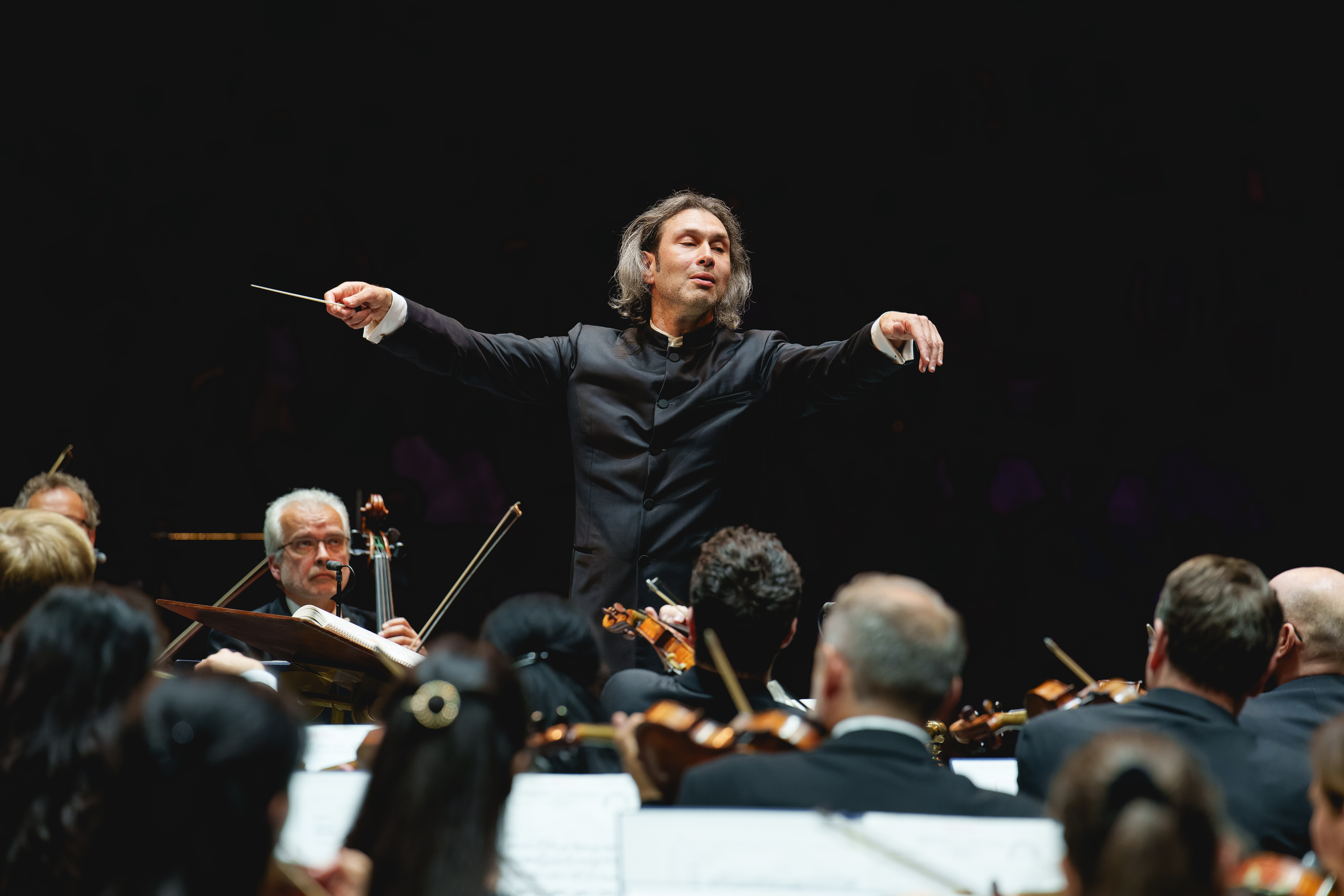
BBC Proms 2023 – BBC Symphony Orchestra / Semyon Bychkov: Bruckner Symphony no.8

Prom 65 – BBC Symphony Orchestra / Semyon Bychkov

Bruckner Symphony no.8 in C minor WAB108 (1884-7, rev. 1889-90 [ed. Nowak])

Royal Albert Hall, London
Monday 4 September 2023

by Richard Whitehouse photos by Chris Christodoulou / BBC

It may have taken 70 years for its Proms premiere but the Eighth has since become the second most often played of Bruckner’s symphonies (this being its 21st hearing), and a near capacity house greeted tonight’s performance by the BBC Symphony Orchestra with Semyon Bychkov.

At home across a broad repertoire, Bychkov has of yet directed relatively little Bruckner, and the first movement took its time to settle. Fugitive rather than speculative in their emotional import, those distinct motivic elements lacked a final degree of definition and only began to take on greater cumulative focus during a development whose unfolding drama was matched but not exceeded by the climax of the coda – after which, that inexorable winding down into silence was precisely controlled while curiously unevocative in its sense of time running out.
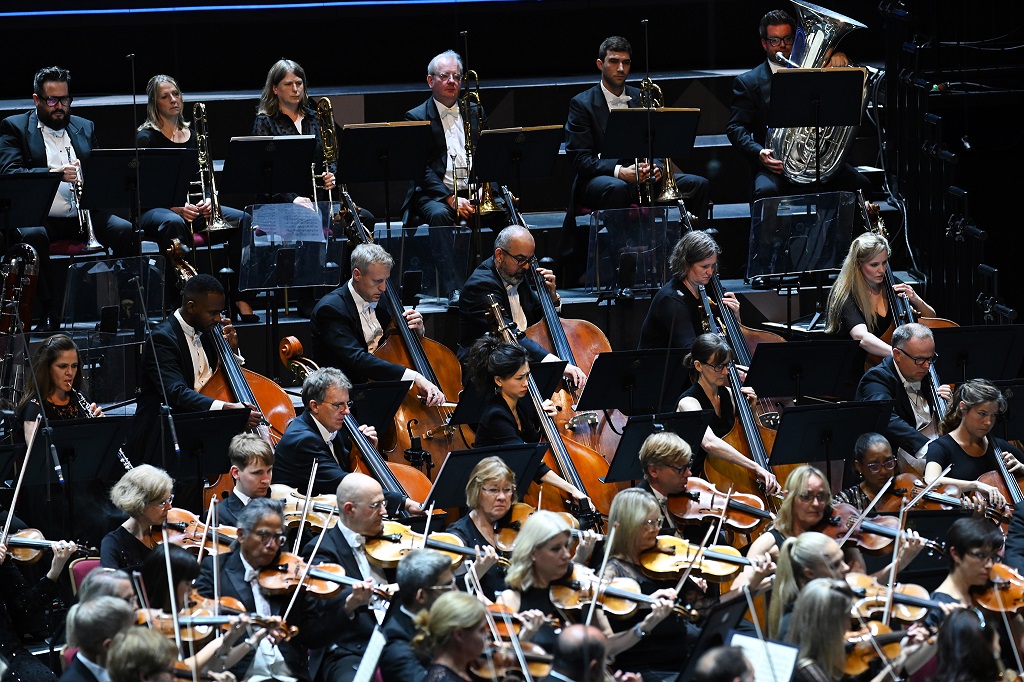
With the outer sections taken at a swift but never headlong tempo that enabled its underlying ostinato pattern to be perceived throughout, the Scherzo exuded energy while also mystery in what remains Bruckner’s most powerful instance of a genre he made his own. The brass was at its most assured, and Bychkov duly avoided any temptation to make the lengthy trio a self-contained episode. Its unforced progress brought winsome contributions from woodwind and harps, the reprise then having audibly greater impetus as it surged towards its decisive close.

As so often in this symphony, the Adagio found the interpretation and its realization in most potent accord. Mindful to draw its continual thematic restatements into a consistent process of developing variation, Bychkov conveyed the music’s expressive but also spatial grandeur with an assurance hardly less evident in its unfolding tonal trajectory. Nor did the excising of material in revision impede its course, even if the sudden appearance of cymbals and triangle at its climax sounded more than usually redundant. A pity, moreover, that momentary failings of intonation among Wagner tubas affected what was otherwise his near perfect rendering of the coda – Bruckner’s distilling of main motifs, underpinned by the halting accompaniment, finding closure only at that point where everything stops as the movement comes full circle.

From here the Finale set out with due purposefulness, even though the occasional rhythmic hesitancy gave notice of an approach in which the whole did not quite match the sum of its admittedly impressive parts. Strategically coinciding with those divisions of the movement overall, the chorale-like main theme brought a resplendent response as left its eloquent then ominous successors sounding incidental within the ongoing formal scheme, and though the extensive development did not lack for variety of content, its discursiveness made for a less than perfect unity. Any remaining tentativeness was none the less dispelled in a coda whose gradual emergence made for an apotheosis of unusual clarity – the superimposing of themes not just ingenious in its technical skill but cathartic in its conveying of a journey completed.

The illustrious rollcall of conductors who have tackled this work at the Proms speaks for itself, and while Bychkov might not yet have joined the ranks of Wand, Haitink and Mehta et al, his belief in and commitment to Bruckner’s Eighth was amply communicated to all those present.

For more on the 2023 BBC Proms, visit the festival’s website at the BBC. Meanwhile click on the names for more information on the BBC Symphony Orchestra and guest conductor Semyon Bychkov – and finally composer Anton Bruckner
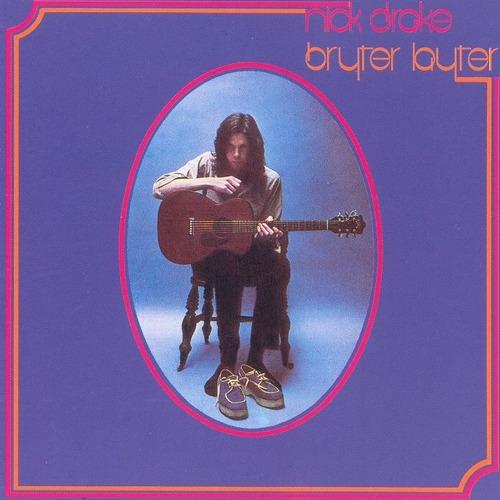
Listening in – Nick Drake: Hazey Jane II

by Ben Hogwood

Yesterday Arcana carried a review of Richard Morton Jack’s new biography Nick Drake: The Life, thoughtfully penned by John Earls.

John referenced the song Hazey Jane II, from the Bryter Layter album of 1971. Here he rediscovered a starry line-up of session musicians – including trumpeters Kenny Wheeler and Henry Lowther and guitarist Richard Thompson. The brass parts were arranged by the masterful Robert Kirby, while Drake’s band members for this song – and the Bryter Layter album – are completed by Dave Pegg (bass guitar) and Dave Mattacks (drums)

Listen to the song below, and appreciate the exquisite instrumental colouring around Drake’s dreamy vocal:

On paper – Nick Drake: The Life by Richard Morton Jack

Nick Drake: The Life
by Richard Morton Jack
John Murray Press 2023 (576 Pages, ISBN: 9781529308082)

Reviewed by John Earls

I first encountered the songs of Nick Drake via the 1985 compilation album Heaven in a Wild Flower. There was something about this selection of bittersweet songs and delicate voice from the three albums released between 1969-72 by the enigmatic singer-songwriter (and exceptional guitarist) who died at the age of 26 that resonated strongly with this then twenty-something listener.

Richard Morton Jack’s recent biography Nick Drake: The Life is a comprehensive and detailed work (576 pages) compellingly and sensitively told. It captures the magic, music and story behind these three remarkable albums – Five Leaves Left, Bryter Layter and Pink Moon – and much more.

Drake came from a privileged background – his 21st birthday present from his parents (a cheque for £750 – worth £10,000 in today’s money) is a particularly eye catching illustration.

But it is his musicality and dedication to his art that shines through. And, of course, there is the story of the mental illness that led to his untimely death.

The book is good on the details of Drake’s collaborators and contributors – I knew that Richard Thompson (guitar) and Danny Thompson (double bass) had played a part in some of his albums but if I already knew that British jazz legends Kenny Wheeler and Henry Lowther both played trumpet on Hazey Jane II, and P. P. Arnold was one of the backing vocalists on Poor Boy, then I’d forgotten.

It’s also good on recording performances given (John Peel) and missed (The Old Grey Whistle Test), and a fascinating encounter with the Rolling Stones in Marrakesh in 1967.

Some of Drake’s musical likes and influences won’t come as a surprise (Bob Dylan, Tim Buckley, Bert Jansch, Joni Mitchell). But there’s also a taste of Drake’s classical music listening including Fauré, Mahler, Debussy and Satie.

Jack’s biography is already being rightly hailed as ‘definitive’. But credit should also go to Patrick Humphries who wrote a groundbreaking biography in 1997 and gave Jack full access to his materials.

When I first heard Nick Drake’s music and read Humphries’ biography it was very much with the subject uppermost in my mind.

Now, as a parent myself, I am also moved by the traumas and anxiety experienced by Drake’s parents Rodney and Molly whose anguish and love is touchingly and delicately portrayed. Drake’s sister Gabrielle has written the foreword to the book but, as she makes clear, this is not an authorised biography.

This is a magnificent book. Inevitably it sent me back to the albums. There is no doubt the music will endure but ultimately, it’s a tragic and heartbreaking tale.

John Earls is Director of Research at Unite the Union. He tweets / updates his ‘X’ content at @john_earls

For more information on the book and to explore purchase options, visit the Waterstones website

New Music at the BBC Proms

For our UK readers, a nod in the direction of BBC4 tonight – where there is a chance to experience some of the standout new music heard during this year’s BBC Proms festival.

There is a chance to experience more of one of today’s standout orchestral composers, Andrea Tarrodi – her Birds Of Paradise is featured, inspired by footage from David Attenborough’s Planet Earth and performed by the Deutsche Kammerphilharmonie Bremen, conducted by Pekka Kuusisto (above, photographed by Mark Allan).

From the first night comes Let There Be Light, by Ukrainian composer Bohdana Frolyak, while the National Youth Orchestra perform The Whole World, a heady new work from Errolyn Wallen.

You can watch from 8pm here

BBC Proms 2023 – Kirill Gerstein, Rundfunk-Sinfonieorchester Berlin / Vladimir Jurowski: Weill, Adès & Rachmaninoff

Prom 60 – Kirill Gerstein (piano), Berlin Radio Symphony Orchestra / Vladimir Jurowski

Weill Kleine Dreigroschenmusik (1928, arr. 1929)
Adès Piano Concerto (2018) [Proms premiere]
Rachmaninoff Symphony no.3 in A minor Op.44 (1935-6, rev. 1938)

Royal Albert Hall, London
Thursday 31 August 2023

by Richard Whitehouse photos by Andy Paradise / BBC

Marking its centenary this October, the Berlin Radio Symphony Orchestra may be less known abroad than other Berlin orchestras but this Proms debut under chief conductor Vladimir Jurowski confirmed an ensemble at home across the broad range of modern and contemporary music.

Not least in Little Threepenny Music, a ‘selection’ Kurt Weill arranged from his and Bertold Brecht’s reworking of The Beggar’s Opera which takes in several of that show’s best-known numbers while also affording a demonstrable overview of its satirical concerns. The BRSO responded with vigour and not a little pathos – above all, in the Threepenny Finale and its juxtaposing pensive ambivalence with a glowering decisiveness: that final chorale making plain its damning inditement of German cultural failings in the era of the Weimar Republic.

A spirited participant, Kirill Gerstein took centre-stage for the first hearing at these concerts of the Piano Concerto written for him by Thomas Adès. Now as before, Gerstein’s dexterity in negotiating this score’s pert amalgam of intricacy and bravura warranted respect: whether in what might be called the ‘Self-Portrait with Gershwin and Ligeti (though Prokofiev is also there)’ of the first movement, Stravinskian cortège of the central Andante, or the interplay of vivacity and uncertainty in the final Allegro. An attentive accompanist, Jurowski summoned playing as tensile and supple as the orchestral writing demands – though abetting the overall impression (his recent works in particular) that even as consummate a conceptualist as Adès needs to instil those ideas, often arresting in themselves, with comparable musical substance.

Gerstein’s transcription of Rachmaninoff’s In the Silence of the Secret Night (Op.4/3) duly prepared for the latter’s Third Symphony. First given at the Proms 85 years ago, it still attracts dislike from those who find it a self-conscious update of the composer’s inherently Romantic idiom as well as those who dislike such an idiom in any case. Not that Jurowski’s account brooked any compromise in marrying consistent technical precision to a powerfully shaped conception of music often appealing, frequently intriguing and not a little unsettling.

The stark rendering of its introduction – spectral ‘motto’ then surging tutti – set the course for an initial movement where contrast between expectancy and eloquence came to a head in the development with its anguished fusion between heart and brain. The Adagio unfolded with an almost Sibelian inevitability, not least in the seamlessness by which its outer sections flowed into then out of a central scherzo abounding in that sardonic humour as became a mainstay of Rachmaninoff’s later years. Nor was there anything blandly predictable about a finale whose opening exuberance was ably maintained through a consoling but never wantonly languorous secondary theme, eventually resolving into a coda whose unfolding as a crescendo of activity brought the whole work – and the present reading – animatedly and satisfyingly full circle.

Impressive music-making on all levels and Jurowski further cemented the Proms connection, specifically that between Rachmaninoff and Henry Wood, with the latter’s transcription of the former’s Prelude in C sharp minor Op.3/2) – as tempestuous as it proved exhilarating.

For more on the 2023 BBC Proms, visit the festival’s website at the BBC. Meanwhile click on the names for more information on artists Kirill Gerstein, the Berlin Radio SO and conductor Vladimir Jurowski – and finally composer Thomas Adès