

by Ben Hogwood
Arcana is very fortunate to have time with one of the finest composers of this generation, Icelandic creator Anna Thorvaldsdottir. With two albums of her new music just released, she has also been enjoying elevated status as a featured composer of the Aldeburgh Festival. We began by talking about her formative experiences of East Anglia’s premier music event.
“I was at the Aldeburgh Festival last year”, she begins, “and the City of Birmingham Symphony Orchestra performed my piece Catamorphosis then. Aldeburgh is such a lovely place, so beautiful, and it has a special aura. It is so focus but also beautifully relaxed. Everybody is there to enjoy music and art, and it’s so special.” The aura of Benjamin Britten, the festival’s founding father, is at every turn, but in a forward thinking way. “It’s beautiful how things grow. Of course he planted all the seeds, and that’s apparent everywhere, but it also feels so open as an event.”
Britten, of course, portrayed his home surroundings of Aldeburgh through incredibly vivid music, music that speaks of a time and place as powerfully as any British music. Is that something Anna is conscious of reflecting with her home country of Iceland? “I have never approached my music from describing nature, or natural phenomena. For me it’s more about the energy, and when I am inspired by nature it’s much more about the energy of nature and the construction – how you can sense details and perspective between them. Of course nature is all around us, and while I come from Iceland – my roots are there – I lived for a while in California, and now here. There are such different atmospheres in the different types of nature, and that’s very inspiring. For myself it has never been about describing that in music, but allowing for the inspiration to seep in when there are things I find musically interesting in the in the atmosphere and the energies.”
She is not aware of having changed her approach in California. “Not so that I know! I think these types of things are perhaps easier to analyse a bit later for oneself, but there are different energies. Also, when I was in California, I was thinking a lot about Iceland because I wasn’t there. I had never lived away from Iceland before, so it was a different kind of energy. I didn’t recognise that I wrote differently but then again you are always evolving and growing, and while wherever you are plays a big part in that growth, it’s hard to identify for yourself specifically.”
The reactions to Catamorphosis have been very strong. “It’s been really wonderful. The circumstances under which that piece was premiered were very unique, because the Berlin Philharmonic managed to have the world premiere at a time where everything was on lockdown, and they could do that over their digital concert hall, in front of an empty hall. That is a very apocalyptic aura that comes with that, and it suited the piece in very strange way. I would have never chosen this of course, but it was a very special aura, even though I was not able to be there! I had so many long talks with Kirill Petrenko, the conductor. I have been really pleased with the reception since then, and now it has now been performed in many concerts with an audience. It’s been a special ride with that piece, for sure!”
The orchestra in Catamorphosis feels like a very big engine, but the light can change according to Thorvaldsdottir’s scoring. “I really enjoy working with different types of energies in my music, and I really spend a lot of time on structuring a piece, getting to know internally how the piece is going to move from one material to the next, and from one atmosphere to the next. In Catamorphosis these polar shifts, that sometimes merge and sometimes separate, is what really drives the energy of the whole piece, and pulsates these different energies and atmospheres throughout the whole structure of the piece. I do this quite a lot in my music, but in this piece it becomes very dramatic in a way, these shifts.”
Talk turns to another new piece, Rituals, written for the Danish String Quartet – which required a different approach. “I do have a passion for writing for larger ensembles and orchestras, but I also have written quite a lot of chamber music. It’s a different approach, a different aura that you embrace, but then again with a string quartet, you can decide whether you’re going to treat it as a chamber ensemble or a bigger string ensemble. In Rituals, I’m really focusing on different kinds of materials. It is written in eleven short parts, but those parts together form one whole. The individual parts focus on their own materials and atmosphere. It’s good to have both, to write chamber music and orchestral music, and I really enjoy writing pieces at the same time in different sizes.”
Like Mahler, Thorvaldsdottir can combine the two forces, possessing the ability to write chamber music within a very large orchestral piece, drawing the ear to the centre of her compositions. “I’m very fascinated with perspective in music”, she says, “and to draw attention to different places at different times, so that you can zoom in and out to get the overall picture and then smaller details of that picture. That’s something I really enjoyed doing.”
Anna played cello as part of her musical education. “I studied a few instruments when I was growing up but I focused a lot on the cello. After I became a teenager I got to know more contemporary music, because when you are studying an instrument, you’re mostly playing older music. When I got to know more and more contemporary music, and I had been always making up songs, I really opened up to all the possibilities that you can work with in music. I started to write down music when I was around 19, and it took over my life – something I couldn’t be without doing. I wrote a lot of pieces before I started studying! Then I studied at the Iceland Academy of the Arts where I had to wait until that department was starting. When I graduated with that degree I, while studying the cello, I went to California and did my masters and Phd there.”
Even then, Anna had a great conviction about her work. “I always knew the reason I was making music – that is I had this open curiosity thirst to create music. I had wonderful teachers who really knew the freedom that I needed, and we had wonderful conversations and discussions. At UCSD I used to see all of the teachers on regular basis because it’s so nice to have conversations with these wonderful composers. As an art student so I was very fortunate to have wonderful people around me, and also in Iceland. All my teachers recognised the space I needed to create my music, which was very special.”
Casting her gaze back a little further, Thorvaldsdottir considers the impact on Icelandic classical music of Jon Leifs, often seen as the founding father in the country. “The history of this sort of Icelandic music is very young”, she considers. Jón Leifs is one of the first Icelandic composers and he was such a big figure. He went to Germany to study and had a very big influence on the music life in Iceland, and the composers coming through at the same time. He’s had a monumental influence, but he had such huge ideas that it was impossible to perform some of his music in his lifetime. Those works have been later performed, but what a great figure to have had in Icelandic music. He did study Western music of course, but for Iceland he was one of the very first composers, and that’s big.”
Does Icelandic music reflect the country from which it comes – young, energetic, in touch with the elements? “It’s really hard when you do come from there. I haven’t lived in Iceland for a while now but my roots there are very strong, and I go back a lot. I understand what you mean, but it’s hard for me to really recognise it in the same way that people can who are not from there. You grow up and live away from Iceland, and you understand the space that is there in a different way than you do when you live there. There is so much space for the individual as well. As I said, we have a young music tradition, and we learn and study the history of music. Being from a place that’s younger, in that sense, has a different kind of freedom. There are great music schools that can play a big part in just how big the scene can actually be, because it’s not a big population but there are so many musicians! So I think it’s a combination of many, many different things.”
The surroundings are key, too. “The fact that untouched nature is so close, wherever you are, is big – it takes half an hour and you are in the middle of a lava field! I grew up surrounded by the ocean and mountains, and that was normal to me. People say they can hear certain things in the music coming from Iceland, but we have very different musical forms – pop music, too. That has the same freedom when you are working outside, in a way that you cannot in the middle of a big city. There is a certain sense of freedom and allowing the individual to be open.”
Talk moves on to Anna’s piece Metacosmos, due for performance at Aldeburgh by the BBC Philharmonic Orchestra and conductor Rumon Gamba soon after we speak. “It was written in 2017, and it’s a piece that orbits a similar aura I work with a lot in my orchestral music. It’s a 13-14 minute-long piece, shorter than Catamorphosis, It’s harder for me to describe, but again it lives in this border between darker energy and brighter energy and this pulling sense of time. The overall inspiration initially was this force that moves between textural material, clusters of harmonies, and very lyrical passages.” She pauses. “It’s hard to describe your own music!”
Writing music is a continuous process and passion for Anna. “Yes, always. I recently had the premiere with the Danish String Quartet, and I handed in another piece that will be premiered in May, for Yeah. Yeah. recently had the premiere with a text request that and I, I handed in another piece that will be premiered in May, which is for Claire Chase in Carnegie Hall. It’s called Density 2036: part x, and it’s a 50-minute long piece, for the whole concert. I am also working on an installation for an orchestra, I have a few pieces lined up.”
Perhaps inevitably, she is approached by TV and film companies for music. “I am, but I haven’t really gone into that medium. It’s a very different way of working for films, and it’s not that I’m closed – I’m open to discussing different projects, but my schedule is planned very far ahead. Yeah. I do get approached but haven’t gone into the medium yet.”
Whichever way she goes, we can be certain of one thing – Anna Thorvaldsdottir’s musical progression will be one to keep a very close eye on. Hers is a talent to nurture in the future, for sure!
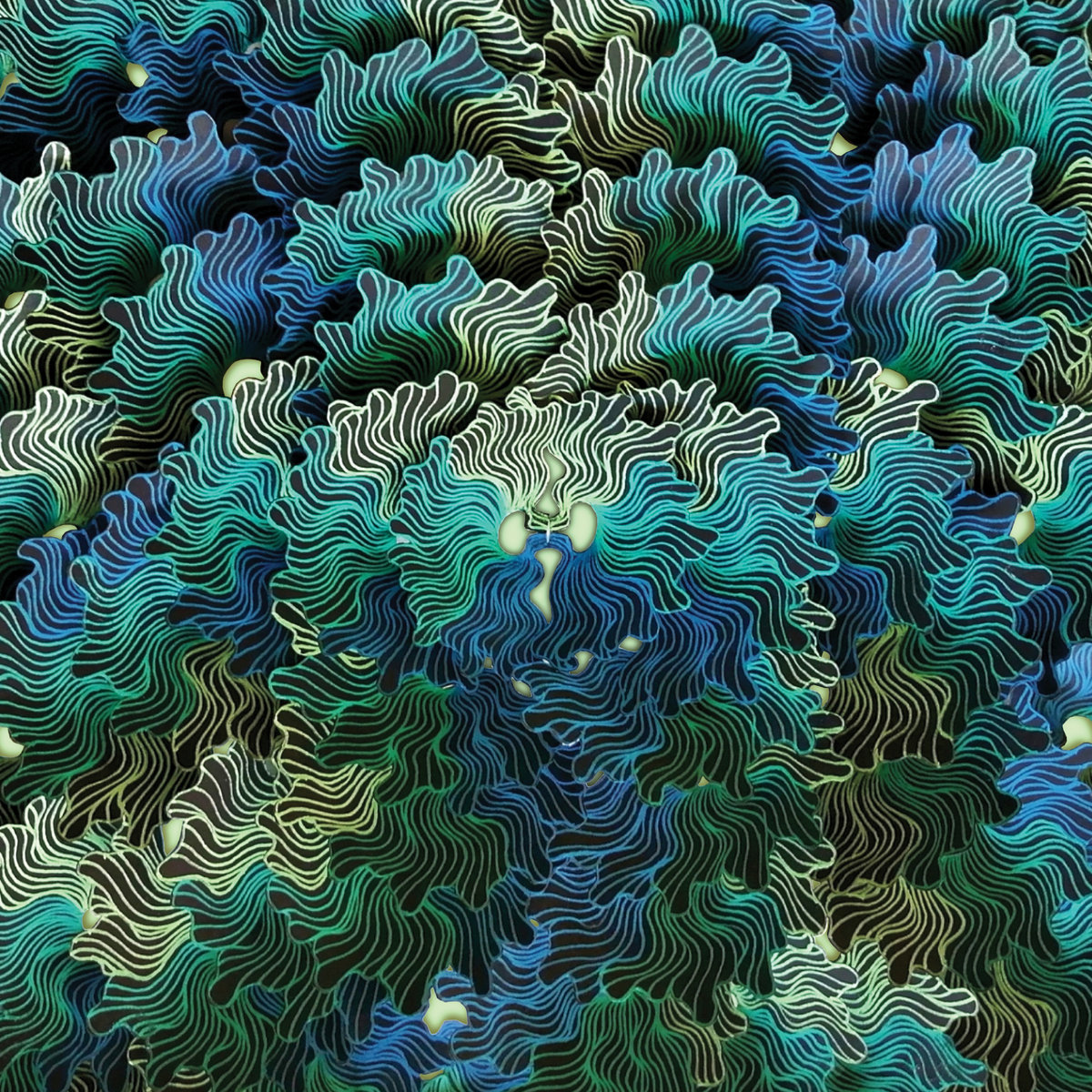
Anna Thorvaldsdottir’s album ARCHORA / AIŌN is available on Sono Luminus now – and you can listen below:


 Arcana.fm