On record – Ellen Nisbeth, Norrköpping Symphony Orchestra / Christian Lindberg – Pettersson: Symphony no.15, Viola Concerto, Fantaisie (BIS)

pettersson-15

Ellen Nisbeth (viola), Norrköpping Symphony Orchestra / Christian Lindberg

Pettersson
Symphony no.15 (1978)
Viola Concerto (1979)
Fantaisie for solo viola (1936)

BIS BIS 2480SACD [67’37”]

Producers Stephan Reh, Marion Schwebel
Engineers Bastian SchickMarion Schwebel

Recorded 13-17 January 2020 at Louis de Geer Concert Hall, Norrköpping (Symphony & Viola Concerto); 29 May 2020 at Petruskyrkan, Danderyd, Sweden (Fantaisie)

Written by Richard Whitehouse

What’s the story?

Christian Lindberg nears the close of his Allan Pettersson cycle for BIS with this coupling of two of the composer’s late works, both of which had previously been issued on this label and are now added to its extensive series of recordings with the Norrköping Symphony Orchestra.

What’s the music like?

Although following-on directly from the Second Violin Concerto [BIS2290], Pettersson’s 15th Symphony might be thought of as forming the end of a trilogy with its predecessors (1976 and 1978) – a sequence becoming more compressed in scale as it becomes less volatile in content. At barely 36 minutes No. 15 was its composer’s shortest symphony since the 11th, but this is not to suggest any lack of drama or eventfulness in a score as finds Pettersson grappling with existential issues key to his thinking since at least the Second Symphony of 25 years earlier.

As so often in this cycle, the salient ideas are heard at the outset: here, ejaculatory chords on brass over side-drum, then wistful lines for viola and violin over lower strings. What follows seems less an extended evolution than an elaboration and intensification – during the course of which a more conciliatory mood takes precedence, though the coda proves to be as tonally oblique as it is emotionally ambivalent. Dividing the present recording into 11 tracks enables listeners to navigate their own route through this absorbing and wholly characteristic piece.

The Viola Concerto has a curious history – its existence not even known about until after the composer’s death; its manuscript suggesting a work complete as a formal entity if lacking in textural detail. Whether or not Lindberg had any input in this latter respect, the solo part has been edited by Ellen Nisbeth and hence sounds appreciably more integrated into the musical content than hitherto. Conceptually the work continues from the Second Violin Concerto and 16th Symphony with saxophone [BIS2110] in its eliding between concertante and symphonic domains; such that the viola line can be heard as a motivic ‘backbone’, affording focus to the sparse orchestral texture and channelling its expressive essence to an ending at once forceful yet provisional. Concerto or not, this is a notable as well as valuable addition to its repertoire.

In between these works comes Fantasie for solo viola, composed when Pettersson was in his mid-20s and still a practitioner on this instrument rather than a composer. Alternately soulful and incisive, this is eloquently rendered by Nisbeth and makes a worthwhile inclusion here.

Does it all work?

Yes, assuming familiarity with at least several of Pettersson’s earlier symphonies. In the 15th, Lindberg steers a more cohesive course than does Leif Segerstam [BIS680] or Peter Ruzicka [CPO9990952] with more idiomatic orchestral playing than either. As to the Viola Concerto, Nobuko Imai [BIS480] is no less sympathetic an advocate but her tone is a little too rounded for this music, whose idiom Nisbeth has down to a tee. Sound is comparable to earlier issues from this source in clarity and perspective, with decent booklet notes by Per-Henning Olsson.

Is it recommended?

Indeed. Those who have been following this cycle will be pleased Lindberg has been given the go-ahead to record all the symphonies. With just Nos. 3, 8, 10 and 11 to go, the end is in sight for this traversal of one of the most significant symphonic cycles from the post-war era.

Stream

Buy

For more information on this release visit the BIS website

In concert – April Fredrick, Thomas Humphreys, English Symphony Chorus & Orchestra / Kenneth Woods: Voyage to America

April Fredrick (soprano), Thomas Humphreys (baritone), ESO Chorus, English Symphony Orchestra / Kenneth Woods

Dvořák Symphony no.9 in E minor Op.95 ‘From the New World’ (1893)
Sawyers Mayflower on the Sea of Time (2018) [World Premiere]

Worcester Cathedral
Saturday 17 June 2023

Reviewed by Richard Whitehouse

This final concert of the season by the English Symphony Orchestra brought us the premiere of a piece delayed from three years ago. Philip SawyersMayflower on the Sea of Time was to have been launched at the Three Choirs Festival in April 2020, but the pandemic derailed this as so many other events. Happily, the tenacity of conductor Kenneth Woods has paid off such that the composer’s largest work so far was finally heard, and in the venue originally intended, making for a notable addition to the English choral tradition and one wholly on its own terms.

Commissioned to mark the 400th anniversary of the sailing of the Mayflower from Leiden to Plymouth and thereby founding the United Sates of America, this is an oratorio in concept but equally a choral symphony in its overall design and thematic cohesion. Its libretto, mainly by the artist Philip Groom, features set-pieces for various figures from the Old and New Worlds duly taken by soprano and baritone soloists (those for treble being allotted to sopranos in the chorus), but these along with ones for chorus are drawn into an inherently musical evolution.

Formally, there are four continuous parts. Persecution and Journey, a sonata design such as informs the Pilgrims’ flight from religious persecution and their decision to cross the Atlantic; Arrival in the New World, a slow movement charting their embarkation and tentative initial interaction with native peoples; Survival and Making our Community, a scherzo where the Pilgrims’ industriousness and idealism quickly becomes its own justification; and Our New World, a rondo-finale whose looking to the future is framed by choruses of growing fervour.

As befits such a work, the choral writing is both extensive and resourceful – not least when it elides between depicting Pilgrims or Natives, and that of a more abstract commentary. No less assured, the writing for soprano and baritone allows Sawyers’ lyrical impulse free reign – not least in extended sections toward the end of the second and fourth parts; the latter, especially, rendering comparable passages by Delius or Tippett from a perspective wholly of the present. On either side, luminous and ecstatic choruses accentuate an essentially affirmative message.

The contributions of April Fredrick (no stranger to Sawyers via her long association with the ESO) and Thomas Humphreys could hardly be faulted for commitment or insight, while that of the ESO Chorus exuded a power and immediacy amplified by the resonance of Worcester Cathedral’s acoustic as to belie its relatively modest numbers. The ESO gave its collective all throughout, projecting the textural intricacy and emotional heft of music whose longer-term formal integration was securely conveyed through Woods’s precise yet unobtrusive direction.

Before the interval, Woods gave a notable account of Dvořák’s Ninth Symphony. The poised anticipation of its introduction and visceral drama of its coda were highlights of the opening Allegro, proceeded by a Largo of an eloquence epitomized by rapt cor anglais playing from Louise Braithwaite. Contrast between the incisiveness of the Scherzo’s outer sections and the lilting delicacy of its trio was pointedly underlined, then the final Allegro surged onward to a coda paying tribute to 19th-century symphonism while blazing a trail for what was to come.

Further information on the ESO’s latest Philip Sawyers release (Nimbus NI6436) can be found at the English Symphony Orchestra website. For more on the artists in this concert, click on the names of April Fredrick, Thomas Humphreys, Kenneth Woods and the English Symphony Orchestra themselves – and click here for more on composer Philip Sawyers.

Arcana at the opera: Hansel and Gretel @ Opera Holland Park (Young Artists Performance)

Hansel and Gretel (1893)
Opera in Three Acts – music by Engelbert Humperdinck; Libretto by Adelheid Wette
Sung in German with English surtitles. Orchestral reduction by Tony Burke

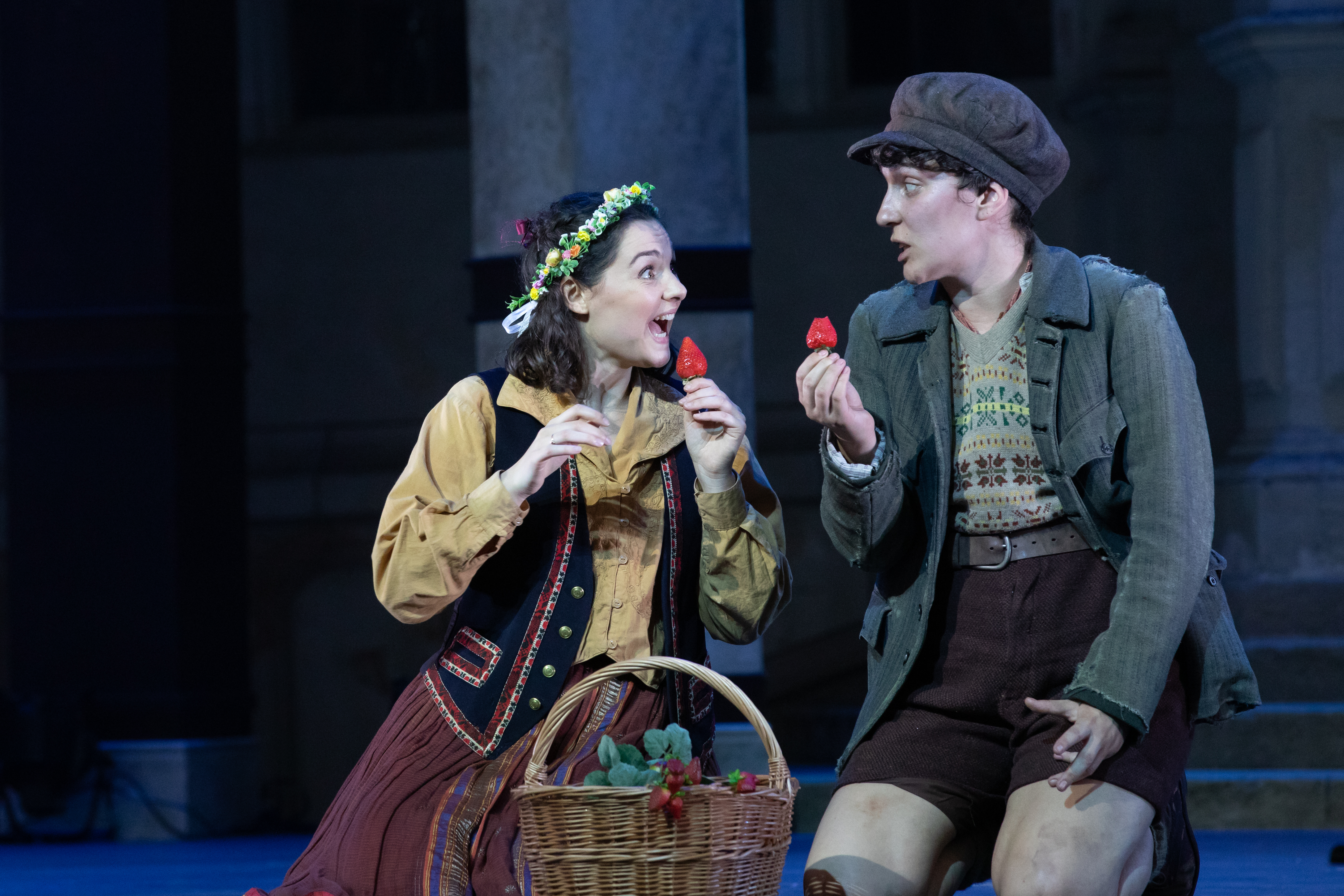
Hansel – Shakira Tsindos (mezzo-soprano), Gretel – Emily Christine Loftus (soprano), Peter – Edward Kim (baritone), Gertrud – Madeline Boreham (mezzo-soprano), The Gingerbread Witch – Ella de Jongh (mezzo-soprano), The Sandman – Claudia Haussmann (soprano), The Dew Fairy – Eleanor Broomfield (soprano)

Bence Kalo (director), Avishka Edrisinghe (repetiteur), Lily Wieland (deputy stage manager)

Opera Holland Park Chorus, Choir of Cardinal Vaughan Memorial School, City of London Sinfonia / Charlotte Corderoy

Holland Park, London
Friday 16 June 2023

review by Richard Whitehouse Photos by (c) Ali Wright

Performances by The Young Artists have been a welcome feature of Opera Holland Park this past decade – none more so than this staging of Hansel and Gretel, Humperdinck’s fairy-tale opera with its ‘rites of passage’ scenario ideally suited to singers at the outset of their careers.

An object lesson in less is more, Bence Kalo’s astute direction worked convincingly through conveying the essence of the siblings’ nocturnal journey – maybe more imagined then real, as was implied by the overture’s becoming a pantomime where a host of comedic and woodland characters assumed the spotlight. Neither was the subsequent element of danger played down, with the confrontation with the Witch taking on ominous overtones as cut across the farce and so made the latter’s demise then the freeing of her victims the more affecting in consequence.

The eponymous figures were as well matched vocally as visually. Shakira Tsindos proved a Hansel likable for all his (sic) gaucheness and gullibility – projecting the character with flair and immediacy, if marginally overdoing the slapstick in the third act. Emily Christina Loftus was a Gretel near ideal in her unforced eloquence, all the while exuding an awareness of the ‘outside world’ as made her the dramatic and musical focus during their sylvan wonderings. As an empathetic portrayal, it could hardly have been bettered technically or interpretively.

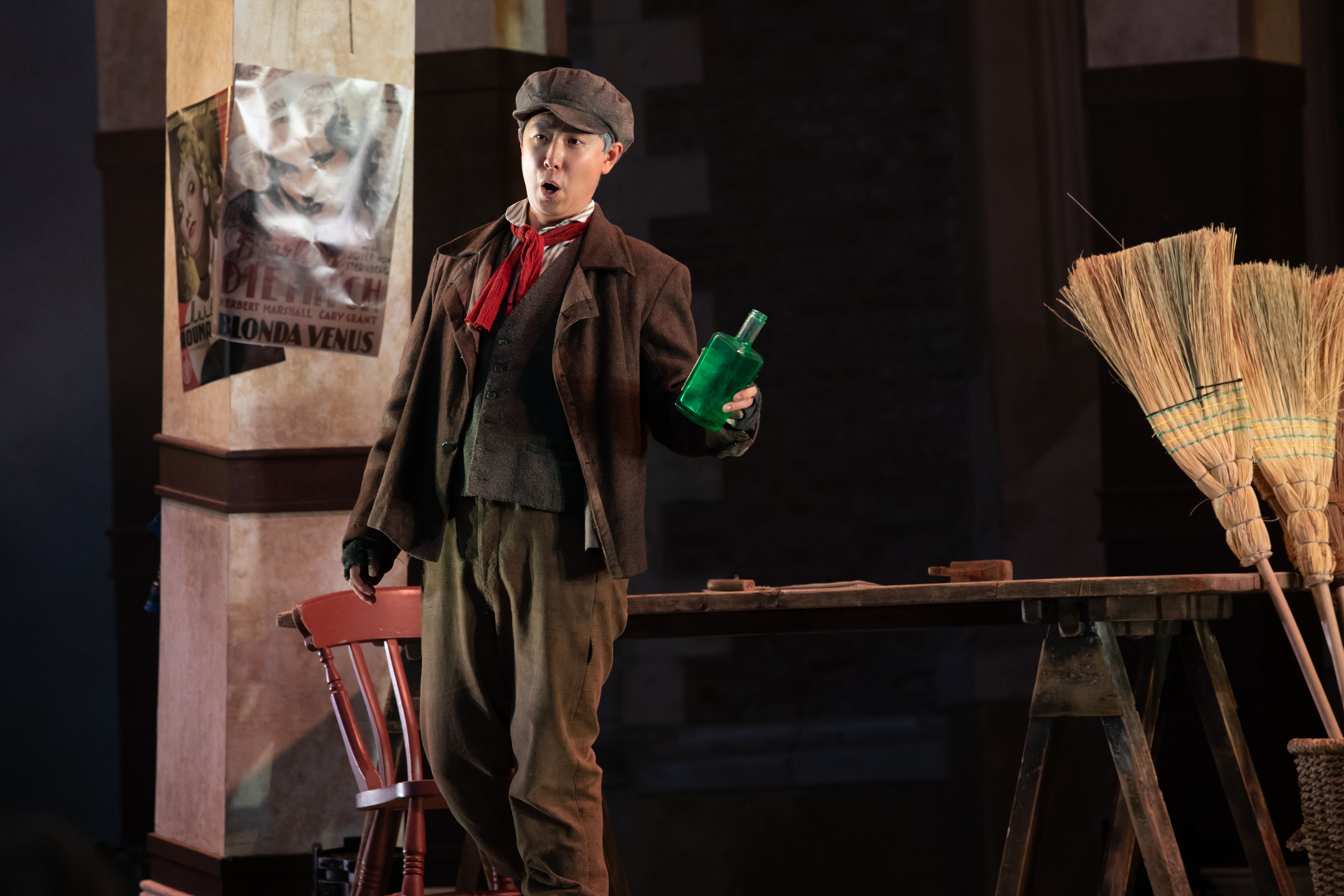
Absent throughout much of the opera, the roles of the parents are none the less crucial to its dramatic trajectory. Edward Kim was adept in channelling the warmth and guilelessness of Peter with no risk of sentimentality, making him a dependable figure whatever his failings. Madeline Boreham was forceful but never mean-spirited as Gertrud, her overt exasperation leavened by the anguish through which she lamented her family’s poverty, and recognizing the degree to which Humperdinck humanizes her character compared to the Grimm original.

The remaining roles were ably taken – not least the Witch of Ella de Jongh, who brought off the vocal as well as scenic change from pantomime dame to small-time dictator with aplomb. Claudia Haussmann was magnetic though a little edgy in tone as the Sandman, while Eleanor Broomfield conveyed real enchantment without unnecessary whimsy as the Dew Fairy. The choral contribution had the requisite poise and finesse, not least in those evocative moments when the shades of children vanished into the witch’s domain emerged out of the tonal ether.

The orchestra (City of London Sinfonia in its familiar summer guise) was its usual dependable self, the scaled-down complement of strings not lacking for presence situated at the centre of the platform. It helped that Charlotte Corderoy (above) was so evidently attuned to this score, pacing the unfolding drama with subtlety and purpose, while drawing instrumental felicities aplenty from such as the animated prelude and magical ‘dream-pantomime’ which frame the second act. In its mingled pathos and effervescence, the closing scene provided a fitting denouement.

A victim of its own success for much of the 130 years since its premiere, Hansel and Gretel remains an opera not just for Christmas and not just for children: a work in which innocence and experience are meaningfully conjoined, as was confirmed by this admirable production.

For information on further performances, visit the Opera Holland Park website – and you can meet the OHP Young Artists here. Click on the names for more information on Bence Kalo and Charlotte Corderoy

Depeche Mode – Are People Good?

Tonight I am seeing Depeche Mode live for the first time. Excitement is building, especially given the quality of their new album Memento Mori – though we will of course miss the presence of keyboard player ‘Fletch’, who sadly passed away in May 2022.

The most recent Depeche Mode to be played on the radio has been People Are Good, a fine new single that has a ring of Kraftwerk’s Computer Love about it. It is effectively a considered update to one of the band’s best singles from 1984:

People Are Good seems to be impressing a more thoughtful approach on people…but is there a lyrical sting in its tale?

As for tonight, I will report back – firstly via a gig review for musicOMH, then a considered response for these pages.

Happy weekend!

Ben

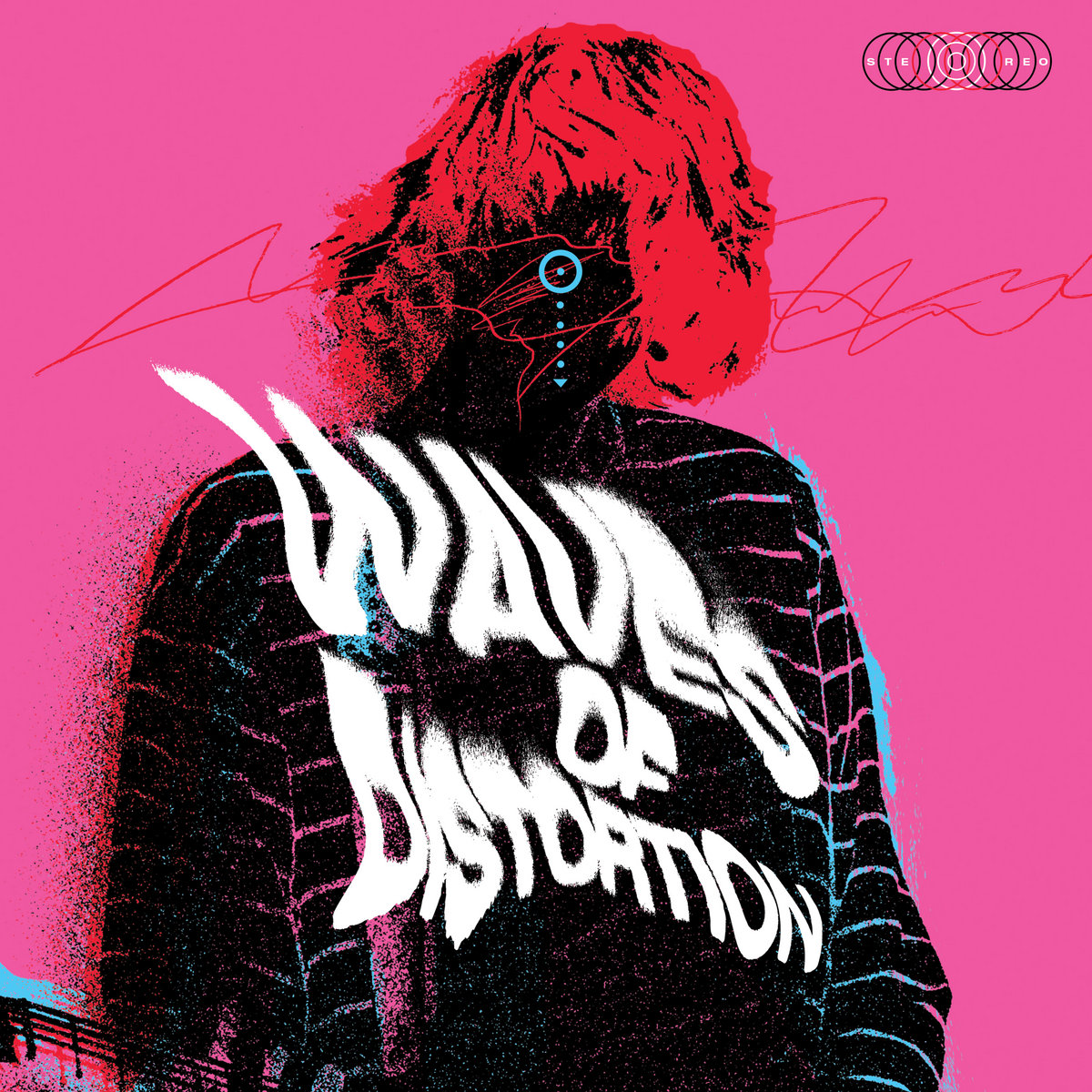
Switched On – Various Artists: Waves Of Distortion (The Best Of Shoegaze 1990-2022) (Two-Piers)

by Ben Hogwood

What’s the story?

Shoegaze was initially a derogatory term, despite its way of describing an area of music where bands tended to look down at their effects pedals during gigs. Now it stands for something far more positive, the celebration of a movement in music now into its fourth decade.

Waves Of Distortion is a compendium of the biggest bands around in shoegaze, but also finds room to celebrate little-known entities, its aim to take the listener down a rabbit hole. It does so across 26 tracks.

What’s the music like?

Rather wonderful. This is an extremely well-chosen sequence of music moving from shoegaze royalty to an examination of more deserving acts. The quality never dips,

The lush textures of Slowdive’s Slomo are first up, celebrating the return of the band in 2017, a key moment in the shoegaze timeline. There is a weightless serenity about their music but also a latent power, beautifully harnessed here.

A strong 1-2-3 is completed by Chapterhouse and Ride, Pearl and Vapour Trail respectively – two tracks from the 1990 origins. Also from that year is Lush’s Sweetness And Light, a beauty enhanced by Miki Berenyi’s angelic tones. How good it is, too, to be reminded of Kitchens Of Distinction, with The 3rd Time We Opened The Capsule.

The excellent notes from Nathaniel Cramp, who runs the Sonic Cathedral label, put the bands in their appropriate context, and explain the welcome inclusion of a number of international bands. Beach House, in particular, deserve their place with the glittering Lazuli, while Robin Guthrie’s starry-eyed version of Echo LadiesOverrated is a treat. More modern inclusions such as The Daysleepers’ richly-voiced Food In Heaven work really well, backed up by Flyying ColoursLong Holiday, which is both tuneful and loosely funky. bdrmm’s A Reason To Celebrate is a welcome blast of sound, too. Sometimes the music is less song-based and more a description of a weather form, with Air Formation’s Daylight Storms a thrilling case in point.

Does it all work?

It does, ticking all the compilation boxes of summing up the best of shoegaze while giving the listener a jumping off point for a number of new discoveries. Repeat listening only adds to the appeal.

Is it recommended?

Very much so. As a starter kit for the shoegaze movement, Waves Of Distortion is highly recommended – but even for the seasoned listener there is plenty to recommend it. Excellent complementary artwork, too!

Listen

Buy

You can explore purchase options at the Piccadilly Records website