Switched On – Black Light Smoke: Ghosts (Scissor and Thread)

by Ben Hogwood

What’s the story?

Black Light Smoke is the front under which Chicago-born Jordan Lieb makes his music. Currently resident in New York, Lieb has house and techno heritage on his doorstep – and pours it into his debut album.

The album draws on 30 years’ worth of dance music in a search for the real meaning of house music. As it does so it brings in elements of rave, house and soul – and forming them into a structure with strong parallels to a DJ mix.

In a deeper meaning, Ghosts also stands for facing the shadows of the past in order to be able to move forward.

What’s the music like?

This is a cracking dance music album. Jordan Lieb is a talented producer, but he doesn’t have to try too hard to show it – the craft of making a strong album akin to a DJ set comes to him instinctively.

We have an atmospheric, deep opener as Sprinkles Says casts an evocative nocturnal atmosphere, and then a thoughtful, voice-led track in the shape of 727 Anthem (House Is Black), which sets out the stall for an album that works as well for the head as it does for the dancing feet. This is an old-style house track seen through younger eyes, and it’s a strong combination.

Then comes one of two excellent vocal tracks featuring Léah Lazonick. Hearts Not Broken is slightly eerie, the spoken word vocal in the verse cutting to a distant harmony for the chorus. Later on, Ghosts itself has smoky, wispy outlines.

Elsewhere, Lieb gets down to business. Pleasure Chaser, The Beat Direct and Out From Within are the sort of deep house tracks we might have expected from the likes of Kevin Yost in the late 1990s, though Lieb creates a very different mood in each one. Love Triangle goes deeper and sultry, but Prisoner is peak time house, its piano ringing out above the dancing throng.

Resonate feels like classic, late 1980s techno, with fat synth lines, while In The Valley has mellow, rich chords to lie on. By way of a contrast, Nighttime Honey keeps its rough edges, vinyl crackles and all, looking out on a nocturnal city scape as it seeks company. Finally The Storm fizzes and crackles, one of the faster tracks of the album taking us out on a high.

Does it all work?

It does. Lieb keeps his music interesting throughout, crackling with atmosphere, and very much setting the scene of late night cities. Social elements are subtly explored, too.

Is it recommended?

Wholeheartedly – this is a fine dance music record. When you buy it, though, you can kill two birds with one stone, because Lieb is donating 100% of all his proceeds to Little Bit Foundation, empowering students living in poverty to achieve their academic goals.

Listen

Buy

Switched On – Brandt Brauer Frick: Multi Faith Prayer Room (Because Music)

by Ben Hogwood

What’s the story?

For their latest album, the trio of Daniel Brandt, Jan Brauer and Paul Frick wanted to go back to the basics of their first. With a primary aim to make people dance through minimal means, they set about their task, in their words bringing in ‘a narrative element directly inspired by the way a night in a club unfolds, as you go through these different experiences’.

A big part of their thinking was a hook-up with speech artist Mykki Blanco, who takes up vocal duties on ‘Act One’. From that the trio looked to bring in a range of vocalists from different scenes and backgrounds, also preparing a questionnaire that they sent to 500 people asking for their vision of the future and experiences of the present.

What’s the music like?

There is not doubt that Multi Faith Prayer Room sees Brandt Brauer Frick reganing their vitality. They do this through a really well constructed album that takes its listener out on to the dancefloor but then back to the side wall for contemplation.

The dance-based tracks are thrilling, visceral pieces of work, and none more so than the Blanco-fronted Act One. While the vocals won’t appeal to all, his is a gripping tale of clubbing experiences, highs and lows. By contrast, some of the people asked for their vision give it on the multilayered vocal tracks Future and Faith, both full of thought provoking clips.

The instrumental tracks show off the group’s prowess in writing for different forces, especially the way the full scored orchestral intro Side segues into the familiar jagged piano that we hear in Ready To Connect. By contrast Dotted Line and Perpetuate are minimal, dot-dash affairs that cross rhythms to hypnotic effect, the latter stretching towards Orbital in its construction.

The vocal tracks are richly varied, too, from the satin voice of Azekel to the brilliant Duane Harden, whose Closer To You is a hands in the air highlight later on. KOM_I makes a strong impression on Soba, while This Feeling finds Sophie Hunger bringing out the emotion.

Does it all work?

It does. The combination of raw, first principles dance music and thoughtful, song-based material is strong – and the musical inspiration is consistent throughout, with plenty of riffs to latch on to as in all good BBF tracks.

Is it recommended?

It is indeed – Brandt Brauer Frick playing to their strengths and producing some of their best music.

Listen

Buy

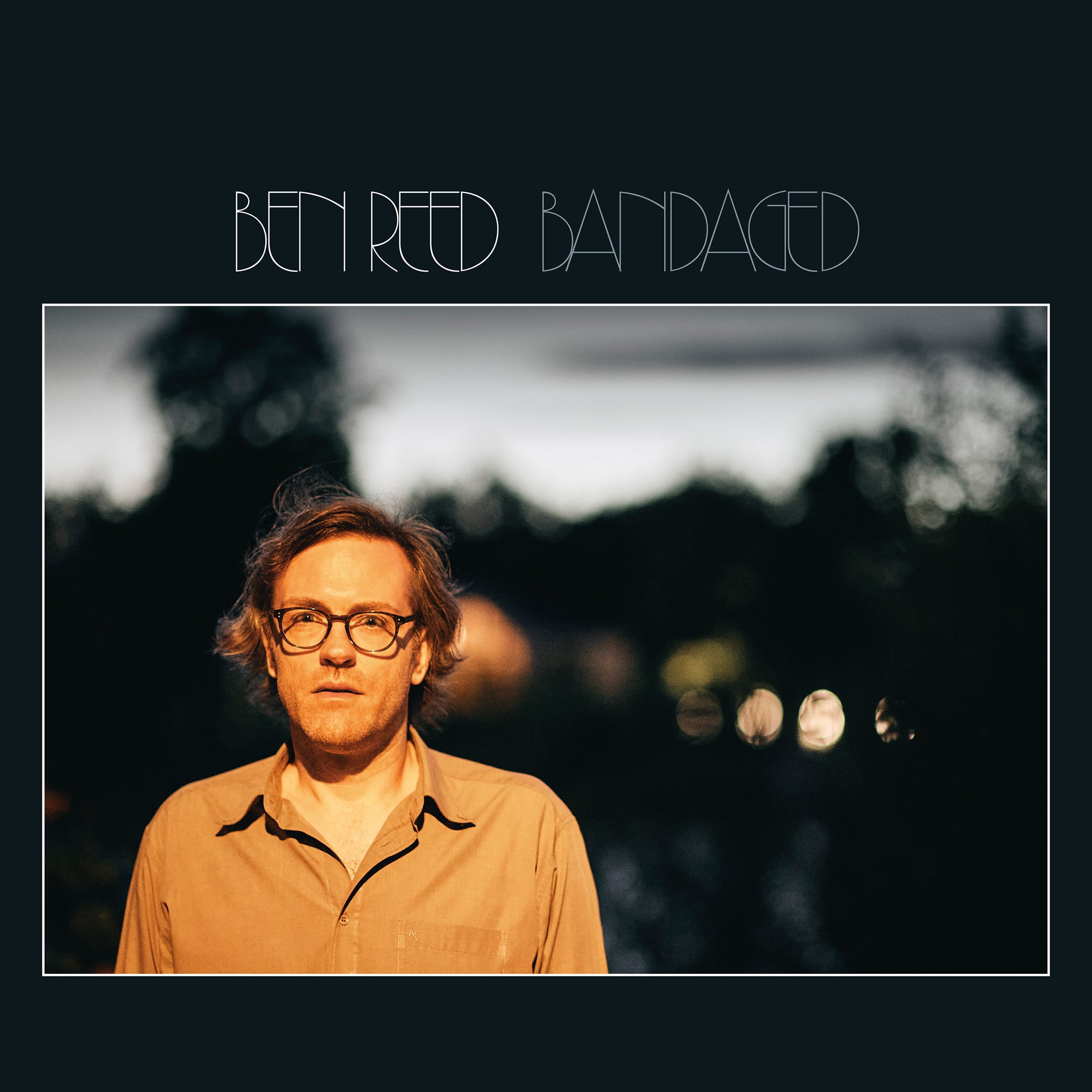
On Record – Ben Reed: Bandaged (Esoteric)

by Ben Hogwood

What’s the story?

Ben Reed has an eclectic musical CV, so it stands to reason his first album on the Esoteric label should live up to those promises.

So far his credits include playing for artists as diverse as Frank Ocean, Sampha, Orlando Weeks and David Byrne – while his own original work draws from progressive rock old and new but reaches back further, to classical music and beyond.

Bandaged has been in the pipeline for three years, with Reed himself recording the vocals – but with guest support featuring a starry array of names. These are Caravan’s Jimmy Hastings, Ross Stanley (organist in the Steve Howe Trio), steel guitar royalty BJ Cole, flautist Rachel Hayter, singer / songwriter Laura Groves on keyboards and Matt Weeks, who doubles up on horns and extra production.

What’s the music like?

Bandaged is a consistently rewarding album. As with all music of a progressive nature it doesn’t reveal all of its treasures immediately, but there is plenty for the first-time listener to hang on to.

The chorus of Tale Of Cleopatra is an obvious case in point, taking up root in the head immediately, but so too is the more complicated, virtuoso performance behind I’ve Got Chains, a lyrical masterclass which also provides an uncanny reflection of modern life and all its pleasures.

The richly coloured and beautifully scored opener Plea finds Reed looking back towards Medieval music in some of the rhythmic trickery, yet he doesn’t fall into the trap of making it too cheesy. Instead, music old and new adds up to something wholly rewarding.

Comparisons with the Canterbury scene are valid for many good reasons, and songs like Everything That Matters enjoy a closer stylistic parallel while keeping a healthy sense of humour, but there are also references in Reed’s work to late-1960s psychedelia. On the other hand, he can write a study in thoughtful meditation, as No Arms No Legs No Body At All and Dwindled turn out to be, the latter with ghostly visions.

Tangled Branches has beautifully layered harmonies and a lively flute counterpoint from Hayter to tell its story, while on the darker side we have Chapter Of Risk, its lower layers of doom enhanced by Hastings’ contrabassoon.

Does it all work?

Yes. While there are a lot of experimental tendencies on Bandaged they are brilliantly managed, and there is almost always a musical hook to hang on to. Lyrics are excellent and memorable, too – when did you last hear the word ‘rivulets’ in a song?!

Is it recommended?

Definitely. Bandaged is a very English progressive record, in the best possible way.

Listen

Buy

You can explore purchase options for Damaged on the Cherry Red Records website

In concert: Pavel Haas Quartet at Wigmore Hall – Suk, Martinů & Korngold

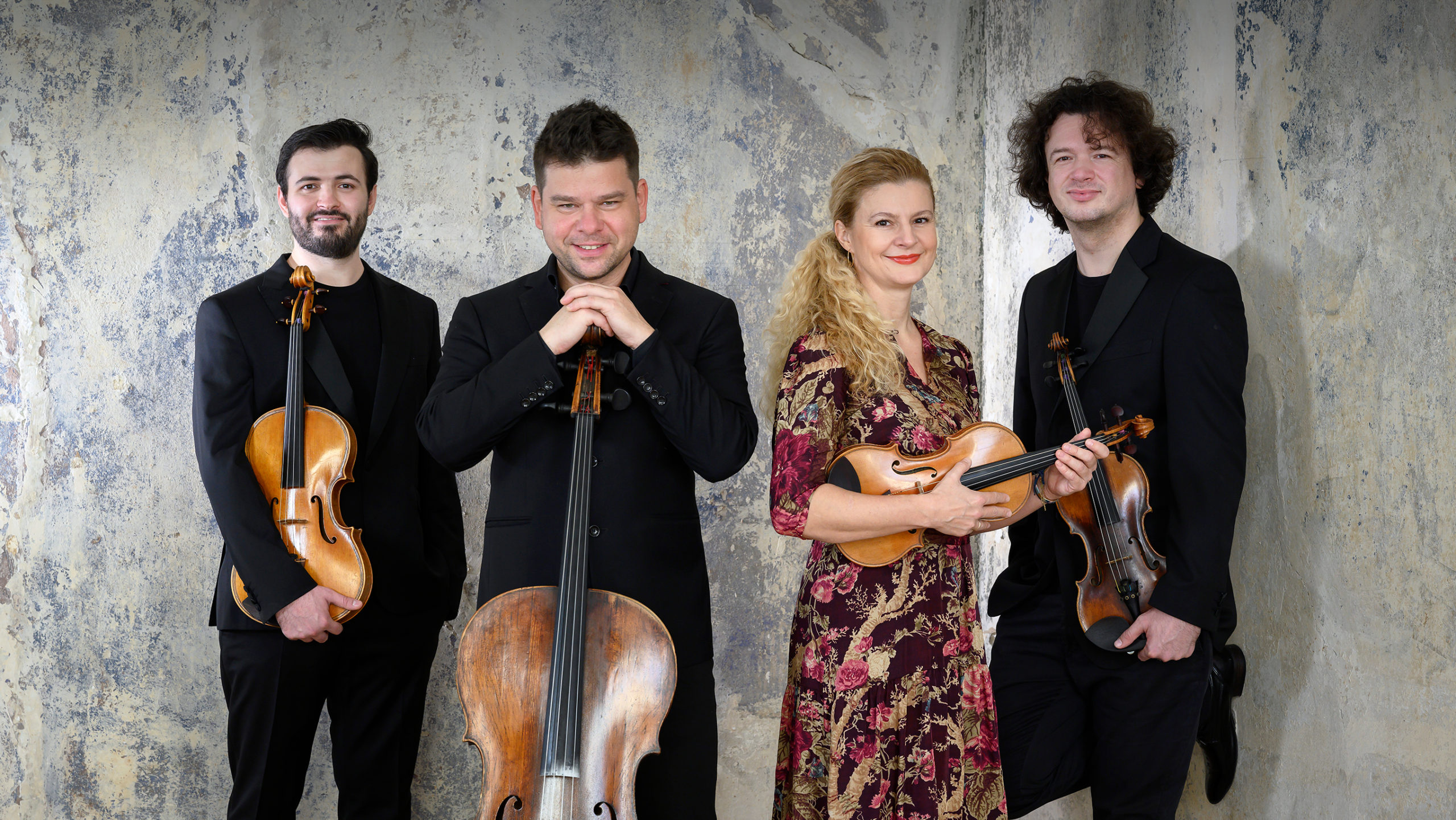
Pavel Haas Quartet [Veronika Jarůšková, Marek Zwiebel (violins), Šimon Truszka (viola), Peter Jarůšek (cello)]

Suk Meditation on an old Bohemian Chorale (St Wenceslas) Op.35a (1914)
Martinů String Quartet no.2 (1925)
Korngold String Quartet no.3 in D major Op.34 (1944-45)

Wigmore Hall
Monday 12 June 2023 1pm

by Ben Hogwood

An unusual and intriguing program from the Pavel Haas Quartet contained music by two fellow Czech composers (Suk and Martinů) and one (Korngold) born in Moravia before moving to America.

The quartet began with a moving piece by Suk, his Meditation on an old Bohemian Chorale (St Wenceslas). This poignant pre-war utterance carried an air of deep profundity right from the first phrase of Simon Truszka’s viola, its elegiac tone enhanced by relative lack of vibrato. The air of solemnity carried throughout, though there was considerable strength in depth as the music grew in stature.

Though a Czech composer, Martinů spent a good deal of time overseas – largely out of necessity. By his early 30s he was in Paris, studying with Roussel, bringing a neoclassical language and tidiness to his music. The String Quartet no.2, though, is a curiously lopsided work, very front heavy with its first movement a combination of substantial slow introduction and quick section. There were close links to the St Wenceslas Chorale here, too, found in the solemn intonations of the Andante. This was the spiritual heart of the piece, dark and uncertain at times and contrasting greatly with the thoughtful but lightly coloured manner in which the quartet began. A resolute first movement found a mood that Martinů reprised in the closing Allegro, a propulsive dance number with a spring in its step. There was an undeniable French flavour to the music here, which the Pavel Haas Quartet brought forward, its elegance at odds on occasion with the rustic dance tunes.

There was tension in the final work, too, though this was undeniably the making of a mature composer. The String Quartet no.3 was Erich Korngold’s last published chamber piece, adjacent in publication to the Violin Concerto, with which it shares the same key of D major. The Pavel Haas Quartet gave a superb account of the piece, exploring its unusual musical language through music that would have presented considerable technical challenges.

The awkward but compelling violin melody in the first movement was brilliantly negotiated by Veronika Jaruskova, who conveyed its uncertainties through sweet tones and phrases. In spite of a convincing and full bodied outburst from all four players, the movement was dominated by this figure, which left a question in the mind. The Scherzo went some way to answering this, a black and white film scene easy to conjure up in the mind as the furtive darting of the main theme ensued. Again this was brilliantly played, as was the heart melting trio, its big tune (from the recently completed score to Between Two Worlds) full of tender longing and given appropriate glissando for expression.

The silvery slow movement flickered in the half light like a candle burning low, but with the flame essentially undimmed. The quartet’s sense of purpose was key here, with burnished lower string tones as viola and cello often combined, a notable cushion on which the searching violin melodies (using material from The Sea Wolf) could rest. Romance was in the air but although some of the music was borne of Hollywood, its intimate confines gave the music a deeply personal air. The atmosphere was heightened as a thundercloud hovered over the Wigmore Hall.

The motorised finale brought conviction and a strong sense of homecoming, not dissimilar to its equivalent movement in the Violin Concerto. Although emphatic in its resolution there were moments where the quartet moved into a different tempo or unexpectedly distant harmonies, Korngold momentarily distracted by edgier thoughts until his focus returned.

The Korngold string quartets have had something of a renaissance of late, with several new recorded versions and a marked increase in performance. On this very cultured evidence it would be no surprise if the Pavel Haas Quartet committed their version to disc soon – but it is to be hoped the other works will join it, for this was a fine concert indeed.

For more livestreamed concerts from the Wigmore Hall, click here

In concert – CBSO Centre Stage: Bobbie-Jane Gardner & Tchaikovsky

Eugene Tzikindelean, Kirsty Lovie (violins), Adam Römer, aDavid BaMaung (violas), Eduardo Vassallo, aArthur Boutillier (cellos)

Gardner True Self (2023) [CBSO Centenary Commission: World Premiere]
Tchaikovsky String Sextet in D minor, Op. 70, ‘Souvenir de Florence’ (1890)a

CBSO Centre, Birmingham
Thursday 8 June 2023 (2pm)

Reviewed by Richard Whitehouse

This last of the City of Birmingham Symphony Orchestra’s Centre Stage programmes for this season brought together the most heard work for the relatively limited medium of string sextet with a Centenary Commission for string quartet by a composer born and based in Birmingham.

Best known for her diverse arrangements of African-American classics taking in Odetta and Alicia Keys, Bobbie-Jane Gardner has also written extensively for classical ensembles; most recently Up on the Toes (the slippery stair dance) for brass quintet (recorded by Onyx Brass), and now True Self. Taking its cue from the Buddhist virtue of absolute happiness, this latter unfolds along an ‘innocence to experience’ trajectory prior to a new awakening – the whole piece founded on a motif whose ‘childlike’ innocence is pervaded by its own vulnerability.

Harmonically subtle and rhythmically agile, True Self received what sounded a committed reading from the CBSO players – notably in the opening section when the music stirs gently but insistently into life, and towards the close when it touches on a resolution not so much tentative as anticipatory. Maybe these nine minutes could yet prove the first stage of a large-scale work or series of pieces? At any rate, it left a thoughtful and affecting impression, and will hopefully be taken up by other quartets seeking a worthwhile addition to the repertoire.

Souvenir de Florence has never been out of its respective repertoire, and this performance gave it its due – not least an impetuous opening Allegro as made the most of Tchaikovsky’s frequently dense part-writing, with a thrillingly climactic lead-back to the reprise, followed by an Adagio whose emotional build-ups were never indulged or overbearing. Even so, the speculative central interlude (with its edgy sul ponticello exchanges) might have benefitted from a touch more ambivalence to set the expansive sections either side into greater relief.

There was no doubting the trenchancy of the Allegretto, outwardly an intermezzo but with a scherzo-like capriciousness across its trio, while the unabashed rhetoric of the final Allegro was finely controlled as this movement reached a close of suitably breathless exhilaration.

You can read all about the 2023/24 season for Centre Stage at the CBSO website. Click on the composer name for more information on Bobbie-Jane Gardner, or visit her Soundcloud page