In concert – Raphael Wallfisch, BBC Concert Orchestra / Martin Yates: English Music Festival opening concert

Raphael Wallfisch (cello, below), BBC Concert Orchestra / Martin Yates

Lewis A Celebratory Overture (2023) [EMF commission: World premiere]
Lloyd Webber (orch. Yates) Scenes from Childhood (c1950) [World premiere]
Moeran Cello Concerto in B minor (1945)
Alwyn Serenade for Orchestra (1932) [World premiere]
Delius Two Pieces for Small Orchestra (1911-12)
Vaughan Williams (arr. Adrian Williams) A Road All Paved with Stars (1929/2016) [Public premiere]

Dorchester Abbey, Dorchester-on-Thames
Friday 26 May 2023

Reviewed by Richard Whitehouse

The breezy ebullience of Paul Lewis’s A Celebratory Overture (redolent of Malcolm Arnold without any risk of expressive ambiguity) launched this latest English Music Festival in fine style, with its crisp and precise playing from the BBC Concert Orchestra under Martin Yates.

As so often in these concerts, world premieres were not lacking and the first brought hitherto unknown partsongs by William Lloyd Webber arranged into suite-form then orchestrated by the conductor. If the resultant Scenes from Childhood adds but little to the reputation of this not inconsiderable figure, the Prelude yields appealing poise while Serenade is a waltz of no mean suavity, then the Finale nimbly combines elements of fugue and waltz on its way to a rousing close. Worth hearing, and not least when rendered with such obvious enjoyment.
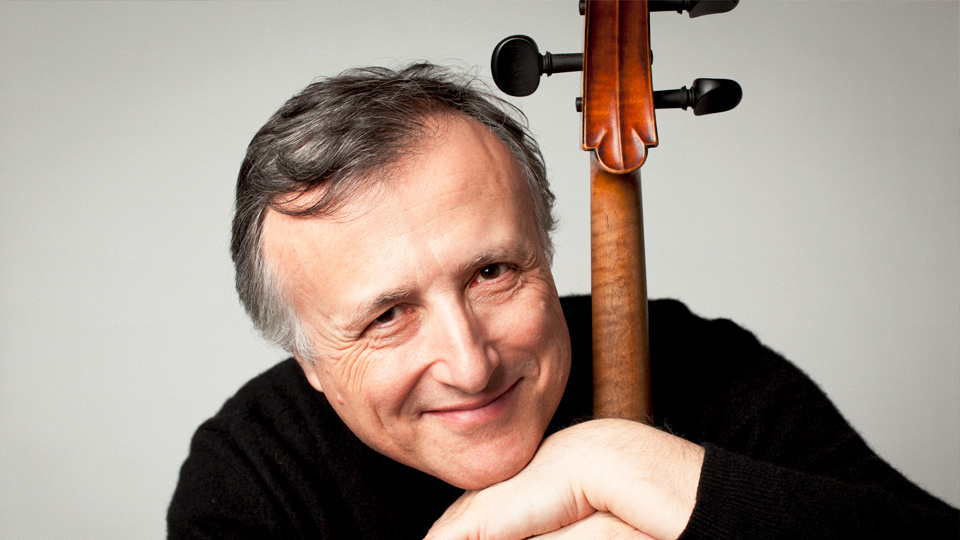
The emotional weight of this first half inevitably fell upon the Cello Concerto by E.J. Moeran. Completed in the aftermath of the Second World War, it was the composer’s first large-scale piece for his wife Peers Coetmore; her belated and often approximate recording likely having deterred others from taking it up. Not so Raphael Wallfisch (above), his belief evident from the outset of a Moderato whose confiding eloquence is not without undercurrents of unease. These latter are made explicit at the start of the Adagio, otherwise centred on one of the composer’s most affecting melodies and building with due inevitability to a cadenza whose growing animation carries over to the final Allegretto. Here a jig-like main theme denotes an Irish influence that offsets any tendency to introspection as it guides this engaging movement to a decisive close.

Quite a performance, then, which was complemented after the interval by a first hearing for the early(ish) Serenade by William Alwyn. Written while on examination duties in Australia, this undemanding piece moves from a (mostly!) tranquil Prelude, through a stealthy and by no means uninhibited Bacchanale then a serene Air which could yet find favour as a radio staple, to a Finale that, as Andrew Knowles rightly indicated in his programme note, betrays more than a hint of Czech folk-music across its insouciant and ultimately boisterous course.
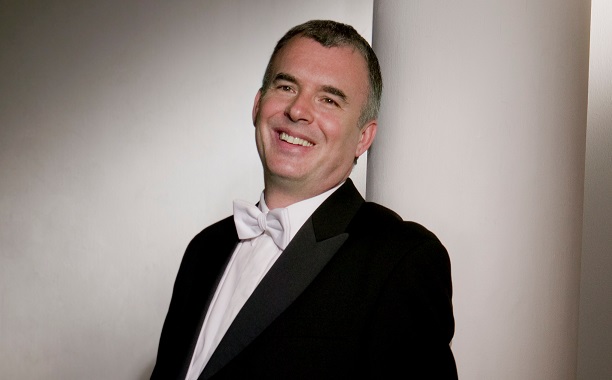
Hardly an interlude, the brace of pieces by Delius fairly encapsulate the inward rapture of his maturity. Yates (above) brought just the right lilt to the dancing gait of On Hearing the First Cuckoo in Spring, while the subtle eddying of Summer Night on the River was effortlessly conveyed.

The final premiere tonight came in the guise of A Road All Paved with Stars – the ‘symphonic fantasy’ as arranged by Adrian Williams (a notable composer in his own right) from Vaughan Williams’ comic opera The Poisoned Kiss. Occasionally revived, its dramatic prolixity rather obscures its musical highpoints – emphasized here in what is both a chronological overview and cumulative paraphrase that also adds a non-symphonic orchestral work to its composer’s output. The surging emotion of those final stages could hardly leave an audience unmoved. This vivid reading concluded a memorable concert in which the Moeran was dedicated to the memory of Michal Kaznowski – who, as cellist of the Maggini Quartet and formerly section-leader at the City of Birmingham Symphony Orchestra, has left a legacy worth remembering.

To read more about the festival, visit the English Music Festival website. For information on the performers, click on the links to read more about cellist Raphael Wallfisch, conductor Martin Yates and the BBC Concert Orchestra, and for more information on composer and arranger Adrian Williams and composer Paul Lewis

Switched On – Wata Igarashi – Agartha (Kompakt)

by Ben Hogwood

What’s the story?

Wata Igarashi makes his Kompakt debut with this multi-dimensional album, the latest chapter in a career that has seen him release for The Bunker NY, Delsin, Midgar and Time To Express, as well as his own WIP net label.

Here he is for a full-blown concept album release, around the mythical secret kingdom of Agartha. In his own words, “Named for the mythical secret kingdom, understood as a complex maze of underground tunnels, perhaps designed by Martians who colonised the Earth tens of thousands of years ago, it’s a similarly mystical, perhaps even cosmic trip – but this time, exploring an inner, deeply personal cosmos.”

On his journey, Igarashi creates scenes from an imaginary film based on the kingdom, teeming with musical incident.

What’s the music like?

Deeply mysterious from the start. Igarashi sets the mood with a thick cloud of ambience, that folds gradually over the music and sets a mood of disquiet through its use of microtones. This unsettled outlook continues when the beats arrive on Searching, but with Subterranean Life it feels as though the explorer has arrived at their destination and are beginning a journey of discovery.

The music becomes more fragmented and improvised, exploring more dimensions with metallic snippets of percussion, but then the mood changes with Ceremony Of The Dead, whose urgency increases as the melodic layers build. This track was originally written as part of a Sony 360 Reality Audio spatial sound concert, and it sounds great on headphones especially when a fresh vocal loop crosses over with Igarashi’s beats. The mood raises still further with Floating Against Time, a beatless number doffing its cap to Steve Reich, while at the same time showing Igarashi’s ability to cross-pollenate a number of different melodic lines with beautiful results. Abyss II runs with similar material, adding electronic sharpness.

Another scene change plunges us into the experimental climate of Burning, where musical activity and syncopation is rife, busy riffs trading off against each other. Agartha itself is the most descriptive scene, Igarashi painting pictures at a slower tempo even with the brush of a hi hat or the crescendo of a drone. This ushers in Darkness, but not the expected downward turn of mood – rather a cosmic interplay from swooping lines on the treble synth over an exquisite held chord. The mood settles towards the end, segueing nicely into Eternally, where the cosmic mood prevails but in much calmer waters.

Does it all work?

It does – though Agartha is definitely best experienced in one listen, so you get the twists, turns and mood changes of the whole journey.

Is it recommended?

It is. This is music of dense textures and intense colours, rewarding the listener who is prepared to revisit on several occasions. That way the secrets of Agartha can be fully unlocked.

Listen

Buy

Listening to Beethoven #220 – Symphony no.2 in D major Op.36 (arranged for piano trio)


The Longing for Happiness. Left wall, detail from the Beethoven-Frieze (1902) by Gustav Klimt

Symphony no.2 in D major Op.36 for orchestra (1800-1802), arranged for piano trio 1805 (Beethoven aged 34)

Dedication unknown
Duration 30′

1. Adagio molto – Allegro con brio
2. Larghetto
3. Scherzo: Allegro
4. Allegro molto

Listen

Background and Critical Reception

Beethoven’s friend and pupil Ferdinand Ries took charge of this arrangement of the Symphony no.2 for piano trio – but the very limited writings about the arrangement strongly imply that the final decisions on its construction and execution were made by Beethoven himself.

The reason for this arrangement is not abundantly clear, other than it making the symphony available for domestic, small-scale music making. Yet the nature of the scoring would mean only very accomplished players could see it through from one end to the other!

Thoughts

This is a remarkable and surprisingly effective transcription, one that fully retains the vitality of Beethoven’s invention while compressing it for the intimacy of a chamber music environment.

Inevitably the textures are very different, but having less instruments does on occasion give the listener opportunity to appreciate the bare bones of Beethoven’s melodic invention.

Spotify playlist and Recordings used

Robert Levin (piano), Peter Hanson (violin), David Watkin (cello) (Archiv Produktion)

Emanuel Ax (piano), Leonidas Kavakos (violin), Yo-Yo Ma (cello)

This is a very fine performance from pianist Robert Levin and soloists drawn from the Orchestre Révolutionnaire et Romantique. The fast music is punchy and incisive, while the slower music has more intimate moments, beautifully captured.

You can chart the Arcana Beethoven playlist as it grows, with one recommended version of each piece we listen to. Catch up here!

Also written in 1805 Spohr String Quartet no.1 in C major Op.4/1

Next up An die Hoffnung Op.32

On his anniversary – two short pieces by György Ligeti

Today is the anniversary of the birth of György Ligeti, one of the 20th century’s true innovators in music.

There are many longer pieces we could have chosen to mark this, but here are two shorter works that illustrate the range of his creativity. First up is Hungarian Rock, a short piece for harpsichord, which pushes the boundaries of what the instrument is capable of:

From the keyboard we turn to the choir, and the remarkable Lux Aeterna, which had such an effect on film director Stanley Kubrick that he used it in 2001: A Space Odyssey:

To discover more about Ligeti, head to read Tom Service’s guide to his music

Switched On – The Black Dog: The Grey Album (Dust Science Recordings)

VNL_12SP5

by Ben Hogwood

What’s the story?

For The Grey Album, The Black Dog have gone back to basics. Inspired by electronic bands such as Depeche Mode and The Human League in their early years, they went back to much older ways of working, with one keyboard per person and a strict limit imposed on the use of the computers.

These were the confines for an album that continues a rich stream of creativity for the Sheffield trio. Proud of their heritage, they are continuing to explore music and architecture simultaneously – and this latest opus taps into both art forms for its inspiration.

What’s the music like?

As its title implied, this is often an album of sombre colour – but there is also an impressive grandeur to the soundscapes The Black Dog conjure up.

That much is immediately evident from the stark outlines and imposing structure of Ghosts Of Decay, with steely synthesizer sounds reminiscent of the band’s city mates Cabaret Voltaire. As the beats arrive so too does an extra urgency, and the bumpy terrain of Let’s All Make Brutalism draws parallels with the trio’s love of 1980s architecture.

The faster tracks on this album are very impressive. Harder Times puts its pedal to the metal with an excellent, low slung groove, while the cleverly named (We Never Needed This) Fascist Groove Thang is excellent. Thee Difference Ov Girls drives forward with great purpose, as does the superb This Is Phil Talking and I Dare You. The last two are peppered with excellent riffs and generate great momentum – before the album subsides into the attractive coda, Borstal Communications sounding like the throb of steelpans.

Does it all work?

It does. The Black Dog are past masters at gauging the structure of an album and do so again here, moving effortlessly between mood and tempo and peaking with a couple of certified bangers.

Is it recommended?

Yes, enthusiastically – The Grey Album is a fine addition to The Black Dog discography, and confirmation that they are very much at the top of their game.

Listen

Buy