
Online Concert: Orsino Ensemble at Wigmore Hall – Britten, Reicha & Janáček

Orsino Ensemble [Adam Walker (flute), Nicholas Daniel (oboe), Matthew Hunt (clarinet), Amy Harman (bassoon), Alec Frank-Gemmill (horn), Peter Sparks (bass clarinet)]

Britten Movement for wind sextet (1930)
Reicha Wind Quintet in E flat major Op.88/2 (1811)
Janáček Mládí (1924)

Wigmore Hall, Monday 5 June 2023 1pm

by Ben Hogwood

This attractive programme of works for wind ensemble began with a rarity.

Benjamin Britten seldom wrote for wind – a shame, since his writing for the instrumental family as soloists or in an orchestral context is remarkably assured. The Movement for Wind Sextet performed here by the Orsino Ensemble is thought to have been a response to Janáček’s Mládí – and is scored for the same forces. This account was shady and elusive to begin with, reflecting its elusive melodic and harmonic figures. There was beautiful control from Nicholas Daniel’s oboe solo before a quicker section featured some lovely ‘burbling’ sounds from the clarinets, oboe and flute pushing for the higher reaches. Ultimately this piece remains beyond reach, an intriguing if slightly frustrating sign of what might have been had Britten committed more wholeheartedly to the wind ensemble.

It made a welcome change to hear the music of Anton Reicha. Born in Bohemia in 1770, Reicha – a flautist – soon found himself leading the court orchestra in Bonn, where his musicians included a certain viola player named Beethoven. Moving on to Paris, Reicha taught at the Conservatoire, where his pupils included Berlioz, Franck and Liszt. In spite of these big-name links, his own music is not heard as often as it should be. He did however write prolifically for wind ensemble, completing 24 accomplished quintets, which are among his most-heard compositions.

The Wind Quintet in E flat major is a particularly attractive example, and received the ideal performance here. The Orsino Ensemble began with a brightly voiced Lento, with the added plus of Amy Harman’s characterful bassoon in the lower register as the ensuing Allegro began. This provided the impetus for the ensemble to exchange attractive melodies, enjoying the beautiful sonorities a wind ensemble can create. The Menuetto had a lovely lilt to its triple time, with busy inner parts to support the genial melody. The third movement also had a winsome lilt to its rhythmic profile, albeit a good deal slower – and with lovely operatic solos from oboe and clarinet. The perky last movement added humour to the mix, with some thoroughly enjoyable interplay, delivered here with virtuosity and style.

Janáček’s sound world is immediately different to those around it – as is the case with the intriguing wind sextet Mladi. Written as a ‘memoir of youth’, and composed around the same time as his masterpiece The Cunning Little Vixen, the work looks back to a childhood in Hukvaldy. Premiered in Brno in 1924, it was first performed in Britain – at the Wigmore Hall in front of the composer – in 1926.

The conflicting accounts of youth, refracted through the mind of a 70 year-old composer, are fascinating to the ear, with joyful moments tempered by unexpected, melancholic asides. There is however an underlying positivity running through the music.

The Orsino Ensemble enjoyed the raucous folk-based tunes along with the doleful asides that are such a characteristic of his work. The rich shades of colour were ideally exploited. Shadows lengthened over the second movement, depicting the composer and his mother parting at a train station. The third movement had the vigour of youth, with some sparky themes, while there was a motoric element to the last theme, generated by the horn – before more complementing aspects of joy and melancholy.

This was a very fine concert, with an encore dedicated to the recently passed Kaija Saariaho. Nicholas Daniel introduced the second of Oliver Knussen’s 3 fantasies for wind quintet, preceded by the poem How Sweet To Be A Cloud, part of the composer’s Hums and Songs of Winnie-the-Pooh. The sonorities we heard here were unexpectedly true to Saariaho’s sound world, and formed a characteristically striking memorial.

For more livestreamed concerts from the Wigmore Hall, click here
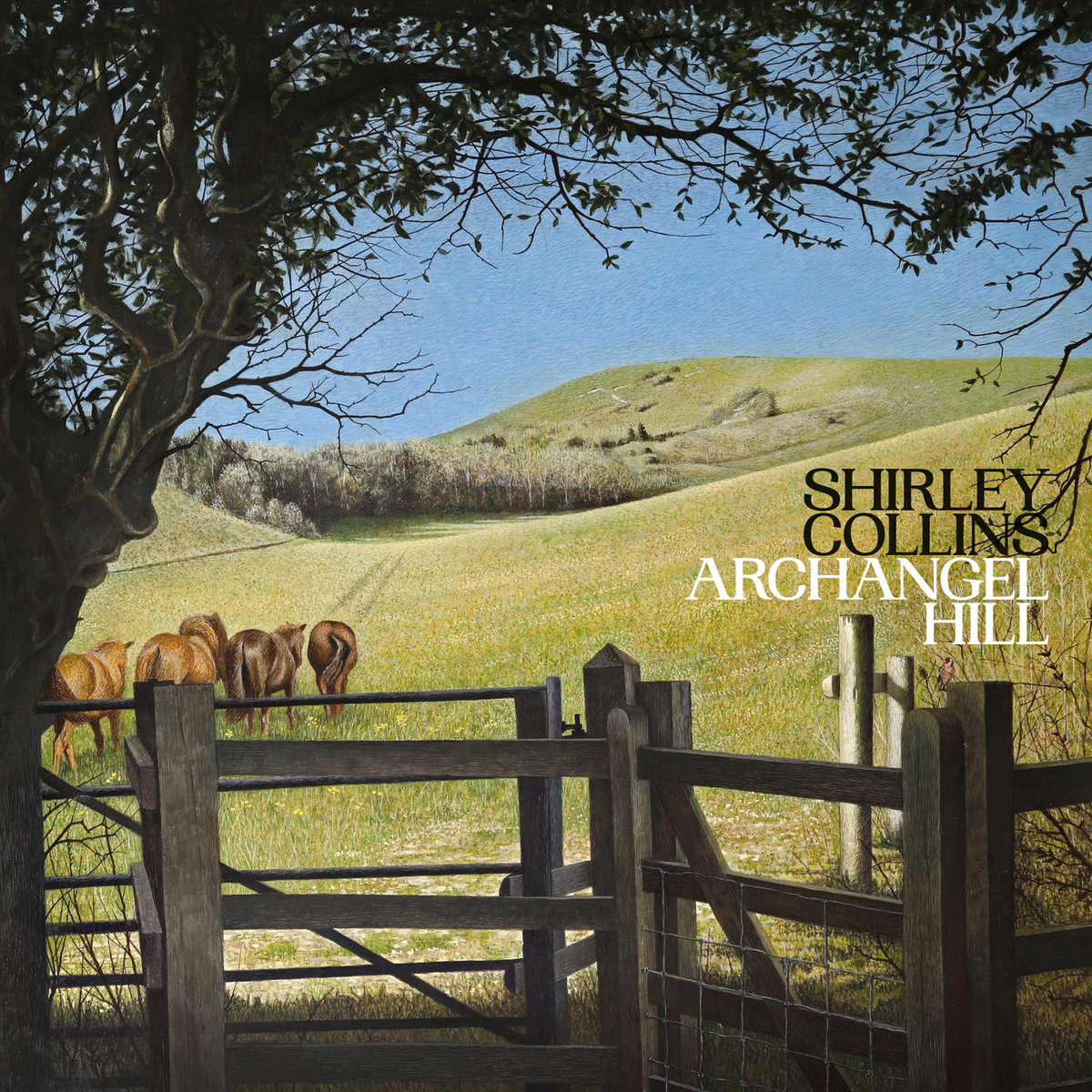
On Record – Shirley Collins: Archangel Hill (Domino)

by Ben Hogwood

What’s the story?

At the age of 87, one of Britain’s national musical treasures continues her 21st century renaissance. Folk music queen Shirley Collins lost the use of her voice to the condition of dysphonia for 37 years, haunted by the end of her marriage to Ashley Hutchings.

In the last eight years her recovery has been crowned by the release of two fine albums for the Domino label – Lodestar and Heart’s Ease – and renewed interest in her writing. She has literally rediscovered her voice – and Archangel Hill continues that convalescence as a love letter to her home county of Sussex.

What’s the music like?

This is folk music as it is meant to function – simple yet deeply moving, music that tells the story of a deep-rooted tradition. Collins is a reverent custodian of the music she has chosen here, and even the new compositions sound as if they have been around for a long time.

As a vocalist, she is in her best shape ever. Collins’ voice is like a beautifully aged tree, proud to show its age and revealing all the different layers of a life which, while difficult, can still be said to have been well-lived.

Along the way she pays tribute to her late sister Dolly, with a profound rendition of Fare Thee Well My Dearest Dear and Lost In A Wood. Her storytelling is peerless, able to shade the pictures exquisitely as she moves from the outward looking The Captain With The Whiskers to the relative darkness of Oakham Poachers.

Along the way she has sterling support from her regular troupe of musical collaborators, who have the chance to come into their own for the sparky instrumentals June Apple and Swaggering Boney. Offering a contrast to these are some moments of deeply strange and enchanting music, such as those found in High And Away, a new song telling the story of Collins’ meeting with Arkansas singer Almeda Riddle.

Does it all work?

It does. Collins sings with great instinct and subtle power, bringing her message across with great clarity. The cover picture, a painting of the local landmark Archangel Hill – otherwise known as Caburn – is the icing on the cake.

Is it recommended?

Yes, wholeheartedly. Shirley Collins is an artist we should treasure, one who holds the key to some incredibly important British musical traditions. The glint she still has in her eye would suggest that even now she has more to give.

Listen

Buy

You can listen to clips from Archangel Hill and explore purchase options on the Domino website

In appreciation: Kaija Saariaho

Yesterday we learned the very sad news of the death of Finnish composer Kaija Saariaho at the age of 70. Saariaho blossomed as a unique voice in 20th and 21st-century classical music, her music notable for its picturesque qualities and colourful, often exotic instrumentation.

Thankfully a good deal of her work has been recorded by the ever-enterprising Ondine Records, who put this playlist together in celebration of her 70th birthday earlier in the year:

Meanwhile you can watch Vista, one of Saariaho’s most striking recent orchestral works, in the performance below with the Helsinki Philharmonic Orchestra conducted by Susanna Mälkki

In concert – Benjamin Grosvenor, CBSO / Riccardo Minasi: Schubert, Chopin & Mozart

Benjamin Grosvenor (piano), City of Birmingham Symphony Orchestra / Riccardo Minasi

Schubert Overture in C major ‘In the Italian style’ D591 (1817)
Chopin Piano Concerto no.2 in F minor Op.21 (1830)
Mozart Symphony no.41 in C major K551 ‘Jupiter’ (1788)

Symphony Hall, Birmingham
Thursday 1 June 2023 (2.15pm)

Reviewed by Richard Whitehouse

It is not often these days to have a whole concert of music from the late Classical and early Romantic eras, but that was just what the City of Birmingham Symphony Orchestra provided this afternoon under the disciplined as well as immensely assured direction of Riccardo Minasi.

There was no mistaking the inherent classicism of Chopin’s Second (sic) Piano Concerto – not least the simmering impetus in its opening Maestoso where, after a forthright tutti, Benjamin Grosvenor rendered those main melodies with requisite poise, and the emotional eddying of its development in direct contrast to the terseness of its coda. Most memorable was a Larghetto of melting eloquence but also, in its central episode, a volatility only gradually dispelled. Here, and in the final Allegro, the almost concertante role allotted to bassoon was characterfully taken by Nikolaj Henriques – as were those brass fanfares and col legno writing for strings (was this really Chopin’s idea?) which see the latter movement on its way to a spirited close. A limpid take on Chopin’s Nocturne in C sharp minor from the same year made for an appropriate encore.

Mozart symphonies rarely conclude a programme nowadays, yet the last four are ideal for this purpose and none more than the Forty-First – by some distance the weightiest and the most physical such work prior to Beethoven’s Eroica. This was the highlight of Minasi’s recording of the final triptych (Harmonia Mundi), with the opening Allegro likewise a statement of intent in its rhythmic tensility and general bravura, though its more ambivalent asides were never downplayed. Less distinctive melodically than its two predecessors, the Andante is memorable for its expressive understatement and a subtlety – with wind and strings enfolded into a textural continuity – that accentuates its pathos. Nor was there any lack of suavity in the Menuetto, its outer sections finding ideal contrast with a trio whose pert expectancy was delectably pointed.

The final Allegro crowns this work in every respect and, here again, Minasi did not disappoint. Not that there any sense of merely ‘going through the motions’ with his inclusion of first- and second-half repeats, each of which brought added intensity to what had gone before as well as enabling the wealth of contrapuntal detail to come through as it too rarely does. For its part the CBSO more than rose to the challenge, not least in a coda whose methodical combining of this movement’s themes makes possible an apotheosis such as felt truly visceral in its affirmation.

Schubert evidently had other preoccupations when essaying his two overtures ‘in the Italian style’, both of which have fallen out of the repertoire this past half-century but which make for attractive and appealing curtain-raisers. Especially that in C major with its teasingly portentous introduction, jocular and lilting main themes, then coda which sees it through to an effervescent close. The CBSO players (woodwind in particular) audibly enjoyed making its acquaintance, and it would be a real pity were such pieces relegated to the lower reaches of today’s playlists.

Hopefully a performance such as that by Minasi will make this just a little less likely. One looks forward to his future collaboration with this orchestra, which returns next Wednesday with its chief conductor Kazuki Yamada in a programme featuring Holst, Beethoven and Rachmaninoff.

You can read all about the 2022/23 season and book tickets at the CBSO website. Click on the artist names for more information on Riccardo Minasi and Benjamin Grosvenor

Listening to Beethoven #221 – An die Hoffnung Op.32

Peanuts comic strip, drawn by Charles M. Schulz (c)PNTS

An die Hoffnung Op.32 for voice and piano (1805, Beethoven aged 34)

Dedication Countess Josephine von Brunsvik
Text Christoph August Tiedge

Duration 4’00”

Listen

by Ben Hogwood

Background and Critical Reception

Christoph August Tiedge’s lied An die Hoffnung had a profound effect on Beethoven, who set the text on two separate occasions – once published as Op.94 in 1816, but firstly published as Op.32 eleven years prior. Its dedication to Countess Josephine von Brunsvik is significant, for she was an unrequited love interest for the composer early in 1805. In March she wrote to her mother, “The good Beethoven has composed a lovely song for me on a text from Urania ‘An die Hoffnung’ as a gift for me”

By the summer feelings on both sides had cooled somewhat, with Beethoven removing Josephine as its dedicatee. Susan Youens, in booklet notes written for a collection of Beethoven lieder on Signum Classics, describes how the song’s ‘major mode optimism is rendered profound by darker touches of minor. The singer’s eloquent leap upward and the quiet blaze of a new (major) key for the acclamation to Hope – “O Hoffnung” – are unforgettable’.

Thoughts

This does indeed appear to be one of Beethoven’s most heartfelt utterances in the medium of singer and piano. It helps that the range of the song falls neatly within the grasp of either a baritone or tenor range, making it available for almost all male voice types.

Yet it is the elegance of the piano with which Beethoven begins, an unspoken melody spinning out with heartfelt ease. When the singer enters the mood is solemn yet rays of light are frequently shed by the piano harmonies as the music turns back to the major key.

The song makes a profound impact, both singer and pianist under the spell of Tiedge’s poetry, right up to the final line – and a final serene thought from the piano. We are in the calm of E flat major, same key as the Eroica symphony, but what a different mood we have here – vulnerability instead of heroism.

Recordings used

Werner Güra (tenor), Christoph Berner (fortepiano) (Harmonia Mundi)
Matthias Goerne (baritone), Jan Lisiecki (piano) (Deutsche Grammophon)
Ian Partridge (tenor), Richard Burnett (fortepiano) (Amon Ra)
Dietrich Fischer-Dieskau (baritone), Jörg Demus (piano) (Deutsche Grammophon)
John Mark Ainsley (tenor), Iain Burnside (piano) (Signum Classics)
Hermann Prey (baritone), Leonard Hokanson (piano) (Capriccio)

Fischer-Dieskau benefits from a heavenly introduction from pianist Jörg Demus, who sets the tone for an intense and often visionary account. The two recordings with fortepiano are quite different – Werner Güra and Christoph Berner pressing on a quite a rate when compared with Ian Partidge and Richard Burnett.

Also written in 1805 Spohr String Quartet no.2 in G minor Op.4/2

Next up Leonore