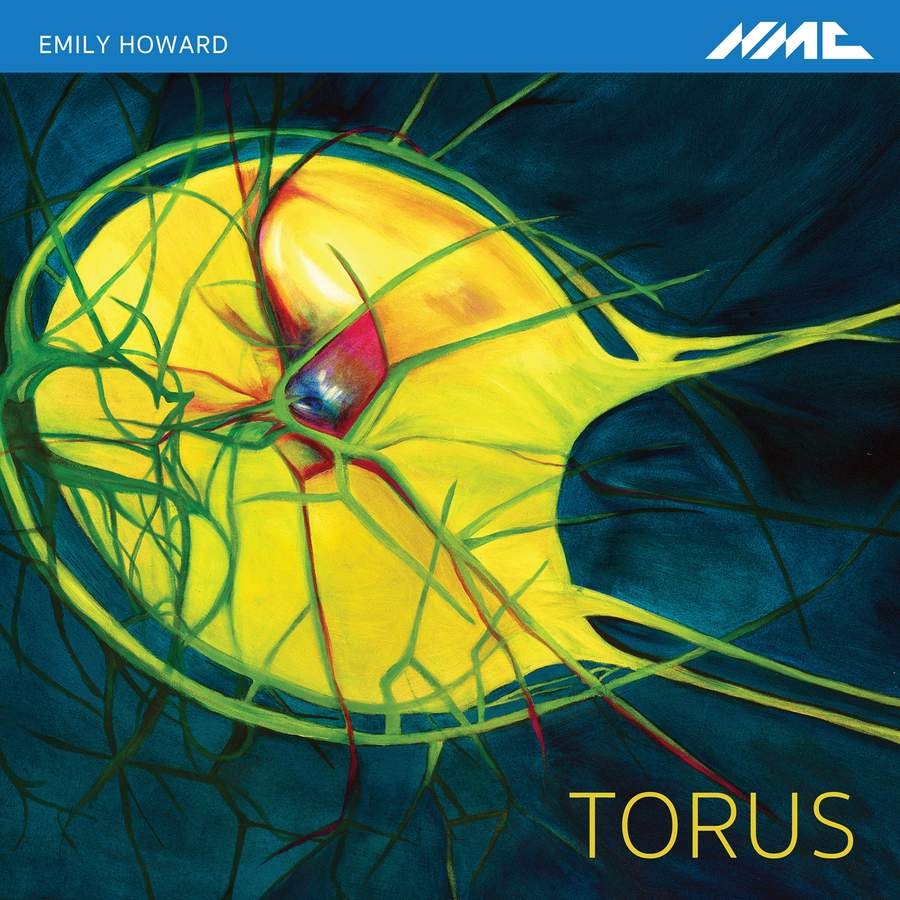
Emily Howard‘s new album, Torus – as reviewed on Arcana – is released today.
When I spoke to Emily about the piece itself back in 2018, she said, “When I created Torus, I imagined I was on the surface of the shape, travelling around and around in one direction, and encountering different landscapes as I went. Around 14 minutes into the work, there is a significant shift and a complete change of musical soundworld, and this is where I had instead imagined a rotation in the other direction. So considering mathematical shapes in this way does help me to define musical shapes and structure in my compositions”.
You can explore buying options for Torus at the NMC website, and watch a short video about it below:
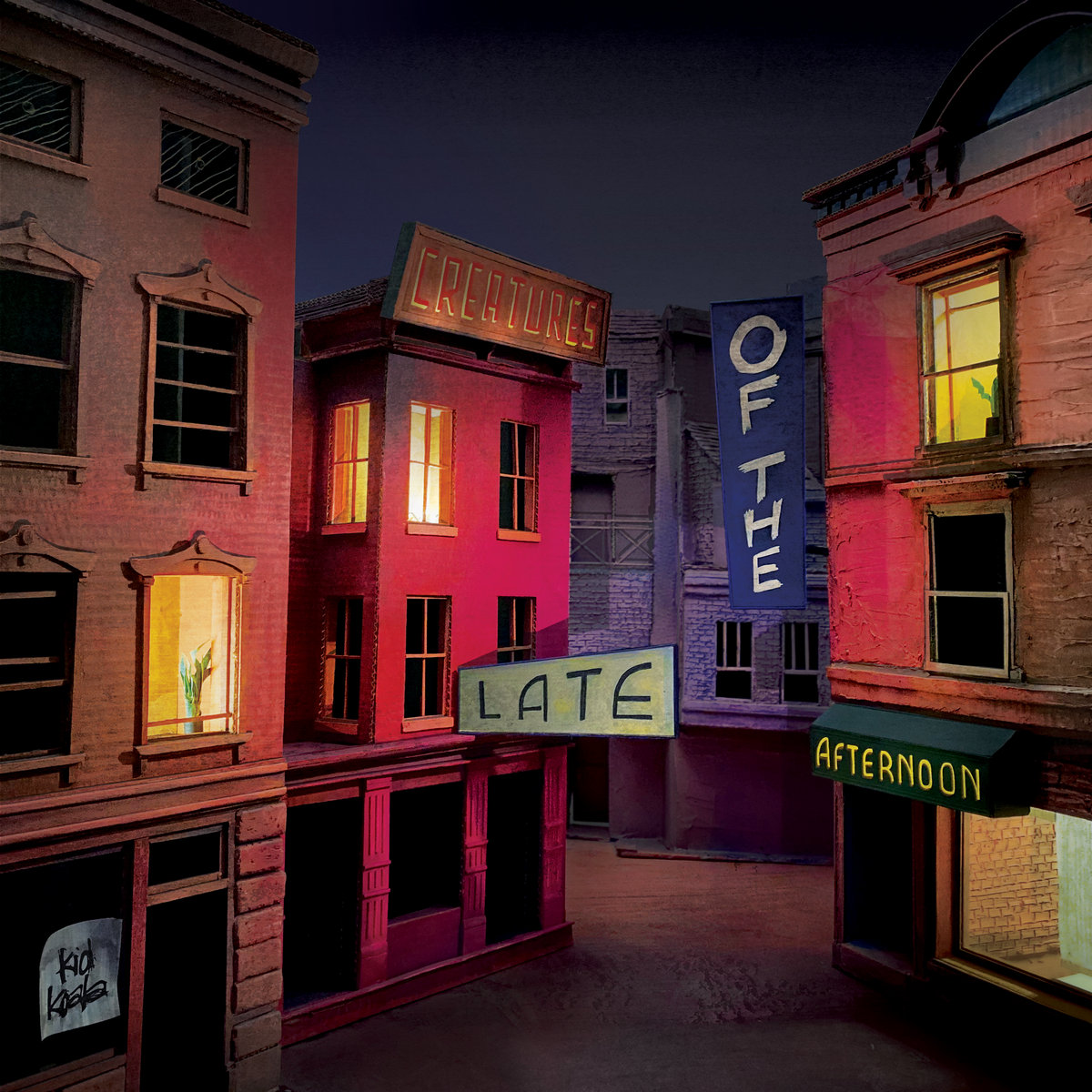
KidKoala is truly a one-off. Not content with making inventive hip hop beats infused with scratching, quirky if well chosen samples and catchy hooks, he matches his music with distinctive visual art.
Such is the case with MusicForTheLateAfternoon, whose LP is accompanied by a board game. Typically for Koala – real name Eric San – the album tells a selection of stories that move quickly between musical sources.
As with a number of established beat makers, he is amassing a considerable body of work, this being his ninth album.
What’sthemusiclike?
Both psychedelic and charming! There is no limit to the imagination here, with a veritable kitchen sink of riffs, beats and speech samples, but it all comes together just like the colourful animations Kid Koala does so well.
Some of the songs here are crowd scenes, children’s voices calling out mottos on the likes of Things Are Gonna Change, supported by walls of guitar and white noise. 1,000Towns is a slightly macabre waltz, weird but winsome.
The blasts of musical adrenalin are complemented by slower, thoughtful asides where there is touching vulnerability, or charming and often amusing dialogue, in this case a couple of scenes in a robot hotel.
There is more variety here than on previous records, but plenty of scratching prowess throughout, Koala’s turntable work so subtle that you’ll oftem miss it.
Does it all work?
Yes. As ever there is a lot of fun to be had here, with a lot of musical twists and turns that might reflect a short attention span but keep the listener engaged.
Is it recommended?
Yes. An album that proves energising, touching and celebratory in equal parts. Closing track Til We Meet Again provides the ideal final sentiment, as hopefully Kid Koala will continue in this rich vein of form.
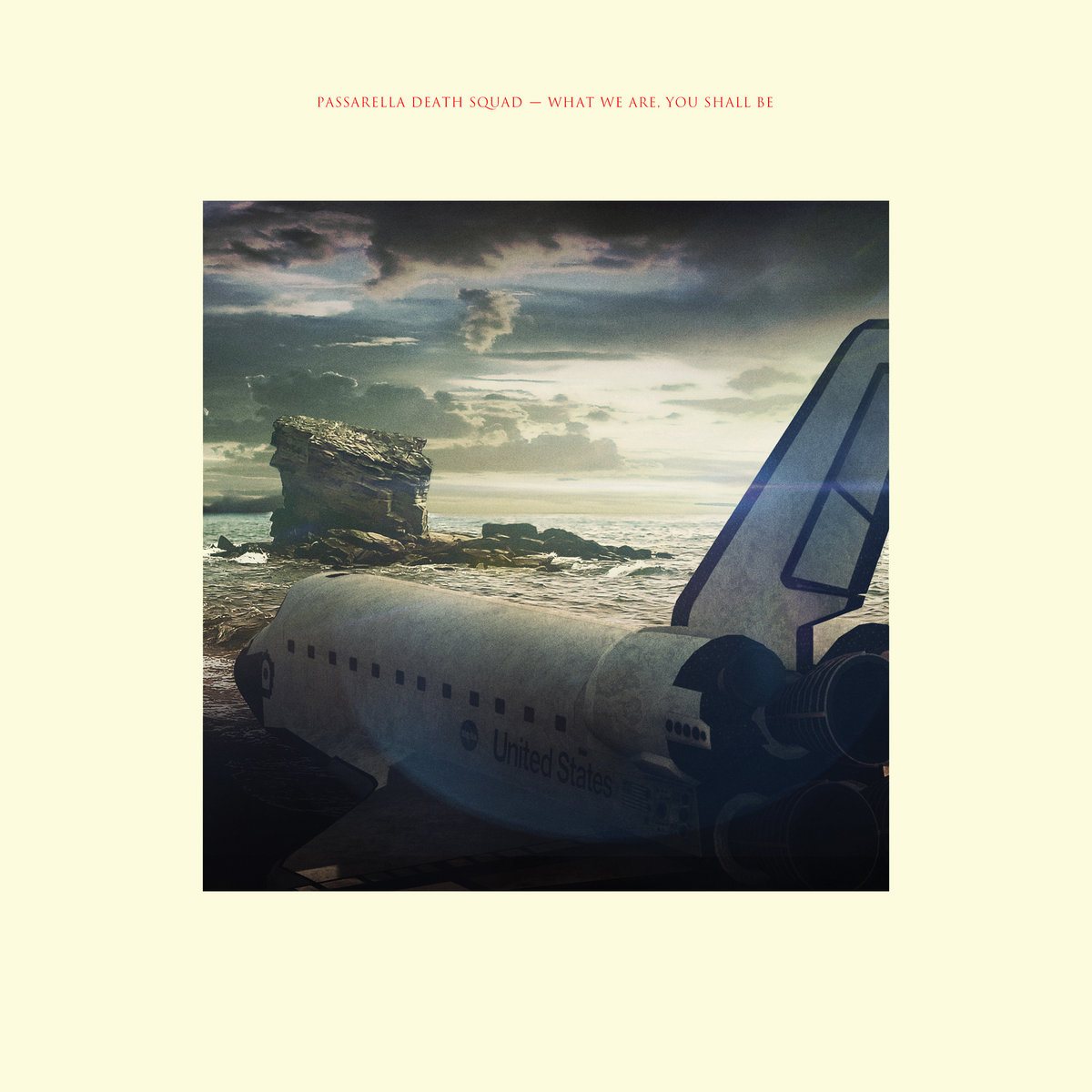
Thirteen years might seem like an age in music, but Danny Passarella and Emilie Albisser have not been idle since the release of their first album.
As Passarella Death Squad they have established themselves as cutting edge clothing designers in London, following the lead of Andy Warhol’s Factory. Simultaneously they have been busy raising important human rights issues through their RAISE publication.
Though the two have their hands full, music has always been front and centre of their world – and here the duo release their first album since their self-titled opus in 2010.
What’s the music like?
Atmospheric and impressive. Passarella and Albisser make slow burning songs that gradually open out like exotic flowers. Their music crackles with atmosphere, and on cuts like Creatures it sports a strong four to the floor beat to go with a song that grows impressively.
Emilie Albisser’s voice is cool and sometimes deadpan, but it gets the ideal backing with lean, bass-led grooves that bring the work of Gus Gus to mind while maintaining a wholly distinctive voice.
Just Like Sleep is one of the standout songs, a nocturnal lament that is beautifully structured and executed. No Mas has a sharper bass shadowing a semi-operatic vocal, with a recurring theme that gathers momentum as the song kicks into gear.
Often the music sets the scene of a club with very dark corners, exploring ghostly and gothic themes with lyrics that are similarly low in temperature. The title track is a good example of this, Albisser’s voice threatened by a robotic intervention but the music continuing on its coolly detached path.
Does it all work?
Yes. The minimal production gives the songs – and in particular Albisser’s voice – enough room to make a strong impact.
Is it recommended?
It is. A smoky second album to lose yourself in. Make sure you give it several listens to fully cast the spell.
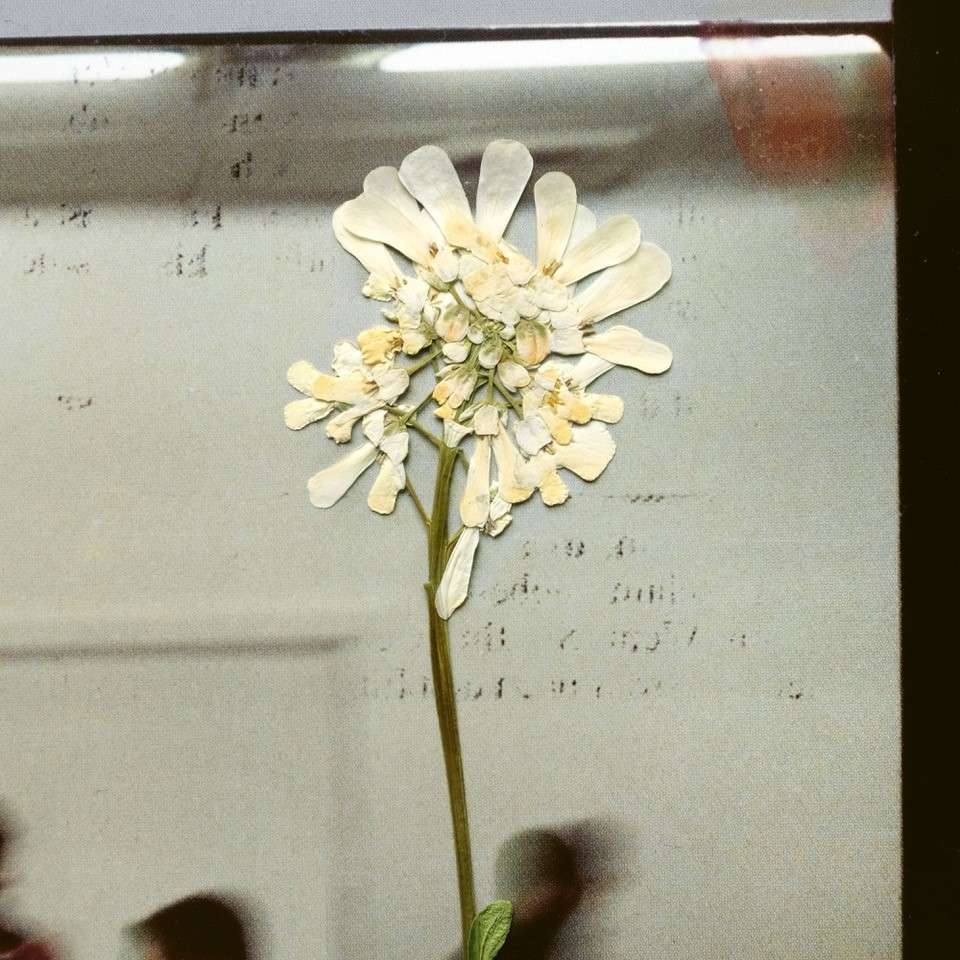
Daughter have something of a cult following, and it’s easy to see why. They have the ability to build strong connections with their listeners, through subtle music that can often be interpreted as downward looking but actually turns out to have a positive undercurrent beneath.
Their last album, Not To Disappear, was perhaps too dark especially given its January release in 2016, but seven years on from that the group have released a couple of strong singles with their collective eye firmly on the long playing game.
What’s the music like?
Both elegant and profound. Where Not To Disappear carried a weathered expression, Stereo Mind Games looks upward with more kinetic energy, alternating between urgent thoughts and slow tracks acting as a musical comfort blanket. There is a really pleasing contrast of light and shade, and their songs have an attractive poise this time around.
Be On Your Way is a standout song that hits home a few listens in, flickering with promise for the future while telling the first part of a story to be continued. Dandelion has a crisp urgency that is the ideal foil for the vocal, while Neptune gives the voice free reign, climbing up to emotional heights thanks to Elena Tonra‘s input as a breathy but meaningful vocalist. Swim Back makes a lasting impression, its driving bassline and swirling production complemented by strong vocals and enigmatic lyrics.
Tonra’s voice dominates proceedings, but in the intervening years it has become a more versatile instrument, operating in slightly glacial tones but also capable a more direct approach.
Does it all work?
Yes, it does – because Daughter reach their listeners with subtle, elegant songs and few frills.
Is it recommended?
It is. Give it a few listens and Stereo Mind Game will set up its own corner in your head.
Strings of the City of Birmingham Symphony Orchestra / Eugene Tzikindelean (above)
Schubert arr. Mahler String Quartet no.14 in D minor D810 ‘Der Tod und das Mädchen’ (1824, arr. 1896) Vivaldi Le quattro Stagioni Op.8 nos. 1-4 (1718-20) Piazzolla arr. Desyatnikov Cuatro Estaciones Porteñas (1965-9, arr. 1996-8)
Town Hall, Birmingham Saturday 22 April 2023
Reviewed by Richard Whitehouse
Acoustically transformed following its refurbishment some 15 years ago, a commendably full Town Hall proved to be the ideal venue for this judiciously balanced programme featuring the strings of the City of Birmingham Symphony Orchestra with its leader Eugene Tzikindelean.
Mahler never fully completed his arrangement of Schubert’s Death and the Maiden quartet, but this has enjoyed not a few hearings since its realization by David Matthews with Donald Mitchell four decades ago. Tzikindelean presided over a brisk, incisive opening Allegro (its exposition-repeat not unreasonably omitted), and if the 30-strong ensemble had not quite the tonal depth or dynamic range that Mahler likely envisaged, there was no lack of immediacy – at least until momentum faltered slightly in the later stages of the reprise then into the coda.
No such uncertainty affected the Andante (the only movement elaborated by Mahler), whose variations on Schubert’s earlier song exuded a cumulative intensity up to the theme’s soulful reappearance toward the close. Nor did the Scherzo lack for truculence over its brief yet vital course, assuaged by the trio’s wistful elegance, while the final Presto unfolded as a tarantella as agile as it was malevolent. Tzikindelean kept his players on a tight if never inflexible rein through to a coda that brought this (for the most part) powerful reading to its decisive close.
Tzikindelean having vacated the leader’s chair for centre-stage, the second half consisted of Vivaldi’s The Four Seasons interspersed with Astor Piazzolla’s take on the seasons from the perspective of Buenos Aires. Brought together a quarter-century ago (at the behest of Gidon Kremer for his group Kremerata Baltica) by Leonid Desyatnikov, with numerous references to the Baroque master, the outcome is a provocative amalgam between ‘ancient’ and ‘modern’ which the CBSO strings rendered with alacrity. Among the highlights from the Vivaldi might be mentioned the plaintive eloquence of the Largo from Spring, the coursing impetus of the Presto from Summer, alternation of the robust and poetic in the initial Allegro of Autumn, or that discreetly alluring interplay of legato and pizzicato writing in the Largo from Winter.
Heard in the sequence ‘Summer-Autumn-Winter-Spring’, the tangos by Piazzolla offer any number of anticipations whether melodic or textural. A significant feature of Desyatnikov’s arrangement is the prominence accorded to the leaders from each section which were seized upon gratefully – not least by cellist Eduardo Vassallo, whose Piazzolla recordings with his ensemble El Ultimo Tango are a masterclass in performance from the chamber perspective. While each of the present pieces is more than the sum of its parts, surely the most arresting instance is that towards the close of ‘Spring’ when the harpsichord (ably taken by Masumi Yamamoto) emerges with an allusion to Vivaldi’s opening theme – a coup de théâtre that is seldom less than spellbinding, and duly worked its magic as part of tonight’s performance.
An impressive showing, then, for the CBSO strings and Tzikindelean – who will hopefully be making further appearances both as soloist and director in the coming season. Certainly, the repertoire for string orchestra is one whose exploration should prove well worthwhile.
You can read all about the 2022/23 season and book tickets at the CBSO website. You can read more about Eugene Tzikindelean here, and more about El Ultimo Tango here


 Arcana.fm