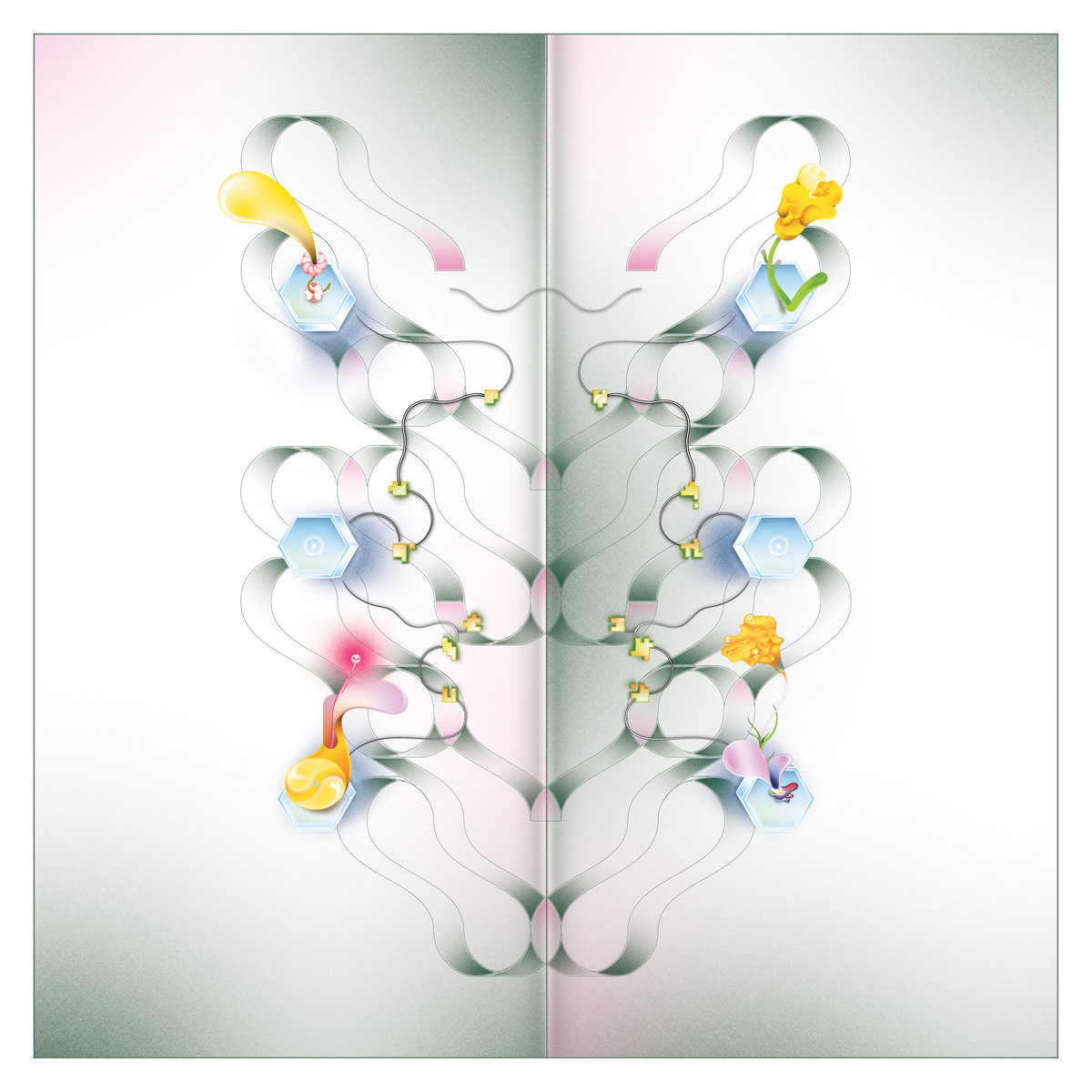
In the course of his writing the Los Angeles-based producer documents the importance of the vast, subterranean fungal network known as the ‘mycelium’, and proceeds to explore how he has captured it in musical form.
It is his first long player release in five years.
What’sthemusiclike?
As always, Matthewdavid’s music teems with life, and in this case it feels like a process of continuous growth expressed in musical form. With no drums, and seemingly no pulse under which the music operates, it takes its own elasticated form. The relative lack of bass, too, means that the listener can feel suspended in space, the music taking place all around without ever feeling earthbound.
The music has a closer focus than previous Matthewdavid’s Mindflight material, more psychedelic too – and often carries the impression of tendrils being extended through probing electronic sounds. On occasion the view pans out to take in a wider expanse, as on the tracks Liquidity and Zithercelium.
Does it all work?
It does, and the considerable advantage here is that the listener can sit on the edge of the music, enjoying its calming effect, or go for total immersion on headphones to harness its peak meditative powers.
Is it recommended?
Yes. Matthewdavid’s take on ambient music is a consistently individual one, and this album is full of new life, intriguing sonic tunnels and possibilities.
J.S. Bach Italian Concerto in F major BWV971 (pub. 1735) Franck Prélude, choral et fugue (1884) Rachmaninoff Variations on a theme of Corelli Op.42 (1931)
Wigmore Hall, Monday 1 May 2023 1pm
by Ben Hogwood
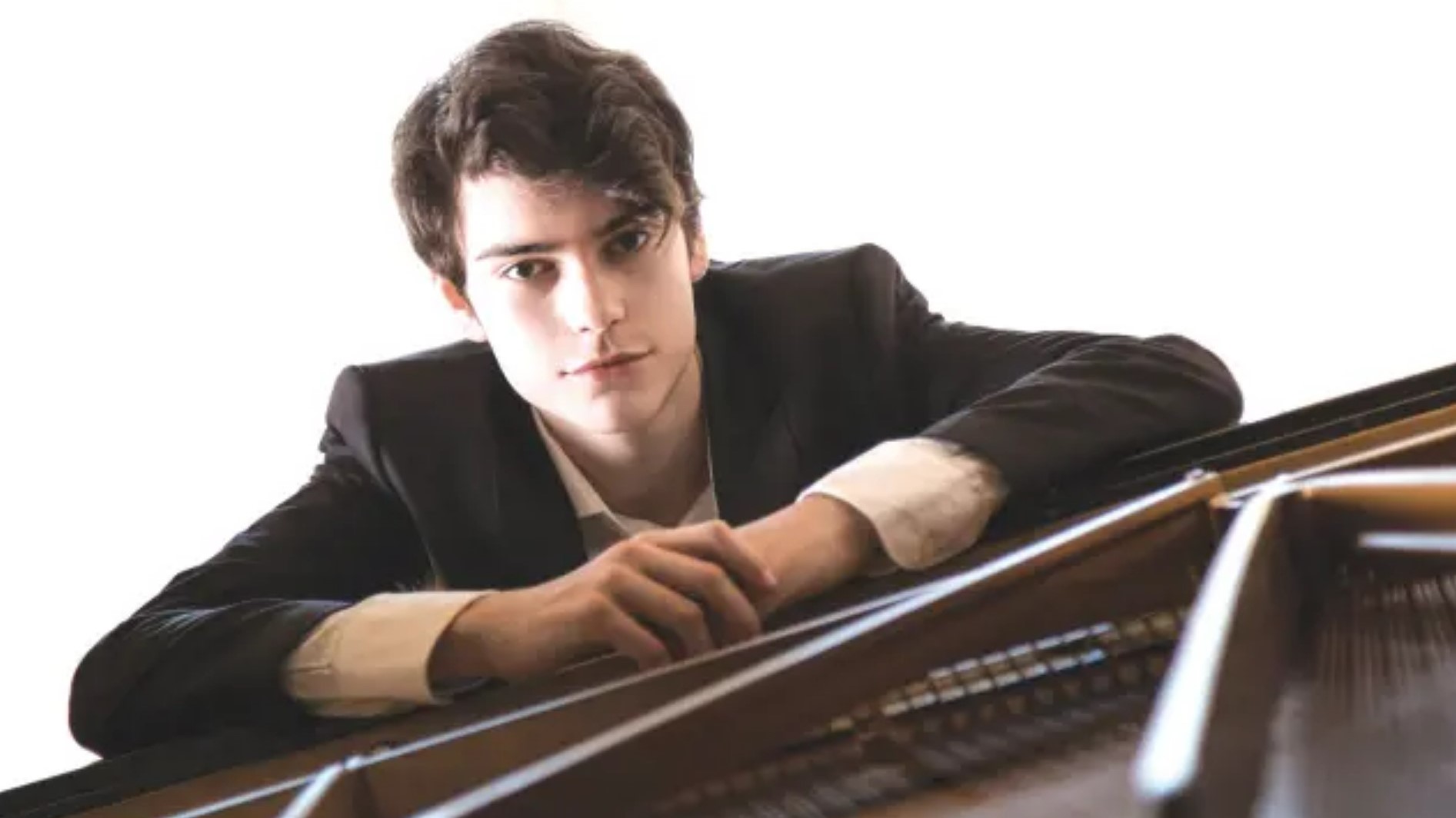
This BBC Radio 3 Lunchtime Concert featured the New Generation pianist Tom Borrow, making his debut at the Wigmore Hall with a very well-judged trio of works casting their eyes back to the past. The Israeli-born performer was notably comfortable in the environment, responding to the intimate atmosphere of the hall with compelling music-making.
Bach’s Italian Concerto was first, a work that is particularly successful on the piano. Borrow’s articulation in a crisp Allegro was very pleasing to the ear, his enjoyment of the counterpoint evident. The Andante was particularly beautiful, and completely unhurried – the pianist not afraid to give the right hand plenty of room to expand Bach’s melodies, the left hand hushed but responsive too. The bustling Presto had plenty of musical activity, the energetic profile maintained throughout but again the shapely melodic phrasing winning through.
Franck’s Prélude, choral et fugue is the best known of his works for solo piano. Its form looks back to the organ works of Bach, inserting a ‘chorale’ section in between the more conventional pair of ‘prelude’ and ‘fugue’. Here the Prélude began softly, Borrow’s light touch bringing delicacy to the decorative arpeggios around the theme, while also bringing the parallels with Brahms into focus. The choral started softy but grew in stature, moving from darkness to bright light, Borrow crossing hands to play the theme with apparent ease. The flowing discourse here was notable, maybe not as loud as some pianists but finding the heart of Franck’s expression nonetheless. The fugue was stately but also mysterious to begin with, the pianist bringing forward its chromatic profile, but then taking full command of the intense exchanges and achieving a most impressive performance in the process. The closing peal of bells was brilliantly played.
Rachmaninoff’s Variations on a theme of Corelli completed the trio of retrospective works, this one another remarkably concentrated piece offering plenty of opportunity for virtuosity and interpretative skill. This was again taken up by Borrow, once again setting a reverent atmosphere with the slow exposition of the theme. The lilting second variation in triple time was persuasively delivered, while a commanding fifth variation and sweeping seventh carried all before them. This only heightened the mysterious eighth and ninth variations, lost in thought.
The dynamic contrasts of the twelfth variation were very well observed, then the anxious syncopations of the thirteenth. The following Intermezzo had the requisite elements of fantasy, followed by a yearning chorale for Variation 14. Borrow’s technical command was impressive throughout, notably in the twists and turns of Variation 16 and the jagged edges of the eighteenth variation onwards. The clarity here was notable, in spite of the volume – and the thunderous finish was complemented by a radiant coda.
Borrow’s encore choice was well-suited – a flowing account of Rachmaninoff’s Prelude in G# minor Op.32/12, with notes that twinkled in the upper right hand at the end.
For more livestreamed concerts from the Wigmore Hall, click here
Oliver Janes (clarinet), Philip Brett, Stefano Mengoli (violins), David BaMaung (viola), Arthur Boutillier (cello), Birmingham Contemporary Music Group / Otis Lineham, Kazuki Yamada (conductors)
BCMG NEXT [George Blakesley (clarinet), Anna Vaughan (violin), Alma Orr-Ewing (viola), Finley Spathaky (cello), Rob Hao (piano)
Fujikura Scion Stems (2010) Illean Février (2019) Fujikura Halcyon (2011)
CBSO Centre, Birmingham Saturday 29 April 2023 (7pm and 9pm)
Reviewed by Richard Whitehouse
Spring may have arrived tardily this year, but Birmingham Contemporary Music Group was certainly in full bloom with this judiciously balanced and absorbing programme that featured one post-war classic and two pieces by one of the leading composers from the present time.
First, though, the welcome opportunity to hear a work by Lisa Illean, whose understated and fastidiously realized music conceals more than is evident on initial hearing. Such is true of Januaries, inspired by memories of holidays in Queensland together with descriptions of the Australian landscape. Its innate subtlety finding a direct parallel in this composer’s drawing of often ethereal yet always evocative timbres and textures from her 12-strong ensemble; and throughout which BCMG responded with due commitment to the direction of Otis Lineham.
The first of two pieces this evening by Dai Fujikura, Perpetual Spring drew inspiration from the Japanese Garden in Portland (US), notably the idea of growth as a process both ongoing and inexorable. Heard from this vantage, the clarinet represented a conceptual and expressive focal point; around which the string quartet weaved its dense if never claustrophobic texture with audible dexterity. Here, too, the music implied considerably more than was ever stated – no doubt in accord with the ‘‘power of ‘quiet’ nature’’ its composer took as his starting-point.
Although it now tends to be overshadowed by its predecessor, Ligeti’s Second String Quartet remains one of his most significant works – its five movements a compendium of his musical practice during the late 1960s, but with a formal and expressive focus that amply sustains the 20-minute whole. It was a measure of this account that a cumulative impetus carried through not merely to the explosive fourth movement, but also a finale whose textural mirage took in allusions to what went before: the music not so much ceasing as dispersing beyond earshot.
The string quartet was also Toshio Hosokawa’s chosen medium for Blossoming. Taking the image (and most probably its mythical association) of a lotus as its starting-point, the piece opened out in music typical of this composer for its unforced elegance and felicitous aura.
Considerably more engrossing an all-round experience, Fujikura’s Secret Forest is among the most impressive of his ensemble works and not least for its visceral conception. Placed centre-stage, the string nonet was balanced with groups of woodwind and brass either side, and above the auditorium. It was the ensuing interplay between the spatially arrayed sound-sources, strings intense in their eloquence and winds hieratic in their intangibility, that the conductor shaped over its course – not forgetting the solo bassoon, seated in the auditorium, who became a human figure plotting a course through this sonic landscape. The piece was directed with conviction by Kazuki Yamada and promises much for the Fujikura commission Wavering World, which he will premiere with the CBSO in Symphony Hall on January 17th.
A pity not more punters remained for the post-concert performance by musicians of BCMG NEXT, which featured two more works by Fujikura. Scion Stems took string trio as the basis for a wide-ranging discussion of textures made even more immediate by its brevity, whereas Halcyon pursued a more circumspect yet never disengaged interplay between clarinet and string trio. In between, Février found Illean’s writing at its most sensuous in its sequence of exchanges between clarinet, cello and piano to which these players likewise did full justice. The current NEXT line-up performs its final concert on June 11th, while BCMG itself returns to Birmingham Town Hall on May 12th for its TREE Concert featuring a new commission by Christian Mason alongside one of the most impressive compositions by Helmut Lachenmann
Hanna Hipp (mezzo-soprano), Tiffin Boys Choir, Philharmonia Chorus, Royal Philharmonic Orchestra / Vasily Petrenko
Mahler Symphony no.3 in D minor (1895-6)
Royal Albert Hall, London Thursday 27 April 2023
Reviewed by Richard Whitehouse Photo of Vasily Petrenko (c) Ben Wright
The Royal Philharmonic Orchestra series of those Mahler symphonies featuring voices came to its conclusion this evening with the Third Symphony, the longest and most encompassing of his cycle with its trajectory ranging from the awakening of life to its divine transcendence.
The first part, comprising Mahler lengthiest purely orchestral movement, presents a stern test in terms of its overall pacing and characterization. Vasily Petrenko had its measure right from the opening fanfare, as powerfully intoned by eight horns in unison, via graphic depictions of inanimate nature (its trombone recitative balefully rendered by Matthew Gee) and its march-like reawakening, to the forceful expressive contrast Mahler invests into this extended sonata design as it advances to a joyous peroration that was superbly controlled and projected here.
Although the published score makes no mention, Mahler evidently favoured a lengthy pause before going into the second part. By allowing barely a minute to elapse, Petrenko arguably left insufficient breathing-space (for the audience if not the musicians) and so undersold the effect of what ensues. Not that this Tempo di Menuetto lacked for poise or insouciance – its chamber-like orchestration exuded a confiding intimacy, with the lingering regret at its close deftly implied. No less persuasive was the third movement, a scherzo whose capricious outer sections found purposeful accord with episodes where the offstage post-horn solos (elegantly delivered by Toby Street) unfolded without hint of indulgence; Petrenko mindful to inject a degree of danger into the final return of the opening music as this heads to its fractious close.
Once again, a slightly longer pause than Petrenko allowed might have given listeners time to settle before the closing three movements – (rightly) played without a break. Not that Hanna Hipp, in situ at stage-left, was other than assured in her contribution to the setting of (part of) Friedrich Nietzsche’s Mitternachts-Lied with its presentiment of eternal life; such unforced eloquence abetted by the hushed intensity of the RPO’s playing. The brief if pertinent setting of Es sungen drei Engel offered the necessary contrast, Hipp sounding a note of uncertainty or even doubt in the context of animated singing from the combined children’s and women’s voices. Here, too, Petrenko’s decision to use actual rather than tubular bells added greatly to the aura of child-like though never merely coy innocence with which this music is infused.
On to the finale – an adagio drawing on precedents from Beethoven and Bruckner, and which crowned this performance in all respects. If the flowing tempo that Petrenko adopted initially seemed a little passive, the seamlessness with which conflicting elements were drawn into the discourse, together with the preparation for and the shaping of each climax, on the way to its apotheosis left no doubt as to his identity with this movement. Neither was there any hint of bathos as striding timpani underpinned those closing bars with their intimations of sublimity.
A memorable performance, then, which brought out the sheer scale and ambition of Mahler’s conception while underlining the all-round excellence of the RPO near the end of its second season with Petrenko. Hopefully there will be further Mahler to come from this partnership.
Here is a nod in the direction of a particularly imaginative playlist from Shida Shahabi. Not many collections of music span more than 500 years, but this one does – from Hildegard von Bingen and Josquin to My Bloody Valentine, Popul Vuh, Arthur Russell and Low.
The mix is part of Adam Wiltzie‘s Introverted but Willing to Discuss Drones playlist series.
You can read more about it on the 130701 website, with a short interview with Shahabi – and you can listen to it below.



 Arcana.fm