On Record: Laurence Crane: Natural World (Another Timbre)

Juliet Fraser (voice and Casio keyboard), Mark Knoop (piano and electronics)

Another Timbre AT210 [55’15”]

Producer Mark Knoop Engineer Newton Armstrong

Recorded 17 December 2022 at City, University of London

Reviewed by Richard Whitehouse

What’s the story?

Another Timbre issues a follow-up to its two-volume overview of Laurence Crane Chamber Works 1992-2009 (AT74x2) with Natural World, his longest work to date, performed by the artists who commissioned it and making an essential addition to the composer’s discography.

What’s the music like?

Older readers may recall the children’s TV programme Mr Ben, where the shopkeeper appears from nowhere. Such is the impression made by Crane’s music, which exists as if awaiting the listener’s recognition. From his early pieces – often brief and frequently for piano – his output has gradually expanded to embrace larger concepts and ensembles, resulting in such works as Octet (2008) and the Second Chamber Symphony (2016). Natural World (2021) might seem a throwback in its intimacy and understatement, but its impact conveys a wholly different story.

This might appear a song-cycle for voice and piano, but their deployment is hardly beholden to precedent. Crane has spoken of his aversion to ‘setting’ poems such that their meaning is distorted, and Natural World uses texts whose neutrality ensures an objectivity of response.

Unfolding as an unbroken span, the work falls into three distinct and designated sections. The first of these, Field Guide, draws on various authors (not least Crane himself) along with marine biologist Rachel Carson in terms of her classifications and observations – proceeding from a lengthy introduction for piano to an increasingly intricate and nuanced interplay with the voice Field recordings of individual birds gradually interpose so that the closing phase is dominated by that of the Dawn Chorus, its complexity the more affecting for not being the outcome of any (self-)conscious creativity.

The second section, Chorus, is the shortest and effectively an interlude that continues with the above as context for a sequence of piano chords and a vocalise whose curving, glissando-like phrases engender an expressive response without this ever becoming explicit or emotive. Such a response is intensified in the third section, Seascape, that includes a further field recording of the ocean – the voice emerging with a text on the innate fragility of ecosystems. Underpinning this is a sustained electronic tone comparable to those on electronic keyboard to which Crane has often had recourse. Here, it serves to envelop the aural picture and so intensify the musical content without this becoming a ‘message’ in any cultural or political sense: listeners being left free to determine their responses to this music.

Does it all work?

Absolutely. Crane has long been a master of musical continuity, such that the extent of this piece is imbued with a tension sustained and unfaltering. It helps that the performers are so attuned to his creative wavelength – Juliet Fraser articulating the vocal part with unforced clarity and poise, complemented by Mark Knoop’s adroit handling of piano and electronics. As on that earlier release from Another Timbre, the close but never constricted sound is ideal in terms of the immediacy brought to Crane’s music which seems never less than absorbing.

Is it recommended?

Indeed. As is usual from this source, there are no booklet notes but a revealing interview with the composer can be accessed at AT’s website. Those who are new to Crane should also check out previous collections of his music issued on the Hubro, LAWO, Metier and Nimbus labels.

Listen & Buy

For buying options, and for more information on the album, visit the Another Timbre website. For more information click on the names Laurence Crane, Juliet Fraser and Mark Knoop
In concert – Noriko Ogawa, English Symphony Orchestra / Kenneth Woods – Brahms, Grieg & Sibelius

Noriko Ogawa (piano), English String Orchestra / Kenneth Woods

Brahms Tragic Overture, Op. 81 (1880)
Grieg Piano Concerto in A minor, Op. 16 (1868)
Sibelius Symphony No. 5 in E flat, Op. 82 (1915-19)

Town Hall, Cheltenham
Sunday 16 April 2023

Reviewed by Richard Whitehouse

The English Symphony Orchestra’s latest concert had no English (or British) connection and no premieres or unfamiliar music. In short, a mainstream sequence of overture, concerto and symphony which worked as a programme simply because these pieces went so well together.

Although it has never lacked for performances, Brahms’s Tragic Overture remains among his more unusual conceptions: a concert overture whose deftly modified sonata design admits an element of evocation as if some intangible drama were being played out. It was to the credit of this performance when such subjection offset an otherwise unwavering formal trajectory, Kenneth Woods integrating the speculative central episode with a conviction that made the heightened reprise of the main theme the more telling for its implacably wrought fatalism.

Brahms’s writing of an overture with components as if ‘in the wrong order’ made an unlikely link to the Piano Concerto by Grieg, which still offers a wealth of surprises in a sympathetic reading. This it received from Noriko Ogawa – bringing out the unforced eloquence of what, the opening Allegro in particular, is much more than a loose sequence of enticing melodies in search of coherence. As her imaginative take on its cadenza underlined, Grieg left nothing to chance as the movement turns decisively full circle. With its easeful horn melody (courtesy of James Topp) and alluring solo response, the Adagio exuded an understated allure, and if the finale lacked for any rhythmic verve, the central section with its rapt flute melody (courtesy of Laura Jellicoe) sounded as affecting as its heightened peroration at the close was majestic.

The ESO and Woods are currently working towards a Sibelius cycle and their account of the Fifth Symphony had all the hallmarks of complete identity with, here again, a determination not to take to take anything in so familiar a work for granted. This was especially notable in the opening movement – its segueing between what began as two separate entities rendered with due seamlessness. Not least that central climax, out of which the scherzo emerged then proceeded to accrue motion imperceptibly through to a coda whose velocity was irresistibly evident. Much more than a whimsical interlude, the Andante had keen appreciation of those ambiguous shadows which inform its progress at crucial junctures, yet without undermining that guileless essence to the fore in the closing pages with their felicitous woodwind playing.

Making an attacca (and rightly so) directly into the finale, Woods brought out the productive contrast between its ideas – thus, the initial theme with its onrushing strings, then the ‘swan melody’ with its harmonic allure and intricate textural layering abetted here by the up-front acoustic of Cheltenham Town Hall. Just how so tensile and compact a movement generates an apotheosis of such grandeur cannot easily be explained, yet such an outcome was tangible as those concluding chords emerged with an inevitability as undeniable as it was heartening.

They certainly set the seal on an impressive performance which was warmly received by the sizable house. The ESO can be heard in Worcester early next month with assistant conductor Michael Karcher-Young, then with Woods in June for the latest edition of The Elgar Festival.

For more information on the artists in this concert, click on the links to read about Noriko Ogawa Kenneth Woods and the English Symphony Orchestra.

Online Concert: Nash Ensemble @ Wigmore Hall – Mozart & Fauré

Nash Ensemble [Alasdair Beatson (piano), Corey Cerovsek, Michael Gurevich (violins), Rachel Roberts (viola), Adrian Brendel (cello)]

Mozart Piano Concerto no.14 in E flat major K449 (1784)
Fauré Piano Quartet no.1 in C minor Op.15 (1876-9, rev. 1883)

Wigmore Hall, Monday 17 April 2023 1pm

by Ben Hogwood

Mozart and Fauré make a good concert match, and it was a nice touch by the Nash Ensemble to choose one of the piano concertos with which to start this BBC Radio 3 Lunchtime Concert

Although Mozart wrote two piano quartets, in 1785 and 1786, he was in the middle of a white-hot streak of creativity between where he wrote a dozen piano concertos in two years. This remarkable period of musical fluency began with the Piano Concerto no.14 in E flat major, which as it happens is highly suitable for the piano quartet combination of piano, violin, viola and cello. To this combination Mozart added one more violin, securing a highly successful domestic first performance in 1784.

The Nash Ensemble players clearly enjoyed this authentic showing. Alasdair Beatson took the solo role by balancing flair and sensitivity, while the strings ensured this attractive work was off to an airy start. That said, they weren’t afraid to dig in when the music turned towards the darker side, and the key of C minor, but E flat won out with its purely positive energy, especially when Mozart’s trill-like figure was introduced. Beatson’s cadenza was beautifully judged, virtuosic but lyrical too.

A softly rendered second movement brought through the piano’s florid figurations but also enjoyed the sweet, still motion of the strings. The Wigmore Hall seemed sunnier for the group’s approach, as it did in the bright and breezy third movement, with sparkling exchanges and a thoroughly enjoyable triple time section which the players clearly relished. This was a fine performance, fulfilling the first principles of chamber music.

Some of Fauré’s very best music can be found in his chamber works, a remarkably consistent body of work running through his career from the First Violin Sonata of 1876 to the String Quartet of 1924. The two piano quartets sit towards the top of this list, the first an outpouring of feeling in the wake of his broken engagement with Marianna Viardot.

The Nash Ensemble communicated this intensity from the passionate swell of the first melody, but there was resolve and determination too, even in Corey Cerovsek’s bittersweet violin solo during the flowing central section. This was where we felt the unique shafts of sunlight that Fauré throws into even the stormiest fast movements, and the harmonic sleight of hand that would be a standout feature of his music.

The second movement Scherzo showed off another of the composer’s traits, the ability to write light-hearted music with long phrases and unusual syncopations. The sleights of hand here were most enjoyable, with purity of tone from the strings and a dextrous piano part from Beatson.

Yet it was the slow movement that contained the emotional heart of the performance, Beatson listening attentively to the playing of his colleagues, Adrian Brendel‘s yearning cello phrase taken up in unison by the strings. Under the twinkling of Beatson’s right hand those strings spoke deeply and longingly.

Fauré had trouble with the finale, revising it after some less than positive feedback from his friends. This 1884 revision, however, turns its thoughts to the future with music of renewed resolve, another characteristically broad phrase looking outwards from the strings over typically tricky piano figures. Needless to say, the Nash Ensemble harnessed all these qualities, capping a memorable performance.

For more livestreamed concerts from the Wigmore Hall, click here

Switched On – James Holden: Imagine This Is A High Dimensional Space Of All Possibilities (Border Community)

by Ben Hogwood

What’s the story?

Four albums down, James Holden is showing another side to his artistry. Holden has always been closely associated with electronic music, but this instalment finds him looking to recreate what rave music was about in the early 1990s.

To do that he has in tandem a fleet of classic analogue synthesizers, and has personalized his approach with recordings of the young Holden on violin and piano.

What’s the music like?

The wordy title is a homage both to rave classics of the time but also brings to mind early Pink Floyd or 1970s Krautrock excursions. All are present in Holden’s music, though he keeps well away from derivative writing, instead bringing through riffs that are fresh, vital and energetic.

It is a big but wholly enjoyable album, one that goes back to first principles in making music for enjoyment, pure and simple. You Are In A Clearing is evidence of that, referring to some of the work Steve Hillage has done with System 7. Like Hillage, Holden gets his synths to talk, sometimes with dolphin-like keening noises, other times with soaring arpeggios.

The young Holden gets his look-in on Contains Multitudes, a longer expression of musical warmth where the violin and piano recordings complement the synths. Worlds Collide Mountains Form also uses the violin, though here it acts of a drone with a dubby bass for company. Common Land occupies similar ground, returning to the early Ibiza triumphs of 808 State for inspiration.

Does it all work?

It does. It may be a long album, but the high dimensional space does indeed realise all possibilities.

Is it recommended?

Enthusiastically. This is a joyous homage not just to early 1990s rave but also the more fantastical end of 1970s Krautrock – and yet James Holden makes the album even more than a sum of those parts. A wonderful and essential album that somehow works.

Listen

Buy

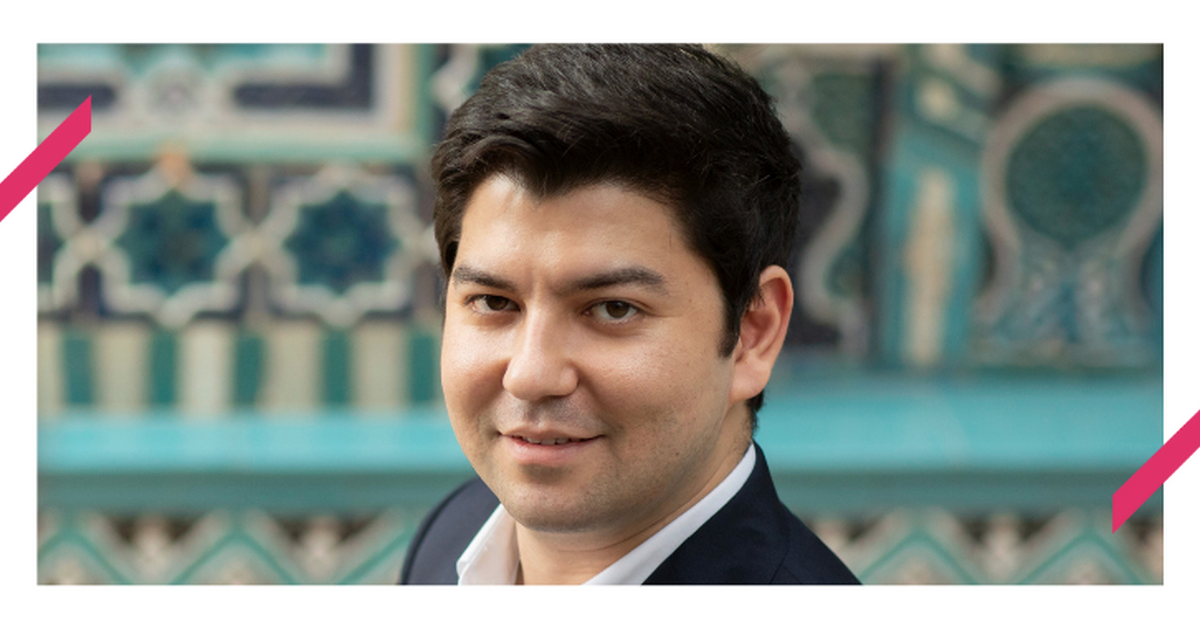
In concert – Behzod Abduraimov, CBSO / François Leleux – Rachmaninoff: Piano Concerto no.2; Brahms: Serenade no.1 & Academic Festival Overture

Behzod Abduraimov (piano, above), City of Birmingham Symphony Orchestra / François Leleux (below)

Brahms Academic Festival Overture Op. 80 (1880)
Rachmaninoff Piano Concerto no.2 in C minor Op.18 (1900-1901)
Brahms Serenade no.1 in D major Op.11 (1858-9)

Symphony Hall, Birmingham
Thursday 13 April 2023

Reviewed by Richard Whitehouse

Its first concert since returning from a European tour saw the City of Birmingham Symphony Orchestra in a programme which tellingly placed Rachmaninoff’s most famous composition within the context of less often heard or uncharacteristically (?) humorous pieces by Brahms.

Cinematic and other extra-musical associations often obscure the purely musical qualities of Rachmaninoff’s Second Piano Concerto, so credit to the Uzbek pianist Behzod Abduraimov for duly underlining these in a reading full of incident and unfailingly cohesive. Among the former might be mentioned the limpid elegance of the first movement’s second theme and its improvisatory continuation before the coda, bewitching transition from the Adagio’s central scherzo back to the main melody, and those evocative interludes after the finale’s ‘big tune’ – this latter returning to cap the whole work in unforced ardour. Integration between piano and orchestra was unfailing, as too the emotional immediacy of the CBSO’s response, and who could question Abduraimov’s decision not to provide an encore after so fine a performance.

Rachmaninoff and Brahms seldom complement each other in concert, though the Academic Festival Overture provided an ideal curtain-raiser. Typically more than a potpourri of student songs (drinking or otherwise), the cunningly fashioned sonata design was deftly unfolded by François Leleux so that its portentous and uproarious elements were held in perfect accord. The percussion audibly relished its rare outing in a Brahms score, not least at the close when the hymn-like ‘Gaudeamus igitur’ emerges to see this piece through to its exhilarating close.

Following the interval, a relatively infrequent hearing for Brahms’s First Serenade. Originally planned for chamber ensemble and later rescored for late-Classical forces (with four horns), its equivocally symphonic ambitions and proportions were inevitably overshadowed by what Brahms went on to achieve, but its musical attractions are many and Leleux had its measure. Not least during an initial Allegro, its dextrous horn theme setting the tone for a movement whose impetus was engagingly maintained through to the touching insouciance of its coda.

Omitting repeats in this movement’s exposition and the first half of the Scherzo – which latter anticipates Brahms’s intermezzos in its speculative aura and understated progress – ensured a viable balance with the Adagio. A pre-echo of slow movements to come, the observance of its ‘non troppo’ marking prevented any loss of expressive focus across the methodically evolving whole. If the remaining movements are closer conceptually to serenade rather than symphony, Leleux gave them their due – whether the twin Menuettos with their enticing contrast between woodwind and strings, a second and more rhythmic Scherzo with rustic horn writing here and in the trio, then the final Rondo in which Brahms looks back to those comparable movements from early Beethoven and Schubert with a lack of inhibition he was only rarely to recapture.

Such was the effect of an account that received an enthusiastic response from the near-capacity house. The CBSO strings take the stage next Saturday for a coupling of Schubert arranged by Mahler and Vivaldi interspersed with Piazolla, directed by their leader Eugene Tzikindelean.

You can read all about the 2022/23 season and book tickets at the CBSO website. Click on the artist names for more on Behzod Abduraimov and François Leleux