Back in March, Daniel Brandt released his third solo album Without Us, described as “a multimedia project that clashes head on with the spiralling chaos of our times”. In our review earlier this year, Arcana noted its “almost irresistible urgency”. Now it returns in remixed form, with Daniel – one third of celebrated German beatmakers Brandt Brauer Frick – taking up the story:
“I invited close collaborators, friends and artists I have been a fan of for a long time to create new versions of the music, including several artists who helped shape the original record. Akusmi, who played many of the guitars and is part of the live band, and Rashad Becker, who mixed the album, both created new versions. Adam Freeland – whom I met in the desert while working on the album, and later worked in his studio in Joshua Tree—also contributed a remix. The live premiere at the Barbican ended in a rave, and some of the remixes, like the ones by Camea, Adam and Hiro reflect that energy. I’m also thrilled to have inspirations such as Tangerine Dream and C. Diab to have contributed with their versions.”
What’s the music like?
Compelling. The range of musical styles on this collection is wide, showing the versatility of Brandt’s originals, and the scope with which he works when writing an album.
C. Diab begins with a full-bodied cello statement in a rework of Persistence, which breaks out into a kind of motoric drone / krautrock interface. Perhaps not surprisingly, the space around the music is pretty vast on the Tangerine Dream rework of Nothing To Undo. PNK goes through the wringer with Akusmi’s pinpricks of minimalist melody, a thrilling and energetic approach, while Rashad Becker is more maximalist in an eventful take on Without Us. Activity is also the name of the game in Bi Disc’s excellent, up-tempo remix of Steady, and then it’s great to see the name Adam Freeland pop up again on a driven yet ethereal take on Paradise O.D. The same track gets some oblique, funky turns from Hiro Ama, after we’ve heard from Camea (a super-deep account techno account of Resistance) and Brandt himself, with the clattering beats and piercing tones of Lucid.
Does it all work?
It does. The vision of Brandt’s original is retained, but the responses here cover a wide emotional response, and a satisfying cross-section of electronically driven genres.
Is it recommended?
It is indeed. Without Us is worth listening to as a double album – Brandt’s powerful original and this set of enjoyable and boundary-pushing remixes. Excellent stuff once again.
published by Ben Hogwood from the original press release. Photo above (c) unknown
The programme for the 77th Aldeburgh Festival takes place from Friday 12 to Sunday 28 June. Aldeburgh Festival has always been a place where music is made in full view of its past and its future; where composers, performers and audiences meet in the “holy triangle” Britten believed was essential to artistic life. In 2026, fifty years since Britten’s death, Britten Pears Arts reaffirms that principle as a living manifesto. 1976 marked an ending, but also a beginning: the moment the care, curiosity and exacting standards Britten and Pears brought to nurturing young artists became the enduring thread of the Festival and this organisation’s identity.
The 2026 Festival convenes artists who know one another’s work deeply—musicians who share a language of trust, risk and detail. Featured Artist Ryan Wigglesworth leads a circle of collaborators including Vilde Frang, Sophie Bevan, Steven Osborne, Lawrence Power and Nicolas Altstaedt. They come not simply to perform, but to pass on what they have learned: forming chamber groups, standing side by side with young players, and allowing music to reveal its meaning through shared attention.
In 2026 James Baillieu and Ryan Wigglesworth begin a 3-year tenure as Associate Directors of the Britten Pears Young Artist Programme. The aim is to build academies in which young, aspiring artists can flourish alongside their mentors and be celebrated in Aldeburgh Festival programmes, and to consider how important this venture is at a difficult time for the arts.
At the heart of this commitment is the new Festival Academy, directed by James Baillieu with Lise Davidsen, Caroline Dowdle, Julia Faulkner and Nicky Spence as faculty. Their work, and the Summer Academy that will follow it for instrumentalists and led by Ryan Wigglesworth, continues the legacy Britten and Pears established and marks a new way for the Young Artist Programme to work, enabling young artists to flourish when surrounded by the very best musicians, challenged, nurtured and invited to experience the generosity of audiences at Snape Maltings.
Pelléas et Mélisande, directed by Rory Kinnear with designs by Vicki Mortimer and lighting by Paule Constable, and performed by Sophie Bevan, Sarah Connolly, Jacques Imbrailo, Gordon Bintner, John Tomlinson and alumni of the Britten Pears Young Artist Programme, opens the festival with a work of delicacy and depth. Alongside Britten’s own late works, music by Feldman, Crumb, Kurtág and Henze sits beside 11 new works by Lera Auerbach, Tom Coult, Tansy Davies, Brett Dean, Lisa Illean, Natalie Joachim, Freya Waley-Cohen, Ryan Wigglesworth and others, maintaining Britten Pears Arts’ commitment to the composers of today and the artists who bring their work to life.
Andrew Comben, Chief Executive, Britten Pears Arts commented, ‘Aldeburgh Festival 2026 draws its joy from the energy of the musicians who gather here and the future they help reveal. At the heart of this is Ryan Wigglesworth, who I’m delighted to welcome as this year’s Featured Artist. His long association with the Festival will be reflected in performances as conductor, pianist and composer, joined by many of his closest artistic collaborators. 2026 marks fifty years since the death of our Founder, Benjamin Britten. His and Peter Pears’ commitment to supporting young artists remains central to our purpose, and the Festival and Summer Academies – led by James Baillieu and Ryan Wigglesworth – strengthen that legacy by placing outstanding young performers alongside world-class musicians as a core part of our programming. The Festival opens with a semi-staging of Debussy’s Pelléas et Mélisande, with an all-star cast and creative team, followed by a wide-ranging programme of opera, orchestras, choirs, chamber music, song, film, talks, walks and a fascinating visual arts programme featuring Ryan Gander, Ffiona Lewis and Kate Giles. Set across Snape Maltings, Aldeburgh and other Suffolk locations it continues to offer a beguiling combination of music, landscape and creative possibility. We really look forward to welcoming everyone in June.’
Ryan Wigglesworth this year’s Featured Artist commented, ‘Making music at Snape Maltings over the past 25 years has been one of the great pleasures of my life. From the start, it felt like home – a place where the most important friendships were forged, a place to grow and develop artistically. So, the invitation to be “Featured Artist” for the 2026 Aldeburgh Festival was a very special and joyous privilege. A strong sense of “family” has always been central to the spirit of the Aldeburgh Festival and accounts for why so many musicians feel drawn to put down artistic roots here. And what bliss it has been programming concerts involving so many of my dearest friends and colleagues:
Nicolas Altstaedt, Sophie Bevan (literally family!), Sarah Connolly, Jacques Imbrailo, Rory Kinnear, Vicki Mortimer, Steven Osborne, Lawrence Power, John Tomlinson, as well as all the members of the two orchestras I’m lucky to be associated with: the BBC Scottish Symphony Orchestra and the Knussen Chamber Orchestra. (the latter itself a legacy of my “thanks-to-Snape” friendship with the late, deeply missed Oliver Knussen). It allows me the rare opportunity to wear all my hats under one roof, as it were: playing chamber music and song, premiering my new piece for Lawrence Power and the KCO, and conducting works that mean a great deal to me personally – none more so than Debussy’s Pelléas et Mélisande. It really is a great honour.’
James Baillieu, Associate Director, Britten Pears Young Artist Programme commented, ‘I am deeply honoured and delighted to be appointed, alongside Ryan Wigglesworth, as Associate Directors of the Britten Pears Young Artist Programme for 2026–2028. The Britten Pears Programme played a formative role in my own development as a young artist, and it is a profound privilege to return in this new capacity to contribute to its future. This appointment represents a deeply meaningful opportunity to help nurture the next generation of musicians within the creative and inspiring context that Britten and Pears established. I am excited to bring my experience, connections, and ideas to the role, and to be part of an ambitious new chapter in the life of this distinguished programme.’
Ryan Wang (piano), City of Birmingham Symphony Orchestra / Pierre Bleuse
Ravel Ma mère l’Oye – ballet (1910-11); Rapsodie Espagole ((1907-08) Liszt Piano Concerto no.1 in E flat major S124 (1849, rev. 1855) Bartók The Miraculous Mandarin BB82 – suite (1918-24)
Symphony Hall, Birmingham Thursday 4 December 2025
Reviewed by Richard Whitehouse Photo of Pierre Bleuse (c) Marine Pierrot Detry
His marking the centenaries of Berio and Boulez at this year’s Proms confirmed Pierre Bleuse (music director of the Ensemble Intercontemporain) as a conducting force to be reckoned with, duly reaffirmed by this afternoon’s concert with the City of Birmingham Symphony Orchestra.
The CBSO has an association with the ballet incarnation of Ravel’s Mother Goose stretching to Simon Rattle and beyond to Louis Frémaux. After an evocative Prelude then a winningly nonchalant Spinning-Wheel Dance, Bleuse (above) brought out the plaintiveness in Pavane of the Sleeping Beauty’ then the subtly nuanced humour in Conversation of Beauty and the Beast; pointing up the piquancy of Tom Thumb then the whimsicality of Laideronnette, Empress of the Pagodas. Interpretively as well as musically, the best was saved until last – the deftest of transitions leading into a Fairy Garden of artless eloquence. Throughout this memorable performance, woodwind playing was consistently beguiling – not least during that approach to an apotheosis such as benefitted from Bleuse’s refusal to overstate its emotional rhetoric.
Nothing wrong with an all-Ravel first half, even if Rapsodie Espagnole may not have been the ideal continuation. Yet that sultry aura exuded by Prélude à la nuit felt almost tangible, as was the ominous unease of Malagueña and the rarefied elegance of Habanera, before the mounting excitement of Feria carried all before it. Bleuse successfully brought out the nostalgic resonances at the centre of this finale, and even if the closing bars lacked a degree of visceral excitement, the sense of a cohesive or cumulative whole could hardly be denied.
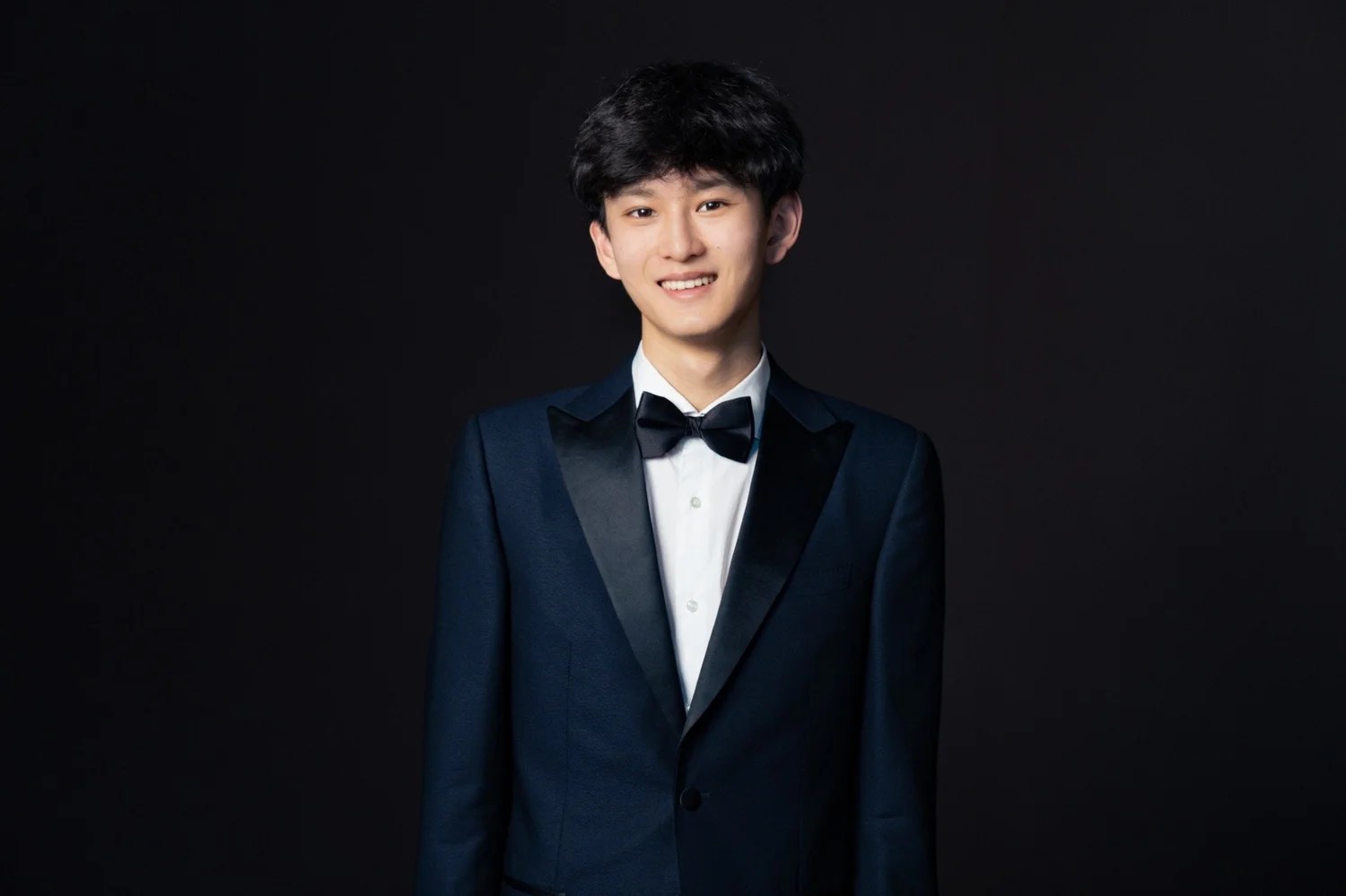
After the interval, a welcome hearing (less frequent these days than might be imagined) for Liszt’s First Piano Concerto. Executed with the right panache and an absence of histrionics, its formal succinctness and cyclical ingenuity are its own justification; not least as rendered with such attention to detail or expressive impetus by Ryan Wang (above). The winner of last year’s BBC Young Musician competition, he evidently has technique to spare while being equally capable of a delicacy and understatement ideally suited to the pensive ‘slow movement’ or the teasingly playful ‘scherzo’. The opening section was enhanced by a poetic contribution from clarinettist Oliver Janes, while the ‘finale’ headed to an exhilarating peroration. Wang duly acknowledged the applause with his leonine rendering of Chopin’s ‘Heroic’ Polonaise.
The programme ended with the suite from Bartók’s pantomime The Miraculous Mandarin. This is music which all too easily descends into overkill, but Bleuse kept a firm grip on its progress from the frenetic opening evocation of urban traffic, via its mounting anticipation with the arrival of the three ‘clients’, through to a bewitchingly shaped encounter between the mandarin and the woman. Nor was there any absence of virtuosity in a climactic chase-sequence, even while the emphasis on its rallentando markings proved a little too intrusive.
Most surprising, however, was a relatively prolonged silence after its explosive ending. Was the audience nonplussed by its once-infamous scenario, or was it unaware of this supposedly familiar music? Whatever, the performance assuredly seal the seal on an impressive concert.
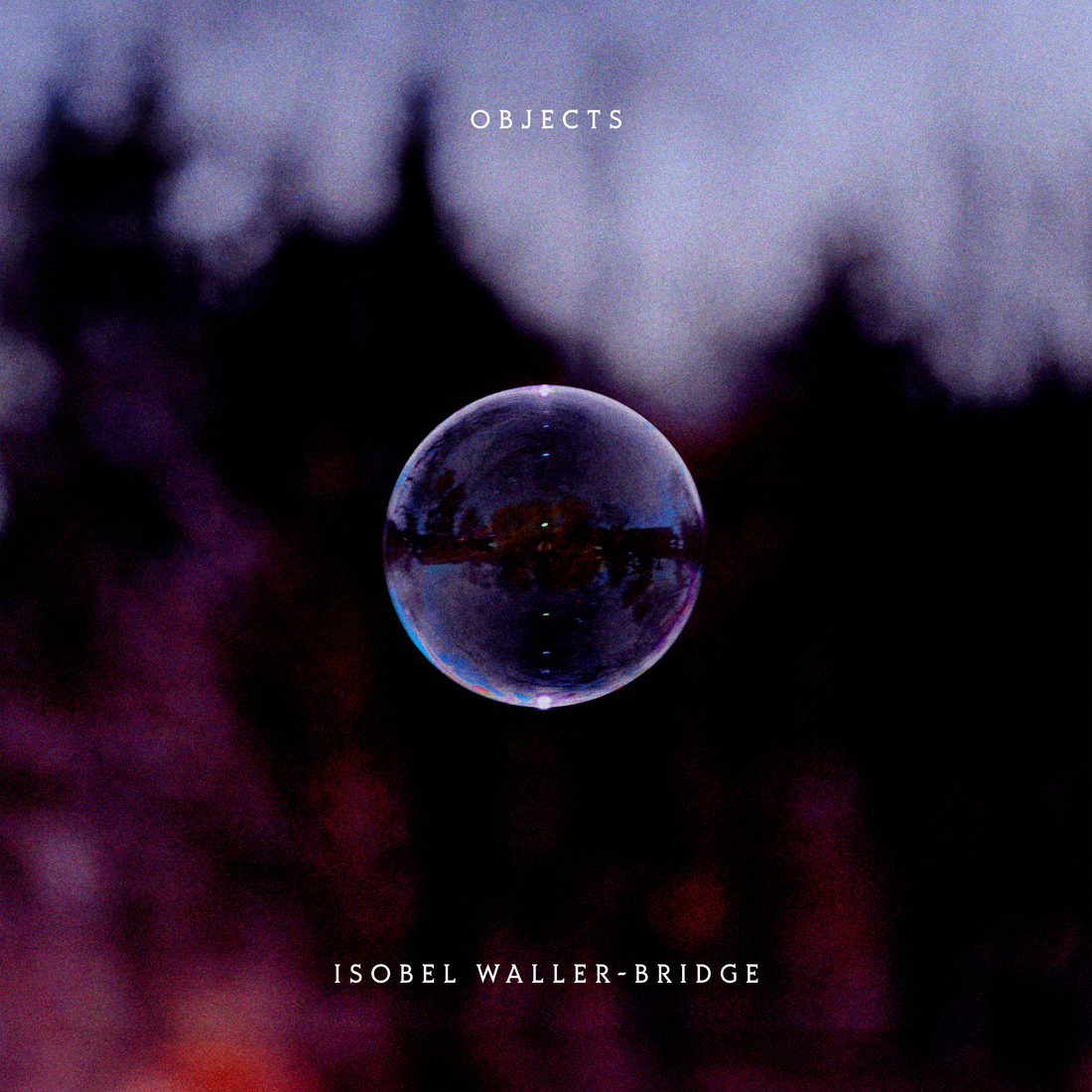
Objects is the new solo album from Isobel Waller-Bridge, out today on Mercury KX. An act of radical stillness, written over four years in the rare quiet moments her career allowed, the album draws from the philosophies of Pauline Oliveros and the experimental radicalism of Stockhausen. Mining sounds from her surroundings and filtering them through minimalism and musique concrète, Waller-Bridge finds music within everyday materials — a ball, a shoe, a cushion, a pane of glass — each becoming a conduit for tenderness and attention. Calling upon trusted collaborator Jonny Woodley, in addition to renowned mastering engineer Heba Kadry (Björk, Ryuichi Sakamoto, John Cale) and mixing engineer James Ginzberg (Lyra Pramuk, Laurel Halo, Anja Lauvdal), Waller-Bridge assembled a team of fellow Deep Listening enthusiasts to bring ‘Objects’ to life.
Stillness is a form of presence that transcends motion – and stillness was something Waller-Bridge did not have. Leading the vanguard of a new wave of composers writing beyond the margins, her scores have become highly sought after because they extend beyond atmosphere and into the realm of psychological portraiture. The unspoken tensions and desires beneath the skin of her subjects colour her worlds: the neurotic gravity behind Munich: The Edge of War, the electronic curdle of Sweetpea, the swooning pastiche of Emma, the hellbent screech of self-destruction on Fleabag, and the BAFTA-winning and Oscar-nominated The Boy, the Mole, the Fox, and the Horse.
Now, with ‘Objects’, Waller-Bridge has turned that gaze inward. Where her 2022 album ‘VIII’ articulated a tormented mind’s undoing, ‘Objects’ is an act of radical stillness. It confers beauty on things the pace of our lives has taught us to ignore, inviting us to listen not as an objective experience, but as a personal and mysterious response to the world.
“These pieces are simple, strange, and lovingly handmade – oddities that feel to me like small miracles,” Waller-Bridge shares. “They reflect how I move through the world: with curiosity, with slowness, and with an openness to the unexpected music in everything. This album isn’t about performance, it’s about presence.”
An acclaimed collaborator in her own right, Waller-Bridge’s recent commissions include 2024’s original work for the American Ballet Theatre for their new production of ‘Crime and Punishment’ alongside ‘Temperatures’ for the Philharmonia Orchestra, which premiered at the Royal Festival Hall in November 2021. She has also collaborated with fashion houses Alexander McQueen and Simone Rocha, scored installations at Frieze London and Venice Biennale, and partnered with Francesca Hayward, principal ballerina at the Royal Opera House, for her dance film ‘Siren.’
Waller-Bridge reflects, “Whether it’s a film, a ballet, or a record, each project feels like a new language of self-expression, this album taught me that exploration is endless — and for me, there’s a deep peace in that thought.”
Objects is out via Mercury KX. CD and vinyl releases are set to release January 23, 2026. You can listen below:
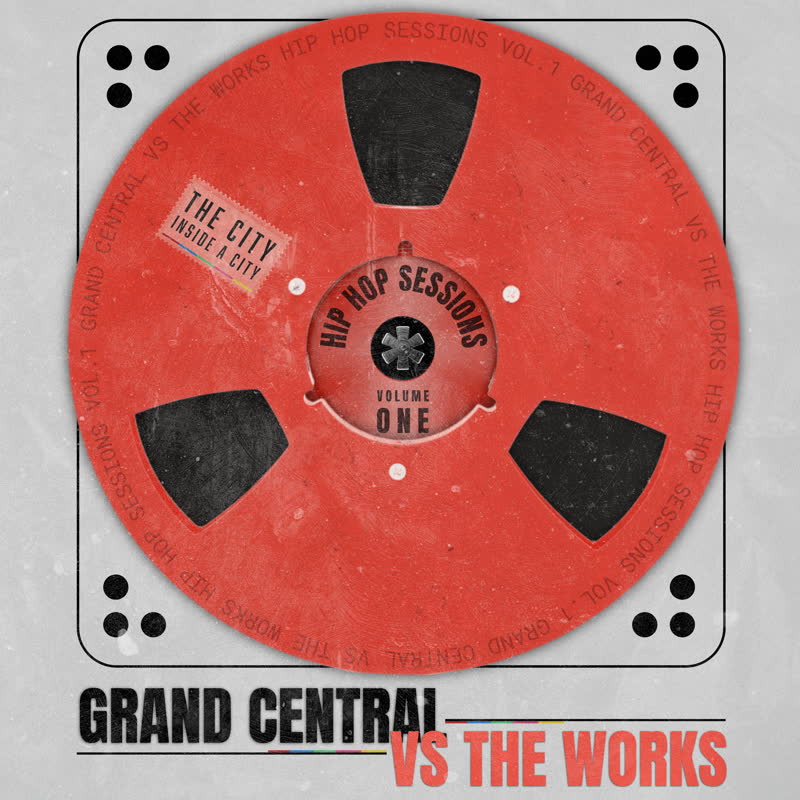
Grand Central Vs The Works will bring back fond 1990s memories for many, but also serves as a futureproof set of releases. It is a collaboration between The Works and what Grand Central head Mark Rae calls “a vault full of Grand Central DATs. Featuring The Jungle Brothers, The Pharcyde, Tony D and Rae & Christian. We are excited to share what has been an amazing journey in fusing the past with the future. Make sure to add to your playlists!

 Arcana.fm