Battery Life is a wholly appropriate title for Neil Cowley’s second solo album. It reflects his experience of bittersweet memories – ‘like a battery, they come with a positive and a negative’, he says. Cowley will reveal all in a forthcoming interview with Arcana, but here he plays out the memories through his piano. He uses a slightly modified instrument, with dampeners often applied for more sensitive volume control, while the main melodic material is dressed with complementary electronics and percussion. These materials draw from ambient and semi-classical sources, though Cowley retains an approach that allows for free improvisation.
What’s the music like?
Intimate and often moving. Cowley avoids by some distance the trappings of arpeggiated piano music, staying well away from the café or the hotel bar and drawing the listener in to the front room or the studio.
In fact the feeling grows that as listeners we are sat right next to Cowley at the piano and able to read his thoughts as he plays. Often he will begin with musical fragments that then blossom into meaningful phrases or riffs on which other thoughts can build, often with percussion and ambient brush strokes for company.
Automata is a good example of Cowley’s careful production of the piano sound itself, employing dampeners and giving effective electronic displacements to the sound. Breaka combines short motifs and windswept atmospherics with a slow but solid rhythm, while more detached figures probe and build up momentum on Ticker Tape.
While a good deal of the tone is serious that does not stop more capricious thoughts, such as those on Scarab Beetle, where little hooks blossom into full blown flights of fancy. The closing Cord brings emotions to a height, still restrained yet deeply meaningful.
Does it all work?
It does. The thoughtful approach is an ideal base from which to work, but through the different tracks Cowley is able to apply instinct, humour and the bittersweet nostalgia that comes with memory recall. The use of perspective through the electronics and ambient effects is subtly applied but gives the music extra layers too.
Is it recommended?
Very much so – a fine and lasting sequel to Hall Of Mirrors, and an album that shows Neil Cowley to be an emotive artist whose fingers have plenty to say.
Boccherini String Quintet in D minor Op.13/4 (1772) Cello Sonata no.2 in C minor (pub. 1772) Cello Concerto no.7 in G major (pub. 1770)
Wigmore Hall, Monday 20 March 1pm
by Ben Hogwood
Steven Isserlis has been a passionate advocate of the music of Luigi Boccherini for a number of years. One of his very first recordings, made for Virgin Classics, brought together a selection of the prolific composer’s works for cello, two of which were heard in this Wigmore Hall lunchtime concert.
Boccherini was born in Italy in 1743, but made his name and much of his living in Spain, where he lived from 1768 until his death. A prodigious cellist, he joined the string quartet in the court of Don Luis in Madrid and wrote himself into the musical equation, making an unusually weighted quintet with two cellos, a combination that became his calling card with over 100 works. While Mozart would go on to write for a string quintet with two violas in the late 1780s, Boccherini achieved a very different balance. His works may be functional in origin but they show fresh invention, distinctive colours and generous melodic appeal. Unfortunately that appeal has not regularly transferred to the concert hall, at least not in the UK – but on this evidence, where Boccherini’s music brightened a spring lunchtime, they should be available on the NHS!
We heard the String Quintet in D minor Op.13/4 from 1772, from early in the Madrid vocation – but clearly Boccherini was already at home in the two-cello idiom. A rich D minor setting found Tim Posner’s cello initially leading with a sonorous tune, before a genial second section in F major assigned plenty of melodic interest to each of the five players. With a relatively congested texture there was nonetheless a beautiful combination of melodies, though the development clouded over in outlook a little.
The second movement Andante gave first violinist Jonian Ilias Kadesha greater prominence, the other four instruments accompanying at walking pace. Soon the texture thinned to three for an extended cello solo, Isserlis’ wonderful tone rising to a high trill with graceful elegance. Boccherini didn’t leave his second cellist out, either, with Posner also enjoying a rich solo rising to the heights. The finale was a quickly executed fugue, with plenty of counterpoint to enjoy and a distinctive sighing chromatic motif passed between the instruments.
Boccherini wrote frequently and fluently for his principal instrument, including many sonatas with harpsichord. Isserlis and Maggie Cole gave a stylish performance of the Sonata in C minor, a work they have enjoyed since recording it in 1988. The assertive beginning established the home key with a strong theme, leading to more lyrical and ornamented melodic content. Isserlis proved very secure in the upper register, especially with a rising motif towards the end of the first movement. A soulful Largo followed, increasing florid and with a lovely resolution at the end. The economical piece soon cut to a triple time third movement, mixing chirpy motifs with longer, flowing passages with chords from the cello.
It is thought Boccherini wrote 12 concertos, of which the Cello Concerto no.7 in G major is one of the most popular. For this performance the group took an authentic figuration, all seven players on stage with Isserlis in the centre, flanked by first violin (Irène Duval) and viola (Eivind Ringstad). They were his foils in the solo passages, Isserlis revelling in the cello’s free spirit while they enjoyed busy counterpoint of their own. The bright figurations had a spring in their step, like a march Isserlis showing impeccable high register intonation. A grand cadenza sealed the deal in the first movement, while the perky finale had violins bright as a button and both cellos in their high reaches. In between was a radiant Adagio, set in B flat major and featuring some particularly beautiful and longer-phrased, ornamented melodies. This was one of those pieces where music making was a pleasure, pure and simple, with music suited to the rustic outdoors.
Perhaps inevitably – as Isserlis joked to the audience – there was an encore in the form of a popular snippet. Boccherini’s Minuet, itself from a string quintet, is his best-known movement and is often played separately on the radio. This concert proved there is a whole lot more where that came from.
You can listen to recordings of the works in this program on the Spotify playlist below, including Isserlis’ own versions of the sonata and concerto:
For more livestreamed concerts from the Wigmore Hall, click here
Beethoven and the Austrian composer Wenzel Müller, who wrote the initial theme on which the ‘Kakadu’ variations are based
Variations on Ich bin der Schneider Kakadu Op.121a for piano trio (1803, revised 1819-20. Beethoven aged 33 at time of composition)
Dedication Prince Nikolas Borissovich Galitzin
Duration 19′
Listen
by Ben Hogwood
Background and Critical Reception
The reference material I have been using for the Beethoven project has the Kakadu variations with a completion date of 1803 – though there are another tranche of dates to take into account. The first autograph score appeared in 1816 after what appears to have been a number of revisions, giving an indication of how Beethoven regarded the material. The opus number 121 confirms a much later publication date of 1824, closely followed by the Choral symphony.
Lewis Lockwood suspects that a number of revisions may even have been made as late as this, particularly the striking introduction with which the work begins. The theme, however, is taken from an opera by the Austrian composer Wenzel Müller. Completed in 1794, the comedy Die Schwestern von Prag (‘The sisters from Prague’) contains the aria I am Kakadu the tailor, whose main theme is lifted by Beethoven for this piece. Following a large introduction are 11 variations on the theme.
Thoughts
This is a substantial piece of work, especially with a full bodied introduction added to the front. In truth this introduction gives the Kakadu variations something of a Baroque profile, giving it a stern, slow minor key introduction, very much a ‘Grave’. It builds in tension, too, with some pretty sparse material that lasts over a third of the piece, and is drawn out for maximum dramatic impact.
Once the theme finally arrives it is something of a light relief, with quite a jaunty profile as the piano and staccato strings set out the simple tune. A feeling of contentment prevails, and this spreads to a flowing first variation and a second variation with light hearted triplets on the violin.
The cello takes over melodic duties for a warm third variation, and the interplay becomes more dense – a sparkling fourth and more intimate fifth attest. The sixth opens the hatches with octaves on the piano, before a thoughtful seventh brings violin and cello alone, the former sweetly sung. The piano’s return is initially quite restrained, the ninth variation a hark back to the solemn introduction and a pause for thought. For the tenth it is as though the trio have saddled a horse and ridden off at speed. The last variation and finale is a wholly suitable summing up, bringing the work to a bracing conclusion.
Spotify playlist and Recordings used
Beaux Arts Trio (Philips Classics) Daniel Barenboim (piano), Pinchas Zukerman (violin), Jacqueline du Pré (cello) (EMI) Rudolf Serkin (piano), Yuzuko Horigome (violin), Peter Wiley (cello) (Sony Classical) Florestan Piano Trio (Hyperion) Stuttgart Piano Trio (SWR)
There are some heavyweight trio combinations who have taken on the Kakadu variations. Among them are the superstar trio of Daniel Barenboim, Pinchas Zukerman and Jacqueline du Pre, whose high voltage version is a memorable encounter. As enjoyable are the versions from the Beaux Arts Trio, the Stuttgart Trio, and Rudolf Serkin leading the Marlboro Music Society.
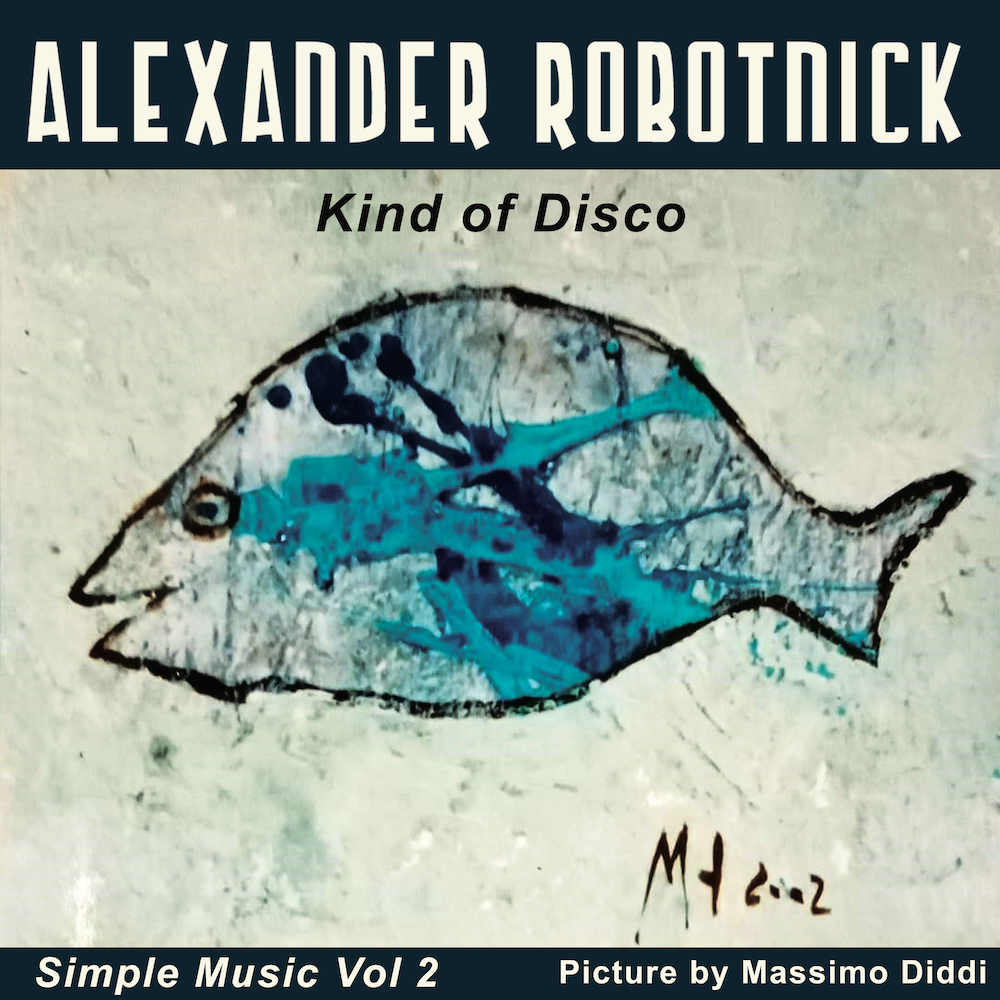
Alexander Robotnick doesn’t do anything by halves. The Italian producer – real name Maurizio Dami – has been making disco or disco / house hybrids with great success for more than 30 years now, so it comes as little surprise to report that a second volume of Simple Music follows hot on the heels of the first, at a distance of just three months.
Simple Music refers to the sort of music Robotnick wants to hear when he goes digging for records, and finds him delivering eight new tracks for the dancefloor.
What’s the music like?
Classy. Robotnick is a past master at this sort of stuff, and the music here achieves its aim with the minimum of fuss. Green Past is a great way to start, a bit of mood music with an atmospheric, repeated vocal that would work just as well with opening credits as it does at the start of a disco album. Robotnick knits the melodies together with ease. And Here It Comes Again is a strong Italo-disco cut, and moody with it.
Intergalactic Travel is a brilliant 80s-present day hybrid, with a suitably deadpan vocal and complementary riffs underpinned by a strong beat. Though it is pure escapism the track is actually discounting the possibility of reaching new worlds! Arpico is similarly effective, its oscillating riff bathed in warm textures.
The World Is Dark, proclaims a whispered voice, while its counterpart suggests ‘the world is shiny’. Rippling synthesizers respond, and a bass that glints in the darkness – again a highly effective track. A Blow To The Heart is a burst of nostalgia – ‘listen to your early mixes’, it warns over a squelchy bass. Canzon Triste introduces hints of melancholy, a more minimal and less effective track, but Le Carillon sweeps that away with a riff that bounces around like a game of ping pong, set to a strong rhythm.
Does it all work?
It does. Robotnick knows exactly what he is doing, and the hand of experience delivers eight consistently good tracks primed for the discerning dancefloor.
Brisbane duo Primitive Motion present a new album of unique sound worlds through Lawrence English’s A Guide To Saints imprint.
One look at the credits on their Bandcamp site reveals just how many instruments, colours and textures the two sonic creators have at their disposal. Sandra Selig is credited with contributions through voice, handclap, flute, cymbals, melodica, radio, saxophone, glass bowl, drums, marble in bamboo, zither, wind chimes and bowed cymbal. Meanwhile Leighton Craig contributes on the acoustic guitar, reed organ, cymbals, field recordings (Kyoto Japan), tremolo guitar, miniature saxophone, voice, piano, metal stool, bird call, synthesiser, wind chimes, shaker and timber box.
Between them, Primitive Motion have made a four-part Portrait Suite, bolstered by a fifth track, Trenches Of Time.
What’s the music like?
Intensely descriptive. Although all the instruments above are used, they are of course employed sparingly, and it is immediately clear how much thought has gone into the resultant colours and textures. Yet to their enormous credit Primitive Motion never make anything sound forced. They create their sonic visions with a healthy degree of musical instinct, allowing their material plenty of room to live and breathe.
Portrait is without question an outdoor suite, using field recordings as well as some deeply evocative percussion and instruments where the textures are very clearly thought out. The woozy reed organ with which Portrait II ends is a case in point, and so are Sandra Selig’s vocals, which have a unforced yet primal beauty in the first of the four movements, lost in thought as they are. The mournful and muffled saxophone at the start of Portrait III is striking, its line taken up by Selig’s vocalise. Her mysterious vocal drone on Portrait IV is also a prominent feature, fading in and out over a distracted piano line.
Trenches Of Time sits outside the four-part suite but is more than a coda. Instead it presents what, to this listener at least, feels like a heat-soaked tundra, with distant structures shimmering in the hot sun. Drones reinforce the intense musical humidity.
Does it all work?
It does – though the listening conditions have an important part to play here. This is definitely not an album to experience on the move, as much of the shading and detail will be lost.
Is it recommended?
It is. The name Primitive Motion is well chosen, for Selig and Craig strip music back to its basic elements in order to create pictures and meditations that leave a lasting impression.




 Arcana.fm